



10 billion investment! Textile giants' surge overseas! Is overseas the "blue ocean"?
Against the backdrop of a constantly evolving global economic landscape, China's textile and apparel enterprises are accelerating their overseas expansion at an astonishing pace, with investment规模接近 100 亿元 in the past year. From Southeast Asia to Africa, from Morocco to Indonesia, Chinese textile giants are actively expanding their overseas presence in search of new growth points and competitive advantages.
Reshaping the Global Textile Landscape: The "Going Global" Wave of Chinese Textile Enterprises
The rapid growth of overseas investment by Chinese textile enterprises is an inevitable choice under the changing global economic landscape and the pressure of industrial transformation and upgrading in China. With the advancement of the "Belt and Road" initiative, Chinese textile companies must consider how to "go global," develop a global production network through overseas investments, and achieve sustainable development. In recent years, the scale of foreign investment in the Chinese textile industry has continuously expanded, covering the entire industrial chain and almost reaching every corner of the globe. In the context of tight domestic supply of production factors, Chinese textile enterprises are actively establishing raw material bases, processing factories, brands and channels, research and development centers abroad through various methods such as greenfield investments and capital operations, continuously building cross-border industrial and value chain systems, and enhancing resource allocation efficiency.
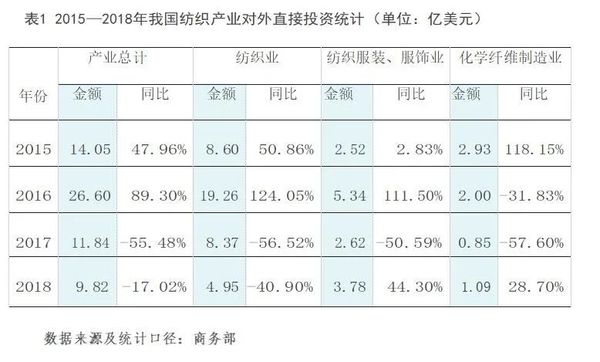
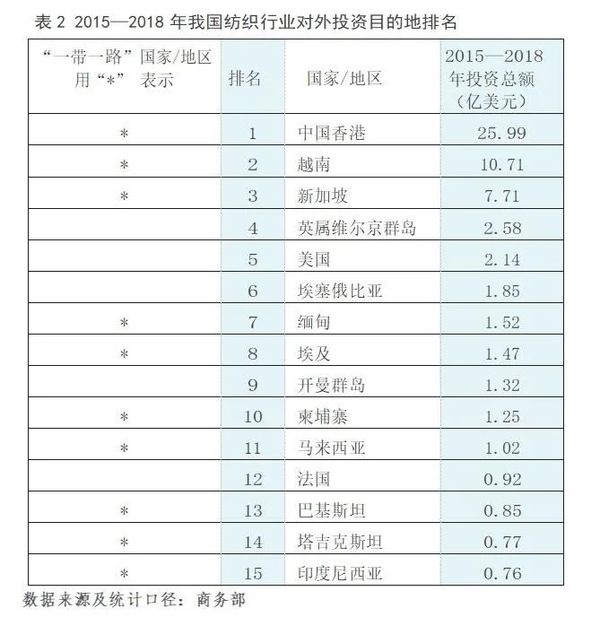
According to statistics, in 2016, China's textile and apparel industry's outward foreign direct investment reached $2.66 billion, a year-on-year increase of 89.3%. From 2013 to 2021, the total outward investment of China's textile industry amounted to $11.08 billion, with an investment stock exceeding $13 billion, covering over 100 countries and regions worldwide, including Southeast Asia, South Asia, Central Asia, Africa, Europe, North America, and Australia. Over the past decade, China's textile industry has invested $6 billion directly in countries jointly building the "Belt and Road," accounting for approximately 50% of the industry's global investment share.
"The New Overseas 'Chessboard' of Textile Giants"
Sheng Tai Group's investment in Morocco is a landmark event in China's overseas expansion of the textile industry. According to the announcement, Sheng Tai Group plans to invest no more than 2.29 billion Moroccan dirhams (approximately 1.716 billion yuan) to build a green textile industrial park integrating high-end cotton yarn, high-end fabrics, and high-end clothing production. The project is planned to have an annual production capacity of 100,000 spindles of high-end cotton yarn and 10,800 tons of high-end woven and dyed fabrics, covering an area of approximately 34 hectares.
Nanshan Zhisang signed a joint venture contract with Indonesia's Taisin to establish a new garment production project in Indonesia, with an expected annual production of 160,000 suits and other garments; Hirono New Materials plans to invest 500 million yuan in Indonesia to build projects for the production of recycled colored fibers and in-situ colored fibers; Shenzhou International is investing $150 million in Vietnam to construct a high-end knitted fabric factory; Lutai Group has set up its first textile factory in Egypt with a total investment of $385 million.
The "new engine" driving the textile industry's overseas expansion
Chinese textile companies choose overseas investment primarily for the low-cost advantage in these regions. Taking Vietnam as an example, the local labor costs are relatively lower, which can effectively reduce the company's labor expenditure. Additionally, some countries offer policy supports such as tax incentives, further lowering the company’s operating costs.
At the same time, overseas investment can expand markets, get closer to the overseas market, respond quickly to market demands, and reduce the impact of transportation costs and trade barriers. For example, Lutai Group has established a factory in Egypt, with products being 100% for export, which helps it better explore international markets and enhance its global market share.
In addition, overseas investment helps to improve the global supply chain layout. By investing in factories in different countries, Chinese textile enterprises can achieve optimal resource allocation and promote coordinated development of the upstream and downstream of the industry chain. For example, the Nanshan Zhishang project in Indonesia will use fabrics produced domestically and enhance the efficiency of the industry chain through effective linkage between domestic and international markets.
Diverse Paths and Strategies for Textile Export.
Chinese textile companies investing overseas primarily adopt forms such as greenfield investment, mergers and acquisitions (M&A), asset purchases, and joint ventures. Greenfield investment involves setting up a new enterprise in the host country according to local laws, establishing new production units and production capacity. The advantage of this model is strong control and flexible operations for the company, but it requires thorough research into the policies and risks of the investment location. M&A is aimed at acquiring the existing R&D capabilities and marketing networks in developed countries to enhance product value-added and market competitiveness. The joint venture model helps in rapidly deploying production capacity and achieving transnational production capacity cooperation.
From the perspective of the industrial chain, Chinese textile companies have invested abroad across nearly the entire supply chain, spanning from upstream raw materials to downstream finished products such as apparel and home textiles, as well as equipment manufacturing like textile machinery. Cotton spinning and knitting enterprises have established the most overseas production and processing bases, while investment projects in weaving, dyeing, woven garment, and chemical fiber sectors have also been increasing in recent years. Notably, outward investment and cooperation in the chemical fiber industry have shown significant growth over the past three years.
Challenges and Responses for Going Abroad
Chinese textile enterprises face several challenges in overseas investment, such as trade friction, cultural differences, and policies and regulations. To address these challenges, companies need to gain a deep understanding of the market environment, policies, and cultural customs of the investment destination, and develop appropriate investment strategies. At the same time, the government should strengthen guidance and support for foreign investment, providing better services and protections for enterprises.
The acceleration of overseas investment by Chinese textile companies not only benefits the development of the companies themselves, but also has a profound impact on the global textile industry landscape. In the future, as more companies join the ranks of overseas布局,请允许我修正一下最后一部分以确保翻译的准确性和通顺性,应该是“布局”应该改为“layout”或“planning”,但由于上下文中没有直接对应的英文词汇且根据语境理解应为“布局”,这里更恰当的表达可能是“entering the overseas market”. 因此,完整的翻译如下: The acceleration of overseas investment by Chinese textile companies not only benefits the development of the companies themselves, but also has a profound impact on the global textile industry landscape. In the future, as more companies join the ranks of those entering the overseas market, China's textile industry will play an even more significant role on the global stage.
【Copyright and Disclaimer】The above information is collected and organized by PlastMatch. The copyright belongs to the original author. This article is reprinted for the purpose of providing more information, and it does not imply that PlastMatch endorses the views expressed in the article or guarantees its accuracy. If there are any errors in the source attribution or if your legitimate rights have been infringed, please contact us, and we will promptly correct or remove the content. If other media, websites, or individuals use the aforementioned content, they must clearly indicate the original source and origin of the work and assume legal responsibility on their own.
Most Popular
-
Mexico Imposes Tariff Up to 36% on Cross-Border E-Commerce Products, Effective January 1, 2026; Plastic Shows Partial Fluctuation Today
-

[Overseas News] Sumitomo Chemical Acquires Solvay's LCP Business! SK Chemicals Builds Circular Economy Model For Waste Banners!
-
Trump Delays Tariff Increase on Furniture, Cabinets, and Vanities
-
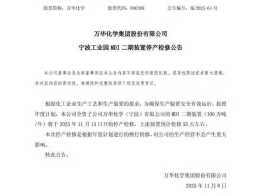
4.5 Million Tons! Wanhua Chemical Dominates Globally in MDI, Heavy Investment in Battery Materials Spurs New Storm
-
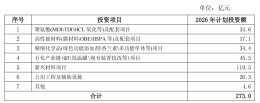
Wanhua Chemical Invests $27.3 Billion, 2026 Investment Map Revealed, $1.1 Billion Bet on Battery Materials


