



With increasing recycled plastics, why do stabilizers become more important?
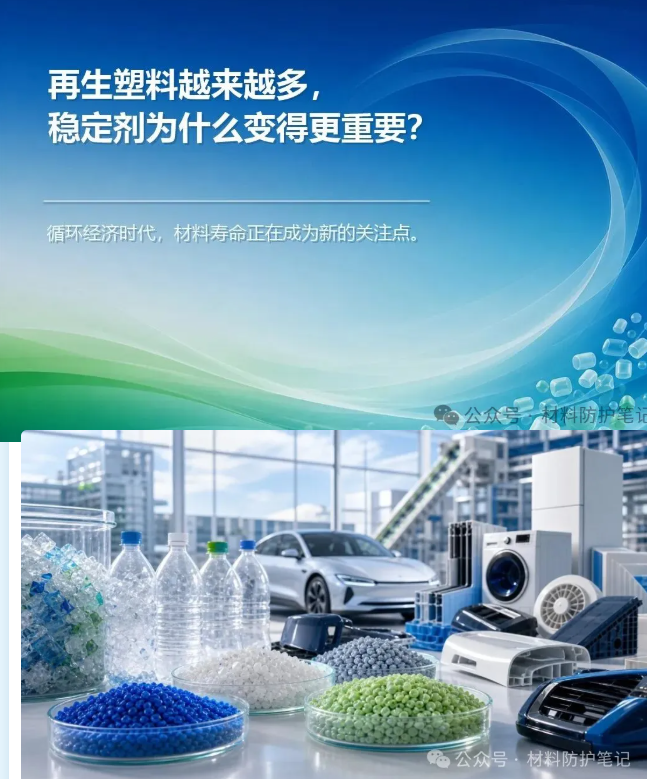
Recycled plastics are being used in more and more products. From packaging materials to automotive parts, from appliance housings to everyday goods, they are no longer just an environmental concept.
But as the rate of use increases, one issue has begun to attract attention:
Can recycled plastics maintain stable performance over the long term?
01Why is recycled plastic becoming increasingly common?
The circular economy is changing the way materials are produced and used.
On the one hand, global markets are paying increasing attention to resource recycling and carbon reduction; on the other hand, more and more brand companies are incorporating the proportion of recycled materials used into their sustainability goals.
Main factors driving the expansion of applications
Environmental policy trends, carbon reduction, brand, ESG requirements, cost and resource utilization.
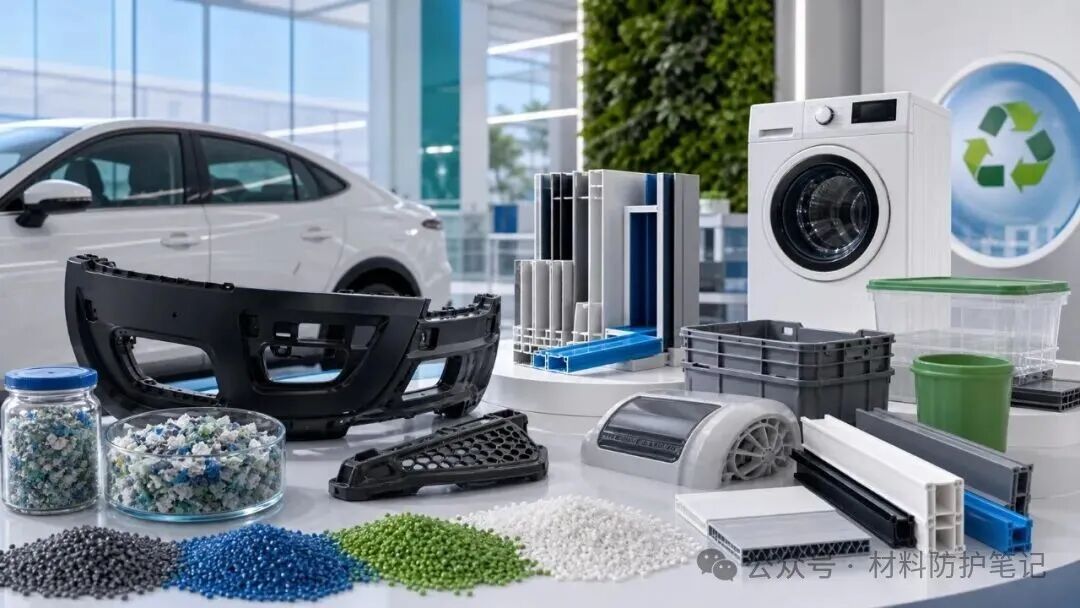
The application space for recycled plastics is gradually expanding in fields such as packaging, automotive, home appliances, construction, and daily necessities.
02What new challenges does recycled plastic face?
Multiple processing may lead to new performance fluctuations.
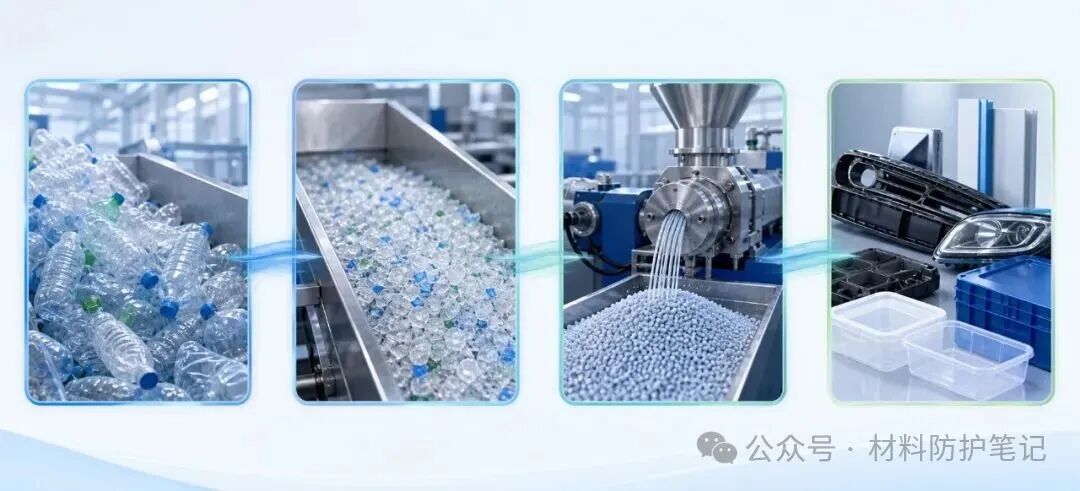
The sources, processing history, and batch composition of recycled plastics are often more complex. During recycling and reprocessing, the material may undergo multiple cycles of melting, shearing, and thermal processing.
Repeated processing → High-temperature shear → Oxidative degradation → Performance deterioration
Possible manifestations
Yellowing, embrittlement, reduced impact performance, decreased weather resistance, increased processing variability
Different polymers, recycling sources, impurity levels, and processing methods face different challenges. Quality improvement requires a combination of raw material selection, recycling treatment, formulation adjustment, and processing control.
03Why are stabilizers becoming increasingly important?
The focus is shifting from “whether it can be used” to “whether it can be used reliably.”
As recycled plastics enter more high-demand applications, companies are beginning to pay greater attention to the stable performance of materials over long-term use.
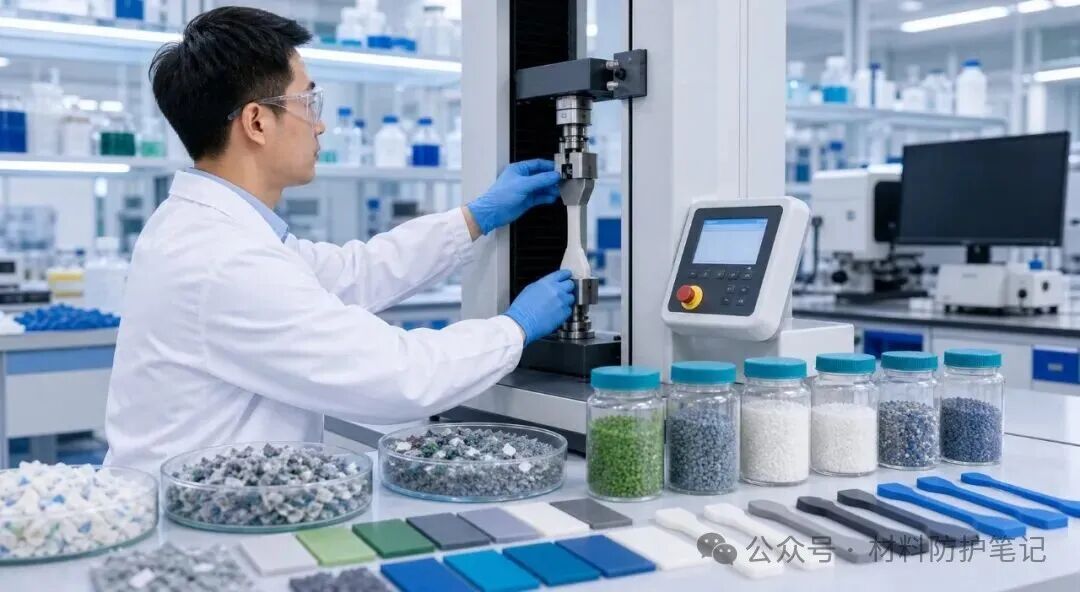
Stabilizers alone cannot solve all the issues faced by recycled materials. Feedstock quality, contamination control, sorting purity, processing conditions, and the formulation system are equally important.
The specific
04What do customers really need?
Environmental protection, performance, and stability all need to be achieved simultaneously.
The clients are not simply buying a batch of recycled plastic. What they truly hope to achieve are three objectives:
Environmental Protection · Performance · Stability
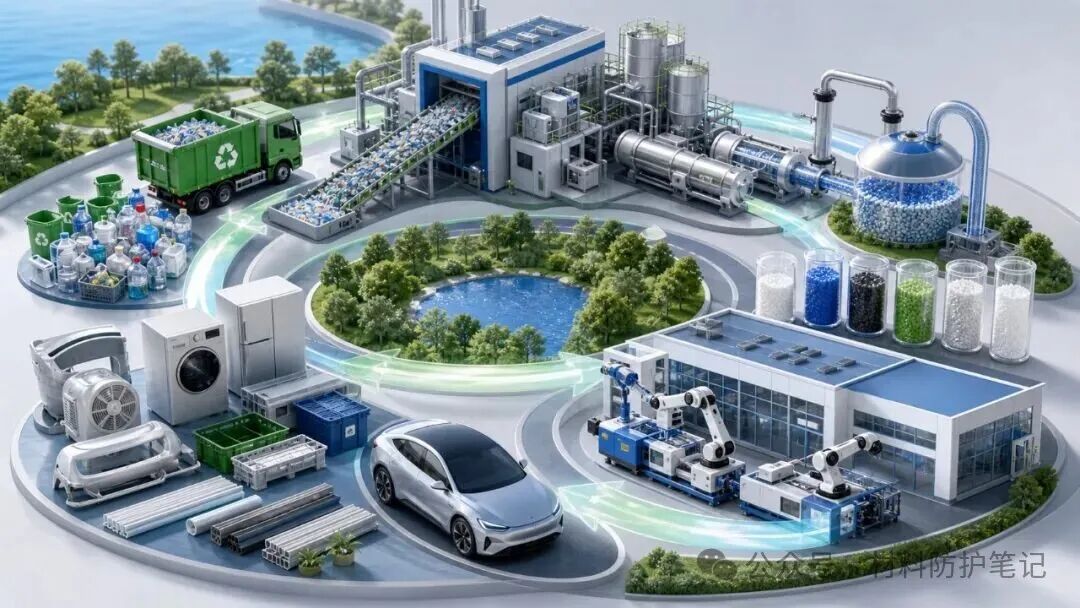
If a material has environmental attributes but fails to meet basic performance and service life requirements, the product will still be difficult to gain market acceptance.
What customers often need is not a single product, but a stable solution that includes raw material evaluation, formulation optimization, processing control, and performance verification.
Written at the end
The circular economy is driving transformation in the materials industry. The increasing proportion of recycled plastics in applications also places higher demands on material performance and quality consistency.
In the future, how to increase the proportion of recycled plastic used while maintaining the long-term stability of products will become an important issue of ongoing concern in the industry.
Enabling recycled materials to truly achieve stable, reliable, and sustainable applications is the more important direction.
【Copyright and Disclaimer】The above information is collected and organized by PlastMatch. The copyright belongs to the original author. This article is reprinted for the purpose of providing more information, and it does not imply that PlastMatch endorses the views expressed in the article or guarantees its accuracy. If there are any errors in the source attribution or if your legitimate rights have been infringed, please contact us, and we will promptly correct or remove the content. If other media, websites, or individuals use the aforementioned content, they must clearly indicate the original source and origin of the work and assume legal responsibility on their own.
Most Popular
-

A Look at the Material Suppliers Behind SpaceX
-

Evonik Parts Ways With The Polyester Business! A Strategic Retreat By A Germany Chemical Giant And The Global Industry Shift
-

Next-generation motors of new energy vehicles: Single-Round Thousand Horsepower, Replacing Brakes, How Powerful Are They?
-

United States Imposes 208.49% Tariff On Chinese Glass Fiber Products
-
Celanese Joins Forces With Aisan Industry to Reshape the Low-Carbon POM Competitive Landscape, Changing the Automotive Supply Chain


