



Where Crates Meet Connectors: ENGEL at Plastimagen 2026 in Mexico
Four machines in action, from high-volume production to precision moulding
Schwertberg, Austria – October 2026
An agricultural transport crate and an automotive connector illustrate two important applications for Mexico’s plastics industry. Both call for cost-effective production in high volumes. Two further exhibits put precision in focus: a silicone soap dish and a syringe plunger for a medical application. EVA, the ENGEL Virtual Assistant, also offers a glimpse of how AI supports production teams on the shop floor.
From 10 to 13 November 2026, the ENGEL stand at the Centro Citibanamex in Mexico City is a place to explore practical production challenges: how can manufacturers improve their own operations? Four machines running live across 480 m² demonstrate solutions for a wide range of customer needs and provide a starting point for hands-on discussions with ENGEL experts.
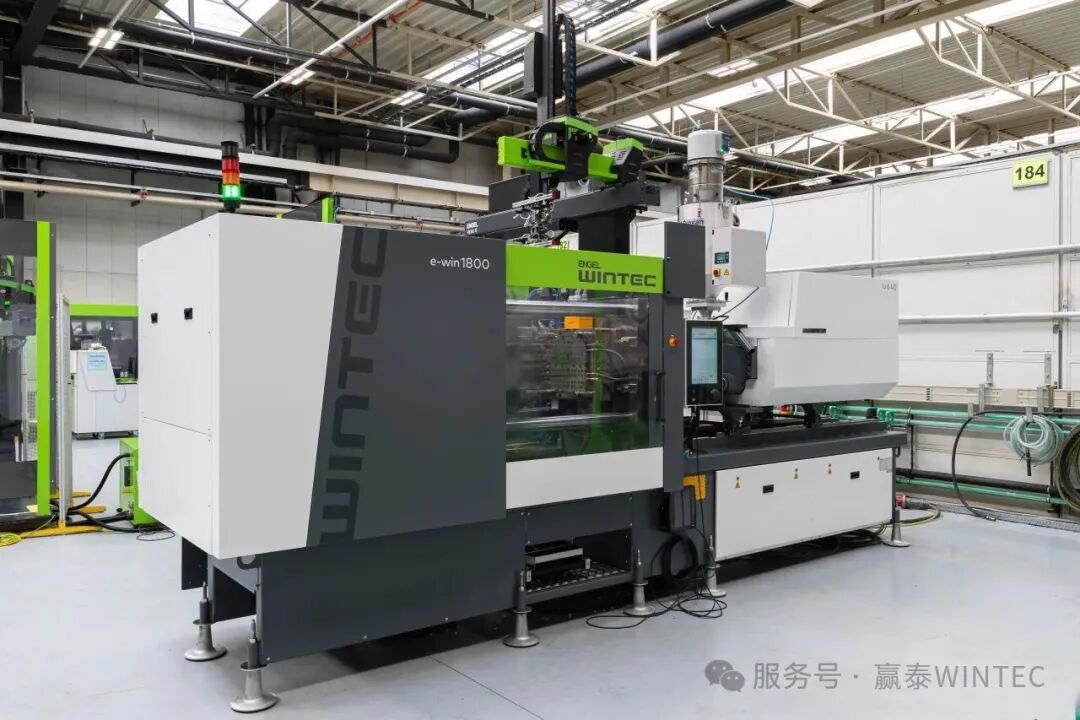
WINTEC e-win 1800 with an ENGEL viper 6 linear robot in a production hall.
High volumes, costs under control
For manufacturers of transport crates, output is only part of the equation. Crates need to perform reliably in use, while material consumption and energy demand remain low and unit costs competitive. Using an application for a customer from Michoacán, ENGEL demonstrates how the WINTEC t-win 6500 meets these requirements. This standardised two-platen machine, with a clamping force of 6,500 kN, is designed for high-volume production. Short dry-cycle times and high availability provide the basis for greater output, while its compact design saves floor space. Robust technology and easily accessible maintenance points help to limit downtime – without the need to invest in expensive special equipment.
In automotive connector production, stable processes and low unit costs are equally vital to competitiveness. The all-electric WINTEC e-win 1800 combines high-volume output with high availability. Sized precisely for the application, the machine dispenses with unnecessary special equipment, helping to keep both capital and operating costs in check. The production figures show what the cell can deliver: a 128-cavity mould and an eight-second cycle time yield 57,600 parts per hour. This is the first time the e-win appears in Mexico at Plastimagen.
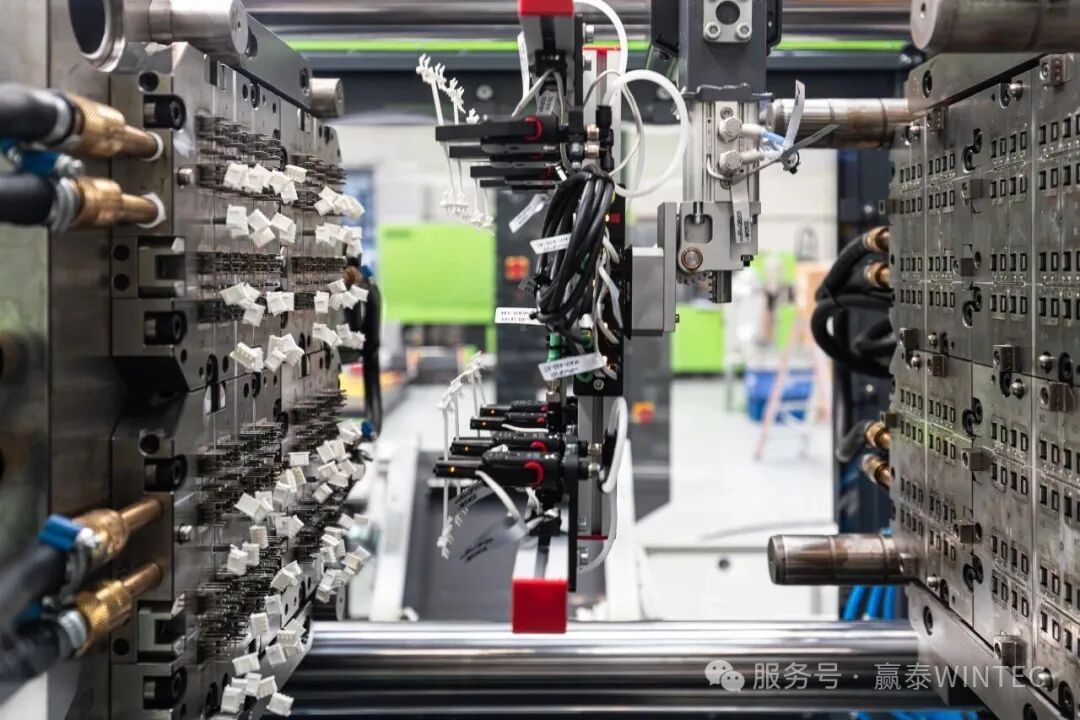
Open 128-cavity injection mould containing white connector components in the WINTEC e-win 1800.
Precision where the part demands it
Non-slip, easy to clean and gentle on surfaces: a liquid silicone rubber soap dish demonstrates the material’s advantages in the bathroom. Series production also demands consistent quality cycle after cycle. ENGEL uses the all-electric e-mac 165/110 LIM with a two-cavity mould from KIPE Molds for this application; cycle time is 51 seconds. The cold runner eliminates sprue waste, helping to reduce material costs. A viper 12 removes the parts within the safety enclosure and places them on a conveyor belt, keeping the automated production cell compact.
For plungers used in medical applications, consistent part quality across many production cycles is essential. At Plastimagen, ENGEL produces a polypropylene plunger on the victory electric 220. Its tie-bar-less clamping unit provides easy access to the mould and space for larger moulds, while the electric injection unit supports precise, energy-efficient processing. For processors, this means greater freedom in designing the production cell without compromising repeatability.
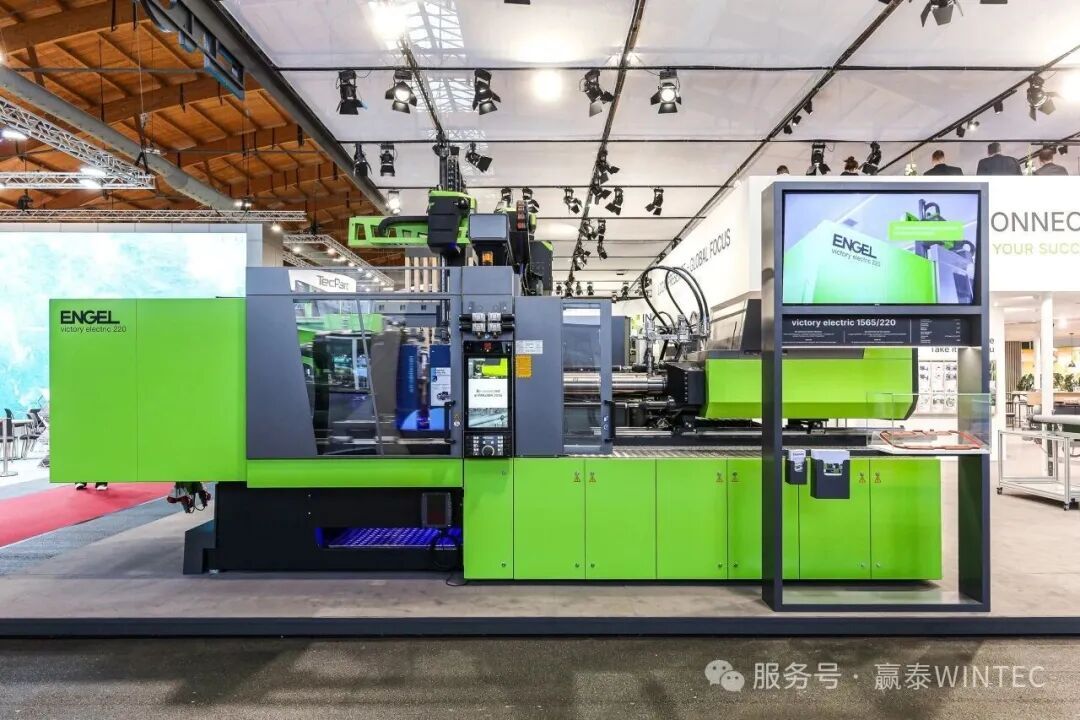
Green and grey ENGEL victory electric 220 on an exhibition stand, with a robot above the machine and a large information screen to the right.
Ask your machine! AI support for production
EVA, the ENGEL Virtual Assistant, tackles a familiar shop-floor challenge: getting the right knowledge to machine operators when they need it. Through inject AI, ENGEL is changing the way people interact with machines. Instead of searching for a generic answer, operators can ask about their specific production situation. Here is how EVA works:
- Understand: Operators ask their question in their own words, by text or voice. EVA places it in the context of the machine and production order.
- Interpret: EVA links the available data with ENGEL’s machine, process and service expertise.
- Explain and recommend: The assistant makes the connections clear and suggests the most appropriate next step.
- Act with control: For approved use cases, EVA prepares changes and transfers them to the machine control system only after the operator has confirmed them.
The technology behind these capabilities is the ENGEL AI Interface. Using the Model Context Protocol (MCP), it provides structured machine information for approved ENGEL applications. The interface is available as an option for new ENGEL and WINTEC injection moulding cells and can be retrofitted to existing machines with CC300 or C3 control systems.
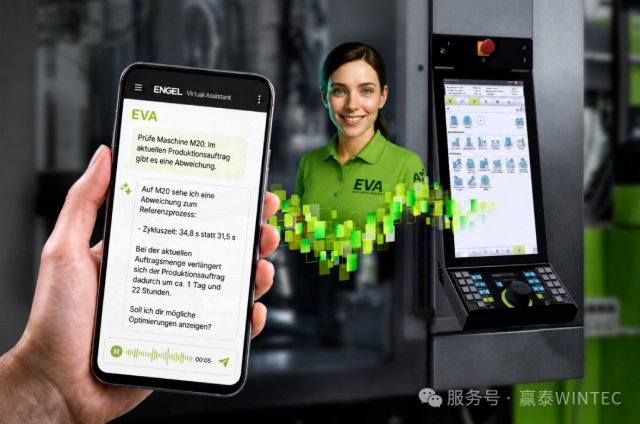
ENGEL Virtual Assistant EVA displayed on a smartphone, showing a detected process deviation on an injection moulding machine and suggesting an adjustment.
Visitors can discuss which solutions best suit their production needs with ENGEL experts at Plastimagen stand 813.
【Copyright and Disclaimer】The above information is collected and organized by PlastMatch. The copyright belongs to the original author. This article is reprinted for the purpose of providing more information, and it does not imply that PlastMatch endorses the views expressed in the article or guarantees its accuracy. If there are any errors in the source attribution or if your legitimate rights have been infringed, please contact us, and we will promptly correct or remove the content. If other media, websites, or individuals use the aforementioned content, they must clearly indicate the original source and origin of the work and assume legal responsibility on their own.
Most Popular
-

The Three Brothers of the Plastics World: What’s the Difference Between HDPE, LDPE, and LLDPE?
-
Injection Molding Machine Screw Noise and Slippage: What to Do?
-
Blown Film Always Has Problems? Root Causes and Solutions for 9 Major Pain Points Are All Here
-
Finally, someone has clearly explained the "plasticizer" of polymers!
-

Polypropylene flame retardant solutions and optimization suggestions