


The new materials and chemical industry is witnessing a surge of hot topics this week! In corporate developments, BASF’s MDI plant in Geismar, USA, has officially commenced operations, making it the largest MDI producer in North America; Nouryon is establishing MMAO production capacity in Jiaxing, with plans to begin operations in the first half of 2028; ALTA intends to acquire BASF’s Palatal business; and Hyundai, Kia, and BASF are collaborating to develop the circular concept seats for the EV3 Study Car 2.0.
In terms of production capacity,Jiangsu Sanmu Chemical plans to invest 1.005 billion yuan in expansionBASF’s MDI expansion project in Geismar, USA, has commenced production; Mercedes-Benz launches Revet, an easily disassemblable thermoplastic riveting solution; Henkel’s ATP division inaugurates a new facility in South Carolina, USA; Longhua New Materials reduces fundraising investment for its 200,000-ton polyether project.
New materialsIn other news, Mingliang New Materials' reflective TPU has passed Intertek testing; Qitai's TPU stabilization technology has been granted a Japanese patent; and the joint venture Xinghua Phosphorus Chemical, established by Xingfa Group and Wanhua Chemical, held a press conference to launch four new phosphorus-based flame retardants. For more details, please refer to the Weekly New Materials Digest.
01
Company News
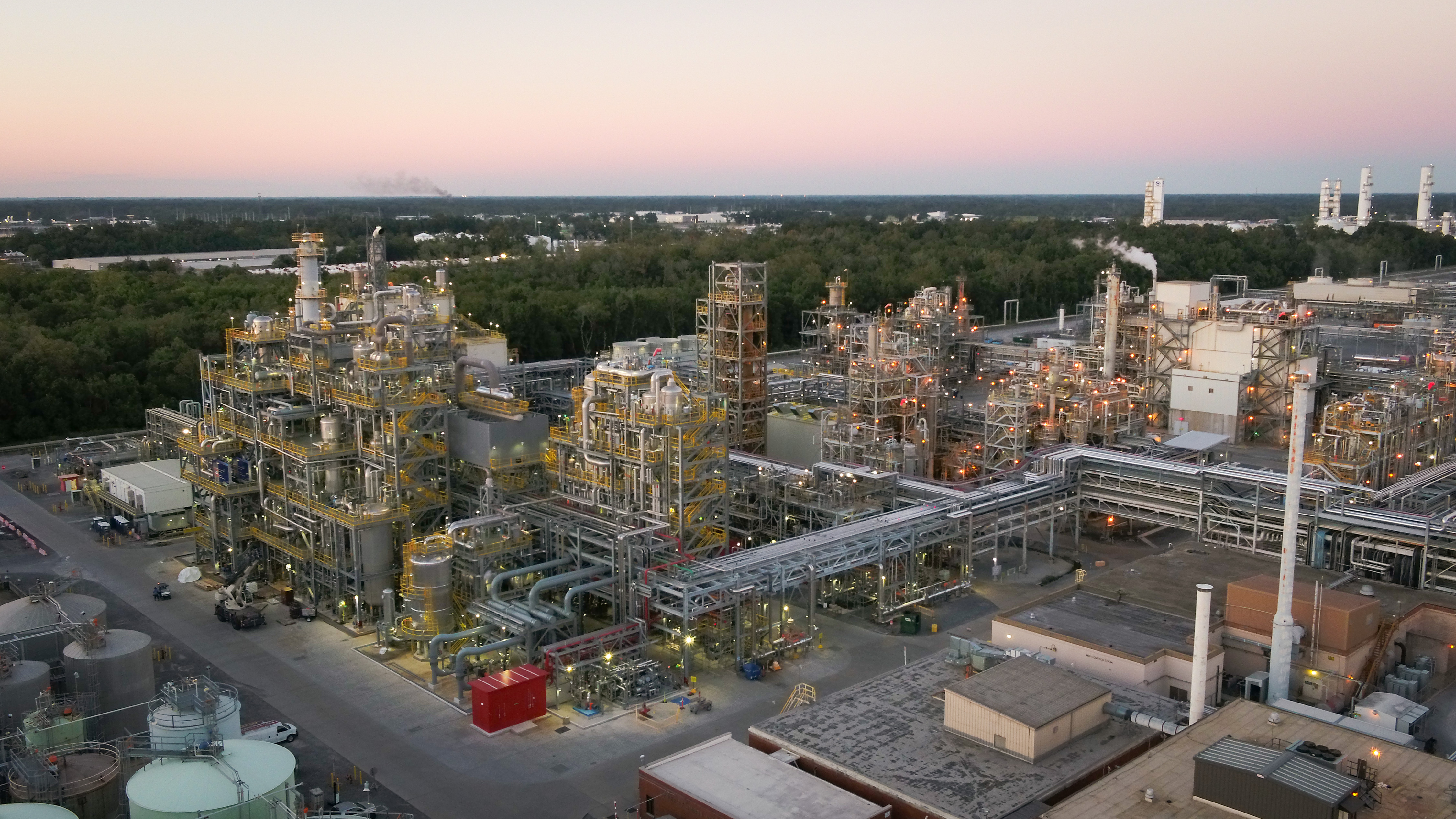
1、BASF’s Geismar MDI plant in the United States has officially commenced operations, making it the largest MDI producer in North America.
On November 11, 2026, BASF will commence operations of its new MDI plant at the integrated site in Geismar, Louisiana, USA. As BASF’s largest wholly owned investment in North America, the project represents a total investment of approximately $1 billion. Construction has been carried out in three phases since 2018, nearly doubling the Geismar site’s MDI production capacity to 600,000 metric tons per year, while simultaneously expanding aniline capacity to strengthen the integrated value chain. As a core raw material for polyurethanes, the additional MDI capacity will serve downstream industries such as construction, home appliances, automotive, and furniture. Leveraging advanced technologies, digitalization, and high safety standards, the facility enhances production flexibility and ensures stable, localized supply for North American customers. This startup solidifies BASF’s leading position in the North American MDI market and demonstrates the company’s long-term confidence in the growth of the regional polyurethane sector.
2. The EU has conditionally approved the equal merger between AkzoNobel and Axalta, with completion expected in early 2027.
On November 6, 2026, AkzoNobel and Axalta announced that their all-stock merger of equals has received conditional approval from the European Commission. To address competition concerns, AkzoNobel is required to divest its European automotive refinish coatings business, thereby eliminating overlapping operations in the European Economic Area, the United Kingdom, and Switzerland; no competitive hurdles exist in other markets. The combined entity will generate approximately $17 billion in revenue, with a portfolio spanning decorative, transportation, aerospace, industrial, and marine protective coatings. The transaction remains subject to remaining regulatory approvals, with closing targeted for early 2027. This strategic union integrates complementary products, technologies, and teams from both companies, creating a global leader in the coatings industry.
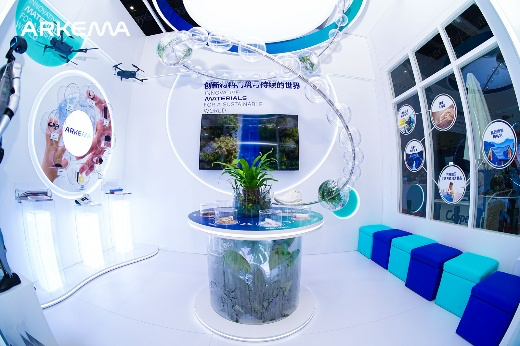
3. Arkema Debuts at the 9th CIIE, Showcasing 15 End-Use Application Solutions
From November 5 to 10, 2026, Arkema will make its debut at the French Pavilion of the 9th China International Import Expo (CIIE). Under the theme “Innovative Materials Building a Sustainable World,” the company will present 15 end-use application exhibits, including its first-ever comprehensive material solutions for humanoid robots, covering embodied intelligence, the low-altitude economy, transportation and energy, and consumer sectors. An artistic installation on-site will demonstrate the transformation of bio-based materials, highlighting Rilsan® PA11, a flagship product of Arkema’s ABC (All Bio-sourced Circular) strategy. Derived from castor beans, Rilsan® PA11 reduces carbon footprint by approximately 80% compared to petroleum-based polyamides. Concurrently, climate science popularization and interactive activities will be held. Leveraging the CIIE platform, Arkema aims to seize opportunities in China’s emerging industries and advance the implementation of local innovation collaborations.
4. Ningxia Xinghuo New Materials' spandex additives and cationic monomer project commences construction, with a total investment of 800 million yuan.
On November 13, 2026, the Ningxia Xinghuo New Materials project for spandex additives and 20,000 tons of DAC cationic monomers commenced construction in the Qingtongxia Industrial Park. With a total investment of RMB 800 million and covering an area of approximately 300 mu, the project will be implemented in two phases: Phase I with an investment of RMB 300 million and Phase II with RMB 500 million. Upon completion, it will produce antioxidants, magnesium-aluminum hydrotalcite, nano-hydrotalcite, and DAC cationic monomers, which are applied in fields such as spandex, plastics, new energy, water treatment, and textiles. At full production capacity, the project is expected to generate an annual output value of RMB 1.6 billion and annual tax revenue of RMB 100 million. The project is poised to fill domestic gaps in relevant sectors, integrate into the industrial park’s supply chain, and promote the expansion and upgrading of the local new materials industry cluster.
5. NylaNova partners with Nylene to supply post-consumer recycled caprolactam
On November 4, 2026, chemical recycling company NylaNova entered into a partnership with nylon 6 producer Nylene. Under the agreement, NylaNova will supply Nylene with green caprolactam derived from the depolymerization of post-consumer PA6 waste. This technology eliminates the need for pre-sorting of waste, achieves a yield exceeding 90%, reduces product carbon emissions by 95% compared to virgin production routes, and is priced at parity with virgin materials. Nylene operates production facilities in the United States and Canada and owns the world’s longest-running nylon 6 depolymerization plant. NylaNova plans to complete its first commercial-scale plant by 2028, a project supported by funding from the Apparel Impact Institute. With extended producer responsibility (EPR) regulations for textiles continuing to tighten across Europe and North America, and global annual nylon 6 waste reaching approximately 2.75 million tons, this collaboration establishes a downstream channel for recycled nylon 6, facilitating the reintegration of discarded nylon waste into the industrial production cycle.
6. ALTA plans to acquire BASF's Palatal business to expand its presence in the South American composites market.
On November 6, 2026, ALTA Performance Materials signed an agreement with BASF to acquire the latter’s Palatal business in Chile. Palatal specializes in vinyl ester and unsaturated polyester resins, serving industries such as construction, mining, and aquaculture, and operates a production facility in Concón, Chile. Upon closing, this facility will become ALTA’s second production site in Latin America. The transaction remains subject to regulatory approvals, during which Palatal will continue normal operations. This acquisition aligns with BASF’s strategy of focusing on its core chemical businesses. Once completed, the deal will expand ALTA’s production capacity and product portfolio in South America, strengthening its local supply and technical service capabilities.
7. Autoneum plans to acquire the French Trèves Group to strengthen its automotive acoustic and thermal management business.
On November 11, 2026, Autoneum announced the acquisition of Trèves Group, a supplier of automotive acoustic and thermal insulation interior components. Trèves Group employs 4,600 people and operates 26 plants across 15 countries, with sales of €720 million in fiscal year 2025. The total transaction consideration is capped at €64 million, comprising an initial payment of €40 million and up to €24 million in performance-linked contingent payments. The initial payment will be made through a combination of newly issued shares subject to a three-year lock-up period and partial cash consideration. Post-merger, projected sales for fiscal year 2026 are expected to exceed CHF 2.9 billion. Restructuring costs of approximately CHF 60 million are anticipated for 2027–2028, with annual synergies exceeding CHF 50 million expected by 2029. This acquisition enhances Autoneum’s product portfolio and global manufacturing footprint, supports the advancement of its “Level Up” strategy, strengthens its global supply capabilities to OEMs, and provides support for research and development in electric vehicles and sustainable materials.
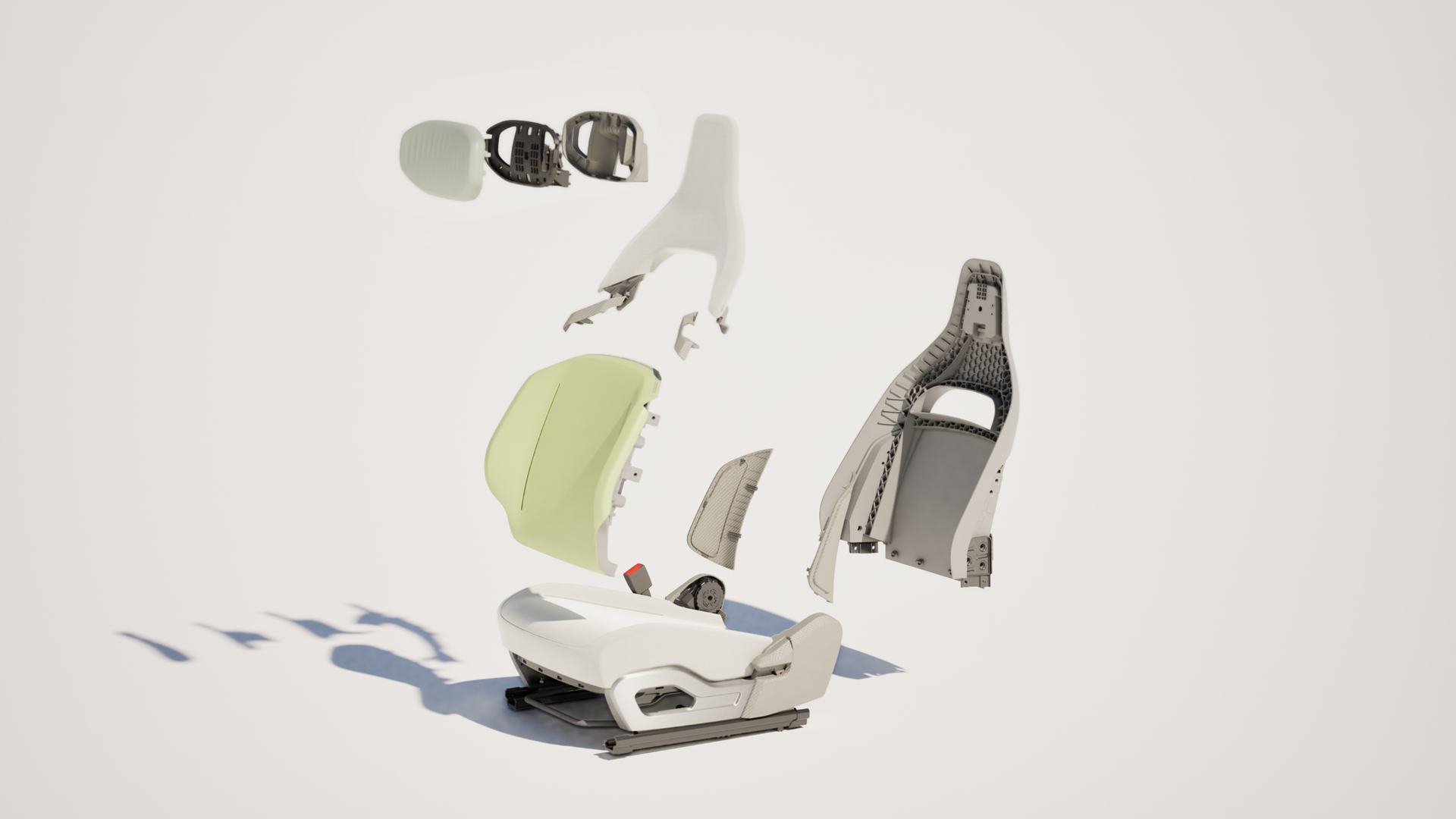
8. Hyundai, Kia, and other partners collaborate with BASF to develop the EV3 Study Car 2.0 circular concept seat
On November 9, 2026, Hyundai Kia and Alten Korea, in collaboration with BASF, jointly developed the concept seats for the Kia EV3 Study Car 2.0. These seats embody design principles centered on circular materials and ease of disassembly, extensively utilizing bio-based and post-consumer recycled raw materials such as BASF’s TPU, polyurethane foam, Haptex synthetic leather, and recycled polyamide. Certain structural components can be integrated to replace traditional metal frames. The project addresses end-of-life disassembly and sorting/recycling requirements from the early stages of vehicle development, balancing structural performance, assembly efficiency, and recyclability. This initiative marks a continuation of the series of concept car collaborations between Hyundai Kia and BASF. Through this partnership, the companies are exploring circular solutions for automotive interiors to enhance the recyclability and resource reuse potential of vehicle seats.
02
Capacity Dynamics
Jiangsu Sanmu Chemical plans to invest RMB 1.005 billion in an expansion project, adding a new annual capacity of 70,000 tons for eco-friendly polyurethane production facilities.
On November 5, the Wuxi Data Bureau published the draft approval opinion on the environmental impact assessment for Jiangsanmu Chemical’s expansion project. With a total investment of RMB 1.00494 billion, the project is located in the Yixing New Materials Industrial Park and will be implemented in three phases. It covers an annual capacity of 70,000 tons of functional acrylic resins, 100,000 tons of environmentally friendly plasticizers, and 70,000 tons of environmentally friendly polyurethanes (including powder polyester and polyester polyols). Upon completion, part of the company’s existing outdated facilities will be dismantled. Trial production for Phase I, Phase II, and Phase III is scheduled for March 2027, March 2028, and March 2029, respectively. The implementation of this project will expand Sanmu Chemical’s production capacity for resins, polyurethanes, and plasticizers, while facilitating the elimination and upgrading of outdated production capabilities.
2. BASF’s MDI expansion project in Geismar, USA, has commenced operations, representing its largest single investment in North America at approximately €1 billion.
On November 11, 2026, according to consolidated reports from foreign media, BASF officially unveiled and commenced operations at its new MDI facility in Geismar, USA. The project is being implemented in three phases with a total investment of approximately €1 billion, doubling the site’s annual MDI production capacity from 300,000 to 600,000 metric tons and positioning BASF as the largest MDI producer in the United States. This expansion brings BASF’s global MDI capacity to 2.2 million metric tons. The capacity increase is primarily aimed at meeting growing demand in North America for energy-efficient buildings, home appliances, and consumer goods. Key players in the global MDI market include Wanhua Chemical, Covestro, and Huntsman, with Wanhua Chemical currently holding the leading position in terms of production capacity. BASF has evaluated a new MDI project in India, while Covestro has shifted its strategic focus to Asia and the Middle East, shelving plans for MDI plant construction in the United States. This capacity expansion will strengthen BASF’s MDI supply security in North America and solidify its competitive position in the global polyurethane raw materials market.

3. Mercedes-Benz launches Revet, an easily detachable thermoplastic riveting solution for automotive interiors to support the circular economy
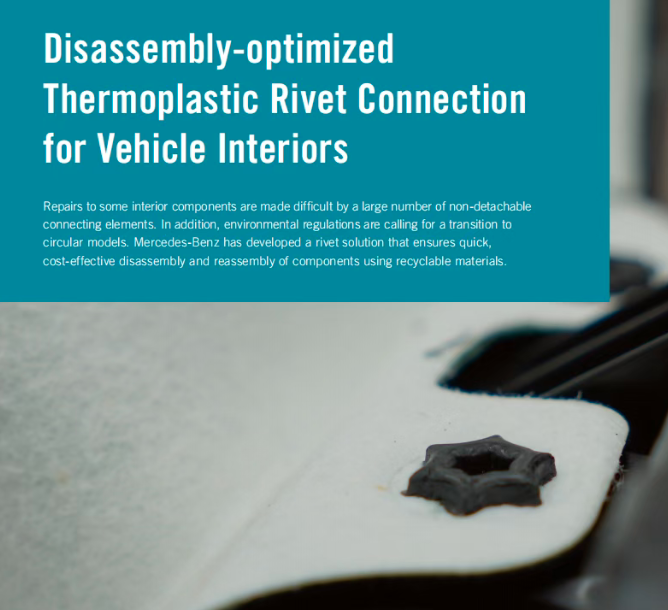
On November 12, 2026, Mercedes-Benz R&D introduced Revet, a detachable thermoplastic riveting technology designed for automotive interiors to address the challenges of disassembly, repair, and recycling associated with traditional riveting methods. This solution modifies the rivet head into a double six-petal flower structure that can be unscrewed using torque, while retaining the advantages of ultrasonic riveting, such as lightweight design, automation, and low cost. The project conducted static tensile and impact tests on two commonly used interior materials, PP and PC/ABS, to verify structural mechanical reliability. The slotted design reduces the disassembly torque by approximately 20%. Additionally, the team optimized the head height and overlap amount through simulation to mitigate stress concentrations. Under the premise of meeting service and crash safety performance requirements for interiors, Revet enables rapid assembly and disassembly of components, aligning with Mercedes-Benz’s 5R circular economy principles and providing a new joining solution for the maintenance and material recycling of automotive interior parts.
4. The world's first bio-based alpha-olefin production facility has commenced operations.
On October 6, German bioenergy company Verbio officially commissioned the world’s first large-scale ethenolysis plant based on rapeseed oil methyl ester at its Bitterfeld site in Saxony-Anhalt. With an investment of nearly €100 million, the facility has an annual production capacity of up to 60,000 metric tons of bio-based chemicals. The plant’s core products are 1-decene and 9-DAME (methyl 9-decenoate), with a combined annual capacity of 60,000 metric tons, including 17,000 metric tons of 1-decene. 1-Decene is a key raw material for producing polyalphaolefins (PAO) and high-end polyolefins, which have traditionally been derived exclusively from petroleum-based routes. The plant employs ethenolysis technology, a type of olefin metathesis reaction. In 2005, Yves Chauvin, Robert H. Grubbs, and Richard R. Schrock were awarded the Nobel Prize in Chemistry for their pioneering work on olefin metathesis.
5. Henkel’s ATP Launches New Facility in South Carolina, USA, to Expand Capacity for High-Performance Tape Bonding Solutions
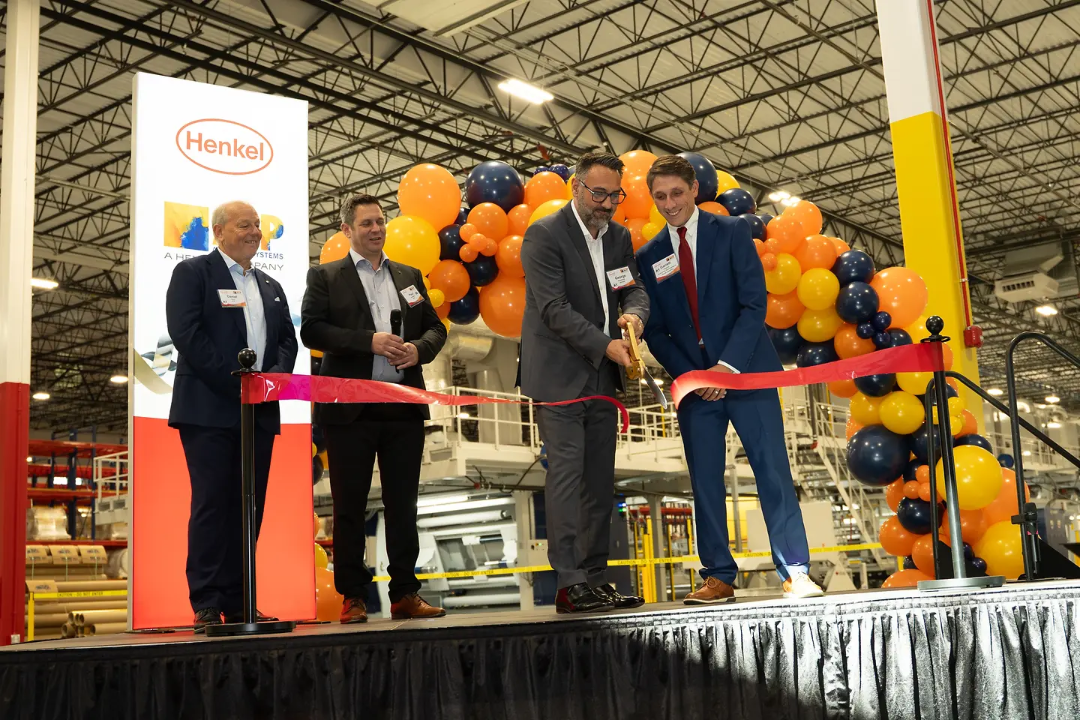
On November 11, 2026, Henkel’s ATP Adhesive Systems officially inaugurated its new production facility in West Columbia, South Carolina. Spanning 127,000 square feet, the site will create 130 new jobs and integrates solvent-free coating, converting, and local product development capabilities to serve industries such as transportation, electronics, healthcare, and construction. This facility complements Henkel’s European operations and strengthens its North American footprint. The new base enhances supply chain resilience, shortens delivery lead times, and accelerates customer product certification. This launch marks a significant step in Henkel’s expansion into high-performance pressure-sensitive adhesives and tapes following its acquisition of ATP. By combining ATP’s engineering expertise with Henkel’s global resources, the facility boosts localized innovation and supply security in North America.
6. Satellite Chemical signed a CNY 20.7 billion new materials project in Lianyungang Xuwei New Area, completing its C3 industrial chain.
On November 11, 2026, Satellite Chemical signed an investment agreement with the Management Committee of Xuwai New Area in Lianyungang for a project focused on propylene and downstream high-end new materials. The total investment amounts to RMB 20.7 billion, covering approximately 1,146 mu of land, and will be implemented in two phases. Upon full completion, the project will have an annual production capacity of 2 million tons of propane dehydrogenation (PDH), 600,000 tons of acrylic acid, 300,000 tons of butyl acrylate, and 1.6 million tons of higher-carbon alcohols. Phase I involves an investment of RMB 12 billion, with a construction period not exceeding three years; the progress of Phase II will depend on the performance of Phase I and market conditions. Funding will come from internal resources and self-raised capital. This project will complete the C3 industrial chain at the Lianyungang base, achieve synergy between C2 and C3 industries, create new profit growth points for the company, and promote the upgrading of products toward high-end, intelligent, and green development.
7. Longhua New Materials reduced the fundraising investment in its 200,000-ton polyether project, with the shortfall to be covered by self-owned and self-raised funds.
On November 11, 2026, Longhua New Materials announced that, following approval by the Board of Directors, it would adjust the allocation of funds raised through its convertible bonds to specific investment projects. The company’s actual net proceeds from the convertible bond issuance amounted to RMB 953.0495 million, which fell short of the planned amount. Without changing the intended use of the funds, the allocated amount for the 200,000-ton-per-year polyether project was reduced from RMB 560 million to RMB 553 million, while allocations for other investment projects remained unchanged. Any funding shortfall will be covered by the company’s own or self-raised funds. This adjustment stems from the lower-than-expected net proceeds and does not alter the direction of the invested projects, nor will it affect project implementation or the company’s normal operations.
03
Material Innovation and Application
1. Bright New Materials' reflective TPU has passed Intertek testing, achieving 100,000 flex cycles without damage.
On November 9, 2026, Bright New Materials announced that its self-developed Model 1740 silver reflective TPU has successfully passed Intertek’s authoritative flex resistance testing. Test data show that the product can withstand 100,000 flex cycles without damage under normal temperature and dry conditions; even after one week of hydrolytic aging at 70°C and 95% humidity, it still endures 50,000 flex cycles without damage. The material combines flexibility with hydrolysis resistance, making it suitable for high-end footwear applications, while also meeting high-frequency voltage processing requirements to improve production yield. This validation of product performance provides a more reliable reflective material solution for the footwear and smart wearable sectors.
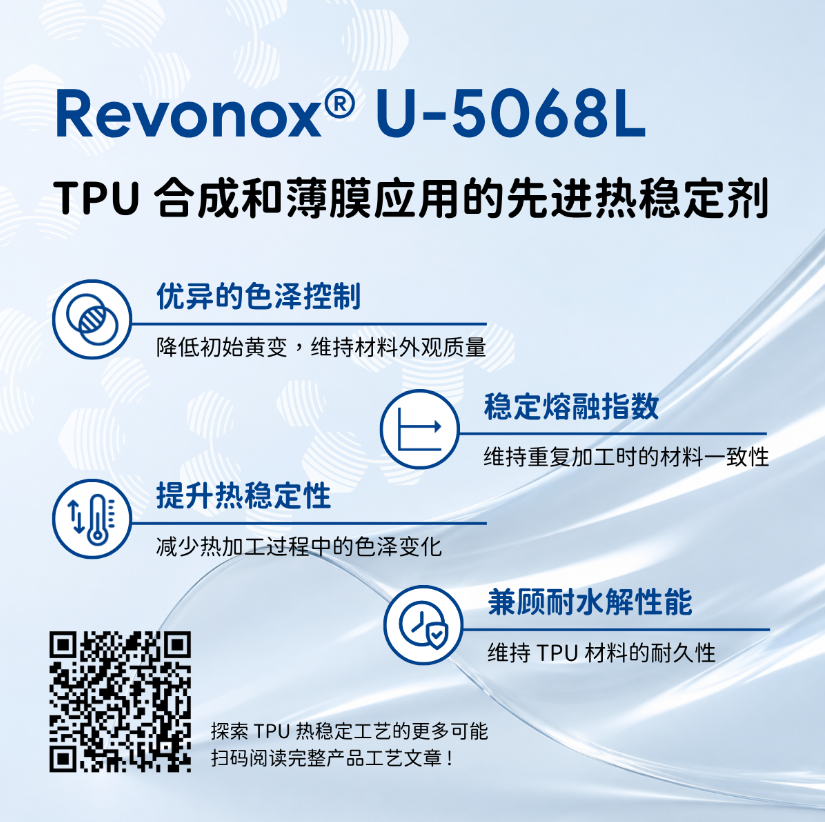
2. Qi Tai’s TPU stabilization technology granted Japanese patent; Revonox® U-5068L heat stabilizer launched
On November 6, 2026, Qitai Technology announced that its Revonox® U-5068L stabilization technology for thermoplastic polyurethane (TPU) has been granted a patent by the Japan Patent Office. The patent covers TPU precursors, compositions, manufacturing processes, and end-use applications. The corresponding product, Revonox® U-5068L, is a specialized heat stabilizer designed to address common pain points during high-temperature TPU processing, such as yellowing, fluctuations in melt flow index, and gel particles. It balances initial color quality, resistance to thermal yellowing, and hydrolysis stability, making it suitable for high-value-added applications including automotive protective films, electronic housings, and precision films. This patent approval in Japan reinforces Qitai’s R&D capabilities in polymer stabilization and provides new technical solutions for high-performance TPU materials.
3. Xingfa-Wanhua Joint Venture Xinghua Phosphorus Chemicals Launch Event Unveils Four New Phosphorus-Based Flame Retardant Products
On November 5, 2026, Yuan’an Xinghua Phosphorus Chemical held a new product launch event for phosphorus-based flame retardants in Yichang, Hubei Province. Yuan’an Xinghua Phosphorus Chemical is a joint venture between Xingfa Group and Wanhua Chemical. The company unveiled four phosphorus-based flame retardant products: BDP, TEPI, DOPO, and DDPS, targeting applications in engineering plastics, electronics and electrical equipment, copper-clad laminates, and viscose staple fibers. The two partners will collaborate across multiple dimensions—including technology synergy, application validation, and market channels—leveraging Xingfa’s phosphorus resource advantages and Wanhua’s formulation and application expertise to deliver green flame-retardant solutions. This launch event aims to help the joint venture expand its market presence and drive the upgrading of China’s phosphorus chemical industry toward high-end, specialized new materials.