Vizitech Unveils Three Strategies in China: Customer Win-Win, Smart Operations, Engineering Innovation
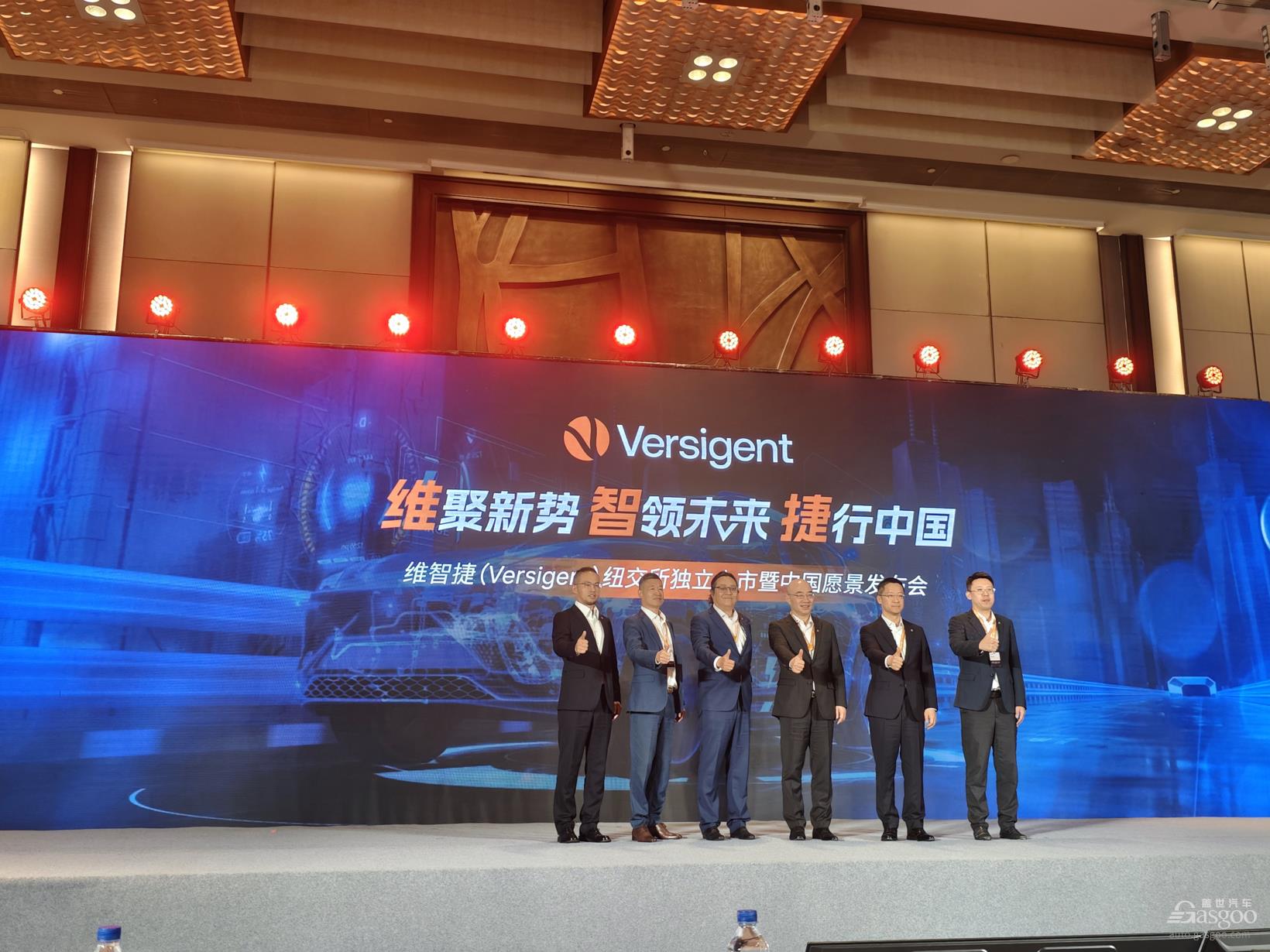
On April 23, on the eve of the Beijing Auto Show, Versigent—formerly the Electrical Distribution Systems (EDS) business unit under Aptiv—unveiled its first vision for China after its independent listing.
Just over 20 days ago, this global electrical architecture solutions provider completed its independent listing on the NYSE. An annual sales volume of $8.8 billion and a product penetration rate covering one-third of all pure electric vehicle models worldwide, these figures are impressive for any supplier. However, what is more meaningful than these numbers is a statement made by Qi Song, the Global Vice President and President of China at Weijie: "We regard China as the global vanguard driving Weijie's continuous advancement in the field of comprehensive digital and intelligent innovation."
The weathervane is not only for the market and factories, but a weathervane for "innovation". Behind this positioning is Wiztivi's clear anchoring of its own role.
The Evolution of an “Established” Supplier in China
Visteon is no newcomer to the Chinese market. Having entered in 1995, it now employs 26,000 people in China, operates 14 manufacturing facilities, maintains 2 technical centers, and employs over 1,800 engineers. Its value chain, from R&D to manufacturing, is now fully established.
However, completeness does not equate to depth. Over the past few years, the pace of electronic and electrical (E/E) architecture transformation in China’s automotive industry has far outstripped that in other global markets. The aggressive experimentation with domain controllers and central computing platforms by both traditional automakers and new energy vehicle (NEV) startups has forced the supply chain to respond at an unprecedented speed. For a multinational supplier, simply importing globally mature products for local production in China is clearly insufficient to keep up.
Vizeo's choice is to move decision-making forward. After its independent listing, the company has driven organizational flattening, granting local teams greater autonomy. The three strategic pillars articulated at the launch event—customer co-creation, intelligent operations, and engineering innovation—may appear to be a business roadmap on the surface, but in essence, they constitute a system designed around "speed."
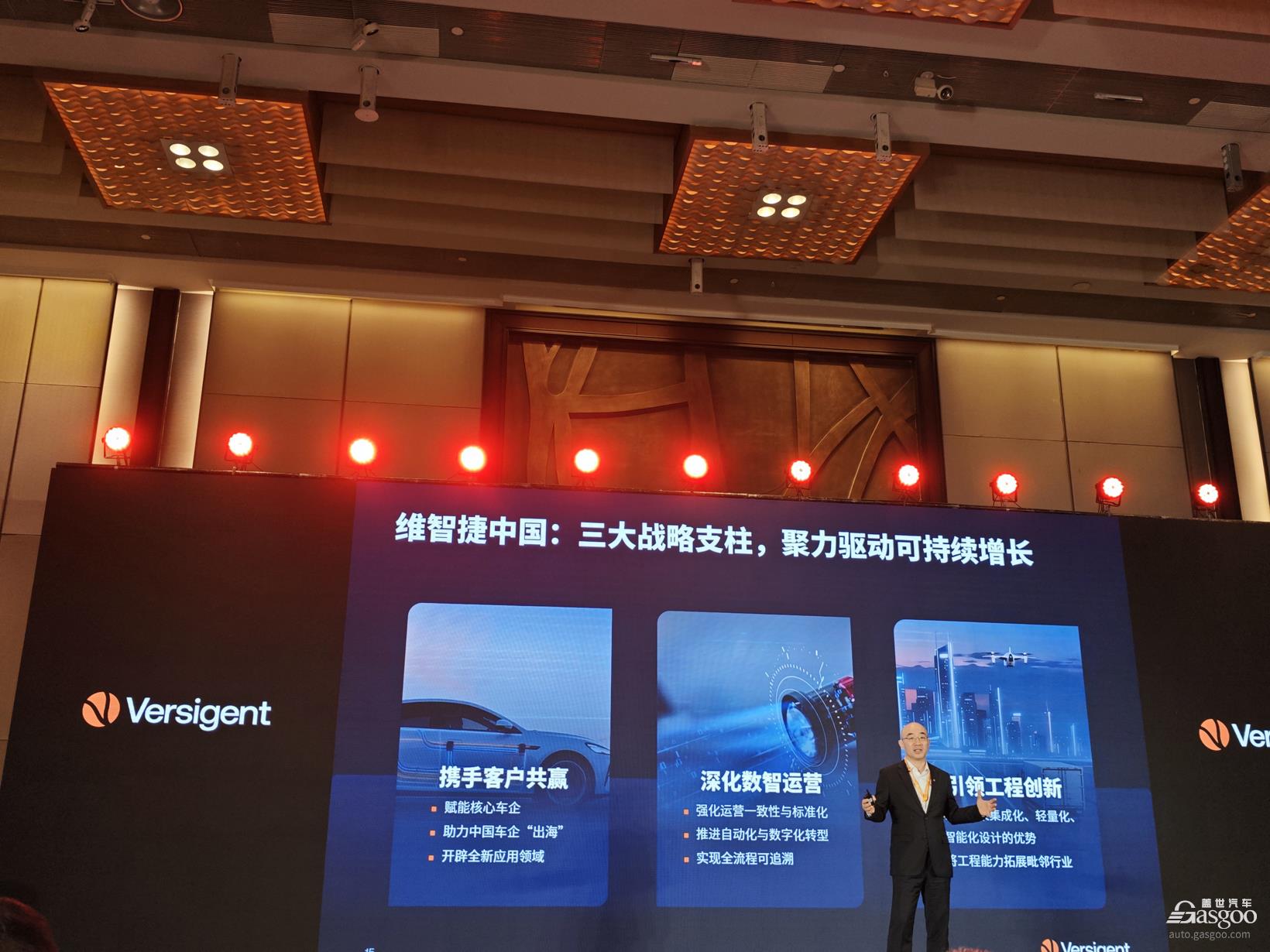
Customer Win-Win: From "Order Acceptance" to "Drawing Together"
The role of traditional parts suppliers was simple: the provided blueprints, and the supplier produced according to the drawings. But today, with the increasing complexity of electronic and electrical architectures, this approach no longer works.
What Wejitech is doing now is taking one step further—deeply engaging in automakers' early R&D processes. This means that when a new vehicle is still at the concept stage, Wejitech engineers are already discussing wiring harness layout and the feasibility of electrical architectures with their counterparts. The benefit of this approach is reducing late-stage changes and shortening the development cycle. For Chinese automakers operating on an 18- to 24-month vehicle development timeline, the value of such deep involvement is self-evident.
Another dimension is global expansion. Chinese domestic brands are accelerating their move overseas, yet localized supply chain capabilities have long been a pain point. With its manufacturing and supply chain network spanning 25 countries, Weizhijie is uniquely positioned to offer a "Chinese innovation + global delivery" solution, empowering Chinese brands to succeed internationally while ensuring stable overseas supply and localized support.
Chinese automakers face three major challenges when going global: after-sales service, claim processing, and quality assurance. Weizhijie's wiring harness solutions can effectively eliminate these concerns. Meanwhile, relying on our global network, we can help customers connect with local laws, labor management, and cultural differences in overseas markets," Qi Song said honestly.
Digital Intelligence Operations: A System That Calculates Quality
Automotive wiring harness production was once considered labor-intensive, but Weizhijie is changing this perception with a digital system called AIMS (Automated Integrated Manufacturing System).
AIMS is a digital ecosystem covering the entire process from order forecasting to finished product shipment. Data from each stage, such as raw material receiving, wire crimping, wiring assembly, and quality inspection, is collected and analyzed in real time. It not only moves quality control checkpoints forward and achieves highly automated intelligent production scheduling, but also ensures accurate traceability throughout the entire process, better supporting automotive manufacturers in implementing L2+ and L3 advanced driver assistance systems. In addition, the AIMS system applies AI technology to production scheduling and quality inspection, reducing changeover time in the wire crimping area by 7%, moving quality checks forward in the assembly area, and achieving a product quality and on-time delivery rate of 99.9%.
A 99.9% on-time delivery rate means that for automakers, wiring harnesses are a quintessential "not even one can be missing" component—missing a single wire halts the entire vehicle assembly line. Amid accelerating model cycles and frequent engineering changes, this system has enabled Weisys to shift its quality control checkpoints upstream.
Engineering Innovation: Using Materials to Save Space, Using AI to Save Time
Lightweighting is a longstanding topic in new energy vehicles, but Weichai has come up with some new solutions.
Next-generation copper-clad steel conductor is an example. Replacing traditional 0.35mm² copper conductor with 0.22mm² copper-clad steel reduces weight by 30% and cuts copper usage by 73%. This solution has already achieved mass production. Another copper-clad aluminum conductor also reduces weight and copper usage, while solving a major industry pain point—traditional aluminum conductors require special terminals and crimping processes. However, Weizhijie's solution is compatible with the same process as copper conductors.
Lighter, thinner, and more space-efficient, the direct benefits are increased range and lower costs. For China's car market, where price wars have reached a fever pitch, these two value points need no further explanation.
At the software level, Wei Zhi Jie’s self-developed iHarness tool suite achieves full-process automation for electrical architecture development, reducing diagramming time by 50%. Building upon this, the Engineering AI Agent automatically handles multi-format drawing conversions and intelligent change management. Data conversion rates for professional software drawings—such as CHS and E3—reach 100%, while drawing change workload is reduced by 18%. These figures may sound unremarkable, but for engineers who work with drawings daily, the efficiency gains brought by AI are tangible and substantial.
Boundary Expansion: From Automobiles to Robots and Flying Cars
Since its independent listing, WeRide has been attempting to extend its expertise accumulated in the automotive sector beyond that domain.
The cable harness for embodied robots needs to withstand 1 million flexes, which Weizhijie's product has achieved; the cable harness for flying cars must operate in an environment as cold as -60℃, while also meeting stringent shielding and flame retardant requirements, for which Weizhijie has also come up with a solution; in addition, the energy storage cable harness has passed UL certification.
The technological foundation of these products is highly similar to automotive wiring harnesses—high reliability, high durability, and high customization. However, the market size and application scenarios are completely different. A Morgan Stanley report predicts that the global robot hardware market will grow from $100 billion in 2025 to $25 trillion by 2050. Veijie is positioning itself at this point, betting on the demand for the "nervous system" during the boom period of smart hardware.
Not only "In China, for China," but also "In China, for the world."
At the meeting, Qi Song clearly stated: "We will take the Chinese market as the starting point, through localization empowerment and innovative practices, to transform China's speed and market advantages into global competitive advantages, truly achieving 'In China, for China, benefiting the world.'"
In the past three decades, the China strategy of multinational companies has mostly been "in China, for China" – localizing production to serve the local market. However, Venustech is attempting a different version: exporting the innovative results from the Chinese market back to its global system.
The logic makes sense. The transformation of the electronic and electrical architecture in China's automotive industry is the fastest globally, driving technological innovations with a first-mover advantage. The experience accumulated, products developed, and processes verified by Weizhijie's engineering team in China can be replicated in other markets. This "China innovation as a global prototype" model has been validated in the consumer electronics industry and is now taking root in the automotive supply chain.
At the 2026 Beijing Auto Show, Visteon will unveil for the first time its smart factory diorama and AI-powered wiring harness design agent. For this century-old company, newly spun off and independent, this showcase represents not only a demonstration of its technological prowess but also a declaration of its evolving role: from follower to definer, from supplier to system-level partner.
Going public is just the beginning. The real story is only just starting.
【Copyright and Disclaimer】The above information is collected and organized by PlastMatch. The copyright belongs to the original author. This article is reprinted for the purpose of providing more information, and it does not imply that PlastMatch endorses the views expressed in the article or guarantees its accuracy. If there are any errors in the source attribution or if your legitimate rights have been infringed, please contact us, and we will promptly correct or remove the content. If other media, websites, or individuals use the aforementioned content, they must clearly indicate the original source and origin of the work and assume legal responsibility on their own.
Most Popular
-

Why did a century-old european dental instrument giant relocate its manufacturing hub to china?
-
Profit and Revenue Growth Struggle to Conceal Debt Repayment Pressure; Success of Kingfa Sci & Tech's High-End Strategy Yet to Be Seen
-

Toray Industries and SGL Carbon Establish Carbon Fiber Supply Partnership for Aerospace Sector
-
Deadly Impact: Hormuz Strait Blockade Sparks Shortage of Plastic Raw Materials, Threatening Shutdowns at Japanese and Korean Chemical Plants
-
【Overseas Highlights】Multiple Nations Plan to Reopen Strait of Hormuz! INEOS & Honeywell Announce Further Asset Sales; BASF Expands Its Footprint in China