



Three World-Class Production Lines Put Into Operation On The Same Day! Aerospace, New Energy, And More Move Forward Together: Is The Carbon Fiber Sector A Boom Or A Bubble?
On June 29, 2026, the carbon fiber concept sector quickly became the focus of the A-share market after the opening. As of 9:34 AM, Zhongfu Shenying (688295.SH) saw an increase of over 15%, with companies such as Jilin Chemical Fiber (000420.SZ), Zhongjian Technology (300777.SZ), Jilin Carbon Valley (836077.BJ), and Guangwei Composites (300699.SZ) also rising in response.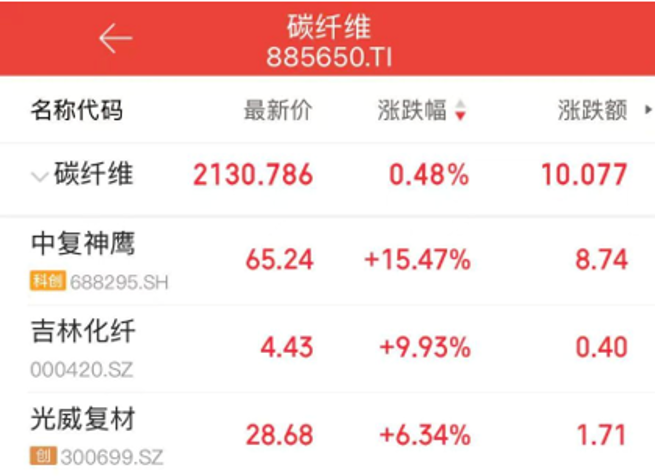
The rapid response of carbon fiber companies' stock prices reflects the high recognition of the capital market for the milestone event on June 28—on this date, three world-class high-performance carbon fiber production lines of China National Building Material Group were simultaneously put into production at the Zhongfu Shenying Lianyungang base.
I. Booming Supply and Demand with Price Resonance: The Carbon Fiber Industry Enters a Period of Rapid Growth
Carbon fiber is known as "black gold." Its density is less than a quarter of that of steel, yet its strength is seven to nine times greater than that of steel. It is a key material for achieving lightweight in fields such as aerospace, new energy equipment, and high-end manufacturing.
From the perspective of industry fundamentals, carbon fiber is currently in a high-growth phase marked by simultaneous increases in both supply and demand. According to data from a research report by Guoyuan Securities, global carbon fiber demand reached 224,500 tons in 2025, up 43.8% year on year; China accounted for 52.5% of global operating capacity, ranking first in the world. Domestic demand reached 132,000 tons, representing a year-on-year increase of as much as 57.1%, while the import share has fallen to around 14%, indicating significantly accelerated progress toward self-reliance and controllability.
The surge in demand is driven by not a single factor, but by the simultaneous strength of three major themes: aerospace, new energy, and emerging technologies. In civil aviation, composites account for about 12% of the C919 large passenger aircraft, which is still at an early stage, while the composite-material share of the main structure of the C929 wide-body aircraft is expected to exceed 50%, leaving enormous long-term room for growth. In the low-altitude economy, eVTOL (electric vertical takeoff and landing aircraft) airframes have composite-material content as high as more than 70%, making them a new major growth engine for carbon fiber. The wind power sector is also maintaining robust demand, with Chinese companies’ carbon fiber consumption reaching 64,000 tons in 2025. In addition, emerging fields such as embodied intelligence are also continuing to contribute incremental growth.
On the supply side, China's carbon fiber production capacity increased by 14% year-on-year to 171,100 tons. In the context of both supply and demand increasing, the industry has entered a high-speed growth phase. With the rising penetration of high-end applications and the continuous improvement of localization rates, the carbon fiber industry chain is expected to maintain a high level of prosperity.
II. Decoding “the World’s Largest”: The Strategic Depth of Zhongfu Shenying’s Three Production Lines
The concentrated commissioning of these three production lines has attracted strong market attention not only because of their economies of scale, but also because of the depth of their technological breakthroughs and market reach. Construction of the production base began in June 2023. Covering an area of 1,500 mu, it involves a planned investment of RMB 6 billion, a designed capacity of 31,000 tons, and ten planned all-purpose production lines. The three lines commissioned this time cover the three major mainstream categories—general-purpose, high-strength, and high-modulus—forming the world’s largest carbon fiber product portfolio spanning high-strength, high-modulus, and large-tow segments.
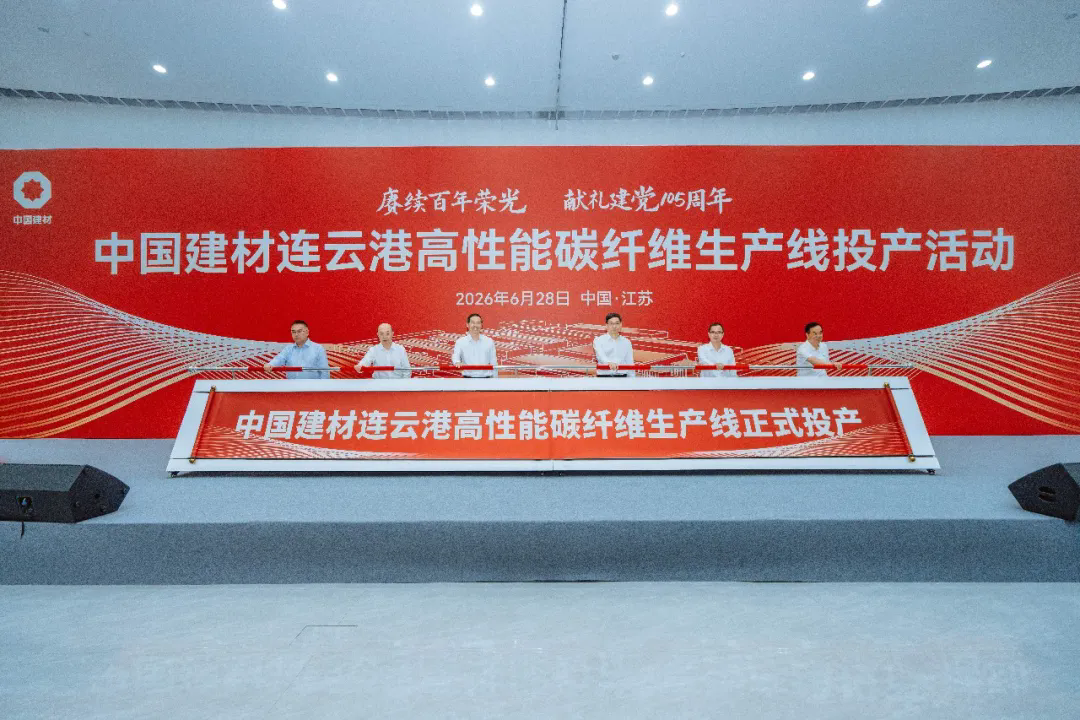
Production launch event site. Photo courtesy of Zhongfu Shenying.
The first one is the world’s largest, with an annual production capacity of 1,000.Ton SYT70(T1100High-strength carbon fiber production line.SYT70 carbon fiberSuitable for space stations, deep-space exploration, and launch vehicles.eVTOLExtreme application scenarios for aerospace vehicles such as low-altitude aircraftThis production line has achieved a leap in capacity from hundreds of tons to thousands of tons, marking the world's first industrial production of T1100 grade materials on a 4-meter wide production line. This breakthrough will further enhance China's self-sufficiency and support capabilities for key strategic materials in the aerospace field.
The second line is the world's largest single-line annual production of 5,000.Ton SYT45S-48KCarbon fiber production line.The production line, relying on Zhongfu Shenying’s globally first-invented dry-jet wet-spinning large-tow manufacturing technology, has launched the third-generation carbon fiber product for the wind power sector, with a modulus more than 10% higher than the previous generation and enabling a reduction in carbon plate usage by 8% to 12%.The product can be widely used in industrial manufacturing fields such as wind turbine blades and new energy vehicles.The completion and commissioning of this production line marks another major leap in the industry’s large-scale manufacturing capability, following the annual 3,000-ton general-purpose carbon fiber production line at the Xining base.
The third one has the world’s largest annual output of 600.TONSYM40A carbon fiber production line for high-grade models with a level of or above.The production line can produce 600 tons of SYM40-grade high-modulus carbon fiber annually.Mainly serving equipment for extreme environments such as the deep sea, deep earth, and deep space, as well as competitive sports equipment,3Celectronic products and other fields,Capable of actively participating in competition in the international aerospace market.
At the commissioning site, Zhang Jian, Chairman of Zhongfu Shenying, introduced that since the first production line had been in trial operation for one month, the A-grade yield of the carbonization line had increased from 40% to 80%, preliminarily achieving compliance upon startup. The project’s core equipment has a localization rate of over 95%, and for the first time in the industry, it has achieved robotization of key processes such as APC automatic batching and AGV smart logistics, with comprehensive energy consumption reduced by more than 15%. The three production lines embody the distinctive features of the broadest market coverage, the fastest return on investment, and the latest technical standards.
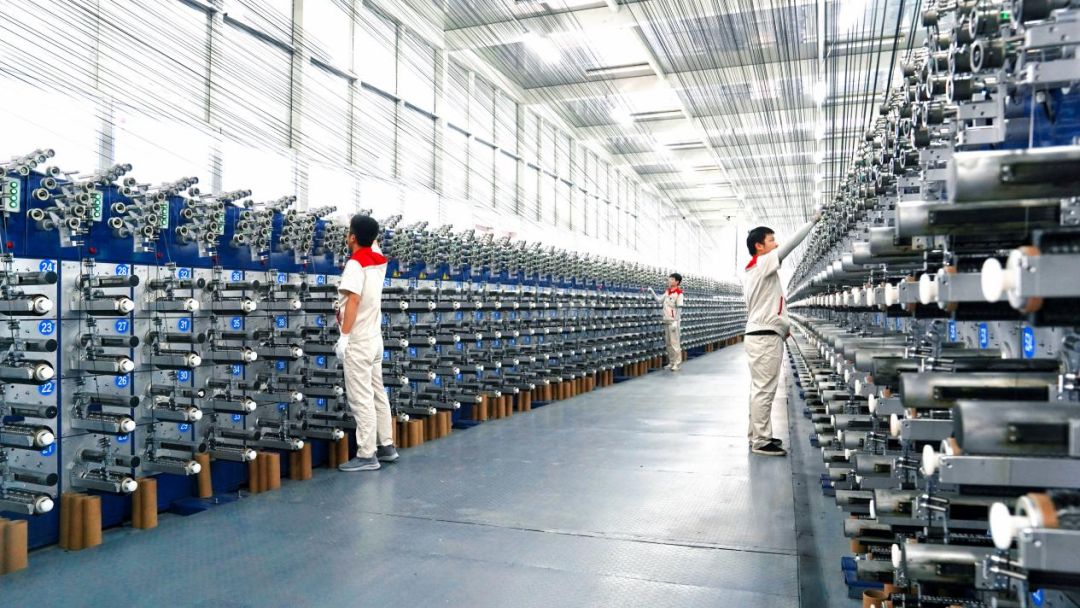
Production scene at the Lianyungang base of Zhongfu Shenying, as shown in the image. Photo provided by China National Building Material Group.
3. Tight Balance in High-End Supply and Deepening Domestic Substitution
As capacity expansion and demand release advance in tandem, pricing signals are equally worth watching. Driven by shifts in the global supply-demand landscape and rising energy, logistics, and labor costs resulting from a weaker yen, leading overseas producers have begun raising prices across the entire industrial chain. According to research by CITIC Securities, overseas manufacturers such as Toray, Mitsubishi Rayon, and Formosa Plastics have successively increased product prices. Among them, Toray of Japan will raise the prices of carbon fiber and intermediate products starting in January 2026, with increases ranging from 10% to 20%. The domestic market has followed suit, with price hikes mainly concentrated in 3K and T700/T800-grade small-tow high-performance carbon fiber.
CITIC Securities believes that the current high-performance carbon fiber market is in a state of tight supply and demand. Against the backdrop of rising cost pressures overseas, some supply from abroad is expected to gradually be taken over by domestic companies, further expanding the demand space for leading domestic manufacturers. Driven by three factors: rising product prices due to cost increases, tight balance in high-end supply, and advancements in domestic technology, the carbon fiber industry is expected to usher in systematic investment opportunities.
Guoyuan Securities likewise believes that the carbon fiber sector is in a strategic window of opportunity marked by the triple convergence of “technological breakthroughs, surging demand, and domestic substitution.” The continued advancement of localization has not only broken foreign technological monopolies in high-end fields, but also enhanced China’s ability to ensure the independent and controllable supply of high-end materials. Shen Jianrong, vice governor of Jiangsu Province, also stated clearly at the commissioning ceremony that Jiangsu will establish a provincial-level carbon fiber industry application alliance, set up a research center for lightweight carbon fiber applications, continue to support breakthroughs in key core technologies and industrialization demonstration projects, and create benchmark achievements in areas such as automotive lightweighting, industrial robots, aerospace, and wind power.
According to 2025 data, China’s carbon fiber localization rate has risen from less than 15% a decade ago to around 86%. In 2025, Zhongfu Shenying achieved carbon fiber sales of 25,100 tons for the full year, up 54.52% year on year; revenue reached RMB 2.194 billion, up 40.87%; and net profit attributable to shareholders increased by 177.33%. Jilin Chemical Fiber expanded its production capacity to 70,000 tons in 2025, making its output and sales the highest in the world. These figures show that leading domestic carbon fiber companies are no longer merely “followers,” but are beginning to occupy an important position in the global landscape of production capacity and technological innovation.
IV. Closing Remarks
The simultaneous launch of three top global production lines by Zhongfu Shenying not only fills the gap in domestic high-end carbon fiber production capacity but also promotes the industry to break away from homogeneous scale competition, transforming towards high-end and technology-driven directions. With the advancement of the C929 project, the implementation of low-altitude economy policies, and the transfer of overseas supply to the domestic market, China's carbon fiber industry is moving from the "domestic substitution" 1.0 stage to a new 2.0 cycle of "global competition and cooperation."
Editor: Lily
【Copyright and Disclaimer】This article is the property of PlastMatch. For business cooperation, media interviews, article reprints, or suggestions, please call the PlastMatch customer service hotline at +86-18030158354 or via email at service@zhuansushijie.com. The information and data provided by PlastMatch are for reference only and do not constitute direct advice for client decision-making. Any decisions made by clients based on such information and data, and all resulting direct or indirect losses and legal consequences, shall be borne by the clients themselves and are unrelated to PlastMatch. Unauthorized reprinting is strictly prohibited.
Most Popular
-

Evonik Parts Ways With The Polyester Business! A Strategic Retreat By A Germany Chemical Giant And The Global Industry Shift
-
Research progress on surface modification of white carbon black and its applications
-
Major Shake-Up! Latest China Auto Export Rankings Released
-

Breaking news! ekon silicone officially renamed bluestar silicone starting today, global silicone landscape may be reshaped
-

List Released! Mexico Announces 50% Tariff On 1,371 China Product Categories


