Breaking news! ekon silicone officially renamed bluestar silicone starting today, global silicone landscape may be reshaped
On June 23, 2026, Elkem Silicones officially announced its renaming to “Bluestar Silicones.” This name is not unfamiliar to the industry — from 2007 to 2017, it was the former name of this global silicone giant.
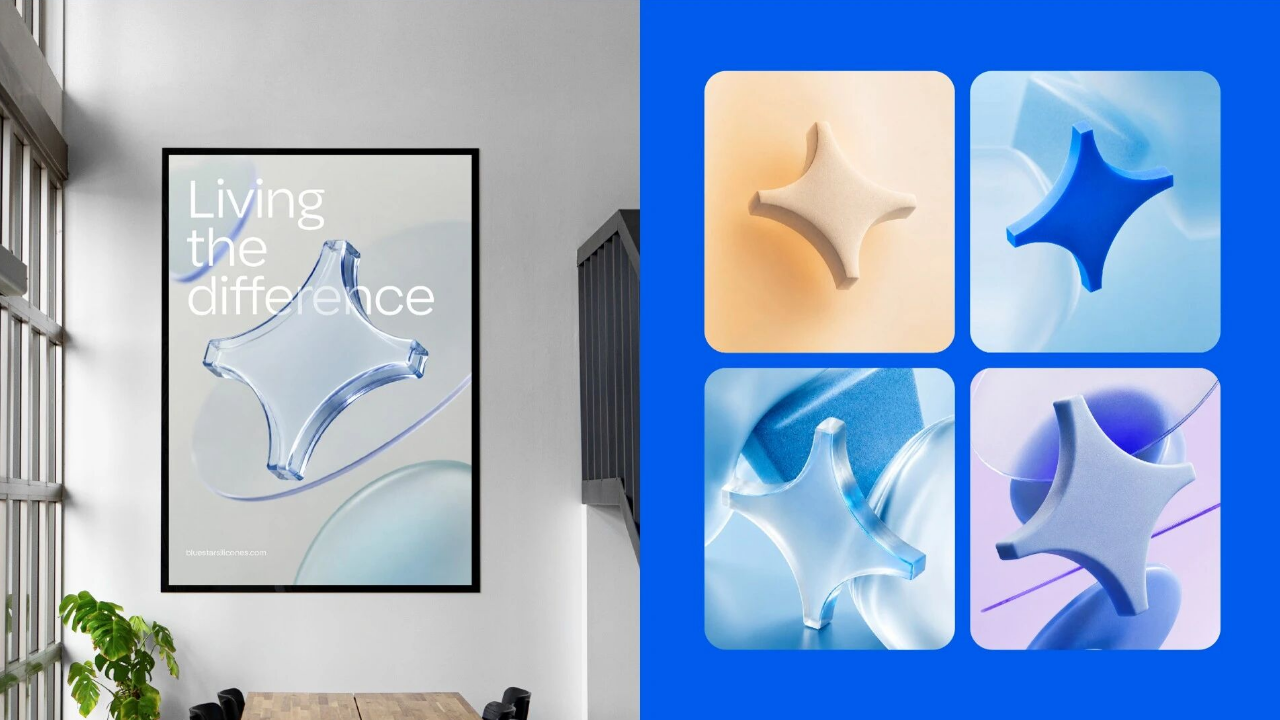
This renaming marks a key milestone following China Bluestar’s completion on April 30, 2026, of the acquisition of the core assets of Elkem’s silicones business. At this moment, the story of a silicon industry giant spanning Europe and Asia and unfolding over fifteen years turns to a brand-new chapter.
I. Event Review: A Landmark “Asset-for-Stock” Transaction
Let's first clarify the ins and outs of this transaction.
On February 13, 2026, China National Bluestar (Group) Co., Ltd. announced that it had signed an agreement with Elkem ASA, a publicly listed Norwegian company, to acquire the core assets of its silicone business. The consideration for the transaction was rather unusual—it was settled by way of redeeming all of Bluestar’s shares in Elkem ASA, totaling 338,338,536 shares and representing an approximately 52.9% stake.
On March 9, 2026, Aiken Company's extraordinary shareholders' meeting approved the agreement. On April 30, the transaction was formally completed.Upon completion of the closing, Bluestar will no longer hold any shares in Elkem, but will directly obtain control of the core assets of Elkem’s silicones business. Elkem, in turn, will completely exit the silicones segment and transform into a specialized manufacturer focused on metals and materials.
The seeds of this transaction were sown fifteen years ago. In April 2011, Bluestar completed the acquisition of Norway's Elkem in full. Since then, Bluestar has gradually injected its previously acquired assets, including the French Rhodia silicon business, China’s Xinghuo silicon, and Lanzhou silicon materials, into the Elkem system. In 2015, Elkem acquired Bluestar Silicon Company; in 2017, it was restructured and renamed "Elkem Silicon." In March 2018, the integrated Elkem was relisted on the Oslo Stock Exchange. Fifteen years later, China Bluestar completed the acquisition of the core assets of Elkem's silicon business.
II. Underlying Considerations: A Strategic Pivot to Meet Each Side’s Needs
Eken’s Dilemma: Why Sell a Profitable Business?
Ironically, the silicone business unit slated for sale delivered quite impressive performance in 2025. In the face of market pressure, the division significantly improved its profitability through cost control and sales volume growth.EBITDA surged year-on-year in the first three quarters.380%However, profits from Elkem’s traditional core businesses, such as its silicon products, declined.
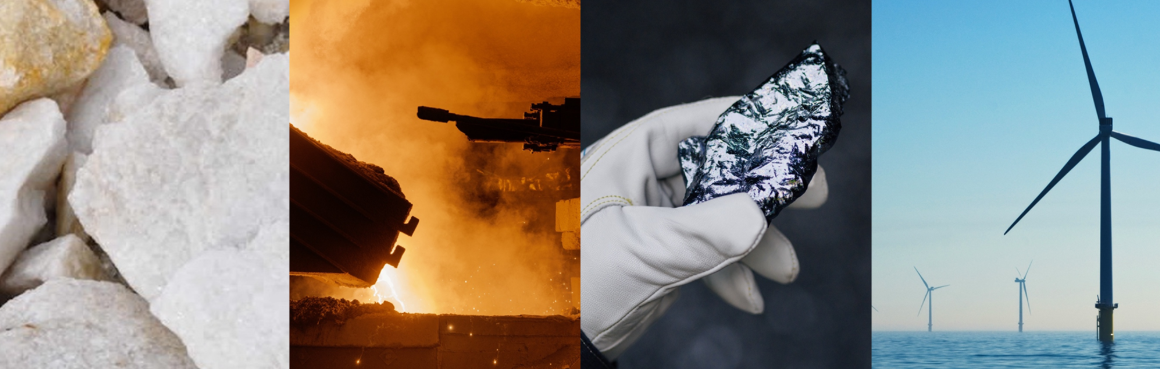
Image source: Elkem official website
Why sell profitable businesses? Elkem CEO Helge Aasen explained: “Since its founding more than 120 years ago, Elkem has continuously optimized its product portfolio to adapt to changing market dynamics and seize emerging growth opportunities. By divesting the majority of our silicones business, we are simplifying our operations, sharpening our strategic focus, and allocating capital to areas where we see strong long-term growth opportunities.”
The core logic lies in strategic alignment.Elkem’s core strengths lie in upstream raw materials and energy-intensive processes, while silicones are more oriented toward specialty chemicals and downstream application innovation, with a competitive logic that differs from Elkem’s traditional advantages. Divesting the silicones business will allow Elkem to streamline its operations and focus on the silicon-based and carbon-based materials businesses where it has greater expertise. Following the completion of the transaction, Elkem will concentrate on three business segments: silicon products, foundry alloys, and carbon solutions. This is a clear-headed choice made by a century-old company in response to industry transformation.
Blue Star’s Strategy: Regain Control of the Core and Develop the Silicone Value Chain
For Bluestar, this acquisition represents a "return" and "strengthening." In its announcement, Bluestar emphasized its deep understanding of the silicone business of Elkem and its long-term commitment to developing the silicone value chain. Against the backdrop of global supply chain restructuring and the rising demand for self-sufficiency in key materials, bringing this core chemical new material back under full control aligns with its long-term strategy as the flagship of chemical new materials under Sinochem.

The synergistic effect is manifested at three levels:
Vertical integration.The acquired assets can be coordinated with upstream entities such as silicon metal, which remain outside the transaction scope and are still retained by Elkem, enhancing the stability and cost advantages of the entire industrial chain. Silicon metal is a core raw material for silicones, and control over the upstream segment means greater control over costs.
Integration of technological research and development.Bluestar’s nearly 3,000 R&D personnel worldwide and more than 2,250 patents can be deeply integrated with Elkem Silicones’ existing 13 global R&D centers. Bluestar Silicones itself has more than 80 years of experience in silicone chemistry and application development expertise, with 11 production sites across four continents and approximately 3,500 employees worldwide, including around 400 R&D scientists. This is a team with profound technological expertise.
Brand and market integration.Restoring the brand name “Bluestar Silicones,” which was used between 2007 and 2017, reconnects the company with a brand of global recognition and industry-leading status. The new visual identity and the brand slogan “Living the difference” (“Difference Makes the Future”) express a renewed ambition for the future.
Chen Yan, head of Bluestar Silicones, said: “Returning to the Bluestar Silicones name reconnects us with an established brand and a recognized heritage, while expressing our renewed ambitions for the future. For our company, employees, customers and partners, this is both a continuation and a step forward.”
III. Industry Impact: A Pivotal Moment in the Reshaping of the Global Silicone Landscape
The timing of this transaction is intriguing.
From a global market perspective, the organosilicon industry is on a path of steady growth.FortuneBusinessInsights Data show that the global silicone market size was USD 21.6 billion in 2025 and is projected to reach USD 22.9 billion in 2026, with further growth to USD 34.7 billion by 2034, at a compound annual growth rate (CAGR) of 5.3% during the forecast period. The Asia-Pacific region dominated the silicone market, accounting for a 46.06% market share in 2025.
From the perspective of the domestic market, the industry is shifting from cutthroat competition toward orderly development. As of the end of April 2026, China’s silicone intermediate production capacity had reached 3.44 million tons per year. In 2026, there was almost no new domestic silicone capacity, with only a small number of planned projects expected to come on stream in 2027. Coupled with proactive production cuts by leading companies and low inventory levels, the domestic silicone market is gradually transitioning from past oversupply to a tight balance between supply and demand. Industry concentration continues to increase, with the CR5 rising from 59.0% in 2017 to 63.2%.
At this point in time, Bluestar completed its acquisition of Elkem Silicones through a zero-cash “share-for-assets” transaction, marking a remarkably precise strategic positioning move.The tightening of supply in the industry and stable demand create a golden opportunity for integrating high-quality assets.
The reappearance of Blue Star Silicon signifies an important reshuffling of the global silicone competition landscape.
First, the influence of Chinese enterprises in the global silicone industry chain has been further strengthened.With 11 production sites spanning four continents, more than 80 years of technological expertise, and solution capabilities serving a wide range of industries—including mobility, safety, electronics, energy, aerospace, healthcare, personal care, construction, textiles, and release coatings—Bluestar Silicones is one of the few companies in the world with fully integrated capabilities across the entire value chain, from metallic silicon and silicone monomers to downstream specialty products.
Second, industry consolidation may accelerate.Against the backdrop of steady growth in the global silicone market and increasingly fierce competition, Bluestar has further expanded its production capacity footprint, technological reserves, and cost competitiveness through this integration. The company has made it clear that it will increase R&D investment in green processes, high-end applications, and the circular economy. This will create more direct competitive pressure on traditional silicone giants such as Dow, Wacker, and Shin-Etsu Chemical.
Third, the synergies between upstream and downstream players are worth looking forward to.BlueStar can still maintain a stable supply of upstream raw materials through supply chain cooperation with Elkem’s retained silicon metal business. This arrangement of “divesting equity but not divesting synergies” may become a new model for large-scale asset restructuring in the chemical industry in the future.
Written at the end.
For China's organosilicon industry, this transaction by BlueStar offers several thought-provoking insights.
The ability to operate globally is crucial.BlueStar's ability to complete this complex cross-border asset restructuring relies on its years of experience in operating multinational industrial platforms. From the acquisition of France's Rhodia Silicones in 2007, to the acquisition of Aiken in 2011, and now this strategic restructuring in 2026, BlueStar has followed a path of "serving the global market with global resources."
Second, strategic focus is more important than scale expansion.Aiken chose to sell its high-performing silicone business to focus on its main operations, while Bluestar opted to take over the silicone business to strengthen its core sector—though the choices of the two companies are completely opposite, the underlying logic is consistent.Clearly define who you are, what you are good at, and where you are going.This serves as a wake-up call for the prevalent tendency of "pursuing large scale and comprehensiveness" in China's current chemical industry.
Third, the value of the brand should not be overlooked.BlueStar chose to restore its former name, “BlueStar Organosilicon,” rather than start from scratch. This decision itself shows that in a globalized industrial landscape, a brand that has accumulated more than ten years of market recognition is one of the most valuable intangible assets.
Editor: Lily
【Copyright and Disclaimer】This article is the property of PlastMatch. For business cooperation, media interviews, article reprints, or suggestions, please call the PlastMatch customer service hotline at +86-18030158354 or via email at service@zhuansushijie.com. The information and data provided by PlastMatch are for reference only and do not constitute direct advice for client decision-making. Any decisions made by clients based on such information and data, and all resulting direct or indirect losses and legal consequences, shall be borne by the clients themselves and are unrelated to PlastMatch. Unauthorized reprinting is strictly prohibited.
Most Popular
-

Evonik Parts Ways With The Polyester Business! A Strategic Retreat By A Germany Chemical Giant And The Global Industry Shift
-
Research progress on surface modification of white carbon black and its applications
-

A Look at the Material Suppliers Behind SpaceX
-
Nike mind: Neuroscience and Foam Material Innovation Merge to Lead Low-Carbon Upgrading Technology in the Footwear Industry
-

Breaking news! ekon silicone officially renamed bluestar silicone starting today, global silicone landscape may be reshaped