



The Temptation of the Trillion-Dollar Market Behind NIO's Battery Swapping: A Good Business Naturally Attracts "Passengers"
Many people became aware of battery swapping because of NIO.
Over the course of eleven years, NIO has invested approximately 18 billion yuan in charging and swapping infrastructure, making it the most diligent company in the industry in terms of building charging and swapping networks. There are 8,466 charging and swapping stations across the country, with the highway swapping network connecting over 550 cities, and an average of less than 180 kilometers between each NIO swapping station on highways. Even in remote but desirable destinations, NIO remains committed to building charging and swapping facilities, and opens them to the entire industry—allowing electric vehicles to reach all the places that fuel vehicles can.
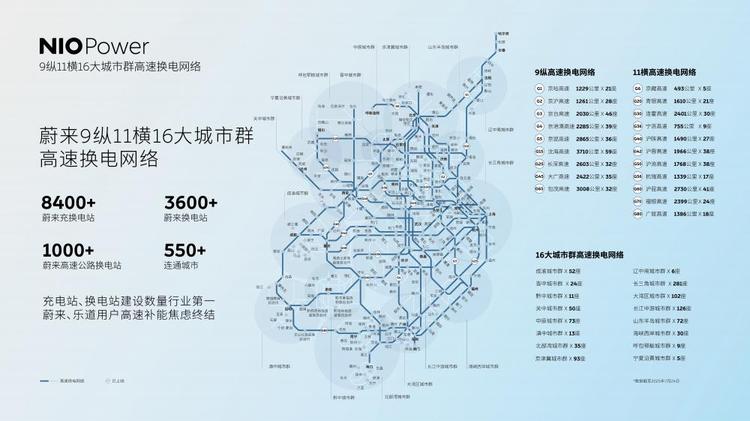
At first, the efforts were not recognized or understood, and NIO's battery swapping was often seen as a "heavy asset burden." However, as the penetration rate of new energy vehicles increased and the battery swapping service entered the scale-up stage, NIO's over seven years of planning began to be understood and recognized, and pursued by assets.
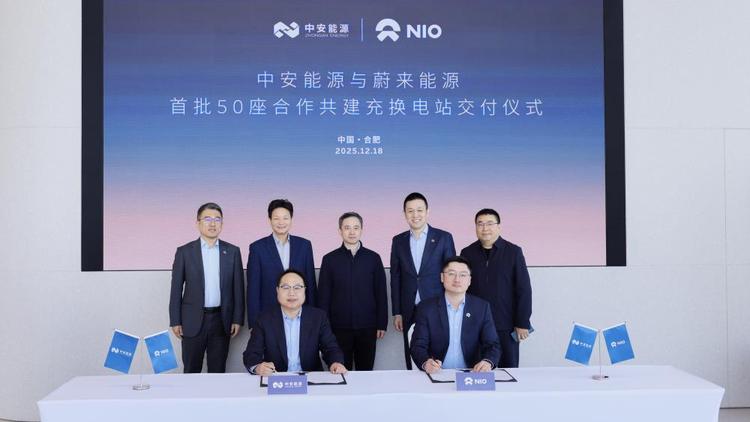
On December 18, 2025, Zhong'an Energy and NIO Energy announced that the first batch of 50 charging and swapping stations co-built by both parties had been officially delivered and put into operation. At the delivery ceremony, William Li, the founder, chairman, and CEO of NIO, stated that local urban investment and transportation investment companies are increasing their cooperation with NIO in the layout and operation of the charging and swapping network. "In August 2024, NIO Energy launched the 'Power Partner' program. As of now, it has co-built nearly 200 charging and swapping stations with 35 partners, including urban investment and transportation investment companies, across 25 provinces, cities, and regions."
Earlier, NIO had already established deep cooperation with energy and power companies such as Sinopec, China National Petroleum, CNOOC, Shell, State Grid, and Southern Power Grid, as well as industry partners like CATL. After seven years of persistence, NIO's battery swapping model has undergone a journey from skepticism to recognition, evolving from a "strategic choice" for NIO to a "scarce infrastructure" in the eyes of the entire new energy and automotive industry.
Nearly a hundred million battery swaps validated: "Network effects" begin to materialize.
A 3-minute "full charge departure" and convenience comparable to refueling: the battery swapping experience has become the mainstream energy replenishment solution for NIO and Le Tao. Currently, NIO has provided nearly 95 million battery swap services for users, with around 100,000 users voting with their actions every day. Once this scale crosses a critical point, the cost is spread, efficiency continues to improve, and the experience forms a virtuous cycle of reputation—battery swapping is no longer a "concept" that needs explanation, but an efficient solution validated by real scenarios.
This growth trajectory is in line with the classic infrastructure stories in business history: Just as JD Logistics and Amazon AWS have transformed from "cost centers" supporting business into independent "profit engines," and as China's high-speed rail has reshaped economic geography through connectivity, NIO's battery swapping is steadily crossing cycles with firm early-stage investments. The core logic is that when the network density reaches a critical point, it will upgrade from a recharging service to an energy operation platform with strong network effects and ecological value. NIO attracts diverse capital to accelerate the arrival of this tipping point through its "open co-construction" model.
Good business naturally attracts people to line up to join.
A good business naturally attracts people to join, especially as the penetration rate of new energy vehicles in China has rapidly increased from 50% to 60%. In October this year, the National Development and Reform Commission and other departments issued the "Three-Year Doubling Action Plan for Electric Vehicle Charging Infrastructure Service Capacity," vigorously promoting the growth of charging networks and service capabilities. As electric vehicles become mainstream, a trillion-yuan market is emerging.
According to calculations by China Automotive Technology & Research Center, the sales of new energy vehicles in China will exceed 16 million by 2025, and the charging market will expand accordingly, with the scale of the charging pile industry surpassing 100 billion yuan in the same year. Under the Ministry of Industry and Information Technology's goal of achieving a 1:1 ratio of vehicles to charging piles by 2030, experts predict that the cumulative sales of new energy vehicles in China will reach 64.2 million by 2030. Driven by multiple factors including policies, technology, and capital, the charging and swapping market is expected to accelerate towards a scale of one trillion yuan.
NIO, through seven years of perseverance and open collaboration, has not only built a differentiated moat in battery swapping but also paved the way for the energy network upgrade of the entire industry. Charging and battery swapping stations are not just energy infrastructure; they are also an entry point to a trillion-level market.
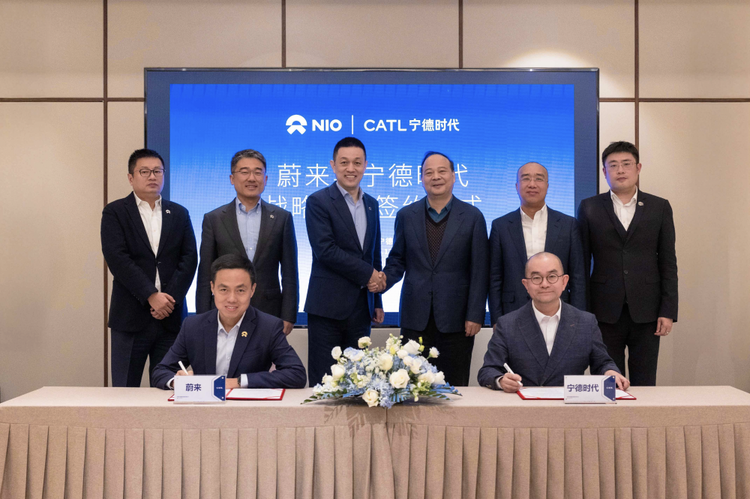
For this reason, when NIO officially launched the "Power Partner Program" in August 2024, opening up the co-construction of charging and battery swap stations to the whole society, a number of state-owned enterprises and energy giants, including China Energy Construction Group, Guangdong Power Grid Electric Vehicle Service Company, and Xi'an Urban Investment New Energy, were the first to sign agreements. Subsequently, Suzhou Energy Group, Wuhan Shouyi Science and Technology Investment, among others, joined in. As of now, NIO Energy has co-built nearly 200 charging and battery swap stations with 35 partners, including urban investment and transportation investment from 25 provinces, cities, and regions, with more partners and charging stations in the pipeline.
Why choose NIO? The answer is clear: mature self-developed technology, a network layout that has formed a system, and operational experience validated by nearly a hundred million instances. It's no longer about singular technology or experience, but about a nationwide, efficiently operating, continuously evolving energy network—which is one of the most scarce assets in the smart electric era. For partners, instead of exploring from scratch, it's better to join hands with an established network builder—lower risk, quicker start, and earlier scale effects.
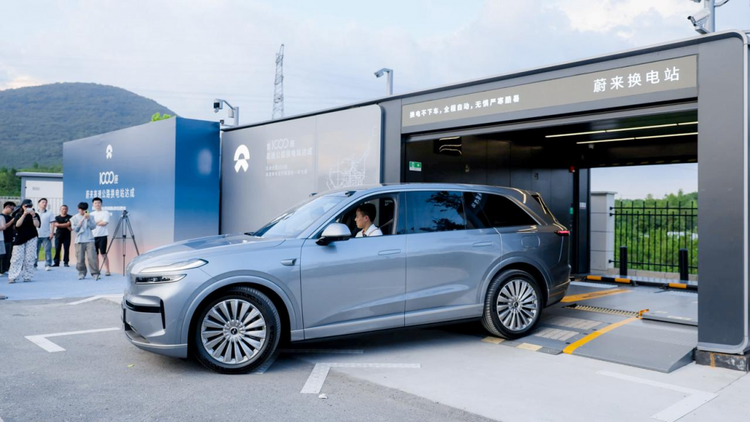
After scaling, the value has just begun. The battery swapping market in 2025 is no longer the scene of NIO exploring the path alone seven years ago. With the network taking shape, state-owned enterprises entering the market, and giants joining forces, this road, once dubbed a "foolish business," is now favored by smart money. As a "infrastructure business," battery swapping has entered the period of value realization.
The story of battery swapping is just beginning in the second half.
【Copyright and Disclaimer】The above information is collected and organized by PlastMatch. The copyright belongs to the original author. This article is reprinted for the purpose of providing more information, and it does not imply that PlastMatch endorses the views expressed in the article or guarantees its accuracy. If there are any errors in the source attribution or if your legitimate rights have been infringed, please contact us, and we will promptly correct or remove the content. If other media, websites, or individuals use the aforementioned content, they must clearly indicate the original source and origin of the work and assume legal responsibility on their own.
Most Popular
-

List Released! Mexico Announces 50% Tariff On 1,371 China Product Categories
-

EU Changes ELV Regulation Again: Recycled Plastic Content Dispute and Exclusion of Bio-Based Plastics
-

Clariant Unveils Cost-Cutting Plan Details, Plans to Shut Down Multiple Plants
-

Mexico officially imposes tariffs on 1,400 chinese products, with rates up to 50%
-
Nissan Cuts Production of New Leaf EV in Half Due to Battery Shortage

