



Surface Modification Of Talc Powder: Its Application Characteristics In Plastics And Coatings
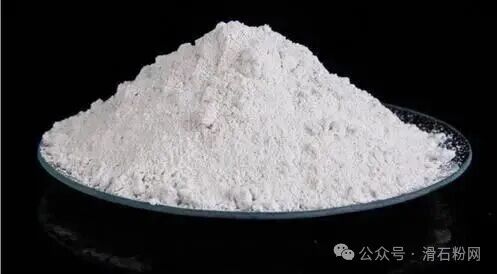
Talc is a hydrated silicate with the chemical formula 3MgO·4SiO2·H2O. Its crystalline forms can be flaky, leaf-like, needle-like, and massive.
The structure of pure talc consists of a layer of brucite (magnesium hydroxide, MgO·H2O) sandwiched between two layers of silicon dioxide. These layers are stacked together, with adjacent talc layers held by weak van der Waals forces. When subjected to shear, interlayer sliding occurs easily.
Talc is inert to most chemical reagents and does not decompose upon contact with acids. It is a poor conductor of electricity, has low thermal conductivity, and exhibits high resistance to thermal shock. Even when heated to a high temperature of 900°C, it still does not decompose.
These excellent properties make talc a very good filler, widely used in the plastics and coatings fields. However, the hydrophilic surface of talc powder limits its application in some hydrophobic fields. To further improve its performance and broaden its applications, surface modification is necessary.
1. Surface Modification Methods and Common Modifiers for Talc Powder
(1) Common surface modification agents for talc powder
To improve the bonding of talc with polymers, the modifiers currently used for talc modification are mainly of two types:
Coupling agents mainly include titanate-based, aluminate-based, silane-based, and stearate-based types. Among them, titanate-based coupling agents are used more widely. Their molecular structure is R′-O-Ti-(O-X-R-Y)n, where R′O- can interact with the chemical structure of the filler surface; R is a long-chain entangling group with aliphatic or aromatic structures, which can improve the compatibility between the polymer and the filler; and Y is an active reactive group that can participate in crosslinking or bonding in polymer-filled systems. In short, one functional group of the coupling agent reacts with the surface of talc powder to bond by chemical force, while the other group participates in the polymerization reaction of the polymer and bonds to the polymer by chemical force. In this way, the coupling agent acts like a bridge linking the two together.
Surfactants: these mainly include sodium dodecylbenzene sulfonate, sodium dodecyl sulfate, dodecyl trimethyl ammonium bromide, dodecyl trimethyl ammonium chloride, and sodium alkenyl sulfonate, etc. Their role in improving compatibility between the polymer and the filler is the same as that of coupling agents, but the mechanism by which they bind to the filler surface is different from that of coupling agents. As is well known, the surfaces of inorganic particles carry charges, and according to the charging characteristics of the particles, the surface charge of inorganic particles also varies with the pH of the solution. When the pH of the solution is greater than the Zeta isoelectric point of the inorganic particles, the particle surface is negatively charged, and the particles can adsorb cationic surfactants. Similarly, when the pH is lower than the Zeta isoelectric point, anionic surfactants can be adsorbed. The action of surfactants on ion surfaces is accomplished through ion exchange, the formation of ion pairs, and the formation of hydrophobic bonds. However, the adsorption of surfactants on polymers is not very good; generally, monomers are first adsorbed and then polymerized to form microcapsule coatings.
(2) Surface modification methods of talcum powder
Modification methods at home and abroad can be roughly divided into six types:
Surface coating modification: applying surfactants onto the particle surface to impart new properties to the particles; this is currently a relatively common method.
**Mechanochemical method:** A modification method that enhances particle surface activity by using crushing, friction, and other mechanical means. In this method, relatively large particles are made smaller through crushing, friction, and similar processes. During this process, the surface activity of the particles increases, that is, their surface adsorption capacity is enhanced, making them more capable of adsorbing other substances. This simplifies the process and reduces cost, while also making product quality easier to control. For example, in Japan, some talc powders are first reduced in particle size to enhance their surface activity, and then mixed with PP modified by acrylic acid or with blends of PP and PE. The resulting reinforced materials are generally used in industrial components such as automobile bumpers, parts around engines, air-conditioning components, and instrument panels, and the talc powder is generally not surface-treated. In China, some talc powder with a particle size of 16.5 μm has been pulverized in an attrition mill and then coated with a silane coupling agent to achieve modification.
Outer-layer modification: a method in which a layer of polymer is uniformly coated onto the particle surface, thereby changing the surface properties of the particles. For talc, this can be achieved by first pulverizing and activating it, then adsorbing a surfactant onto the surface under certain conditions, followed by adsorption of monomers through the surfactant, and finally carrying out polymerization of the monomers to achieve the effect of surface coating.
Localized activity modification: Different functional groups are grafted onto the particle surface through chemical reactions to achieve surface modification.
High-energy surface modification: This method uses the enormous energy generated by high-energy discharge, ultraviolet light, plasma radiation, and similar sources to modify the particle surface, activating it and improving the compatibility between the particles and polymers.
Precipitation reaction modification: This method utilizes the precipitation effect to coat the particle surface, thereby achieving the modification effect.
2. Applications of talc in the plastics industry
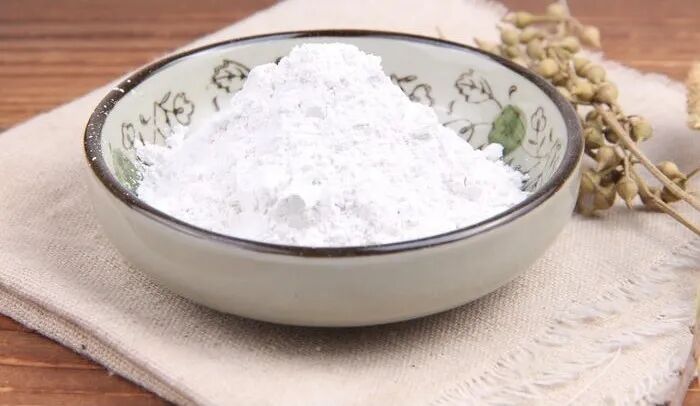
Talc-filled plastics can improve the rigidity, dimensional stability, and lubricity of products, help prevent creep at high temperatures, reduce wear on processing machinery, and enable polymers to achieve greater hardness and creep resistance through filling while maintaining essentially unchanged impact strength. If properly treated, talc can also enhance the thermal shock resistance of polymers and improve the molding shrinkage, flexural modulus, and tensile yield strength of plastic products. Talc is inexpensive, making it suitable for use as an extender (lowering compound cost while causing only minimal reduction in the physical properties of the resin). At the same time, its plate-like structure and high aspect ratio also make it suitable for use as a reinforcing agent, improving the mechanical properties of the compound.
Application in PP materials: This is currently the most extensively studied and widely applied area. It is now widely used in automotive components, such as bumpers, parts around the engine, air-conditioning components, dashboards, lights, chassis, pedals, and other parts.
In addition, it is also used to improve various mechanical properties of PP materials and endow the material with new properties. For example, filling PP with 32% talcum powder can improve the mechanical strength of PP and is used to produce washing machine parts and building drainage pipe fittings. It features a high surface finish, good toughness, a high heat distortion temperature, and good dimensional stability, and has been widely applied.
Applications in automobiles: PP materials are widely available, low in density, and their physicochemical properties can be improved through modification. They can reduce costs, decrease weight, and lower fuel consumption without compromising mechanical performance. For example, automotive cooling fans injection-molded from talc-filled PP are not only lightweight and low in noise, but also improve cooling efficiency.
For fillers, talc is the best choice because its microscopic structure is plate-like. Owing to this special structure, compared with granular fillers, talc provides a distinct reinforcing effect. In particular, when added to PP, its nucleating effect significantly improves tensile yield strength and stiffness, giving talc-filled polypropylene (PP) a series of excellent mechanical properties, enabling it to replace engineering plastics such as ABS, nylon, and modified PPO. Talc-reinforced PP not only achieves a balanced relationship between stiffness and toughness, but also offers high surface hardness, good scratch resistance, and an attractive texture.
For example, in the United States, HPM Company produces honeycomb sound-absorbing ceilings of 168m2 and 5kg, as well as car window lift mechanisms made from PP material filled with 20% talc powder. Mitsubishi in Japan and Audi in Germany use a combination of EPDM and talc powder-filled PP material to manufacture car bumpers, among other products.
In China, the Chengdu Silicone Research Center successfully developed talc-filled PP materials for the drum housings of window regulators and electrical connector housings used in Santana cars. Yanshan Company developed talc-filled PP materials for automotive door inner trim panels, and the Nantong Synthetic Materials Factory under the Ministry of Chemical Industry developed talc-filled PP materials for Shanghai Volkswagen Automotive Co. to replace VW4405PP6, a German modified PP material used for producing air filters. Talc-filled PP is also widely used in other components such as instrument panels, chassis parts, and pedals.
In addition, the use of modified talc powder in SMC materials is also currently under study. If successful, it could significantly reduce the weight of automobiles and lower fuel consumption.
Application in household appliances: In China, PP materials are mainly general-purpose types, while high-strength and impact-resistant high-performance PP materials are relatively rare, representing a significant gap compared with foreign countries. Filling PP materials with talc can significantly improve their impact resistance, heat resistance, and corrosion resistance. They are mainly used in the production of household appliances such as washing machines, among which washing machines account for the largest consumption.
For example, the talc‑filled polypropylene material produced by Jinan Plastic Products Factory using suitable processes and formulations was used in the production of components for the drum washing machines at Jinan Washing Machine Factory, and the resulting products passed inspection and were fully qualified.
Applications in other plastics: because talc-filled plastics can not only improve the rigidity of products, but also enhance dimensional stability and lubricity, while reducing wear on molding machinery and molds, they can also be used in other plastics such as PE, PVC, ABS, and nylon.
For example, filling ABS and nylon with talc can improve the flexural modulus of both materials. Chongqing Synthetic Chemical Plant used talc with a relatively high fiber content to fill PVC and modify it, and then used the modified PVC to produce PVC floor tiles with excellent overall performance.
3. Application of talcum powder in the field of coatings
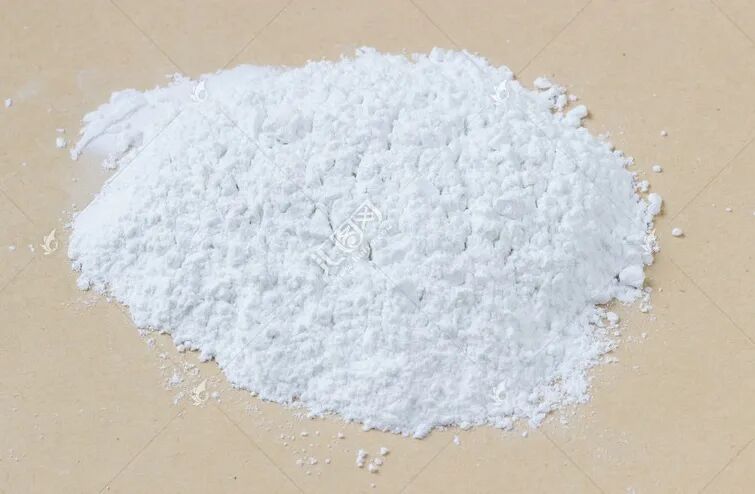
Talc powder has good suspension and dispersibility, as well as low abrasiveness, making it an excellent filler for coatings. The flaky particle structure of talc powder can provide the coating film with high water resistance and prevent the penetration of porcelain paint, primarily used in primers and intermediate coatings. The fibrous particle structure of talc powder, due to its high oil absorption and good rheological properties, improves the storage stability of the coating. It also enhances the rheology and leveling of the coating, while improving the weather resistance of the paint.
Coatings are, in a broad sense, composite materials. They appear in liquid form primarily to facilitate application. After the solvent evaporates, the coating on the wall surface is essentially a composite material. During application, coatings behave as pseudoplastic fluids, that is, a type of non-Newtonian fluid whose viscosity decreases as shear force increases. Therefore, talc that is effectively dispersed and fully wetted by the coating resin can effectively improve the rheological properties of the coating.
According to the rheological model, the coating during the construction process can be viewed as composed of many thin layers with a thickness of dh. Under the action of external forces, sliding occurs between the layers. Given that the interlayer cohesion of talc is greater than the cohesive forces between the coating layers when the talc is effectively wetted and fully dispersed, the yield stress for interlayer sliding increases. In the rheological model, this can be seen as an increase in the thickness of the thin layers, resulting in a decrease in shear rate and an increase in viscosity. When the external force increases, part of its internal structure is damaged, leading to a decrease in viscosity. After the external force is removed, the tendency for the talc layers to recover increases the viscosity of the coating, exhibiting properties similar to thixotropic fluids. With the assistance of other additives, ideal rheological properties can be achieved. During the process from the completion of film application to full drying, the flaky structure of talc can effectively improve the leveling of the coating film.
After the coating film is completely dried, talcum powder, due to its high aspect ratio, can impart the coating film with higher impact resistance and fracture toughness. The role of talcum powder in the dried coating film is similar to its role in polymer composites.
4. Application Prospects of Modified Talcum Powder
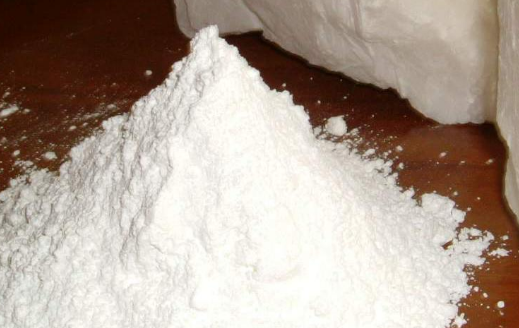
As people gain a deeper understanding of the properties of talcum powder, its applications in industries such as coatings and plastics will continue to expand. Since the production capacity of modified high-grade talcum powder falls far short of domestic and international market demand, the rational modification of talcum powder is receiving increasing attention.
Therefore, while becoming familiar with the various physicochemical properties of talc powder and its application characteristics across different industries, we should continuously summarize experience in experiments and production applications, keep exploring and innovating, and use existing high-tech methods to expand the deep processing of medium- and low-grade products, develop high-value-added products, and jointly create a win-win situation for the talc industry and processing industries such as coatings. With the further development of talc powder modification technology, it is bound to play an increasingly important role in China’s plastics, coatings, and other industries.
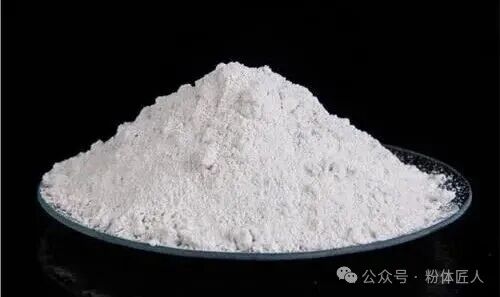
Talc is a layered silicate mineral with a hardness of 1 and a slippery feel. It has a specific gravity of 2.6–2.8 g/cm³ and a melting point of 1550°C. It has excellent heat resistance, lubricity, acid and alkali resistance, insulation properties, and strong adsorption capacity for oils. In foundry production, it is mainly used as an auxiliary material for coatings on sand molds and sand cores of non-ferrous alloy castings or small cast iron castings, as well as a release agent.
Physical and Chemical Indicators (%)

【Copyright and Disclaimer】The above information is collected and organized by PlastMatch. The copyright belongs to the original author. This article is reprinted for the purpose of providing more information, and it does not imply that PlastMatch endorses the views expressed in the article or guarantees its accuracy. If there are any errors in the source attribution or if your legitimate rights have been infringed, please contact us, and we will promptly correct or remove the content. If other media, websites, or individuals use the aforementioned content, they must clearly indicate the original source and origin of the work and assume legal responsibility on their own.
Most Popular
-

A Look at the Material Suppliers Behind SpaceX
-

Evonik Parts Ways With The Polyester Business! A Strategic Retreat By A Germany Chemical Giant And The Global Industry Shift
-

Next-generation motors of new energy vehicles: Single-Round Thousand Horsepower, Replacing Brakes, How Powerful Are They?
-

United States Imposes 208.49% Tariff On Chinese Glass Fiber Products
-

Celanese Joins Forces With Aisan Industry to Reshape the Low-Carbon POM Competitive Landscape, Changing the Automotive Supply Chain


