Supply-Demand Game Intensifies, Futures Remain Weak in Short Term
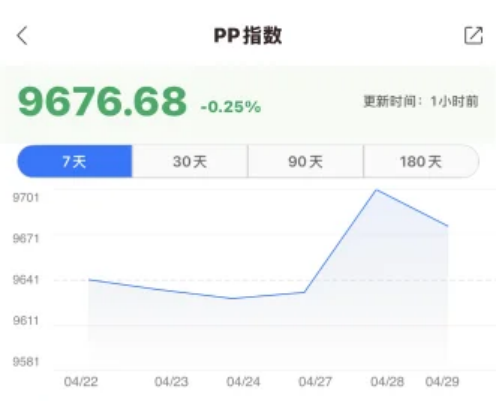
The South China PP Price Index stood at 9676.68 points, down 24.46 points or 0.25% from last week. Among the grades, homopolymer raffia and fiber remained unchanged, while copolymer dropped by 50, thin-wall grade fell by 50, and homopolymer decreased by 70.
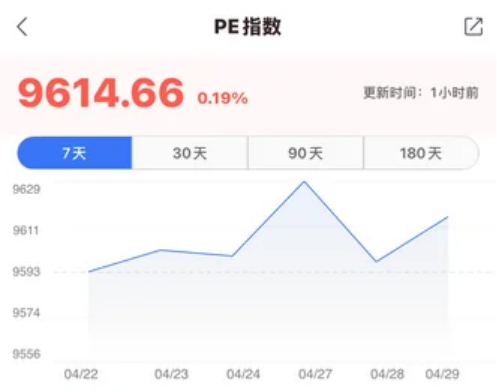
South China PE Price Index 9614.66 points, up 18.16 points from last week, an increase of 0.19%, among which linear increased by 100, low pressure remained flat, and high pressure increased by 50.
This week, the futures market prices for polyolefins showed a fluctuating adjustment trend. At the beginning of the week, due to the tension in the Middle East's geopolitical situation and the shortage of raw materials caused by the obstruction of passage through the Strait of Hormuz, the market experienced a technical rebound. However, as the market gradually digested the geopolitical news, and with the downstream demand entering the traditional off-season in the latter half of April, the spot prices lacked the strength to follow the increase, and polyolefin prices came under pressure and fell back in the latter part of the week.
On the cost side, the Middle East situation remains the largest external disruption this week. As passage through the strait has yet to resume, raw material shortages have directly driven up polyolefin import costs in Asia. Although U.S.-Iran negotiations remain uncertain, the market generally believes that supply restoration will take time; thus, international oil prices remain volatile at high levels, providing strong cost support for polyolefins. However, with increased oil price volatility, polyolefin production gross margins have partially recovered, and the marginal effect of cost support weakened somewhat in the latter part of this week.
In terms of demand and operating rates: downstream PP processors—including woven sack, injection molding, BOPP film, and modified plastics enterprises—saw operating rates decline by 1–3 percentage points week-on-week, with the overall operating rate holding steady at approximately 58%. Orders in the woven sack sector have contracted; several BOPP film producers have partially halted operations due to cost pressures; and daily consumer goods manufacturers—facing weak pricing power—have struggled to pass on rising costs to end-users. For PE, the peak season for agricultural film has ended, and its operating rate has dropped to 45%; demand for packaging film and pipe materials remains stable, yet high raw material prices have dampened processors’ willingness to replenish inventories, resulting in an overall operating rate of 52%, down 2 percentage points week-on-week. Downstream enterprises are primarily focused on inventory consumption and fulfilling immediate requirements, leading to subdued spot trading this week. High-priced cargoes face poor demand, and market participants are generally adopting a wait-and-see stance with limited restocking intentions. The inability to effectively pass on cost pressures to end-users constrains the upside potential for polyolefin prices. Regarding exports, international polyolefin prices remain elevated, causing domestic prices to trade at a discount relative to export parity, thereby reducing export orders. PP and PE export volumes in April declined 15% month-on-month, weakening external demand support.
The polyolefin market prices are expected to show a weak and volatile trend next week. The shortage of raw materials and the high operation of oil prices caused by geopolitical issues will still provide strong cost support for polyolefins. However, the fundamental contradictions are becoming increasingly prominent: although the supply side remains at a low level, demand is entering the seasonal off-season, agricultural film demand is coming to an end, and the downstream sector is clearly resistant to high-priced raw materials. In addition, the inventory of the two major oil companies is 22.73% higher than the same period last year, and destocking is extremely slow. Overall, the tug-of-war between cost support and the situation of high inventory and weak demand will make it difficult for prices to move significantly in either direction. However, in the absence of a sudden escalation of geopolitical events, as the risk premium gradually fades, the market focus is likely to shift slightly downward to digest the pressure of high inventory.
【Copyright and Disclaimer】This article is the property of PlastMatch. For business cooperation, media interviews, article reprints, or suggestions, please call the PlastMatch customer service hotline at +86-18030158354 or via email at service@zhuansushijie.com. The information and data provided by PlastMatch are for reference only and do not constitute direct advice for client decision-making. Any decisions made by clients based on such information and data, and all resulting direct or indirect losses and legal consequences, shall be borne by the clients themselves and are unrelated to PlastMatch. Unauthorized reprinting is strictly prohibited.
Most Popular
-
Continental Plans to Begin Sale of ContiTech in Early 2026
-

$4 Billion! Medtronic Makes Another Acquisition
-
Profit and Revenue Growth Struggle to Conceal Debt Repayment Pressure; Success of Kingfa Sci & Tech's High-End Strategy Yet to Be Seen
-

BASF Delivers First Batch of Innovative Cathode Materials for Semi-Solid-State Batteries to Weilan New Energy
-

Why did a century-old european dental instrument giant relocate its manufacturing hub to china?