



Sumitomo Chemical Develops Bio-Based LCP With Quantifiable Biomass Content
Sumitomo Chemical has achieved production scale for liquid crystal polymer (LCP) containing monomers derived partially from biomass, known as bio-based LCP. As a global supplier in the LCP market, the company is leveraging biomanufacturing technologies to prepare a large-scale production system for this bio-based LCP and plans to begin providing customers with samples produced at this commercial scale.
Excellent heat resistance, flame retardancy, and flowability
According to Sumitomo Chemical, LCP is a super engineering plastic with excellent heat resistance and flame retardancy. Its outstanding flowability makes it particularly suitable for many applications, including electronic devices such as smartphones, automotive components, and office automation equipment.
Most raw materials traditionally used in the production of LCP are derived from fossil resources. The company reports that there is growing demand to shift toward biomass-based raw materials and reduce carbon footprints as part of its commitment to achieving a sustainable society. Here, “carbon footprint” refers to the total greenhouse gas emissions released across every stage of a product’s life cycle—from raw material procurement through manufacturing, use, and disposal—expressed in terms of carbon dioxide equivalents.
Quality is equivalent to fossil-based LCP.
Sumitomo Chemical has been developing bio-based LCPs to meet growing customer demand. In June 2025, the company established technology for large-scale production of these materials and has since been working on scaling up operations. Through manufacturing at production scale, they have now confirmed that they can produce LCPs containing partially biomass-derived monomers with quality equivalent to that of LCPs made from traditional fossil-based raw materials.
This equivalence stems from Sumitomo Chemical’s internal evaluation conducted in accordance with ASTM international standards. The assessment focused on the material’s heat resistance, flowability, and mechanical properties, which the company considers to be the key characteristics underlying the advantages of LCP.
Bio-based LCP is made from a primary raw material, namely biomass-derived monomers produced from 100% biomass feedstocks. This bio-based grade is equivalent to Sumitomo Chemical’s existing compound grade SUMIKASUPER E6008 and contains approximately 30% biomass-derived content by weight of raw materials.
Sumitomo Chemical’s manufacturing process for this bio-based LCP employs a segregation method. Biomass and non-biomass raw materials are kept completely separate during production, thereby enabling precise quantification of the biomass content in the final product.
Another approach is mass balance. In this method, biomass and non-biomass feedstocks are mixed together, and the characteristics of the biomass feedstock are allocated to a portion of the product output in proportion to the amount of biomass feedstock used. Sumitomo Chemical has stated that it will evaluate the features of each method and adopt the one that best meets customer needs.
Sumitomo Chemical's Biomanufacturing Strategy
As part of its long-term vision, Sumitomo Chemical describes itself as a company that solves social issues through innovative technologies. In biomanufacturing, it combines chemistry and biotechnology across four biotechnology fields, which are categorized by color:
Green Biosolutions (Food and Agriculture): The company is committed to building a regenerative society through chemical crop protection products and biorational products. Biorationals include microbial crop protection products derived from natural sources, plant growth regulators, rhizosphere microbial products, and solutions that leverage these products to protect crops from pests and diseases or to enhance crop quality and yield.
Red Biotechnology (Medical): It contributes to human health through drug development, CDMO services based on cell culture technologies, and regenerative medicine and cell therapies. A CDMO (Contract Development and Manufacturing Organization) is a company that conducts process development and manufacturing for its clients.
White biotechnology (industry and energy) and gray biotechnology (environment) promote sustainable manufacturing by utilizing biomass-derived feedstocks through organic synthesis and omics technologies. Omics technologies provide comprehensive analysis of biomolecules such as genes, proteins, and metabolites.
Sumitomo Chemical has stated that it will continue to create value through chemical and biotechnologies, while helping to address societal challenges by providing innovative solutions.
【Copyright and Disclaimer】The above information is collected and organized by PlastMatch. The copyright belongs to the original author. This article is reprinted for the purpose of providing more information, and it does not imply that PlastMatch endorses the views expressed in the article or guarantees its accuracy. If there are any errors in the source attribution or if your legitimate rights have been infringed, please contact us, and we will promptly correct or remove the content. If other media, websites, or individuals use the aforementioned content, they must clearly indicate the original source and origin of the work and assume legal responsibility on their own.
Most Popular
-

Mexico Imposes Tariff Up to 36% on Cross-Border E-Commerce Products, Effective January 1, 2026; Plastic Shows Partial Fluctuation Today
-
4.5 Million Tons! Wanhua Chemical Dominates Globally in MDI, Heavy Investment in Battery Materials Spurs New Storm
-

Trump Delays Tariff Increase on Furniture, Cabinets, and Vanities
-
Back-to-back major joker moves! covestro’s 1.32 million ton mdi dual-line expansion and hdi acquisition reshape global polyurethane landscape
-
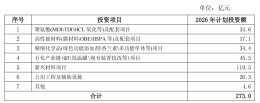
Wanhua Chemical Invests $27.3 Billion, 2026 Investment Map Revealed, $1.1 Billion Bet on Battery Materials


