



Sinopec Beijing Research Institute of Chemical Industry: Research Progress on Biodegradable Nonwoven Materials
Nonwoven fabric, also known as nonwoven cloth, is a type of fabric that is neither woven nor knitted and does not use yarn as its raw material. It is primarily made from directionally or randomly arranged fibers or filaments, which are then reinforced and formed through mechanical, thermal bonding, or chemical methods. Nonwoven fabrics are mainly classified according to their manufacturing processes, including different web-forming methods such as spunbond, meltblown, and wet-laid nonwovens, as well as different bonding methods such as needle punching, spunlacing, chemical bonding, and thermal bonding. Manufacturers may choose different nonwoven production processes based on the characteristics of the raw materials and the intended uses of the products. Compared with traditional textiles, nonwoven fabrics use a wide variety of raw materials, offer high production efficiency and low manufacturing costs, and possess a range of advantages such as being lightweight and soft, dry and breathable, environmentally friendly, and non-toxic. They are now widely used in construction, automotive repair, apparel, military, medical and healthcare, and environmental protection fields.
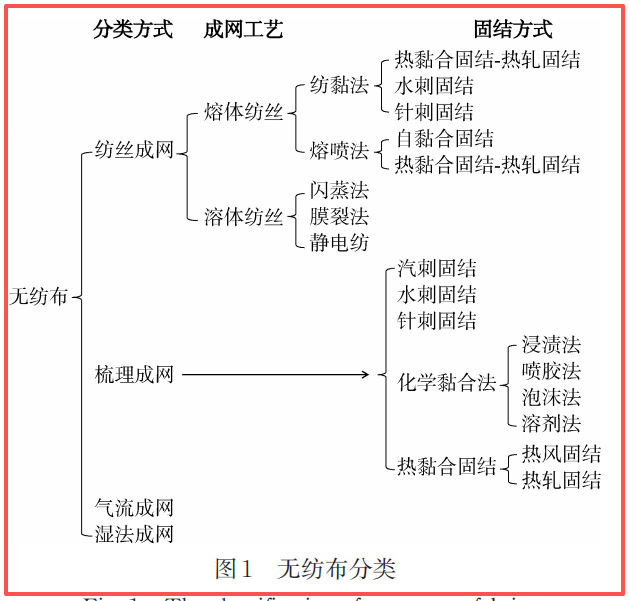
At present, population aging is becoming increasingly severe in developed countries, while birth rates remain stubbornly high in most developing countries. As a result, industries such as modern healthcare, sanitation, and medical care are flourishing, and the demand for nonwoven fabrics has risen sharply. Meanwhile, sectors such as the construction industry, water treatment, and chemical separation processes require nonwoven fabrics to have specialized and functional properties, and the demand for targeted modification of nonwoven fabrics is growing rapidly. In 2022, the global nonwoven fabric market was valued at approximately several tens of trillions of RMB, and demand is expected to continue rising in the future.
Against the backdrop of worsening global environmental pollution and increasingly strained resources, concepts such as “sustainable development” and “green development” have gradually become the main themes of contemporary development. In 2020, the National Development and Reform Commission and the Ministry of Ecology and Environment issued the Opinions on Further Strengthening the Control of Plastic Pollution, which, guided by the principles of being “recyclable, easy to recycle, and degradable,” called for banning the use of non-degradable plastic bags and disposable plastic tableware, and restricting the use of non-degradable disposable plastic products in hotels and plastic packaging bags for express delivery.
In the “Guiding Opinions on Accelerating the Establishment and Improvement of a Green, Low-Carbon, and Circular Economic System,” issued by the State Council in 2021, it is not only required to promote the concepts of green design, green production, green living, and green consumption, but also to emphasize the overarching direction of “developing an economy based on efficient resource utilization and the strict protection of the ecological environment.” As a sunrise industry hotspot for the new century widely recognized by most economists and entrepreneurs, nonwoven fabrics have broad applications across many fields. Therefore, the development of biodegradable nonwoven materials is of great practical significance. Starting from the classification of biodegradable polymers, this paper reviews the development status, preparation processes, and application scenarios of commercially available and under-research biodegradable nonwoven fabrics, and looks ahead to the future prospects of nonwoven fabric development.
Biodegradable Polymers
Biodegradable polymers are defined as polymers whose physical and chemical properties decline and that are converted into carbon dioxide, water, biomass, and some other small-molecule compounds under aerobic or anaerobic conditions through the action of microorganisms, animals, and plants. Biodegradable polymers can be divided into three major categories: natural polymer types (polysaccharides), microbial types, and chemically synthesized types. Natural polymer biodegradable materials include chitin derived from the shells of marine animals and other organisms, as well as cellulose, starch, lignin, and other biomaterials. Although they are derived from nature, abundant, readily available, environmentally friendly, and inexpensive, their mechanical and processing properties are relatively poor, so they often require modification or blending with synthetic polymers that also possess biodegradability. Microbial biodegradable polymers refer to polymer materials formed by the fermentation of organic matter under the action of microorganisms, most of which are polyhydroxyalkanoate (PHA) polyesters. Among them, poly-β-hydroxybutyrate (PHB) is the most widely used. PHA has many monomer types and tunable structures, making it suitable for fields with different requirements. However, due to its high cost, current products are mostly used in high-end consumer goods. In addition, because the melting temperature of PHA is close to its decomposition temperature, its processing temperature window is narrow and processing is difficult. Therefore, PHA is often blended and modified with other biodegradable polymers that have better processability to meet the needs of large-scale commercial applications. The key point in the design of chemically synthesized biodegradable polymers lies in the presence of biodegradable functional groups. These functional groups can be ranked in order of degradability from strong to weak as follows: aliphatic ester bonds, peptide bonds, urethane groups, aliphatic ether bonds, and methylene bonds. Among them, polymers containing aliphatic ester bonds have become a global research hotspot because of their good biodegradability, including polylactic acid (PLA), polyglycolic acid (PGA), polybutylene succinate (PBS), poly(butylene adipate-co-terephthalate) (PBAT), poly(butylene succinate-co-terephthalate) (PBST), polycaprolactone (PCL), and polypropylene carbonate (PPC). Products made from synthetic materials have controllable structures and properties and are not limited by the source or abundance of raw materials, giving them enormous development potential. At present, research mainly focuses on blending them with other biodegradable materials for performance optimization and property design.
2 Biodegradable Nonwoven Fabric
2.1 Natural Polymer-Based Biodegradable Nonwoven Fabrics
Natural polymer-based biodegradable nonwoven fabrics are limited in application because of the intrinsic properties of their raw materials. Starch is currently the most widely used natural polymer raw material. Due to its poor processability, it is mostly used in the form of an additive, such as a binder between cotton fibers in nonwoven fabrics for planting bags and a filler in sound-absorbing nonwoven fabrics. Alternatively, starch from crops such as corn can be saccharified and fermented to obtain lactic acid, the raw material needed for PLA production. In addition, the Italian company Novamont has developed Mater-Bi, a plasticized starch that can be completely degraded in the marine tidal zone environment, greatly improving processing performance and showing promise as a raw material for biodegradable nonwoven fabrics in the future. Chitin is the second most abundant organic substance on Earth after cellulose. It is non-toxic, antibacterial, highly compatible with human cells and tissues, and has strong adsorption capacity. Biodegradable nonwoven fabrics made from chitin are mostly used in the medical field. Shao Lan prepared pure chitin wet-laid nonwoven fabrics by improving the wet-laid process. The nonwoven fabric has the ability to kill and inhibit bacteria on the surface of human skin. After adding 0.2%–1% (mass fraction, the same below) of bonding fibers, the air permeability, extensibility, and flexibility of the nonwoven fabric were all improved and met the standards for medical dressings, overcoming the shortcomings of commercially available chitin fiber medical dressing films, which adhere poorly to the skin and are uncomfortable for patients. Maevskaia et al. used chitosan and 0.5% chitin fiber to prepare a needled nonwoven fabric (Fig. 2). Compared with the commercial TachoComb hemostatic material, this nonwoven fabric was more effective in suppressing arterial bleeding and could be developed into a new-generation topical hemostatic material. The Nomata team found that chitin microfiber nonwoven fabric can be implanted in vivo and promote cell growth between ligaments and bone, strengthen the fixation between ligaments and bone, and even help bone cell growth.
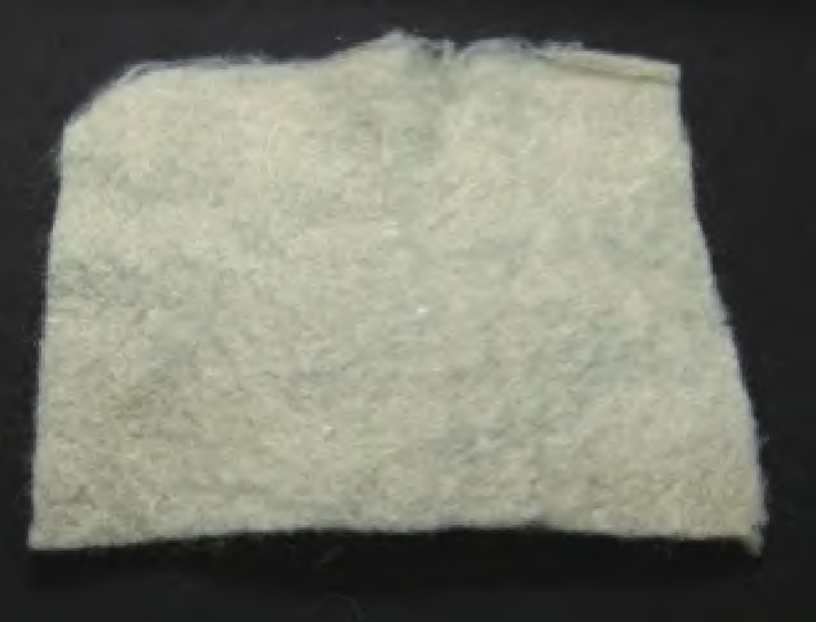
Figure 2 Nonwoven material of composite fibers containing 0.5% CNFs.
2.2 Microbial Biodegradable Nonwoven Fabrics
Microbial biodegradable nonwoven fabrics are mainly nonwoven fabrics made from PHA. Among them, research on PHB began the earliest and is the most comprehensive. PHB is a fully biodegradable thermoplastic polyester that degrades via an enzymatic hydrolysis mechanism, in which the ester bonds in the main chain are cleaved and degradation proceeds gradually from the surface inward.
PHB nonwoven fabrics exhibit excellent biocompatibility and bioresorbability and have broad prospects in the medical field. The Slepicka team found that direct plasma sputtering on the surface of PHB nonwoven fabrics could effectively inhibit the growth of *Escherichia coli* and *Staphylococcus epidermidis*. Ding et al. prepared honeycomb-structured PHB/PCL/58S (58S sol includes 60% SiO₂, 36% CaO, and 4% P₂O₅) nonwoven fiber mats by electrospinning, which can promote cell-material interactions and facilitate tissue regeneration. PHB nonwoven fabrics are brittle, with an elongation at break of less than 10%, but they have excellent biodegradability. Packaging and mulch films made from them are in line with the concept of green environmental protection. Recently, the Olkhov team found that the addition of a small amount of PLA can greatly reduce the biodegradation rate of PHB, but can enhance the ozone oxidation rate of PLA/PHB blends. Based on degradation kinetics, a ratio of 30% PLA to 70% PHB was determined to be optimal. PLA/PHB nonwoven fabrics prepared by electrospinning can be used as bio-packaging and agricultural covering materials. Walczak et al. blended poly(L-lactic acid) (PLLA) and atactic PHB at a mass ratio of 90:10 and prepared nonwoven fabrics by melt-blowing [Fig. 3(a)], which exhibited excellent shape memory behavior. In the shape-memory spiral experiment [Fig. 3(b)], when the shape recovery temperature was close to the glass transition temperature (Tg) of the nonwoven fabric, the re-shaped nonwoven fabric could fully recover its shape within 30 s, showing promise for applications in self-fixing, self-adjusting implants, intelligent foldable stents, wound dressings, and other medical fields.
In addition, the hydroxyl butyric acid-hydroxyl valeric acid copolyester (PHBV) is prepared by copolymerization based on PHB, which retains the complete biodegradability and biocompatibility of PHB while also possessing new advantages such as anti-coagulation properties and non-cytotoxicity. However, PHBV also exhibits brittleness, poor toughness, low thermal stability, and a narrow processing temperature window, which severely affects its processing performance and biodegradation rate. Therefore, it is often blended with synthetic biodegradable polymers for combined use. Ningbo Hesu Fiber Co., Ltd. has collaborated with the Ningbo Institute of Materials Technology and Engineering, Chinese Academy of Sciences, to use patented processes and raw materials in a co-extrusion device to melt-blend PHBV and PLA, resulting in antibacterial finished fibers that have a relatively fast degradation rate along with good rigidity and toughness. These fibers are expected to be developed as antibacterial biodegradable non-woven fabrics for applications in medical, health, and clothing fields.
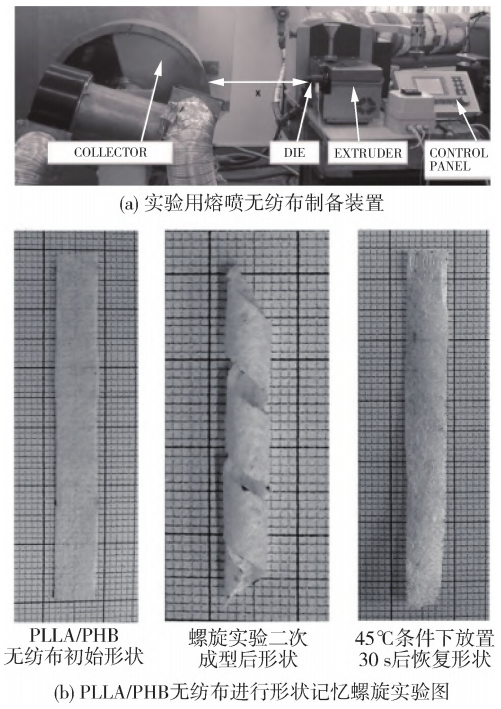
Figure 3 Melt-blown nonwoven fabric preparation device used in the experiment and shape-memory spiral experiment of PLLA/PHB nonwoven fabric
2.3 Aliphatic Polyester-based Synthetic Biodegradable Non-woven Fabric
Synthetic biodegradable nonwovens containing aliphatic ester bonds are currently one of the most favored types of biodegradable nonwovens. They possess excellent biodegradability, and their structures can be purposefully designed and selected according to the diverse performance requirements of different application scenarios, offering flexibility and strong specificity. Compared with microbial biodegradable nonwovens, aliphatic polyester-based biodegradable nonwovens have achieved significant improvements in cost reduction, degradation rate control, and application functionality.
2.3.1 PLA
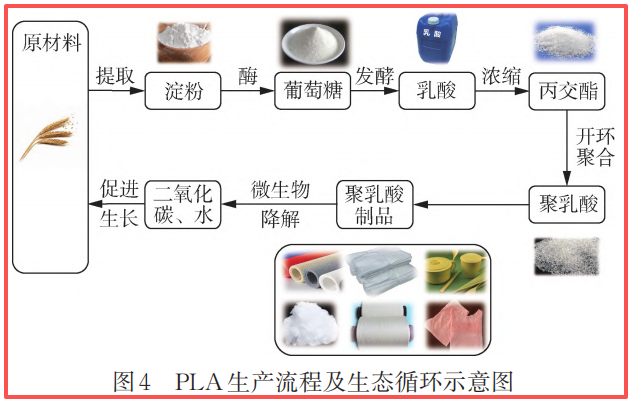
PLA is a renewable, biodegradable linear aliphatic polyester material. Using lactic acid as the main monomer, the intermediate lactide is first prepared, and the final PLA product is then obtained through ring-opening polymerization. PLA not only possesses good biodegradability, compatibility, absorbability, and environmental friendliness, but also exhibits excellent mechanical strength, making it a star material in the field of biodegradable materials. Figure 4 illustrates the PLA production process and ecological cycle. As shown in the figure, the raw materials for PLA are derived from renewable plant resources. Starch extracted from biomass such as corn or from straw cellulose is enzymatically decomposed into glucose, which is then fermented by lactic acid bacteria to produce lactic acid monomers. Meanwhile, discarded PLA products are decomposed by microorganisms in nature into carbon dioxide and water, which are subsequently converted into the organic substances necessary for the growth of the raw materials. The entire production and disposal process of PLA is environmentally friendly and aligns with the contemporary concepts of sustainable development and green environmental protection.
As early as the mid-20th century, DuPont in the United States prepared PLA using ring-opening polymerization, but the price was as high as several thousand dollars per kilogram. In the early 21st century, NatureWorks industrialized PLA on a large scale and developed the mature Ingeo™ series of products. Among them, Ingeo™6 series products 6202D, 6252D, and 6752D have a melt flow rate of 80 g/(10 min) at 190°C, specifically designed for fiber-forming processes such as spunbond or meltblown nonwoven fabrics. Dharmalingam et al. used PLA/PHA blends to produce nonwovens by meltblown and spunbond processes for use as agricultural mulch films. The PLA-PHA nonwoven mulch film prepared by the meltblown method showed superior degradability, achieving a degradation rate of over 90% after 90 days under ASTM D5338 standard composting conditions, much higher than the 60% degradation rate of nonwovens prepared by the spunbond method. In recent years, several domestic enterprises, including Anhui Fengyuan Futailai and Zhejiang Hisun Biomaterials, have successively launched PLA grades such as FY201, REVODE210, and REVODE190 suitable for meltblown processes, bringing unlimited possibilities for the expansion of the PLA raw material market in China. Zhejiang Guancheng Technology has produced PLA nonwoven fabrics with a basis weight of 10–200 g/m² and a width of up to 1.6 m through a combination of spunbond process and mechanical reinforcement, with a production capacity reaching 5 tons/day. These can be used for filter bags, tea bags, dust bags, etc. PLA nonwoven fabrics can also be used in the medical and health fields. To address the issues of PLA’s rigidity and poor skin-friendliness, Yiteer Exploration (Beijing) Technology Co., Ltd. used PLA as the fiber core component, with PBAT and nano zinc oxide particles as the sheath components, and obtained antiviral, biodegradable sheath-core structured nonwoven fabric through bicomponent spinning, carding, web formation, and consolidation processes. This nonwoven fabric combines skin-friendliness and crispness, solving the problems of rough touch and strong cutting sensation of pure PLA nonwoven fabrics, and is mainly used as fabric for masks and protective clothing. In addition, by blending different functional components, PLA nonwoven products can also be used for supermarket and convenience store shopping bags, non-liquid garbage bags, cleaning wipes, ribbons and shoelaces, air/water/oil filtration, thermal insulation materials, and more.
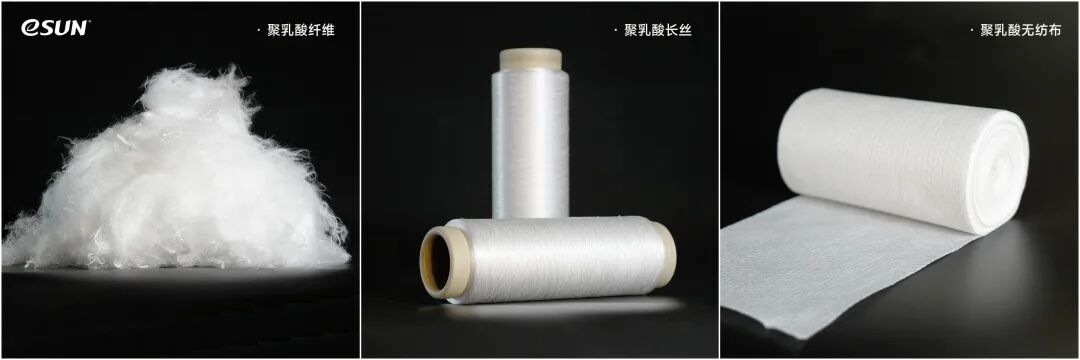
Yisheng PLA Non-woven Fabric
2.3.2 PGA
Compared with PLA, PGA has a simpler main-chain structure and is a thermoplastic polyester material with an ultra-fast degradation rate, capable of completely degrading into water and carbon dioxide within 1 to 3 months. PGA has a high degree of crystallinity, a Tg of 35–40°C, and a melting point as high as 220°C, far exceeding those of other biodegradable polymers. PGA exhibits excellent water vapor, oxygen, and carbon dioxide barrier properties as well as outstanding tensile strength; however, it is brittle, with an elongation at break of 13.3%, which is far lower than that of biodegradable polymers such as PBS, PBAT, and PBST. Therefore, PGA is often blended with more tough biodegradable materials such as PBAT. On the one hand, the PBAT component improves the processing performance of the blend; on the other hand, the PGA component enhances the water and gas barrier properties of the blend. PGA nonwovens are mainly used in tissue engineering scaffolds and repair materials in general medical surgery, with few applications in other fields. Research teams in Switzerland, China, and other countries have used PGA nonwoven fabrics as tissue scaffolds and coated them with corresponding reagents to culture specific cells, with the potential to be used in the construction of urethral materials and periodontal tissue regeneration materials. The Nevi (absorbable polyglycolic acid repair material) product produced by Guangzhou Qiyuan Biotechnology Co., Ltd. uses sheet-like PGA nonwoven fabric soaked with fibrin glue and other medical adhesives, and is placed at large wound sites that cannot be directly sutured, achieving the dual effects of preventing wound bleeding and serving as a suturing pad, and can be applied in thoracic surgery for pneumothorax. In 2022, State Energy Group Yulin Chemical Company achieved the world’s first industrialized production of 50,000 tons/year of coal-based PGA biodegradable materials. In 2023, the 500,000 tons/year PGA project of Sinopec Guizhou Energy and Chemical Co., Ltd. was also under smooth construction. The localization, stabilization, and independent development of PGA production will also contribute to the sustainable development of PGA nonwovens in China in the future.
2.3.3 PBS
The advantages of the biodegradable material PBS lie in its wide range of raw material sources (petroleum-based or bio-fermentation-based), complete biodegradability with a fast degradation rate, and excellent heat resistance. PBS has a melting temperature of 90–116°C, a tensile strength of up to 36 MPa, a tensile modulus exceeding 440 MPa, and an elongation at break of about 600%. Its thermal and processing properties, which fall between those of polyethylene (PE) and polypropylene (PP), make PBS the biodegradable polymer with the best overall performance. However, its cost is relatively high, with an average transaction price of about RMB 30,000 per ton, higher than that of PLA and PBAT.
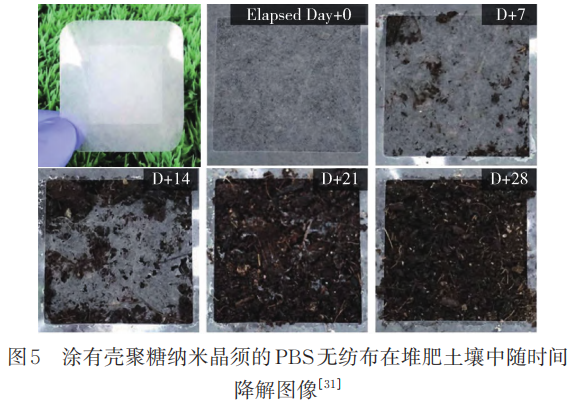
The Choi team developed a nonwoven mask made primarily of PBS. The filtration layer was coated with positively charged chitosan nanowhiskers, which can block 98.3% of inhalable PM2.5 particles. Experiments confirmed that the mask could completely degrade when buried in soil (Fig. 5). In China, Zhuhai Wantong under Kingfa Sci. & Tech., in collaboration with Kingfa Medical, developed a PLA+PBS nonwoven mask. All components, including the ear loops and nose bridge strip, were made of biodegradable materials. Its bacterial filtration efficiency exceeds 99.8%, breathing resistance is no more than 35 Pa, and its degradation rate is higher than 90% after 6 months, meeting EU standards. Shandong Runjuxiang Nonwoven Materials Co., Ltd. first produced heat-resistant PBS capable of withstanding 100°C through polycondensation of succinic acid and butanediol followed by modification, and then used the spunbond process to manufacture PBS nonwoven products, which can be applied in packaging materials, personal protective equipment, and medical and health fields. Wang Luoxin’s team stacked PBS nonwoven fabric with ramie fiber fabric and used hot pressing to prepare a biodegradable material with high modulus, high strength, and low cost. Its tensile, bending, and impact properties, as well as interlaminar shear strength, were significantly improved compared with PBS nonwoven fabric.
2.3.4 PBAT
PBAT is a copolymer composed of aliphatic poly(butylene adipate) (PBA) and aromatic poly(butylene terephthalate) (PBT). It not only exhibits good biodegradability, but also combines the favorable toughness and ductility of PBA with the higher heat resistance and mechanical strength of PBT. PBAT has a mature and well-established processing and industrial chain, and its cost is relatively low. The earliest company to focus on PBAT research was Germany’s BASF, whose flagship grade Ecoflex offers excellent performance and enjoys high global sales. In China, relatively mature enterprises include Bluestar Tunhe, Kingfa Sci. & Tech., and Sinopec Yizheng Chemical Fibre, among others. In 2022, China’s total PBAT production capacity exceeded 700,000 tons per year, accounting for 73% of global capacity. PBAT is mostly processed by film blowing and used as film materials for packaging, agricultural mulch films, and the like. However, reports on nonwoven products made from neat PBAT are scarce; most are produced as nonwovens after blending and modification with other biodegradable polymers such as PLA. Lu’an Zaifeng New Materials Co., Ltd. disclosed a patent for a PBAT melt-blown biodegradable nonwoven and its preparation method, in which PBAT is used as the main raw material and blended with PLA and PCL; after melt blowing and self-bonding steps, a nonwoven with large specific surface area, fine fiber diameter, good filtration performance, and high porosity is obtained. Kan Ruijun blended PBAT into PHBV to broaden the processing window and improve processing performance. The PHBV/PBAT melt-blown nonwoven shows excellent antibacterial properties, achieving an antibacterial rate of 49.55% against Staphylococcus aureus, and is expected to realize commercial applications in the medical and health industries.
2.3.5 PBST
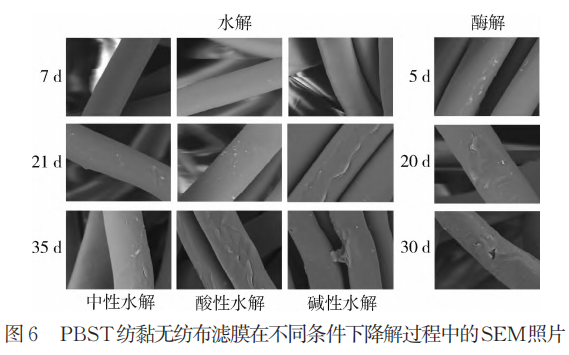
PBST and PBAT are both aliphatic/aromatic copolyesters, with the main difference being that the aliphatic ester unit in PBST is butylene succinate. Since the PBST monomer unit contains fewer carbon atoms than PBAT, its glass transition temperature (Tg), melting temperature, and tensile strength are all higher than those of PBAT. However, PBST exhibits toughness far superior to other biodegradable materials, with an elongation at break reaching up to 1300%. Jian-Yong Yu and colleagues were the first in China to carry out research on PBST, thoroughly investigating the relationship between component ratio and feed ratio as well as their effects on melting point and crystallinity, and examining the influence of temperature, water, enzymes, and pH on degradability. They also studied the isothermal crystallization behavior and thermodynamic properties of PBST and improved its spinning process technology. In 2011, the team disclosed a patent for a method of manufacturing biodegradable nonwoven materials. Using the melt-blown process, they produced nonwoven fabrics with both excellent thermodynamic properties and air permeability, suitable for use as sound-absorbing cotton or in materials for thermal insulation and breathability applications. In 2014, Xiangyu Jin and others optimized spinning and web-laying parameters such as temperature and speed to produce PBST spunbond nonwoven fabrics for use as geotechnical drainage board filter membranes. They also explored the degradation degree of these materials under different environmental conditions over time: enzymatic hydrolysis > alkaline hydrolysis > acidic hydrolysis > neutral hydrolysis (see Figure 6). In 2017, Minqiao Ren and colleagues disclosed a patent for polyester compositions, nonwoven fabrics, their preparation methods, and applications. The nonwoven fabric containing PBST components showed good air permeability, water absorption, and ease of sterilization. Moreover, it shrinks significantly in hot water at 100°C, facilitating recycling and enabling repeated use.
Recently, based on the independently developed PBST copolyester polymerization process technologies provided by the Beijing Research Institute of Chemical Industry and the China Textile Academy, Sinopec (Hainan) Polyester New Materials Co., Ltd. has successfully commenced construction of a 60,000-ton-per-year PBST continuous polymerization project in Yangpu, Hainan. With the mass production of PBST and controllable costs, it is expected to play an important role in the nonwoven fabrics sector.
2.3.6 PCL
PCL is a polymer that can be degraded under both aerobic and anaerobic conditions. Its melting point is 60°C, which is relatively close to room temperature, resulting in a narrow processing window that makes fiber spinning and other processing techniques difficult to operate. In addition, it has only moderate degradability and is relatively expensive, so it is often used as an additive component to improve the toughness of other biodegradable resins. PCL is mostly used in electrospinning technology for tissue engineering materials. Seol et al. prepared a composite nonwoven fabric by electrospinning a PCL solution together with a CaO-SiO2 gel solution, which can be used as a medical bone tissue regeneration material. Hardt et al. developed a PBAT/PCL electrospun nonwoven wound dressing loaded with sulfadiazine silver. This dressing rapidly released the drug in the initial stage to inhibit Escherichia coli and Staphylococcus aureus, and its efficacy could last for more than 4 days, offering the advantages of rapid pain relief and long-term promotion of wound healing. The Zanella team developed a propolis-containing PBAT/PCL anti-Pseudomonas aeruginosa wound dressing, which is expected to be used clinically as a skin dressing.
2.3.7 PPC
PPC is an aliphatic polycarbonate derived from propylene oxide and carbon dioxide, and is considered one of the most promising green and environmentally friendly plastics. Since Shohei Inoue first discovered in the 1960s that the alternating copolymerization of propylene oxide and carbon dioxide could produce PPC, numerous research teams in Europe and Asia have studied it and achieved industrialization. In 2002, Inner Mongolia Mengxi, in cooperation with the Changchun Institute of Applied Chemistry, Chinese Academy of Sciences, took the lead in putting PPC into production, with a capacity of 2,000 tons per year, though the plant has since been shut down. Subsequently, companies such as Henan Tianguan, Zhongke Jinlong, and Wenling Bangfeng gradually expanded production capacity. By 2021, the core reaction unit of Broad East’s 300,000 tons per year PPC project was successfully tested, laying a foundation for further development. PPC generally has a tensile strength of only 13 MPa, a relatively slow degradation rate, and poor thermal stability, but it exhibits good elongation at break as well as excellent water and oxygen barrier properties. China is still in a stage of rapid development and has large carbon dioxide emissions. The emergence of PPC has effectively turned carbon dioxide from waste into a valuable resource, in line with the current carbon neutrality policy, and thus has great development potential. However, because PPC has poor heat resistance, low mechanical strength, and processing difficulties, there has been little research on its application in the field of nonwoven fabrics. In the future, greater breakthroughs in material modification and further exploration of processing technologies will still be needed to expand the application fields of green and environmentally friendly PPC nonwoven fabrics.Carbon dioxide can also be used to make plastics, and the amazing PPC is growing strong in China!
3 Conclusion
With the development of the times, products should not only offer excellent performance and low cost, but also align with the concepts of green environmental protection and low-carbon sustainable development. As a result, biodegradable nonwoven fabrics have emerged. Their raw materials are widely sourced, such as petroleum, crops, animal shells, carbon dioxide, and so on. Their processing methods are diverse, including melt-blown, spunbond, hydroentanglement, and needling. Their applications are extensive, covering medical and health care, agriculture, industry, and daily life. Their performance characteristics can be designed to provide antibacterial properties, regeneration, barrier functions, filtration, warmth retention, support, and more. Their post-processing is simple, green, and pollution-free, saving labor, time, and cost. At present, in the biodegradable nonwoven fabric market, products made from a single polymer as the raw material account for an increasingly smaller share, while the compounding and blending of multiple biodegradable polymer components has become the main development trend. Future research should strengthen the following two aspects.
(1) Improve the definition and standards of biodegradable materials in the country, strengthen the constraints on market products, and avoid the phenomenon of varying quality of circulating products.
(2) Further refine research on the biodegradability of biodegradable materials in real-world environments. For example, the degradation performance of Mater-Bi plasticized starch varies greatly across different marine regions, with poorer degradation observed farther from the coastline. PLA and PPC are both chemically synthesized biodegradable materials; because the number of degrading microorganisms in environmental soil is relatively low, their degradation rates are much lower than that of PHBV, making them more suitable for industrial composting treatment. PLA hardly degrades in natural seawater, and the weight loss of PBS, PBAT, and PCL within 364 days is also far below the national standard. Therefore, it is crucial to study the effects of various environmental factors, such as oxygen concentration, temperature and humidity, and microbial species, on the biodegradation performance of these materials. This will help establish and refine industry standards for biodegradable materials and ensure the achievement of green and sustainable development.
【Copyright and Disclaimer】The above information is collected and organized by PlastMatch. The copyright belongs to the original author. This article is reprinted for the purpose of providing more information, and it does not imply that PlastMatch endorses the views expressed in the article or guarantees its accuracy. If there are any errors in the source attribution or if your legitimate rights have been infringed, please contact us, and we will promptly correct or remove the content. If other media, websites, or individuals use the aforementioned content, they must clearly indicate the original source and origin of the work and assume legal responsibility on their own.
Most Popular
-

A Look at the Material Suppliers Behind SpaceX
-

United States Imposes 208.49% Tariff On Chinese Glass Fiber Products
-

Government's Triple Action, Enterprises' Three Arrows in Five Days, Semiconductor Reshuffle! What Signal Does Japan's Chemical Industry Release?
-

Next-generation motors of new energy vehicles: Single-Round Thousand Horsepower, Replacing Brakes, How Powerful Are They?
-
Shutdowns And Production Cuts! Widespread Price Quotes Suspended, Chemical Products May Still Be Easier To Rise Than Fall In June-July!


