



Research & Development Spending of 63.4 Billion Exceeds Net Profit by Double: 2025 Financial Report Reveals Auto Companies' High-Stakes Bets
In the earnings season, what stands out the most is not how many cars someone sold, but how much money someone spent in the lab.
BYD: Earns 3 yuan and spends 2 yuan—truly ruthless.
BYD invested RMB 63.4 billion in R&D for the full year—the highest among A-share companies—with 120,000 engineers and over 70,000 patents. Its net profit was RMB 32.6 billion: for every RMB 3 earned externally, RMB 2 went straight into the lab, leaving RMB 1 as profit. The funds are poured into intelligent vehicle technologies: the "God's Eye" ADAS system, the fifth-generation DM hybrid platform, second-generation Blade Battery, and megawatt-level flash charging—advancing both software and hardware through full-stack in-house development.
Geely: Revenue of 345.2 billion, the most determined in AI transformation
Geely’s total revenue in 2025 reached RMB 345.2 billion, an increase of 25% year-on-year; core attributable net profit, excluding non-core items such as foreign exchange gains and losses, amounted to RMB 14.41 billion, up 36% year-on-year. Total vehicle sales reached 3.025 million units, with new energy vehicle (NEV) penetration exceeding 50% for the first time. R&D investment totaled RMB 17.62 billion, up 29% year-on-year, while cash reserves hit a record high of RMB 68.2 billion.
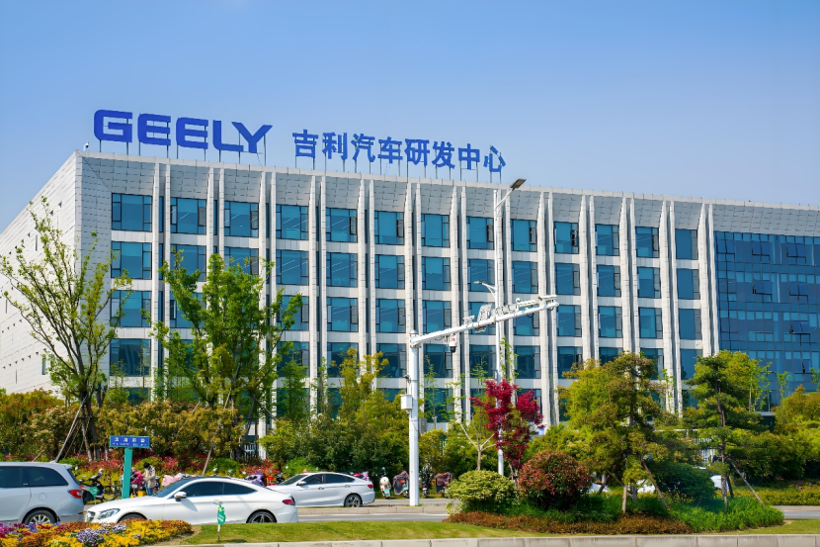
But Geely's boldest move isn't about numbers—it's strategic: completely halting development of non-AI intelligent cockpits and fully pivoting to an AI-native architecture. They're scrapping their old approach entirely and rebuilding from the ground up. Underpinning this resolve is the Xingrui AI Computing Center 2.0, delivering 23.5 EFLOPS of computing power—the highest among Chinese automakers. Geely's strategy follows a "computing foundation + technology trickle-down" model: first building robust infrastructure, then cascading advanced intelligent driving capabilities down to brands like Lynk & Co and Galaxy.
Great Wall: Revenue Hits Record High, Profit Plummets by Half
Great Wall reported revenue of RMB 222.8 billion in 2025, up 10.2% year-over-year, marking its first breakthrough above RMB 220 billion. However, its net profit attributable to shareholders was only RMB 9.865 billion, down 22.07% year-over-year, while its net profit excluding non-recurring gains and losses plummeted by 37.5%—a classic case of "revenue growth without profit growth."
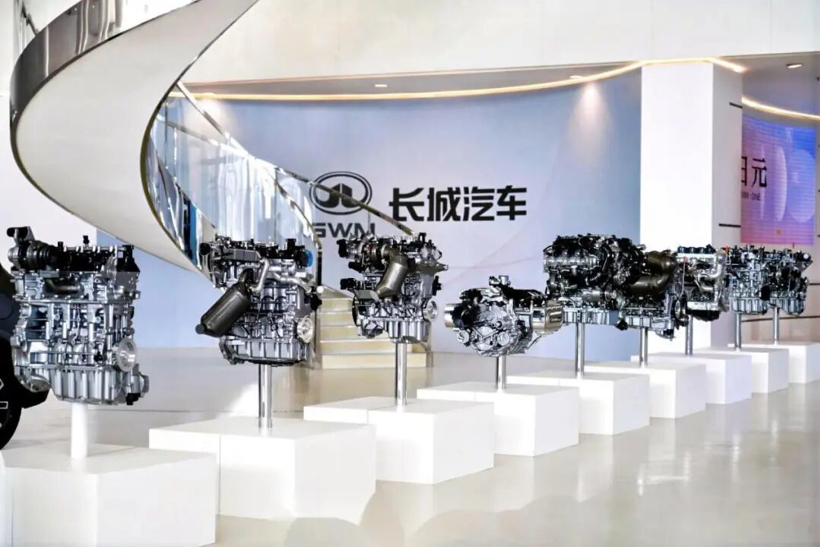
Where did the money go? Sales expenses reached RMB 11.273 billion, up 43.93% year-over-year; R&D expenses amounted to RMB 10.432 billion, an increase of 12.13%. Even amid declining profits, R&D spending continues to grow at a double-digit rate—demonstrating Great Wall’s unwavering commitment to technological advancement. The R&D focus is on the VLA autonomous driving large model, whose standout feature is its Chain-of-Thought (CoT) reasoning capability that reveals the decision-making process, addressing the “black-box trust crisis” in intelligent driving. Previously released data showed that the intelligent driving R&D team exceeds 5,000 members, with software development accounting for 70% of the team.
Li Auto, XPeng, and NIO: New Energy Vehicles Also Don't Hold Back
Li Auto plans to invest about 11.3 billion yuan in R&D by 2025, with half going to AI. Over the past three years, the company has cumulatively spent 33 billion yuan, averaging 100 million yuan every three days. CEO Li Xiang said the company aims to become a "embodied intelligence enterprise," with self-developed chips set to go into production in 2026. Xpeng invested nearly 9.5 billion yuan in R&D for the entire year, with nearly half focused on AI, while selling software subscriptions and licensing technology to the public.
Interestingly, NIO is one of the few automakers that reduced R&D spending this year, cutting costs and pursuing efficiency more aggressively. NIO's total revenue in 2025 is 87.48 billion yuan, with R&D expenses of 10.605 billion yuan, a 18.7% decrease year-on-year. However, it hasn't relaxed its efforts in AI. In October 2025, NIO launched the World Model 2.0, focusing on "open interaction." Meanwhile, the autonomous driving department was reorganized into a "4×100 relay" model, merging the intelligent driving team with the general AI team.
This high-stakes gamble, no one can see through to the end.
In 2025, the industry’s profit margin stood at only 4.1%, and fewer than seven out of eleven leading automakers achieved profit growth. Geely invested RMB 17.62 billion in R&D, enabling its profit growth rate to outpace revenue growth; Great Wall invested RMB 10.421 billion in R&D and RMB 11.273 billion in sales expenses, achieving a new revenue high but facing profit pressure; BYD invested RMB 63.4 billion in R&D, securing technological leadership.
If electrification is the "heart transplant" for cars, then intelligence is the "brain transplant." The 2025 financial reports are declaring a fact: future leading car manufacturers will first be AI companies, and then car companies. Whoever completes this identity transformation first may win the next decade.
【Copyright and Disclaimer】The above information is collected and organized by PlastMatch. The copyright belongs to the original author. This article is reprinted for the purpose of providing more information, and it does not imply that PlastMatch endorses the views expressed in the article or guarantees its accuracy. If there are any errors in the source attribution or if your legitimate rights have been infringed, please contact us, and we will promptly correct or remove the content. If other media, websites, or individuals use the aforementioned content, they must clearly indicate the original source and origin of the work and assume legal responsibility on their own.
Most Popular
-
Breakthrough! 13.6-million-ton new giant emerges as world’s fourth-largest polyolefin producer, reshaping industry landscape
-
Domestic PBE Breakthrough, Polyolefin Modification Industry to Break the Impasse
-
BASF Delivers First Batch of Innovative Cathode Materials for Semi-Solid-State Batteries to Weilan New Energy
-
Auto Market Sees Significant Recovery in March: BYD No Longer Dominant, Changan Chery Geely Strive to Catch Up
-

Deadly Impact: Hormuz Strait Blockade Sparks Shortage of Plastic Raw Materials, Threatening Shutdowns at Japanese and Korean Chemical Plants


