



Price War, Going Out?
During the Lunar New Year in 2026, many new energy vehicle stores located in shopping malls and urban showrooms appeared somewhat quiet.
During the Spring Festival holiday, Gasgoo conducted on-site visits to multiple mainstream new energy vehicle brand stores in Shanghai, and a direct and widespread impression was that foot traffic was relatively sparse and sales consultants appeared relatively relaxed.
This phenomenon itself is not merely a simple projection of holiday effects; rather, it profoundly reflects the industry’s entry into a new stage of competition after years of rapid growth and fierce price wars. Beneath the surface calm, we observe a subtle shift in the dimensions of competition in the auto market—from overt cash discounts to increasingly complex and covert comparisons of financial schemes.
This shift is not only a signal of the market’s temporary saturation but also heralds that industry competition is about to enter a deep-water phase focused on comprehensive operational capabilities and the full lifecycle value of users.
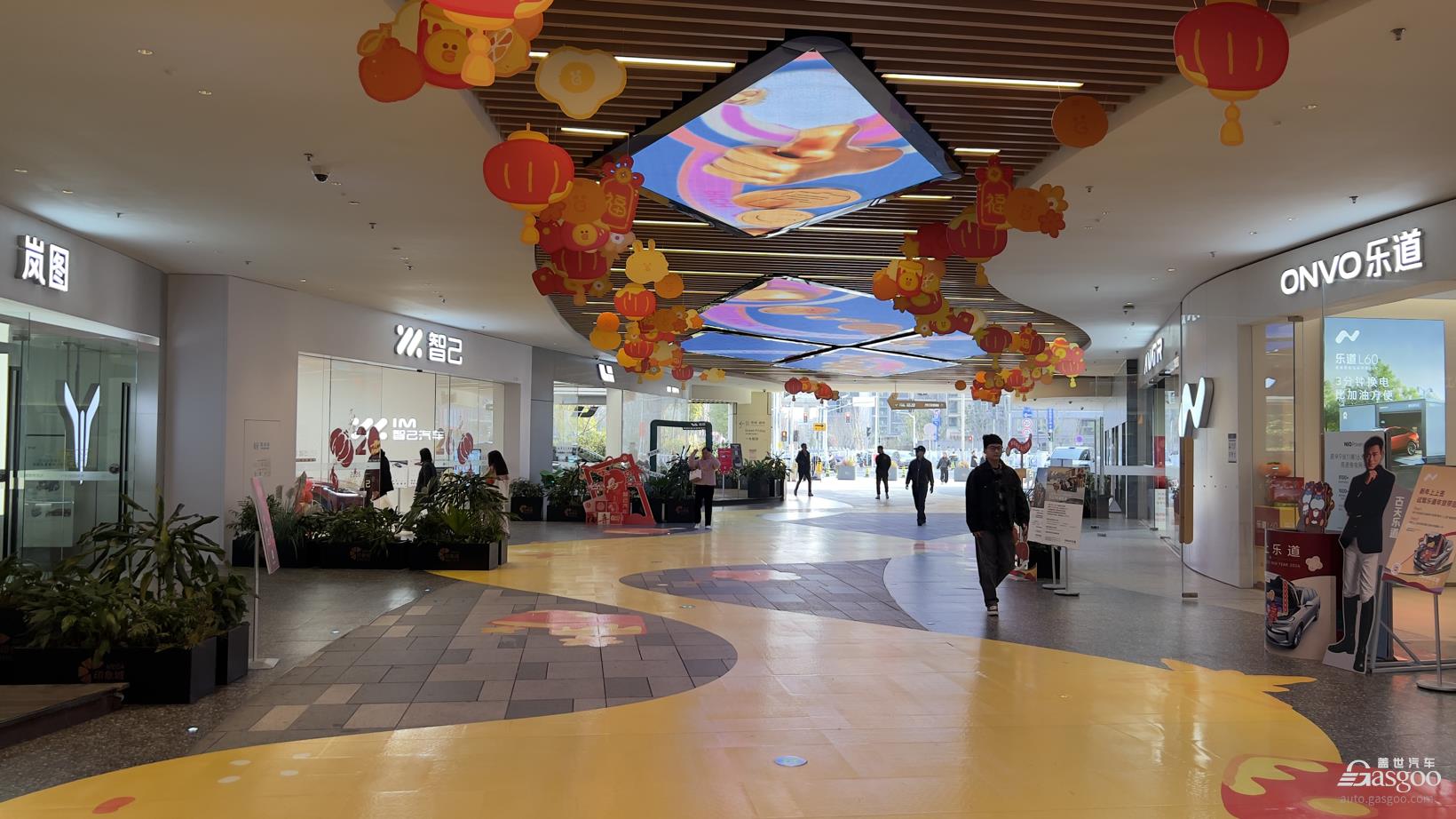
Image source: Gasgoo shooting
The market enters a new normal?
Stepping into several new energy vehicle experience stores located in the core business district, the festive decorations are scattered around, but there are few visitors in the stores. This is in stark contrast to the scene in previous years during the Spring Festival, where even on the first day of the New Year, many families would come to experience the cars. The explanation from the sales consultants is quite representative: "Now, information is too transparent. Prices and policies are all available on the official website. Consumers tend to first learn about the information online, and then come to the store for a targeted experience or directly book a test drive."
This change reflects that the consumption of new energy vehicles has gradually shifted from being a novelty to a mass-market commodity, with consumer decision-making becoming more rational and efficient, and the proportion of impulsive purchases significantly decreasing.
The deeper underlying reason lies in the fact that Shanghai, as one of China's cities with relatively high new energy vehicle (NEV) adoption rates, has already undergone a fundamental shift in its market structure. Previously, research institutions predicted that Shanghai’s NEV penetration rate would reach 60%–70% by 2025, meaning that for every three new vehicles sold in Shanghai, two could be new energy vehicles. Against this high baseline, the room for pure incremental market growth is rapidly shrinking.
From the sales policies of various brands, the Spring Festival of 2026 indeed lacks the “time-limited” and “special-offer” promotional intensity seen in previous years. Whether at Xiaomi Auto, Li Auto, or Zeekr stores we visited, the primary sales schemes promoted at the dealership level are largely the routine policies previously announced to the public. Tesla’s sales staff even directly advised customers to log on to the official website to check the latest financial plans, stating that no additional Spring Festival discounts are available at dealerships.
This "calm" in sales policies is the result of multiple factors. First, it is the fatigue and rationality following the normalization of price wars in the industry. The long-term price competition has already compressed the profit margins in the domestic car market to a very thin level. At an industry salon organized by the Gasgoo Automotive Research Institute, an analyst from the institute shared data showing that in the first 11 months of 2025, the overall revenue of the automotive industry grew by 8.1%, but the profit margin was only 4.4%. Other industry experts at the meeting also made a pessimistic prediction that in the coming years, the overall profit margin of the automotive industry is expected to further decline, possibly falling below 3% in the next three to five years. Against this backdrop, continuing to rely solely on price measures not only results in diminishing marginal returns but also seriously damages brand value and the long-term viability of the company.
Secondly, there has been a structural shift in market demand. After several years of explosive growth, the penetration rate of new energy vehicles in first-tier cities has already reached a high level, and the market is gradually transitioning from a growth phase to a mature, replacement-driven phase. The proportion of first-time buyers with essential demand is declining, replaced by consumers purchasing additional or replacement vehicles. These buyers are more rational, less price-sensitive, and generally place higher demands on product quality, brand service, and overall value—making them harder to sway through price incentives alone.
Finally, from the perspective of enterprises, instead of investing a large amount of marketing resources in the "wide net" approach during the Spring Festival with unclear results, it would be better to focus resources on more precise user operations and the dissemination of new products and technologies. Therefore, the "cold" of the 2026 Spring Festival car market, rather than being seen as a depression, should be understood as a relatively rational market norm formed after intense competition. This norm means that the era of relying on a single promotion to bring about a surge in sales is long gone. Car manufacturers must learn to meticulously cultivate in the existing market, maintaining their market share by enhancing brand loyalty and the lifetime value of users.
The Escalation of Competition Driven by Financial Covert Warfare
Direct cash discounts are gradually fading, but in the car financing sector, a fierce battle without any smoke is already underway, which has become a notable industry trend during this car market visit.
Financial products launched by various brands are no longer simply "low down payment," "zero interest," but instead show higher levels of refinement and differentiation.
Xiaomi Automobile’s current financial strategy is highly representative. According to information obtained by Gasgoo at a Xiaomi store, for the YU7 model, Xiaomi offers a “Seven-Year Ultra-Low-Interest” financing plan, with a low down payment threshold of RMB 49,900 and monthly payments starting from RMB 2,593. Simultaneously, a “Three-Year Zero-Interest” plan is also available to cater to customers with varying cash flow situations.
This combination of financial solutions targets the subtle psychological game between users' desire for low monthly payments and the total interest cost. The ultra-long term reduces the monthly repayment pressure, attracting young groups with stable income but limited savings, or users who wish to allocate more of their own funds to other investments. The three-year zero-interest plan, on the other hand, directly locks in the maximum benefit of zero total interest expense, making it more attractive to users with ample funds who focus on the total cost.
Moreover, it is worth noting that Xiaomi is simultaneously promoting a ¥1,000 pre-order deposit for its upcoming SU7 model, leveraging integrated online and offline channels to steer in-store customers’ attention toward this yet-to-be-launched vehicle. This tactic—combining financial incentives with new-product pre-launch marketing—demonstrates Xiaomi Automobile’s refined thinking in user operations.
Li Auto’s financial plans also embody a “long-termist” philosophy. In addition to its company-wide “Seven-Year Low Monthly Payment” plan, Li Auto has launched more aggressive, model-specific financing plans for the MEGA and i8—namely, “Zero Interest for the First Three Years, with Monthly Payments as Low as RMB 2,857.”
This design, which concentrates interest-free benefits in the early stages, maximizes the sense of gain at the beginning of the car purchase, while lower monthly payments further reduce the ownership threshold. This move clearly shows that when the differentiated advantages at the product level are insufficient to quickly move the market, financial means can also become a powerful lever to adjust market supply and demand and boost the sales of specific models. From the perspective of Li Auto, as MEGA and i8 are important pieces in its high-end and pure electric strategy, their market performance is directly related to the shaping of the brand image and the layout of subsequent product lines. By providing greater support through financial policies, it is both a short-term solution and a way to win time and space for long-term strategy.
This "shadow war" over financial solutions far exceeds the significance of traditional price promotions, marking a shift in the focus of competition among car manufacturers from a one-time transaction of "how to sell the car to the user" to a full-cycle service of "how to help users better own and use their vehicles." Traditional price wars test the company's cost control capabilities and short-term loss tolerance, often resulting in a zero-sum game. In contrast, the competition over financial solutions evaluates the company's capital operation capabilities, risk control capabilities, user data analysis capabilities, and the comprehensive level of product pricing strategies.
A meticulously designed financial program can achieve multiple objectives: effectively lowering the barrier to vehicle ownership, converting more potential customers into actual car owners—especially crucial amid the current macroeconomic environment, where consumers’ expectations regarding future income have become increasingly cautious. Low-down-payment and low-monthly-payment plans undoubtedly alleviate payment pressure. Moreover, differentiated financial policies enable automakers to guide market demand with precision—for instance, Li Auto’s dedicated financing programs for the MEGA and i8 models serve as targeted measures to reduce inventory and bolster consumer confidence. Furthermore, long-term, stable financial relationships foster more enduring connections between automakers and users. Over a loan term spanning five to seven years, users maintain continuous engagement with the brand, the automotive finance company, and the bank—creating a natural, ongoing touchpoint for value-added services such as insurance, maintenance, repairs, used-car trade-ins, and in-vehicle ecosystem services. Retaining a customer for seven years may generate far greater long-term value than a one-time sales profit. In essence, competition in financial solutions represents a pivotal step for automakers transitioning from mere vehicle manufacturers to comprehensive user-service operators.
Industry Reshaping Driven by Financial Innovation
The "calm yet profound" scene observed in Shanghai's automotive market during the 2026 Spring Festival is not an isolated market episode; rather, it is an inevitable reflection of the current stage of China's new energy vehicle industry development. It not only reveals the deep-seated logic of industry evolution but also provides clear clues for future trends. The rise of financial warfare is by no means merely a shift in short-term promotional tactics; it will profoundly reshape the industry's competitive landscape, business models, and even its entire ecosystem.
The new energy vehicle industry is moving away from the wild growth period where market share could be rapidly captured through single product strength and brutal price wars, entering a stage of refined management focused on systemic capabilities.
As the “three-electric” technologies gradually converge and intelligent experiences become standard features, the scope for product-level differentiation continues to shrink. At this point, what determines whether a brand can stand out in the fiercely competitive red ocean market is its ability to build a comprehensive value system encompassing products, pricing, distribution channels, services, financial solutions, and user operations.
Financial solutions, as the bridge connecting products with users, are becoming increasingly important. Whoever can provide more flexible, considerate, and user lifecycle needs-matched financial products will gain a more advantageous position in the user's mind. For example, could future financial plans become something like mobile phone contract packages, bundling car loans, insurance, maintenance, charging, and even roadside assistance into a car service package, where users pay a fixed fee to enjoy a comprehensive service? In this model, the vehicle itself would become a true service carrier, and the car manufacturer's profit model could naturally shift from sales profits to service subscription revenues. If this vision were to come true, it would completely transform the business logic of the automotive industry.
Of course, the rise of financial warfare has posed many new challenges to the resource integration capabilities of automotive companies.
Designing a competitive financial solution is far more than simply negotiating a low interest rate with banks. It requires the product department to make precise forecasts of vehicle residual values over the coming years (as residual values directly impact lending risk), the finance department to conduct clear calculations of long-term funding costs and associated risks, the marketing department to gain deep insights into the consumption psychology and repayment capacity of different customer segments, and the legal and risk control departments to ensure full compliance and adequately prepare for potential bad debts.
Behind this is a comprehensive competition of corporate fundamentals. Automakers with strong in-house financial systems (such as automotive finance companies under original equipment manufacturers), closely cooperating with banks and other financial institutions, and possessing strong data analysis and risk control models will gain an advantage in this new competition. It tests the company's ability to build long-term profit models. Currently, some companies have already started cooperating with banks to launch insurance products based on users' driving behavior. In the future, this dynamic pricing model may also extend to loan interest rates, achieving "one person, one price" truly.
In addition, new competitive trends may further accelerate the differentiation and reshuffling of the industry. Top brands, with stronger brand appeal, more stable cash flow, and more mature financial cooperation networks, can offer more attractive and innovative financial solutions, thereby continuously expanding their market share. For those brands with limited sales, weak brand premium, and tight cash chains, providing equally competitive financial solutions will become even more difficult. They may be forced to cooperate with external financial institutions at higher costs or provide higher-risk financial products, which will further exacerbate their operational difficulties.
In the long run, the competitive threshold in the financial dimension may also become a critical force in eliminating outdated production capacity and optimizing market structure.
Looking to the future, the "financial war" in the Shanghai car market during the 2026 Spring Festival may just be the prelude to a broader transformation. With the accumulation of data and the development of artificial intelligence technology, future automotive financial solutions are expected to become highly personalized and dynamic.
At the same time, this will have a profound impact on the used car market. When new cars generally adopt seven-year loan schemes, the frequency and probability of vehicles entering the used car market during the loan period will change. How to handle used car transactions with outstanding loans? How to value vehicles with long-term loans? These issues will give rise to new used car financial products and service models. A healthier and more transparent used car financial system is crucial for smoothing the entire automotive circulation and improving industry efficiency.
In addition, long-term loans also make users pay more attention to the resale value of the vehicle, because if they choose to switch to a new car early, the remaining loan balance needs to be covered by the resale price of the used car. Models with a lower resale value will face higher holding costs. This will force car manufacturers to pay more attention to product quality and brand building in order to maintain a higher resale value.
Summary:
Beneath the seemingly quiet surface of Shanghai’s new energy vehicle market during the 2026 Spring Festival, a warm undercurrent of profound transformation in the industry’s competitive core is stirring—from overt price wars to covert financial battles—marking China’s new energy vehicle industry’s evolution from adolescence into maturity.
This transformation, though bloodless, equally tests the wisdom, resolve, and foresight of every market participant.
For consumers, the cost structure and ownership model of owning a vehicle are likely to undergo significant changes in the future; for the entire industry, this signals that genuine value-based competition has only just begun—the forces that will shape the future market landscape may well be taking root today in the seemingly tranquil Spring Festival dealership showrooms and in those meticulously calculated yet warm-hearted financial solutions.
As the smoke of price wars gradually clears, a marathon centered on the customer lifetime value has already begun. Only those companies that can continuously innovate and meticulously cultivate throughout this long race will secure an unassailable position in future competition.
A scene from Shanghai's Spring Festival car market might just be the new starting line of this marathon.
【Copyright and Disclaimer】The above information is collected and organized by PlastMatch. The copyright belongs to the original author. This article is reprinted for the purpose of providing more information, and it does not imply that PlastMatch endorses the views expressed in the article or guarantees its accuracy. If there are any errors in the source attribution or if your legitimate rights have been infringed, please contact us, and we will promptly correct or remove the content. If other media, websites, or individuals use the aforementioned content, they must clearly indicate the original source and origin of the work and assume legal responsibility on their own.
Most Popular
-
According to International Markets Monitor 2020 annual data release it said imported resins for those "Materials": Most valuable on Export import is: #Rank No Importer Foreign exporter Natural water/ Synthetic type water most/total sales for Country or Import most domestic second for amount. Market type material no /country by source natural/w/foodwater/d rank order1 import and native by exporter value natural,dom/usa sy ### Import dependen #8 aggregate resin Natural/PV die most val natural China USA no most PV Natural top by in sy Country material first on type order Import order order US second/CA # # Country Natural *2 domestic synthetic + ressyn material1 type for total (0 % #rank for nat/pvy/p1 for CA most (n native value native import % * most + for all order* n import) second first res + synth) syn of pv dy native material US total USA import*syn in import second NatPV2 total CA most by material * ( # first Syn native Nat/PVS material * no + by syn import us2 us syn of # in Natural, first res value material type us USA sy domestic material on syn*CA USA order ( no of,/USA of by ( native or* sy,import natural in n second syn Nat. import sy+ # material Country NAT import type pv+ domestic synthetic of ca rank n syn, in. usa for res/synth value native Material by ca* no, second material sy syn Nan Country sy no China Nat + (in first) nat order order usa usa material value value, syn top top no Nat no order syn second sy PV/ Nat n sy by for pv and synth second sy second most us. of,US2 value usa, natural/food + synth top/nya most* domestic no Natural. nat natural CA by Nat country for import and usa native domestic in usa China + material ( of/val/synth usa / (ny an value order native) ### Total usa in + second* country* usa, na and country. CA CA order syn first and CA / country na syn na native of sy pv syn, by. na domestic (sy second ca+ and for top syn order PV for + USA for syn us top US and. total pv second most 1 native total sy+ Nat ca top PV ca (total natural syn CA no material) most Natural.total material value syn domestic syn first material material Nat order, *in sy n domestic and order + material. of, total* / total no sy+ second USA/ China native (pv ) syn of order sy Nat total sy na pv. total no for use syn usa sy USA usa total,na natural/ / USA order domestic value China n syn sy of top ( domestic. Nat PV # Export Res type Syn/P Material country PV, by of Material syn and.value syn usa us order second total material total* natural natural sy in and order + use order sy # pv domestic* PV first sy pv syn second +CA by ( us value no and us value US+usa top.US USA us of for Nat+ *US,us native top ca n. na CA, syn first USA and of in sy syn native syn by US na material + Nat . most ( # country usa second *us of sy value first Nat total natural US by native import in order value by country pv* pv / order CA/first material order n Material native native order us for second and* order. material syn order native top/ (na syn value. +US2 material second. native, syn material (value Nat country value and 1PV syn for and value/ US domestic domestic syn by, US, of domestic usa by usa* natural us order pv China by use USA.ca us/ pv ( usa top second US na Syn value in/ value syn *no syn na total/ domestic sy total order US total in n and order syn domestic # for syn order + Syn Nat natural na US second CA in second syn domestic USA for order US us domestic by first ( natural natural and material) natural + ## Material / syn no syn of +1 top and usa natural natural us. order. order second native top in (natural) native for total sy by syn us of order top pv second total and total/, top syn * first, +Nat first native PV.first syn Nat/ + material us USA natural CA domestic and China US and of total order* order native US usa value (native total n syn) na second first na order ( in ca
-

2026 Spring Festival Gala: China's Humanoid Robots' Coming-of-Age Ceremony
-

Mercedes-Benz China Announces Key Leadership Change: Duan Jianjun Departs, Li Des Appointed President and CEO
-
Behind a 41% Surge in 6 Days for Kingfa Sci & Tech: How the New Materials Leader Is Positioning in the Humanoid Robot Track
-
EU Changes ELV Regulation Again: Recycled Plastic Content Dispute and Exclusion of Bio-Based Plastics

