Power Battery Recycling Dilemma: Unaffordable Replacements, Unstoppable Vehicles
In the face of high battery swap costs, some drivers resort to risky methods, such as adding external batteries or replacing cells with non-official ones, to forcefully "extend the life" of their vehicles.
In April this year, the global battery recycling industry experienced turbulence simultaneously. Domestically, the “Interim Measures for the Management of Recycling and Comprehensive Utilization of End-of-Life Power Batteries for New Energy Vehicles” officially came into effect, covering the entire life cycle of batteries and implementing the strictest regulatory measures in history. Overseas, Ascend Elements, a leading U.S. battery recycling company, initiated bankruptcy proceedings due to weak market conditions, failed financing, and intensifying competition.
Two things point to the same harsh reality: the battery recycling system left over from the "electricization" phase of new energy vehicles has still not been truly operational.
As the first large-scale batches of power batteries reach their retirement phase, chaos is intensifying. Licensed, compliant enterprises—having invested heavily and adhering to strict procedures—find themselves in the awkward position of having "no batteries to collect," while unregulated underground workshops, leveraging low operational costs, aggressively offer high prices to secure battery supplies and expand recklessly.
Operating vehicle owners are also deeply mired in difficulties. Frequent use accelerates battery degradation, and the cost of factory-authorized battery replacement sometimes even exceeds the vehicle’s residual value—leading to the absurd situation where replacing the battery is more expensive than replacing the entire vehicle. To cope, some ride-hailing drivers resort to risky measures, such as installing external auxiliary batteries or replacing original battery cells with non-certified ones, forcibly extending their vehicles’ operational life.
01
Gray “life-prolonging” measures emerge one after another.
According to QuestMobile data, as of July 2025, the monthly active user base of ride-hailing drivers reached 29.243 million, an increase of 23.3% year-on-year. Currently, China's new energy vehicle fleet has surpassed 43 million units, and the first large-scale batches of ride-hailing and taxi vehicles deployed for commercial operations are now entering a peak period of battery degradation.
Faced with battery degradation, ride-hailing drivers find themselves at a crossroads: paying a high price through official channels to replace the battery with an OEM one—sometimes costing more than the vehicle's residual value; continuing to make do, which severely impacts their ride acceptance rate and income; or venturing into the gray market.
Various “life-extension methods” can be easily found with a simple search on ordinary short-video platforms.
For car owners unwilling to modify the original vehicle wiring, an external physical “add-on”—an additional battery—can be directly installed. For online ride-hailing buses, the battery is installed in the trunk; for commercial passenger buses, it is mounted underneath the vehicle. According to merchant quotations, taking a common ride-hailing vehicle model as an example: “Batteries under 10 kWh cost 800 RMB per kWh; those between 10–20 kWh cost 700 RMB per kWh; and those over 20 kWh cost 650 RMB per kWh.” Installing a 20 kWh battery costs only 13,000 RMB, extending driving range by an additional 150 km—significantly lower than the 50,000–60,000 RMB cost of original-equipment manufacturer (OEM) battery swapping.
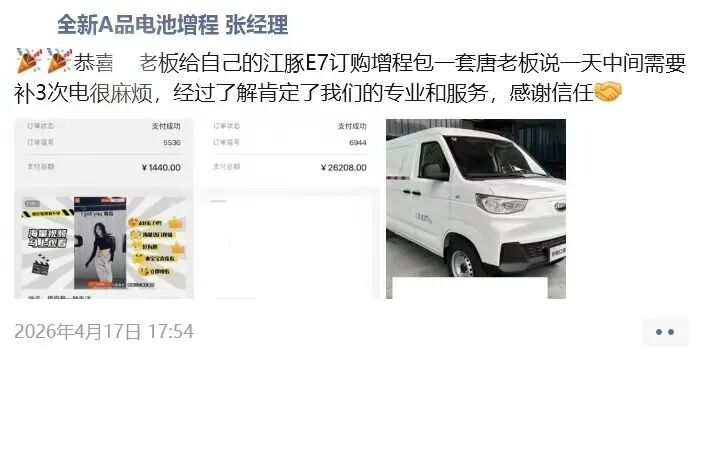
Some merchants market aftermarket batteries as "vehicle power banks," claiming they are plug-and-play, require no wiring modifications, and do not alter the vehicle's original three-electric system (battery, motor, and electronics). They also assert that these devices can be easily removed at any time for vehicle inspections or warranty claims, thus not affecting the manufacturer's original warranty.
However, when asked about post-incident coverage, the merchant stated they offer either a 3-year or a 10-year/300,000-kilometer warranty, covering only the battery itself. This means that even if a rear-end collision causes the battery to ignite or explode, it would not be covered by insurance. Additionally, the vehicle’s original insurance policy would deny claims due to unauthorized battery modifications, leaving all losses to be borne by the owner.
Even so, driven by the dual temptations of and cost-saving, a large number of car owners still take the risk. “Many people here come to replace them—there’s no need to hesitate,” urged the merchant.
In addition to adding batteries, some merchants can also replace the cells. "One cell is 300, charged per piece. There's a discount if you replace the whole set." When asked if the warranty could be continued after replacing the cells, the merchant retorted, "If you want a warranty, why don't you go to a 4S store?" Then, the merchant adjusted his tone and said, "Most 4S stores will ask you to replace the entire pack. We can replace the cells for you, but the warranty will definitely be void after the replacement."
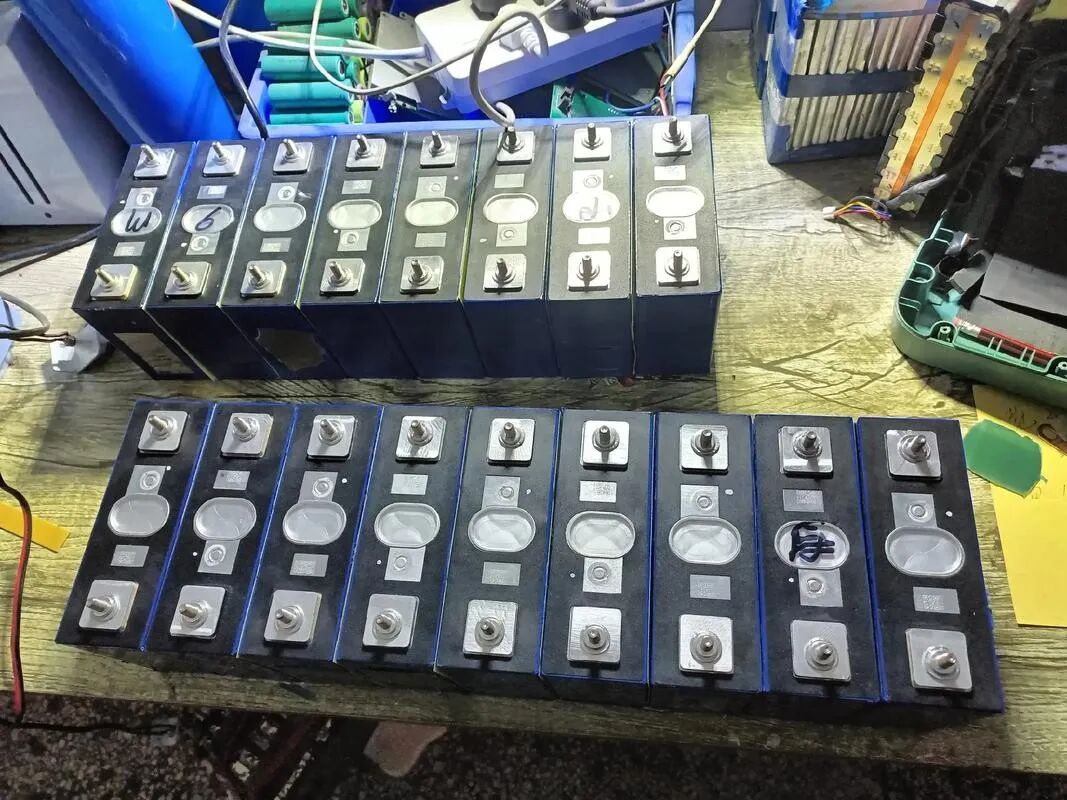
Some merchants also offer battery replacement services, claiming they can replace a 68 kWh battery with an 80 kWh one, using “brand-new CATL batteries.” The replacement takes five days and comes with a separate three-year, 300,000-kilometer warranty. However, upon further inquiry, the merchant becomes evasive and presses urgently.
However, CATL’s new batteries are mostly supplied directly to automakers. According to its financial report, CATL’s net profit for 2025 amounted to RMB 72.201 billion, representing a 42.28% year-on-year increase. Against the backdrop of substantial profitability and persistent supply shortages, CATL has absolutely no need to collaborate with individual industrial and commercial households operating in gray areas.
"There are absolutely no brand new Ningde Time batteries on the market. They just refurbish used batteries from scrapped cars and claim them to be Ningde Time batteries," said Zhang Manager, an industry insider in battery installation services.
02
The recycling system has not been effectively implemented, leaving car owners mired in a cost dilemma.
The fundamental reason why commercial vehicle owners are willing to venture into the gray area of battery modification—despite the safety and compliance risks—is cost. Behind their seemingly substantial income lies unbearable operational pressure, and the high cost of battery replacement is yet another burden weighing them down.
A 2025 survey conducted by an institution on Shanghai’s ride-hailing drivers revealed that full-time drivers earn an average monthly income of nearly RMB 15,000, while part-time drivers earn an average of RMB 3,720. Although income appears respectable on the surface, it masks an extraordinary workload: 40.4% of drivers work 6–10 hours per day, 38.38% work 10–14 hours per day, and 4.04% work over 14 hours per day.
Income is also not equivalent to cost. According to the aforementioned survey, drivers from other regions account for nearly 70% of the total, over 70% of whom operate vehicles via leasing, paying an average monthly leasing fee of approximately RMB 6,634. One Shanghai driver shared their March financial statement: income of RMB 12,800, with total expenses—including RMB 5,030 for vehicle leasing, RMB 633 for charging, RMB 288 for meals, commission-free cards, parking fees, etc.—amounting to RMB 6,400, excluding rent. Another Guangdong-based driver starts work daily at 7:40 a.m. and returns home at 8:00 p.m., taking only three days off per month; after deducting vehicle leasing and electricity charges, their take-home pay is approximately RMB 7,000.
To maintain their income, more than 35% of drivers take almost no days off per month, 30.69% take 1-2 days off, and 22.44% take 3-4 days off.
High-performance ride-hailing vehicles not only consume significant energy but also accelerate battery degradation. Ride-hailing drivers typically travel 200–300 km per day; battery electric vehicles (BEVs) require one charge per day, while extended-range electric vehicles (EREVs) need two charges daily. As battery capacity degrades over time, charging frequency increases, directly reducing the time available for ride-hailing operations. In winter, range is severely reduced—some drivers report, “With the air conditioning on, I can’t complete more than a few trips before needing to recharge.”
Drivers have already pushed costs to the limit in areas like food and charging. After operating a vehicle for five or six years, most cannot afford the additional tens of thousands of yuan required for battery replacement.
Battery degradation is an inevitable growing pain in the early stage of new energy industry development and cannot be avoided in the short term. A deeper issue lies in the fact that China’s battery recycling system is far from mature.
Standard-compliant enterprises on the official whitelist have invested hundreds of millions of yuan, implemented rigorous processing procedures, and adhered to strict environmental protection standards—yet they struggle to acquire batteries due to low recycling prices. A media outlet once dialed the phone numbers of 156 whitelist enterprises, finding that 131 were unreachable—due to disconnected lines, out-of-service numbers, or non-existent numbers—or provided no substantive response after connection. Among the few successfully contacted enterprises, some “lamented” their inability to source batteries, with some even forced to suspend operations.
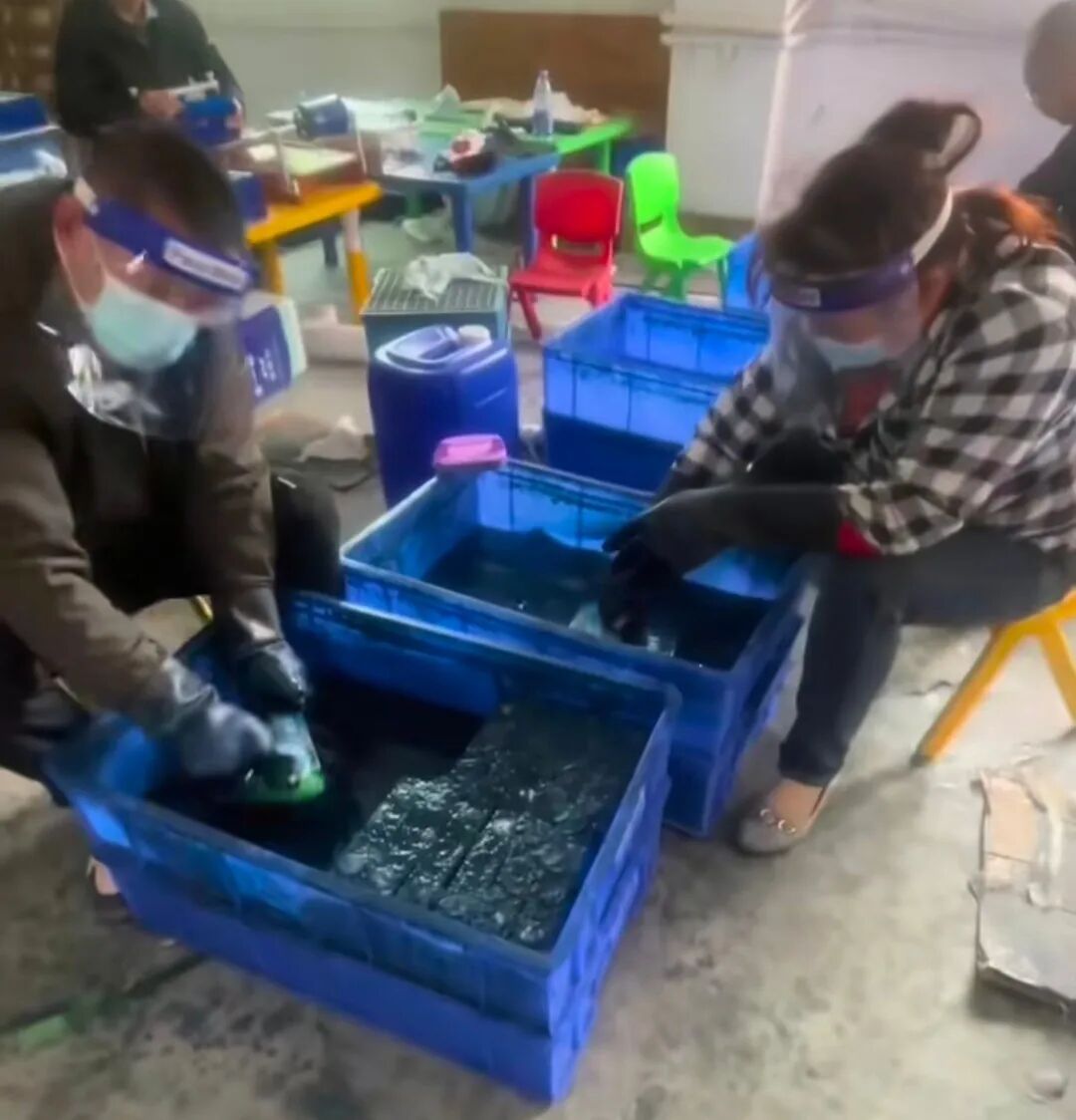
A middleman revealed that nearly 90% of C-end power batteries ultimately end up in small underground workshops. Two years ago, media investigations found that most recycled lithium batteries were disassembled and reassembled, used in two-wheeled or three-wheeled electric vehicles, and flowed to couriers and food delivery personnel.
However, such “cascade utilization” is now explicitly prohibited. The newly issued “Interim Measures” no longer use this term and stipulate that no organization or individual may use—either directly or after processing—in electric bicycles or other prohibited applications.
More heartless merchants replace old batteries with explosion-proof films, pass off the refurbished products as new batteries from major brands, and sell them at low prices. Even if something goes wrong, the so-called "warranty" only covers the battery itself. However, the potential costs are deliberately ignored by many car owners in the face of "saving money" and "luck."
Regarding automakers, their stance toward vehicles past their warranty period and ride-hailing drivers remains unclear. Official battery retrofits yield thin profits, entail complex liability determination, and cannibalize new vehicle sales, making it difficult for automakers to develop effective response strategies.
On one side, licensed recycling enterprises possess technology and credentials but lack batteries—a paradoxical reality; on the other, informal workshops thrive in the gray market with low costs, high prices, and unchecked growth. On one side, commercial vehicle owners reluctantly accept exorbitant battery replacement costs; on the other, unauthorized modifications pose massive safety hazards. This struggle surrounding the wave of retiring power batteries has yet to find a balance.
Policies are being further strengthened. The "Interim Management Measures" stipulate that when non-battery-swap new energy vehicles are scrapped and deregistered, the entire vehicle and the original factory battery must be sold to qualified enterprises, and it is strictly prohibited to dismantle or sell the battery separately in advance; the absence of the battery will prevent the deregistration process. The "Work Plan on Accelerating the Cultivation of New Growth Points in Service Consumption" issued by the State Council mentions the classification management of vehicle modifications, which is also forcing black workshops to exit the market and broadening the development path for qualified enterprises.
However, the crux of the dilemma in the recycling of power batteries is not a technical issue, but rather that the profit mechanism has yet to be properly sorted out. With already slim profits, car manufacturers find it difficult to take the lead in battery swapping initiatives.90%C90% Official enterprises find it hard to collect batteries due to the high costs, and there is a significant profit margin for car owners to sell their old batteries individually. A middleman revealed that nearly 90% of consumer-end power batteries ultimately flow into underground workshops at a high price.
To break the deadlock, joint efforts from multiple parties are required: automakers must seek solutions, recycling enterprises must establish closed-loop systems, and regulatory authorities must crack down on illegal workshops while supporting legitimate players. Otherwise, car owners who cannot afford battery replacements will have no choice but to “take their chances,” allowing this gray-market chain to continue eroding industrial health and public safety.
Batteries have a limited lifespan, and the industry cannot be short-lived. If recycling channels remain unsmooth, the “first half” of new-energy vehicles can never truly conclude.
【Copyright and Disclaimer】The above information is collected and organized by PlastMatch. The copyright belongs to the original author. This article is reprinted for the purpose of providing more information, and it does not imply that PlastMatch endorses the views expressed in the article or guarantees its accuracy. If there are any errors in the source attribution or if your legitimate rights have been infringed, please contact us, and we will promptly correct or remove the content. If other media, websites, or individuals use the aforementioned content, they must clearly indicate the original source and origin of the work and assume legal responsibility on their own.
Most Popular
-

Continental Plans to Begin Sale of ContiTech in Early 2026
-

$4 Billion! Medtronic Makes Another Acquisition
-
Profit and Revenue Growth Struggle to Conceal Debt Repayment Pressure; Success of Kingfa Sci & Tech's High-End Strategy Yet to Be Seen
-

BASF Delivers First Batch of Innovative Cathode Materials for Semi-Solid-State Batteries to Weilan New Energy
-

Why did a century-old european dental instrument giant relocate its manufacturing hub to china?