Polypropylene cost dividend fades, off-season pressure continues
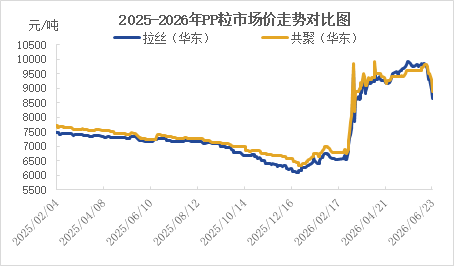
Data source: Jinlianchuang
In June, the polypropylene market rose and then retreated. At the beginning of the month, the cost side continued to provide support, coupled with the domestic plants entering a concentrated maintenance period. Several oil-based units, including Zhongjing Petrochemical Phase II, Fushun Petrochemical, Zhanjiang Dongxing, and Hainan Ethylene, among others, were involved.PDHDevice shutdowns for centralized parking maintenance have increased, with maintenance-related output losses at a relatively high level. The polypropylene industry’s operating rate has declined markedly year on year. Within the month, the market is in a commissioning lull, and petrochemical companies are controlling volumes and shipments with strong intentions to support prices. Meanwhile, port inventories continue to draw down, leaving overall market spot availability neutral to slightly tight. Mid-month, the U.S. and Iran reached a ceasefire understanding memorandum, raising expectations for the resumption of navigation through the Strait of Hormuz. International crude oil prices fell, pushing down oil-based production costs; amid bearish sentiment, prices were capped.PPFutures prices have dropped sharply. Although spot market quotes have followed the decline, factors such as concentrated maintenance and limited market circulation resources have provided support, resulting in a smaller decrease compared to the futures market.6The month is in a seasonal low-demand period; plastic-woven products,BOPPOperating rates in downstream industries such as film have fallen to the lowest level of the year. End-user order follow-through remains weak, and persistently high feedstock prices continue to squeeze processors’ margins. Downstream buyers generally adopt a purchase-as-needed strategy, completely abandoning mid- to long-term stockpiling. The market is seeing only sporadic low-priced deals driven by rigid demand, while speculative inventory building has essentially disappeared, leaving market conditions weak.
Market Outlook:
Supply side:6Multiple sets of oil system maintenance for monthly vehicle inspection and repair.PDHThe equipment is planned to be restarted successively, and the overall industry operating rate will increase from6Monthly prices are gradually rebounding from low levels, and domestic monthly supply is expected to increase month on month, so shipment pressure on petrochemical producers is steadily intensifying. Refineries’ willingness to support prices by controlling output is weakening, and they are frequently cutting ex-factory prices to accelerate sales. As a result, market prices are also likely to remain weak.
Requirements: Translate the above content into English and output only the translation, without any explanation.7During the month, as off-season demand continued to deepen and activity was constrained by high temperatures, the operating rates of major downstream industries continued to decline. The plastic weaving industry, due to insufficient infrastructure-related and courier-bag orders, maintained operating rates at year-to-date lows.BOPPDue to a lack of orders from the food and daily chemical sectors, film manufacturers have generally reduced their production load; the continuous fluctuations in raw material prices have compressed the profits of product processing. Downstream factories mostly adopt short-cycle, just-in-time procurement based on actual needs, with almost no speculative stockpiling. The lack of upward driving force from the demand side has created negative feedback for the market trend.
Market sentiment:7The monthly merchant sentiment is mainly cautiously bearish. As some installations plan to restart, merchants' anxiety about shipments increases, leading them to actively lower prices to sell goods and recover funds.PPCapital sentiment in the futures market is pessimistic, further transmitting pessimistic expectations to the spot market and reinforcing merchants' bearish outlook.
Overall, translate the above content into English and output only the translation, with no explanation.7Due to factors such as off-season demand combined with bearish market sentiment, the overall situation is being constrained.PPThe market is running somewhat weakly.
【Copyright and Disclaimer】The above information is collected and organized by PlastMatch. The copyright belongs to the original author. This article is reprinted for the purpose of providing more information, and it does not imply that PlastMatch endorses the views expressed in the article or guarantees its accuracy. If there are any errors in the source attribution or if your legitimate rights have been infringed, please contact us, and we will promptly correct or remove the content. If other media, websites, or individuals use the aforementioned content, they must clearly indicate the original source and origin of the work and assume legal responsibility on their own.
Most Popular
-

Evonik Parts Ways With The Polyester Business! A Strategic Retreat By A Germany Chemical Giant And The Global Industry Shift
-

A Look at the Material Suppliers Behind SpaceX
-

Next-generation motors of new energy vehicles: Single-Round Thousand Horsepower, Replacing Brakes, How Powerful Are They?
-

Nike mind: Neuroscience and Foam Material Innovation Merge to Lead Low-Carbon Upgrading Technology in the Footwear Industry
-
Celanese Joins Forces With Aisan Industry to Reshape the Low-Carbon POM Competitive Landscape, Changing the Automotive Supply Chain