Overcapacity drives transformation: PP Industry Faces Make-or-Break Divide as Jingbo Bets on Multiple High-End Niche Markets
Polypropylene (PP), a synthetic resin, is a common commodity in the plastic industry. Its name appears on packaging bags, car instrument panels, and medical syringes, and it has consistently ranked among the top in the production of general plastics. Because of its "ubiquity," it has long been labeled as: large volume, low price, and homogenized.
However, this logic is currently being broken.
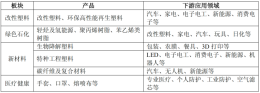
Jingbo Holdings Group (hereinafter referred to as "Jingbo") and its subsidiary, Jingbo Polyolefins, have brought a wide range of new products to CHINAPLAS (Hall 6.2, A02). From medical-grade transparent PP to chemically recycled PP, and even foamed PP - a variety of high-performance PPs cover five major sectors: medical, automotive, packaging, cold chain, sports, and new energy, almost all of which are for high-end niche applications.
This shift is not unique to Jingbo. It reflects a profound divergence unfolding across the entire polypropylene industry: commodity-grade materials continue to compete on price, while another group of companies is redefining the boundaries of PP through R&D capabilities.
Why now? There are two reasons.
Firstly, there is price pressure caused by overcapacity. In recent years, China’s polypropylene (PP) production capacity has continued to expand, leading to prolonged downward pressure on prices; the strategy of competing on scale is becoming increasingly ineffective.
Second is the structural upgrade of downstream demand. Emerging sectors such as new energy vehicles, medical devices, sustainable packaging, and the low-altitude economy now demand materials that far exceed the capabilities of general-purpose PP. Those who strategically position themselves early will find blue oceans within red seas.
“Waste Plastics to Polypropylene”: How Chemical Recycling Is Rewriting the Rules
Start with the most closely watched green issues.
If you have interacted with brand owners or car manufacturers for procurement in the past six months, chances are you have heard a word:Recycled ContentThis is backed by strict regulations: the EU PPWR (Packaging and Packaging Waste Regulation) mandates a mandatory proportion of recycled material in packaging; new energy vehicle manufacturers face pressure from the ELV (End-of-Life Vehicles) regulation, requiring an increased percentage of recycled content in materials; meanwhile, ESG evaluations are pushing for "green procurement."”Transforming a paper announcement into tangible supplier selection criteria.
But the old problem with recycled PP has never changed:Physical recycled materials have poor performanceImpurities, strong odor, excessive precipitates, and reduced mechanical properties—these defects have kept physical recycled PP from being used in high-end applications, limiting it to low-value fields.
Jingbo Polyolefin launched the following at this exhibition:rPP-C series, took another path:Chemical regeneration。
The logic of chemical recycling is to first crack and reduce waste polypropylene back into propylene monomers, and then repolymerize them into new PP. Since it "reshuffles" at the molecular level, the purity and performance of the final product can match those of virgin PP, rather than just doing "addition and subtraction" on the existing molecular chains as in physical recycling.
The chain established by Jingbo is: "Waste Plastics → Pyrolysis Oil → Propylene → Polypropylene → Products." This pathway enables the rPP-C series to achieve:
Food-grade productsLow extractables, low odor, high cleanliness; suitable for yogurt cups, ready-to-drink tea bottles, and thermoformed food containers; withstands high-temperature sterilization and cold-chain shock.
Automotive grade products: Recyclable content ratio can reach 100%, with high toughness, high rigidity, high temperature resistance, and low VOC, suitable for components such as dashboards, door panels, and pillars, equivalent to virgin PP.
Daily Chemical ProductsExcellent chemical stability, suitable for cosmetic bottles and personal care containers, meeting the brand's green image requirements.
It is worth noting that the product has been awarded.ISCC PLUS certification(Certification for International Sustainable Development and Carbon), which means the full-chain traceability has been endorsed by a third party — this is a tangible procurement rationale for brand owners and automakers that need to disclose ESG reports.
During the exhibition, Jincheng will also host the “Chemical Recycling for Sustainable Development Forum”—a move that is thought-provoking: the technology is already mature, and the next step is to align industry-wide awareness and achieve commercial collaboration across the entire value chain.
PPA "New Identity": From Commodity Plastics to High-End Specialty Materials
If recycled PP is being produced,“Eco-friendly Card”, then high-end specialty materials are precisely what they're targeting.“Performance Card”。
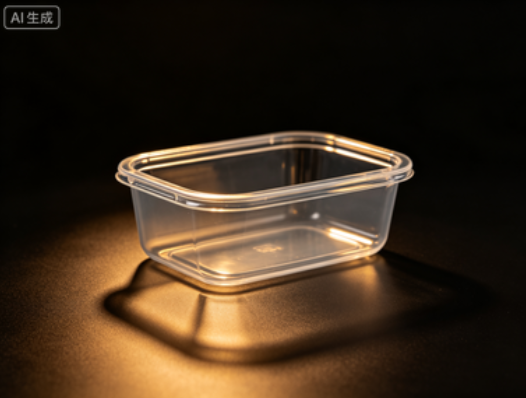
Medical Transparent PP (RP348P)This material is another highlight of Jingbo Polyolefins at the exhibition. Its target is clear: medical devices impose requirements on materials that are orders of magnitude higher than industrial-grade standards in terms of safety, cleanliness, and sterilization tolerance.
Key specifications of RP348P: Complies with YY/T 0242-2007 Medical Device Standards and has undergone biological evaluation confirming non-toxicity and non-sensitization; withstands dual sterilization via 121°C saturated steam and ethylene oxide (EO); features low haze design, offering transparency comparable to glass; maintains toughness at temperatures below 0°C, effectively reducing damage rates during cold-chain transportation. The final point is especially critical—low-temperature damage during winter logistics in Northern China has long been an endemic issue in the medical consumables supply chain.“A "dull pain," a solution at the material level, is often more thorough than optimizing the logistics plan.
Expanded Polypropylene (EPP800MM) is another noteworthy segment.
EPP (Expanded Polypropylene) is not a new material, but there are two points worth noting about Jingbo's approach: first, the adoptionSupercritical CO₂₂Physical foaming processWithout the use of chemical foaming agents, the product has no odor and is 100% recyclable, which, in an era of increasingly strict environmental compliance, represents a genuine differentiating advantage; second, the application scenarios are precisely targeted—from the outer shells of New Energy Vehicle (NEV) battery packs (lightweight + safety cushioning), to the core materials of wind turbine blades (weight reduction + reduced mechanical load), and then to the liners of sports helmets (high rebound + energy absorption), all of which are high-value, high-growth scenarios.
The density of EPP800MM is adjustable (0.02–0.2 g/cm³), offering engineers genuine design flexibility. In new-energy vehicle battery management systems, cell spacers must simultaneously provide thermal insulation, lightweight properties, and impact resistance—making EPP material an increasingly important option for this application.
Geopolitical Competition and "Material Sovereignty"
Among the products displayed by Jingsibo, there is a detail worth special attention from the plastic industry: alongside the polypropylene business, there is also the company's polyarylene materials business.Para-aramid nanofiber Para-aramid paper。
Aramid and polypropylene originally belong to two different sectors, but they are now displayed together on the same exhibition stand—the logic is straightforward: both represent domestic alternatives to imported materials.
Para-aramid has been monopolized by Japanese and American companies such as DuPont (Kevlar) and Teijin for a long time, and is the core material for bulletproof vests, aerospace structural components, and power battery separators. Polyaromatic New Materials (a joint venture established in 2018 between Jingbo and Tsinghua University) has achieved the first in China.Para-aramid nanofibersBreakthrough in large-scale production - fiber diameter of 10-100 nm, aspect ratio exceeding 3000, delamination temperature can reach 400°C; meanwhile, exclusive mastery of fully para-aramid paper preparation technology, which reduces weight by 20% compared to conventional meta-aramid paper, filling the gap in low grammage aramid paper in China.
Why mention this in the context of the polypropylene industry?
Over the past two years, geopolitical restructuring of global supply chains has already had a tangible impact on the materials industry. U.S. export controls targeting China have broadened in scope, and European companies’ demands for “de-risking” strategic materials have grown increasingly urgent. Against this backdrop, both chemical recycling in the polypropylene (PP) value chain and domestic production of strategic materials such as aramid fibers point to the same objective.Chinese chemical new materials companies are transitioning from "capacity providers" to "technology definers."。
At the exhibition, Wang Junhua, vice chairman of Jinxing Group, stated: "The focus of future industry competition will shift from 'production capacity scale' to 'technological barriers' and 'ecological collaboration'. Enterprises with innovation capabilities and full-chain integration capabilities will take the leading position in the new industrial landscape."
This statement carries extra weight when heard in the context of 2026.
Trend is clear, who is seizing the pricing power?
The profit margin of general-purpose PP has been compressed to the limit, and the future growth lies in highly customized special grades—medical-grade, automotive-grade, and food-contact-grade. Each specific application scenario has its own technical barriers and pricing power.
The second is to achieve circular and compliant operations.EU regulations, automotive ELV, and brand ESG - the triple compliance pressures will transform the demand for recycled PP from a "nice-to-have" to a "must-have." Chemical recycling, offering stronger performance assurance compared to physical recycling, will become the dominant technology route for high-end recycled PP.
Third, industrial chain integration.
Manufacturers still waiting for “a market recovery” might ask themselves this question: When prices rebound, what will enable you to maintain your profits?
【Copyright and Disclaimer】This article is the property of PlastMatch. For business cooperation, media interviews, article reprints, or suggestions, please call the PlastMatch customer service hotline at +86-18030158354 or via email at service@zhuansushijie.com. The information and data provided by PlastMatch are for reference only and do not constitute direct advice for client decision-making. Any decisions made by clients based on such information and data, and all resulting direct or indirect losses and legal consequences, shall be borne by the clients themselves and are unrelated to PlastMatch. Unauthorized reprinting is strictly prohibited.
Most Popular
-

$4 Billion! Medtronic Makes Another Acquisition
-

Why did a century-old european dental instrument giant relocate its manufacturing hub to china?
-

Toray Industries and SGL Carbon Establish Carbon Fiber Supply Partnership for Aerospace Sector
-
Profit and Revenue Growth Struggle to Conceal Debt Repayment Pressure; Success of Kingfa Sci & Tech's High-End Strategy Yet to Be Seen
-

Deadly Impact: Hormuz Strait Blockade Sparks Shortage of Plastic Raw Materials, Threatening Shutdowns at Japanese and Korean Chemical Plants