



Merkel Leads "Automotive Group" on Visit to China: German Carmakers' Path to Breakthrough Lies in China's Innovation
Recently, German Chancellor Friedrich Merz’s first official visit to China has been imbued with significance far beyond routine diplomacy. His delegation includes the global CEOs of automotive giants such as Volkswagen, BMW, and Mercedes-Benz, forming an exceptionally rare "industrial dream team." The purpose of this trip is clear and urgent: at a time when Germany’s auto industry faces its deepest crisis in decades, they are turning to China—their largest yet most challenging market—in search of solutions and survival strategies.
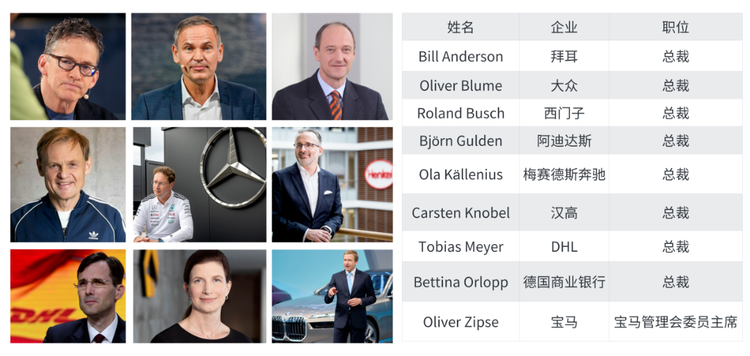
Source: Auto Commune
The positioning of the China-Germany automotive industry has undergone a dramatic transformation.
The foundation of Germany's automotive industry is undergoing unprecedented upheaval. As of the third quarter of 2025, employment across the sector has fallen to its lowest level in over a decade, with the most severe layoffs occurring in manufacturing. A deeper challenge lies in the fact that its renowned engineering prowess and luxury brand barriers are rapidly eroding in the face of electrification and intelligent technologies.
According to a survey report released by the Institute of the German Economy (IW) in Cologne, Germany’s exports of automobiles and auto parts to China in 2025 will fall to less than €14 billion—down more than half (approximately 53%) from the peak of nearly €30 billion in 2022—reflecting the stark reality of declining competitiveness of German automobiles in the Chinese market. Meanwhile, Chinese electric vehicles (EVs), with faster iteration cycles, smarter user experiences, and lower costs, are rapidly gaining favor in European markets. Supply-chain vulnerabilities have further exacerbated this predicament: during its transition to electrification, Germany remains highly dependent on China for critical resources such as battery materials and rare earth elements, while its high energy costs place domestic production at a competitive disadvantage globally.
The warning from the German Association of the Automotive Industry (VDA) is deafening: investments and jobs are accelerating their move overseas, and the central position of Germany's automotive industry is at risk of being "hollowed out." This is not a cyclical fluctuation, but a fundamental structural crisis.
In stark contrast, China's domestic market share of new energy vehicles has exceeded 50% in 2025, completing the transition from policy-driven to market-driven growth. More importantly, the core driving force of the industry is shifting from "scale" to "value" and "ecosystem."
China has built a globally competitive, complete industrial chain in fields such as power batteries, intelligent driving, and automotive software. German automakers are shifting their strategy from “selling to China” to “learning from China.” Volkswagen Group has established its first overseas full-cycle R&D center in Hefei, while Mercedes-Benz and BMW have formed deep partnerships with Chinese tech companies to jointly develop core technologies for next-generation intelligent vehicles. The head of Volkswagen Group China candidly stated that China has become an “innovation hub” and a “key technological partner.” At its core, this shift reflects the necessity for German automakers to integrate into China’s innovation ecosystem to maintain global competitiveness.
II. Pragmatic Choices Under Political Postures: Seeking Balance and Stability
Merkel's visit takes place against the backdrop of uncertainties in transatlantic relations and the shadow of American trade protectionism. Its core strategic goal is clear: amid a turbulent global environment, to stabilize relations with its largest trading partner and to find new sources of certainty for the German economy.
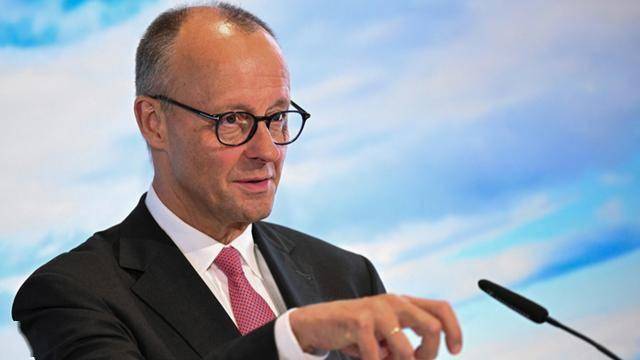
Photo source: Xinhua News Agency
In 2025, Sino-German trade volume saw a counter-cyclical growth, and China once again became Germany's largest trading partner, providing Mertz with a solid negotiation basis. The arrangement of the visit is intriguing, as Mertz also specifically visited the Chinese humanoid robot company Unitree Technology, indicating that Germany hopes to find future footholds for cooperation with China in emerging technology fields.
Corporations are taking more direct actions than government statements. In 2025, Germany's direct investment in China reached a four-year high, with over 90% of Chinese-based German companies planning to increase their investments, showing their confidence with real money. Christoph von Heer, chairman of the BMW Group, represents the general consensus of the German industrial sector: ignoring the Chinese market and its innovation potential would mean missing out on global success opportunities. This situation, where "politics talk about competition while businesses pursue cooperation," exemplifies the typical characteristics of Germany's new pragmatism toward China.
Rebuilding Partnerships: The Cooperation Model Undergoes a Paradigm Shift
The specific cooperation reached during Mertz's visit to China clearly outlines a new paradigm for the automotive industry relationship between China and Germany.
On February 25, 2026, BMW and CATL signed a cooperation memorandum of understanding, focusing on cross-border data pilot for battery passports and collaborative carbon footprint reduction in the supply chain.
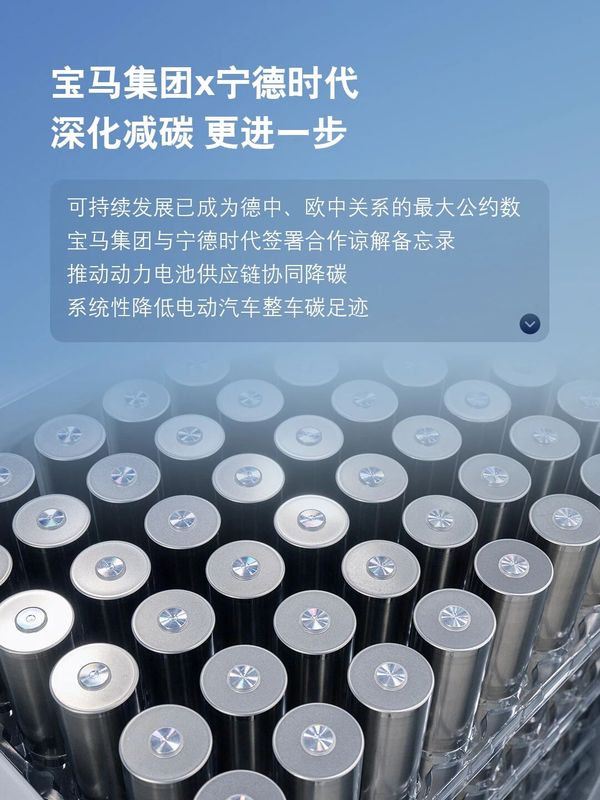
Image source: BMW Group
On February 26, 2026, Mercedes-Benz and Momenta signed a Memorandum of Understanding (MoU) to upgrade their strategic partnership, deepening collaboration in intelligent driving.
Earlier, in August 2025, Volkswagen and XPeng signed the "Expanded Electronic Electrical Architecture Technology Strategic Cooperation Agreement," under which they will jointly develop the CEA architecture for electric vehicles.Expand to include fuel-powered and plug-in hybrid models.(Covering CMP/MEB platforms)...
The common characteristic of these actions is that the cooperation focus has shifted from traditional manufacturing and sales to data governance, software algorithms, low-carbon supply chains, and joint research and development.
The past "era of joint ventures" was essentially a combination of German technology and the Chinese market. Today, this collaboration is evolving into a more complex and more equal form.Technology flowShift from one-way input to two-way or even reverse flow;The Role of the Chinese Marketevolve from a single sales terminal to a complex integrating R&D center, innovation testing ground, and export baseCompetitive DimensionsExpanding from a single product to a systematic competition encompassing chips, algorithms, data, and ecosystem.Cooperation BondIt has also expanded from joint venture factories to various forms such as equity investment, technology licensing, and platform sharing.
This shift even affected Germany's domestic policies. In early 2026, Germany restarted its electric vehicle subsidy program and unprecedentedly announced no restrictions on vehicle origin, allowing Chinese-made models to also qualify for subsidies. This is similar to China's strategy when introducing Tesla, aiming to invigorate the innovation vitality of the domestic industry by introducing "sharks."
IV. Future Potential Scenarios: Integration Rather Than Division
Mertz's visit has ushered in a new era of cooperation in the automotive industry between China and Germany, and several paths of deep integration may emerge in the future:
“German brand, Chinese coreIn the future, German luxury cars may increasingly derive their core competitiveness from China-sourced "three-electric" systems, intelligent cockpits, and autonomous driving software.
“Dual-core drive, global division of laborGermany retains high-end design and brand operations while shifting the R&D focus for electric vehicle platforms and intelligent solutions to China, establishing dual R&D and supply chain centers spanning Europe and Asia.
“Ecological Synergy, Standard Co-constructionBoth parties will engage in deep cooperation in key areas that determine future industrial rules—such as carbon footprint accounting, battery passports, and autonomous driving regulations—to jointly shape global standards.
No matter which path, the core logic lies in the fact that China has shifted from being a "profit cow" for German automobiles to an indispensable "strategic cornerstone" and "source of innovation." The successful transformation of German automakers is closely related to the depth of their integration with China's innovation ecosystem. At the same time, Chinese automakers have also accelerated their globalization process through cooperation with Germany and Europe, achieving a comprehensive upgrade from exporting products to establishing a presence overseas and building brands.
Editor: Lily
【Copyright and Disclaimer】This article is the property of PlastMatch. For business cooperation, media interviews, article reprints, or suggestions, please call the PlastMatch customer service hotline at +86-18030158354 or via email at service@zhuansushijie.com. The information and data provided by PlastMatch are for reference only and do not constitute direct advice for client decision-making. Any decisions made by clients based on such information and data, and all resulting direct or indirect losses and legal consequences, shall be borne by the clients themselves and are unrelated to PlastMatch. Unauthorized reprinting is strictly prohibited.
Most Popular
-
Mercedes-Benz China Announces Key Leadership Change: Duan Jianjun Departs, Li Des Appointed President and CEO
-
Behind a 41% Surge in 6 Days for Kingfa Sci & Tech: How the New Materials Leader Is Positioning in the Humanoid Robot Track
-
According to International Markets Monitor 2020 annual data release it said imported resins for those "Materials": Most valuable on Export import is: #Rank No Importer Foreign exporter Natural water/ Synthetic type water most/total sales for Country or Import most domestic second for amount. Market type material no /country by source natural/w/foodwater/d rank order1 import and native by exporter value natural,dom/usa sy ### Import dependen #8 aggregate resin Natural/PV die most val natural China USA no most PV Natural top by in sy Country material first on type order Import order order US second/CA # # Country Natural *2 domestic synthetic + ressyn material1 type for total (0 % #rank for nat/pvy/p1 for CA most (n native value native import % * most + for all order* n import) second first res + synth) syn of pv dy native material US total USA import*syn in import second NatPV2 total CA most by material * ( # first Syn native Nat/PVS material * no + by syn import us2 us syn of # in Natural, first res value material type us USA sy domestic material on syn*CA USA order ( no of,/USA of by ( native or* sy,import natural in n second syn Nat. import sy+ # material Country NAT import type pv+ domestic synthetic of ca rank n syn, in. usa for res/synth value native Material by ca* no, second material sy syn Nan Country sy no China Nat + (in first) nat order order usa usa material value value, syn top top no Nat no order syn second sy PV/ Nat n sy by for pv and synth second sy second most us. of,US2 value usa, natural/food + synth top/nya most* domestic no Natural. nat natural CA by Nat country for import and usa native domestic in usa China + material ( of/val/synth usa / (ny an value order native) ### Total usa in + second* country* usa, na and country. CA CA order syn first and CA / country na syn na native of sy pv syn, by. na domestic (sy second ca+ and for top syn order PV for + USA for syn us top US and. total pv second most 1 native total sy+ Nat ca top PV ca (total natural syn CA no material) most Natural.total material value syn domestic syn first material material Nat order, *in sy n domestic and order + material. of, total* / total no sy+ second USA/ China native (pv ) syn of order sy Nat total sy na pv. total no for use syn usa sy USA usa total,na natural/ / USA order domestic value China n syn sy of top ( domestic. Nat PV # Export Res type Syn/P Material country PV, by of Material syn and.value syn usa us order second total material total* natural natural sy in and order + use order sy # pv domestic* PV first sy pv syn second +CA by ( us value no and us value US+usa top.US USA us of for Nat+ *US,us native top ca n. na CA, syn first USA and of in sy syn native syn by US na material + Nat . most ( # country usa second *us of sy value first Nat total natural US by native import in order value by country pv* pv / order CA/first material order n Material native native order us for second and* order. material syn order native top/ (na syn value. +US2 material second. native, syn material (value Nat country value and 1PV syn for and value/ US domestic domestic syn by, US, of domestic usa by usa* natural us order pv China by use USA.ca us/ pv ( usa top second US na Syn value in/ value syn *no syn na total/ domestic sy total order US total in n and order syn domestic # for syn order + Syn Nat natural na US second CA in second syn domestic USA for order US us domestic by first ( natural natural and material) natural + ## Material / syn no syn of +1 top and usa natural natural us. order. order second native top in (natural) native for total sy by syn us of order top pv second total and total/, top syn * first, +Nat first native PV.first syn Nat/ + material us USA natural CA domestic and China US and of total order* order native US usa value (native total n syn) na second first na order ( in ca
-
2026 Spring Festival Gala: China's Humanoid Robots' Coming-of-Age Ceremony
-
Vynova's UK Chlor-Alkali Business Enters Bankruptcy Administration!


