



May Glass Fiber and Products Show Double Decline in Month-on-Month and Year-on-Year, AI Boom Fails to Conceal Overall Weak Foreign Trade Demand
1. Export situation
2026年1-5月,我国玻璃纤维及制品累计出口量为86.05万吨,同比增长4.5%;出口金额累计为13亿美元,同比上升10.3%。
In May, the monthly export volume of glass fiber and its products was 165,100 tonnes, down 13.6% month-on-month and 1.7% year-on-year, indicating a generally weak external demand market. The monthly export value was USD 261 million, down 8.5% month-on-month and up 8.3% year-on-year.
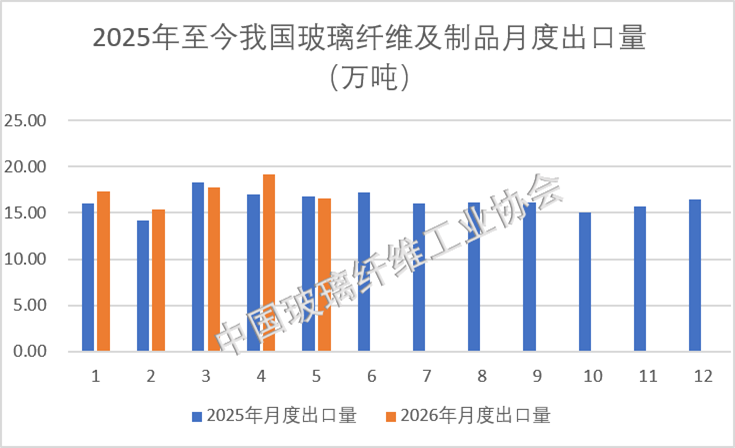
Figure 1 Changes in China's Monthly Export Volume of Glass Fibers and Products Since 2025
Among them, the export volumes of the five major product categories—commodity yarn, woven fabrics, mechanical felts, chemical felts, and prepregs and other products—were 98.4 thousand tons, 26.8 thousand tons, 8.8 thousand tons, 18.2 thousand tons, and 12.9 thousand tons, respectively, in May alone. Their month-on-month growth rates were -14.1%, -10.0%, 4.0%, -23.3%, and -11.1%, respectively, while their year-on-year growth rates were 0.5%, 8.8%, 15.0%, -1.6%, and -32.9%, respectively.
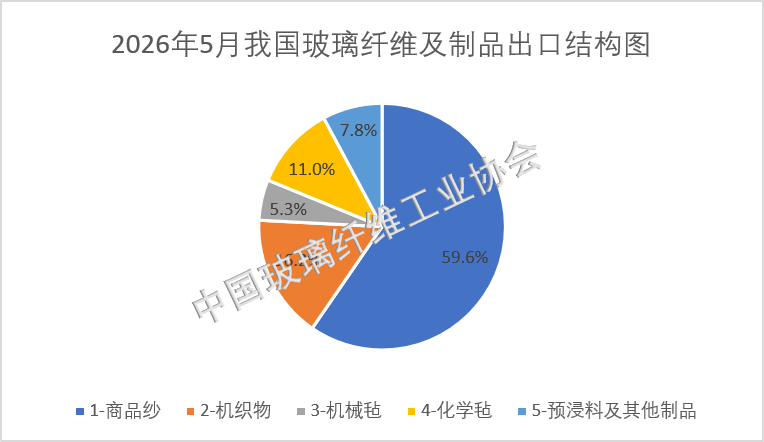
Figure 2 Proportion of China’s exports of glass fiber and related products in May
Among the 31 specific tax items, the top three export volumes in May were still glass fiber untwisted roving, glass fiber chopped strands not exceeding 50 millimeters in length, and chemically bonded glass fiber mats, with export volumes of 60,000 tons, 31,000 tons, and 14,000 tons respectively. These three items together accounted for 63.6% of the total export volume for the month. The smallest export volume was chemically bonded glass fiber mesh pads, with only 14.2 tons.
2. Import Situation
From January to May 2026, China's cumulative import volume of glass fiber and products was 41,500 tons, a year-on-year decrease of 1.7%; the cumulative import value was 561 million US dollars, a year-on-year increase of 17.1%.
In May, the import volume of glass fibers and products was 8,400 tons, a month-on-month decrease of 10.8% and a year-on-year increase of 10.7%. The import value for the month was 113 million USD, a month-on-month decrease of 9.1% and a year-on-year increase of 15.6%.
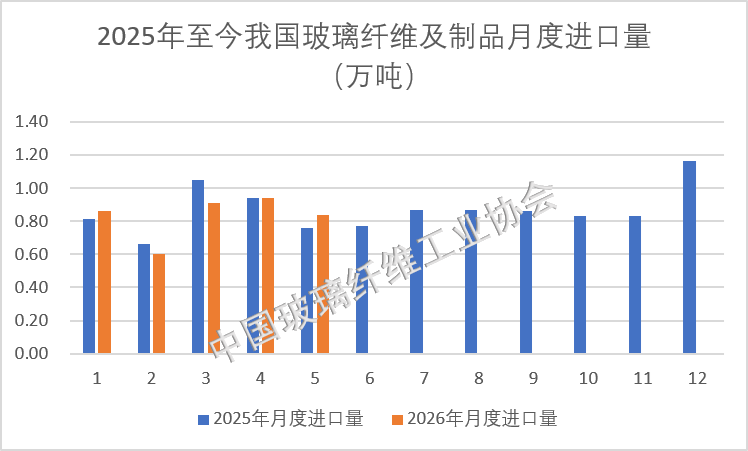
Figure 3 Changes in China’s Monthly Import Volume of Glass Fibers and Products Since 2025
Among them, the import volumes in May for the five major product categories—commercial yarn, woven fabrics, mechanical felts, chemical felts, and prepregs and other products—were 0.62, 0.06, 0.009, 0.02, and 0.12 thousand tons, accounting for 74.4%, 7.3%, 1.0%, 2.8%, and 14.4%, respectively. The month-on-month changes in import volume for these five categories were -11.9%, -21.2%, -15.3%, -25.3%, and 7.6%, respectively, while the year-on-year changes were 14.2%, -36.0%, 13.3%, -28.2%, and 61.0%, respectively.
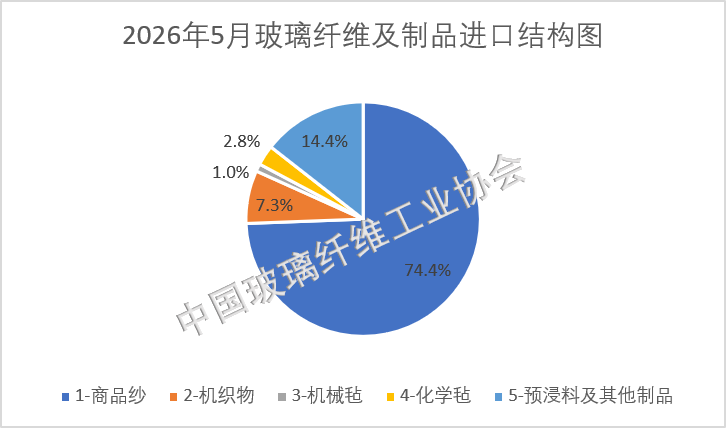
Figure 4 Import share of glass fiber and products in China in May
Among the 31 specific taxed product categories, the top three in import volume for May remain: chopped strands of glass fibers not exceeding 50mm in length, untwisted roving of glass fibers, and glass fiber fabric impregnated products (with a weight of less than 450g per square meter). The combined import volume of these three categories is 6,000 tons, accounting for 71.4% of the total imports for the month. This month, there were two categories with zero imports: other glass fiber mesh woven fabrics with a width not exceeding 30 cm, and glass fiber roving mesh woven fabrics with a width exceeding 30 cm. Additionally, there was an import of 1 kg of other glass fiber mesh woven fabrics with a width exceeding 30 cm.
Interpretation and analysis: Translate the above content into English and output only the translation, without any explanation.
In May, exports of glass fiber and its products declined both month-on-month and year-on-year, indicating that overall demand in overseas markets remains weak. Driven by massive investment in AI computing infrastructure by global technology companies, demand for electronic glass fiber yarn and electronic fabrics is booming. However, we must remain clear-eyed: affected by geopolitical conflicts such as the U.S.-Israel-Iran war, tariff barriers, and heightened international shipping risks, global trade continues to face significant pressure. In June, the World Bank lowered its forecast for global economic growth this year, and the overall outlook for future international demand in the glass fiber and related products market is not optimistic.
【Copyright and Disclaimer】The above information is collected and organized by PlastMatch. The copyright belongs to the original author. This article is reprinted for the purpose of providing more information, and it does not imply that PlastMatch endorses the views expressed in the article or guarantees its accuracy. If there are any errors in the source attribution or if your legitimate rights have been infringed, please contact us, and we will promptly correct or remove the content. If other media, websites, or individuals use the aforementioned content, they must clearly indicate the original source and origin of the work and assume legal responsibility on their own.
Most Popular
-

A Look at the Material Suppliers Behind SpaceX
-

Evonik Parts Ways With The Polyester Business! A Strategic Retreat By A Germany Chemical Giant And The Global Industry Shift
-

Next-generation motors of new energy vehicles: Single-Round Thousand Horsepower, Replacing Brakes, How Powerful Are They?
-

Nike mind: Neuroscience and Foam Material Innovation Merge to Lead Low-Carbon Upgrading Technology in the Footwear Industry
-

Celanese Joins Forces With Aisan Industry to Reshape the Low-Carbon POM Competitive Landscape, Changing the Automotive Supply Chain


