



Lithium Battery Breakthrough: Musk Says Tesla Achieves Scalable Production of Dry Electrode Batteries
Tesla CEO Elon Musk has confirmed that the company has overcome a critical bottleneck in lithium battery manufacturing, successfully achieving mass production of dry electrode technology. Musk called this breakthrough a "major advance" in lithium battery production technology, marking a key step forward for the electric vehicle industry in reducing manufacturing costs and increasing production efficiency.
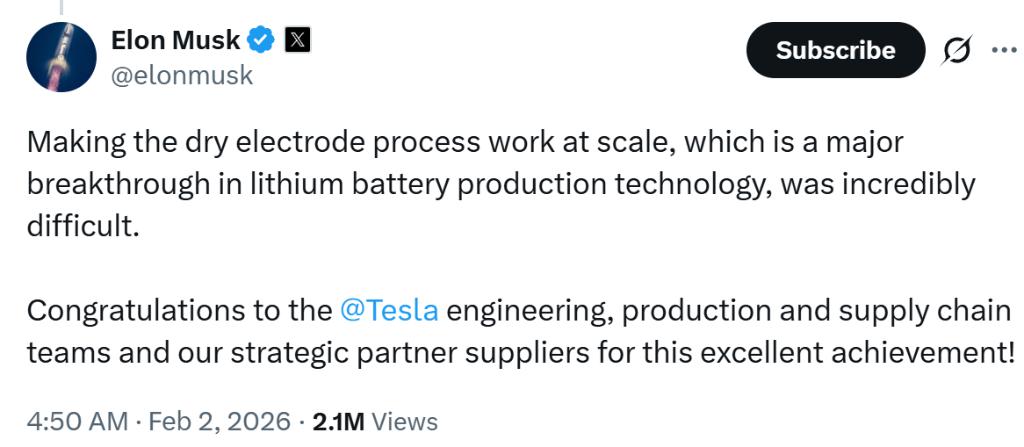
Musk stated on social media platform X that scaling up the dry electrode process from the lab to mass production is extremely challenging, calling it an "exceedingly difficult" task. He specifically congratulated Tesla's engineering, production, and supply chain teams, as well as strategic partners, confirming that the company has solved this long-standing technical problem plaguing the battery industry.
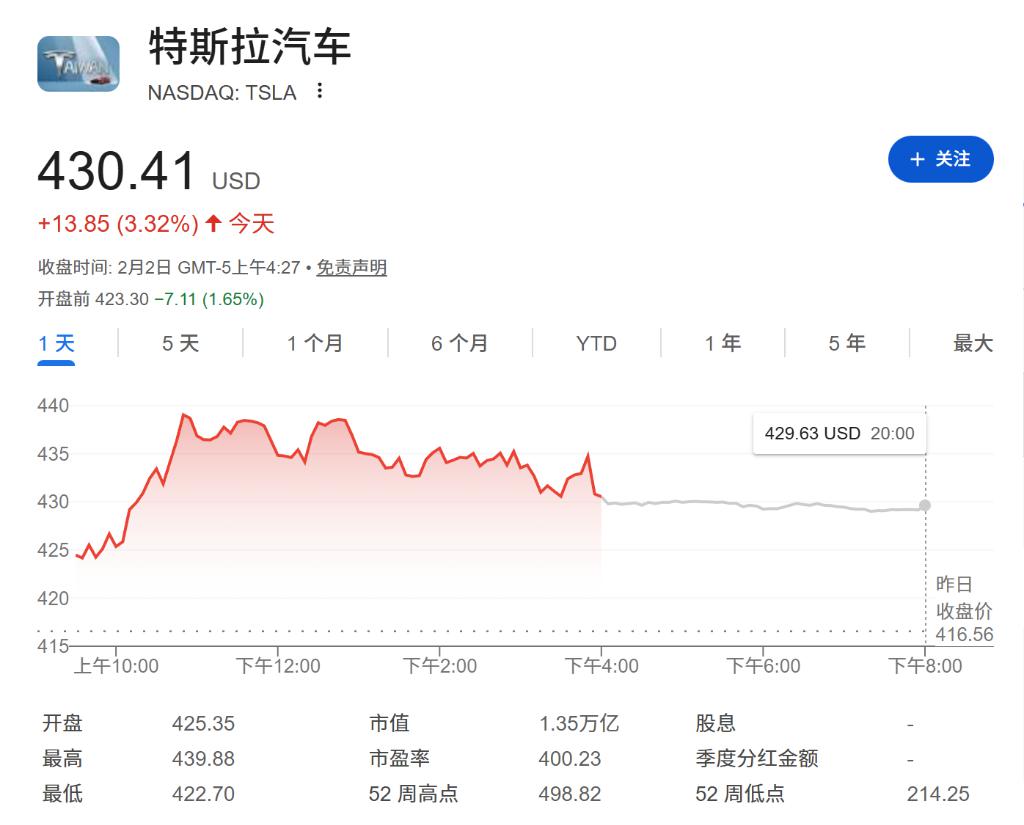
The news comes as Tesla's energy storage business is showing strong growth, and the implementation of dry electrode technology is expected to further solidify its competitive advantage in the energy storage and electric vehicle sectors. Although Tesla's stock price rose 3.32% to $430.41 at Friday's close, it fell 1.65% in after-hours trading, and the market is closely watching the potential boost this technological innovation could bring to future profit margins.
Tesla further elaborated on the commercial value of this technology, pointing out that the dry electrode manufacturing process can not only significantly reduce costs and energy consumption, but also greatly simplify factory processes and "greatly" improve scalability.This development implies that Tesla may have lower capital expenditure requirements and greater production flexibility in future battery capacity expansions.
Mass Production at Scale: From "Impossible" to Reality
The core of this breakthrough lies in solving a technology long considered by the industry as difficult to mass produce. Social media user @tslaming shared Tesla's related patent documents on X, which subsequently triggered confirmation from Musk. @tslaming pointed out that the battery industry has generally believed for many years that mass production of dry electrodes is impossible, regarding it as an unscalable "laboratory trick." However, Tesla's latest published patent application shows that the company has locked in the "secret recipe" for dry electrode manufacturing.
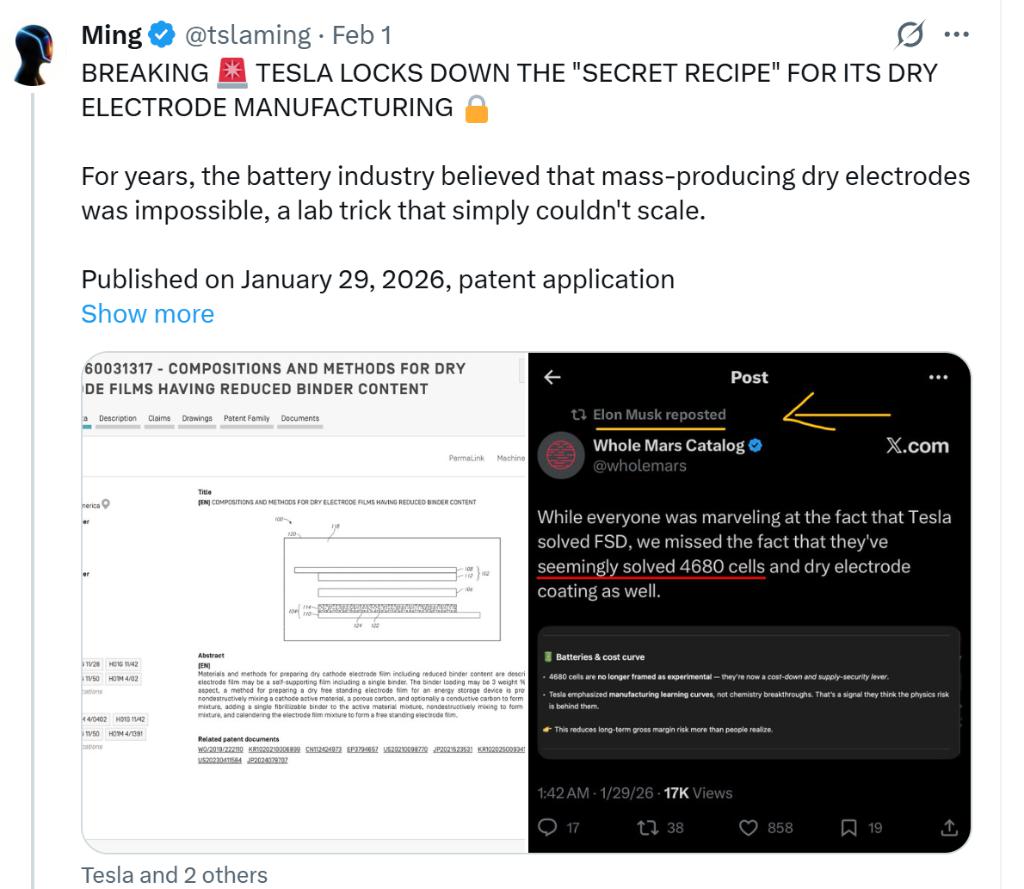
In his response, Musk emphasized the difficulty of achieving this goal, calling it a major breakthrough in lithium battery production technology. The successful implementation of this technology breaks away from the traditional reliance on wet solvent coating processes in battery manufacturing, validating the feasibility of dry process technology in an industrial-scale production environment.
Technical advantages: lower cost and higher efficiency
According to information disclosed by Tesla's official sources and patents, the dry electrode process offers significant cost and environmental advantages over traditional wet processes. In short, this process eliminates the need for toxic wet solvents such as N-Methyl-2-pyrrolidone (NMP), which typically pose major risks to the environment and human health.
In traditional processes, electrode coating requires the use of wet solvents, followed by drying in massive ovens. In contrast, dry electrode technology directly applies active materials onto the electrode through heat or pressure. This method not only simplifies the manufacturing flow and eliminates expensive drying steps, but also reduces energy consumption and factory footprint.
In addition, this technology brings performance improvements. Related patents show that Tesla has designed a pure dry cathode that can provide maximum energy with minimal binder (as low as 1.25%), thereby increasing battery energy density, range, and performance. At the same time, this process can better maintain particle integrity and extend battery life (for example, retaining about 90% of its capacity after 2000 cycles).
Business Context: Energy storage growth and automotive sales challenges.
This technological breakthrough comes at a critical time for Tesla's business development. The company's fourth-quarter earnings report showed steady growth in its energy storage business, with annual energy storage deployments climbing to 46.7 gigawatt-hours (GWh). In the third quarter, Tesla's energy storage revenue had already recorded a 44% year-over-year surge, reaching $3.4 billion.The application of dry electrode technology is expected to further support the inexpensive and efficient manufacturing of electric vehicles and grid storage products.
However, Tesla is facing some pressure on the auto sales front. Data shows that in December 2025, Tesla's sales in the European market were 35,280 units, a year-on-year decrease of 20.2% compared to the 44,190 units in the same period of 2024. Against this backdrop, technological innovation to reduce the cost of core components is particularly crucial for Tesla to maintain its market competitiveness and profit margins.
According to BenzingaEdgeRankings data, Tesla currently scores well on momentum indicators and has a favorable long-term price trend.
【Copyright and Disclaimer】The above information is collected and organized by PlastMatch. The copyright belongs to the original author. This article is reprinted for the purpose of providing more information, and it does not imply that PlastMatch endorses the views expressed in the article or guarantees its accuracy. If there are any errors in the source attribution or if your legitimate rights have been infringed, please contact us, and we will promptly correct or remove the content. If other media, websites, or individuals use the aforementioned content, they must clearly indicate the original source and origin of the work and assume legal responsibility on their own.
Most Popular
-
Key Players: The 10 Most Critical Publicly Listed Companies in Solid-State Battery Raw Materials
-

Vioneo Abandons €1.5 Billion Antwerp Project, First Commercial Green Polyolefin Plant Relocates to China
-
Clariant's CATOFIN™ Catalyst and CLARITY™ Platform Drive Dual-Engine Performance
-
Multifaceted Collaboration: PA Prices Rebound Against Trend to Break Through
-
European Supermarket Shelves Full of "Misleading" Recycled Plastic Packaging Claims

