Huawei Qiankun Launches Car Black Tech, Qiankun Intelligent Driving ADS 5 for Autonomous Driving
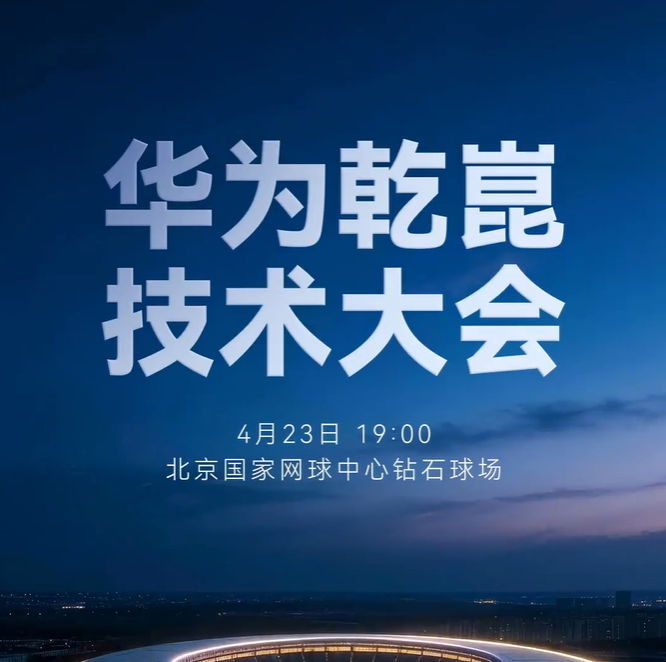
On April 23, the 2026 Huawei Qiankun Technology Conference was held at the Diamond Court of the National Tennis Center in Beijing. The theme of the conference was "Secure with Qiankun, Confidently Pursue a Better Future." At the conference, Huawei Qiankun released 10 core technologies, covering the new Huawei Qiankun Intelligent Driving ADS 5 and the HarmonySpace 6 smart cabin system.
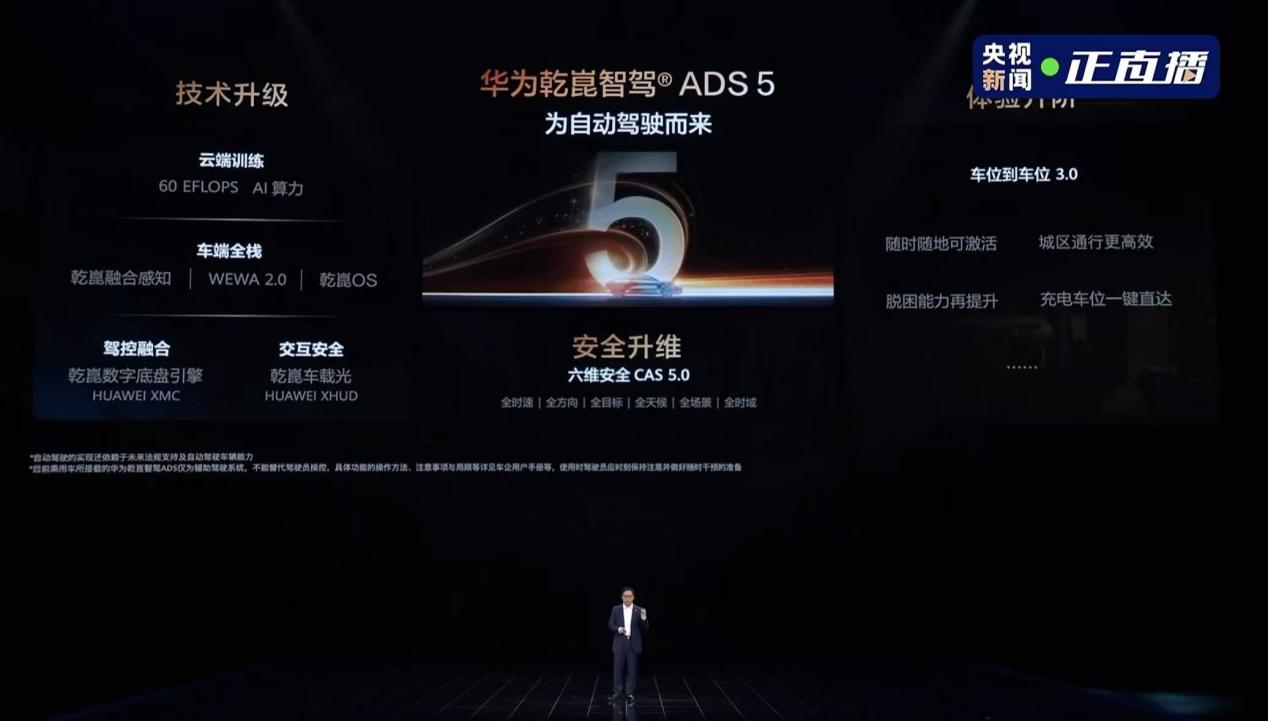
In terms of technical architecture, Huawei’s Qiankun Intelligent Driving ADS 5.0 has comprehensively upgraded underlying technologies. At the algorithm level, it introduces the evolved AI intelligent agent architecture “WEWA 2.0,” specifically designed for autonomous driving. In the cloud, this architecture incorporates Multi-Agent Game Theory, enabling all traffic participants to function as intelligent agents that engage in strategic interactions with the ego vehicle.
In the vehicle side, ADS 5 introduces the safety risk field technology, which quantifies the kinetic field, potential field, and behavioral field in the environment to create a dynamic risk heat map for the vehicle to adopt defensive strategies; the Driving Agent module transforms the system into a performer of travel tasks, capable of optimizing strategies on its own.
At the operating system level, Huawei has launched the industry's first HarmonyOS-based operating system for autonomous driving, KunOS, featuring three fully self-developed technologies: a deterministic low-latency engine, an end-to-end zero-trust security model, and a comprehensive safety redundancy architecture.
Among them, the full-chain zero-trust security model is equipped with anti-intrusion, anti-leakage, anti-tampering, and anti-diffusion functions. In terms of vehicle control, Huawei Qian Kun XMC has been upgraded to version 3.0, equipped with the Omni-Region Fusion Architecture 2.0. HUAWEI ADS and HUAWEI XMC have achieved deep integration of underlying algorithms, relying on multimodal AI vehicle-road collaboration algorithms and MIMO multiple-input multiple-output joint algorithms, breaking the traditional serial processing model, and realizing parallel collaborative computing of perception, decision-making, and execution.
In the vehicle safety system, ADS 5 has released the Full-Dimensional Collision Avoidance System CAS 5.0. The system has been upgraded from the original five-dimensional safety to six-dimensional safety, adding the dimension of "all-time domain safety." In the existing five dimensions of safety, CAS 5.0 has been upgraded to version eAES 3.0, which supports active lane changing or acceleration for avoidance when a collision risk from the side or rear is detected.
The system is equipped with a next-generation 896-line LiDAR to detect low-reflectivity obstacles and irregularly shaped moving objects in low-light conditions. For rainy or foggy weather, the HUAWEI XHUD can generate virtual white lane markings on the AR-HUD. Additionally, the system debuts an industry-first feature that prevents unintended steering inputs and includes an oversteer stability control assist function integrated with steer-by-wire hardware.
The newly added "all-time domain safety" system includes pre-incident prevention and post-incident protection functions. Pre-incident functions include a pop-up warning for road hazards within a five-kilometer range, and an active speed reduction function for the driver when facing risks such as speeding at intersections and taking sharp turns at high speeds. Post-incident protection functions include the third-row seat moving forward in the event of a rear-end collision, the rollout of blowout stability control assistance 3.0 to two-motor and three-motor models, and the driver incapacitation assistance 2.0, which, under the guidance of the car manufacturer's customer service, can direct the vehicle to a service area or toll station.
In terms of intelligent driving experience, ADS 5 upgrades the function to the 3.0 version of "from parking spot to parking spot." The new version supports the activation of NCA function in non-standard scenarios such as rural dirt roads and park roads. The system has optimized its response strategies for complex scenarios, supporting automatic reversing to give way in tight road face-to-face situations, and has improved the ability to negotiate and merge into the main road at T-junctions.
On the accessibility features, new functions have been added including the Comfort Control Assist that can actively bypass potholes, and the semantic navigation parking function that supports selecting shops. Meanwhile, the updated Motion Sickness Relief 3.0 version has been launched, which helps alleviate discomfort through seat adjustments, as well as the Smart Lighting Carpet 2.0 that adaptively aligns with slopes.
For parking and energy replenishment, the system supports one-touch navigation to charging spots and vehicle egress control via hand gestures. Leveraging the digital chassis engine capability, the system introduces a new all-terrain adaptive off-road mode that automatically identifies terrain types—including mud, sand, water crossings, and snow—and autonomously adjusts powertrain and chassis control strategies accordingly.
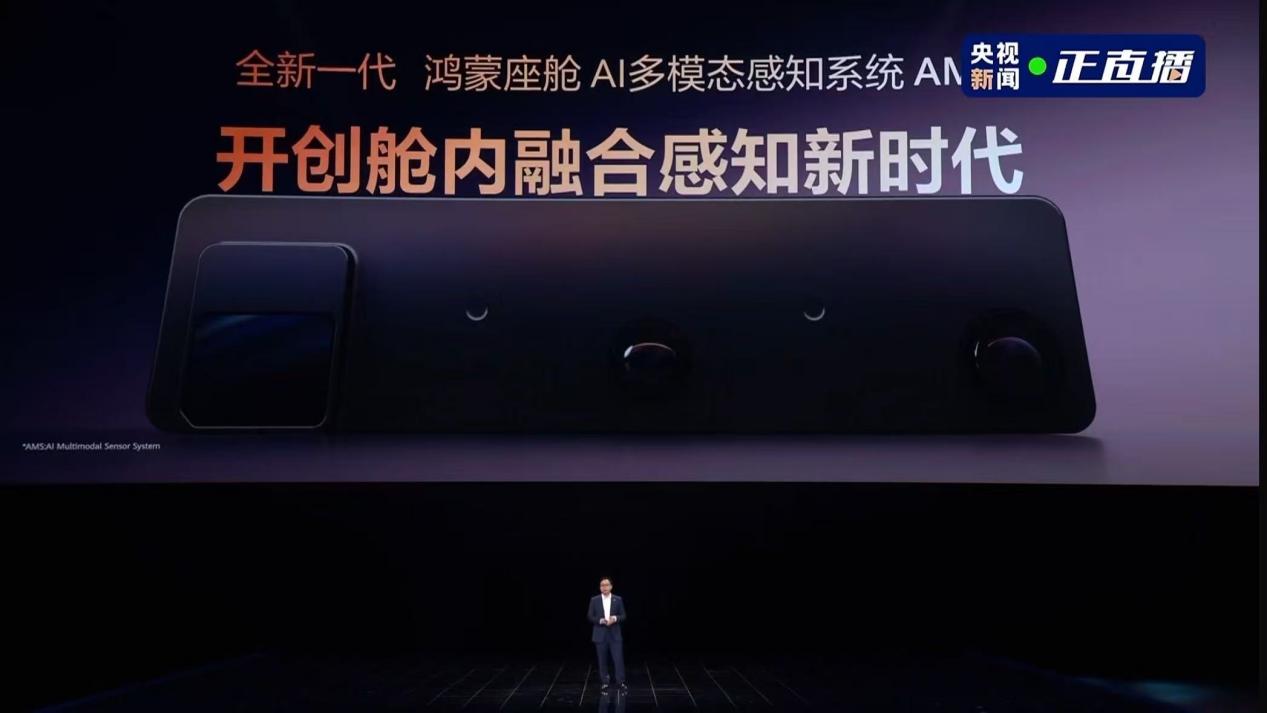
The conference also released HarmonySpace 6 for HUAWEI Smart Cockpit. Its underlying MoLA 2.0 architecture has been upgraded, with the System Agent module upgraded to a trillion-parameter end-to-end large model. Based on this architecture, Huawei launched the first all-scenario chat AI assistant "New Generation HUAWEI Smart Cockpit Xiaoyi Intelligent Agent" and announced the opening of the industry's first smart cockpit AI Agent ecosystem. In terms of cockpit perception and hardware devices, Huawei released the three-in-one AI multimodal perception system AMS, the three-in-one intelligent light module IHm830, and the first commercial LCoS automotive projection light engine.
Finally, at this conference, Huawei Qiankun also disclosed operational and R&D testing data for its intelligent driving system. In terms of R&D investment, Huawei Qiankun’s R&D expenditure in 2026 will reach nearly 20 billion RMB, with cumulative investment totaling nearly 70 billion RMB. Additionally, as of mid-April 2026, Huawei Qiankun’s intelligent driving system has accumulated over 10 billion kilometers of assisted-driving mileage.
In addition, the HUAWEI Qiankun Intelligent Driving ADS Pro Enhanced Edition, which features the exclusive laser vision Limera sensor, is currently rolling out the urban NCA function to users via OTA. During the previous Qiankun Intelligent Driving Competition, the total number of participants exceeded 150,000, with 47.1% of the NCA mileage in urban areas.
【Copyright and Disclaimer】The above information is collected and organized by PlastMatch. The copyright belongs to the original author. This article is reprinted for the purpose of providing more information, and it does not imply that PlastMatch endorses the views expressed in the article or guarantees its accuracy. If there are any errors in the source attribution or if your legitimate rights have been infringed, please contact us, and we will promptly correct or remove the content. If other media, websites, or individuals use the aforementioned content, they must clearly indicate the original source and origin of the work and assume legal responsibility on their own.
Most Popular
-

Why did a century-old european dental instrument giant relocate its manufacturing hub to china?
-
Profit and Revenue Growth Struggle to Conceal Debt Repayment Pressure; Success of Kingfa Sci & Tech's High-End Strategy Yet to Be Seen
-

Toray Industries and SGL Carbon Establish Carbon Fiber Supply Partnership for Aerospace Sector
-

Deadly Impact: Hormuz Strait Blockade Sparks Shortage of Plastic Raw Materials, Threatening Shutdowns at Japanese and Korean Chemical Plants
-
【Overseas Highlights】Multiple Nations Plan to Reopen Strait of Hormuz! INEOS & Honeywell Announce Further Asset Sales; BASF Expands Its Footprint in China