



How middle east geopolitical conflicts impact the supply chain of rubber and plastic additives: The Transmission Path from Raw Materials to Prices
Since early 2026, geopolitical conflicts in the Middle East have continued to escalate, posing severe challenges to shipping security in the Strait of Hormuz. As the core region of the global petrochemical industry, turmoil in the Middle East has, throughRaw material costs, logistics transportation, supply pattern.Three pathways are having a profound impact on the global chemical industry chain. The rubber and plastics additives industry, positioned in the middle of the industrial chain, is now facing the dual pressures of rising costs and supply fluctuations.
I. The Middle East — The Heart of the Global Chemical Supply Chain
The Middle East, with its abundant oil and natural gas resources, has become a core production and supply base for the global petrochemical industry and holds a pivotal position in the global chemical supply chain.

Strait of Hormuz
The Strait of Hormuz is the world’s most important energy transportation route, measuring only 39 kilometers at its narrowest point. Exports of petrochemical products from the Middle East are highly dependent on this passage.
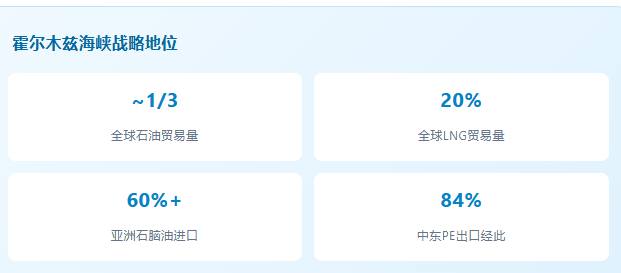
In addition, the Middle East region also concentrates global...More than 20% of methanol and LPG production capacityas well as substantial capacities of olefins, aromatics, fertilizers, and other products. Any supply disruption would trigger a chain reaction across the global chemical market.
2. How Geopolitical Conflicts Affect the Additives Industry
The impact of geopolitical conflicts in the Middle East on the rubber and plastics additives industry is mainly transmitted through the following three channels:



III. Specific Impact on the Rubber and Plastics Additive Industry
Raw material prices have generally risen.
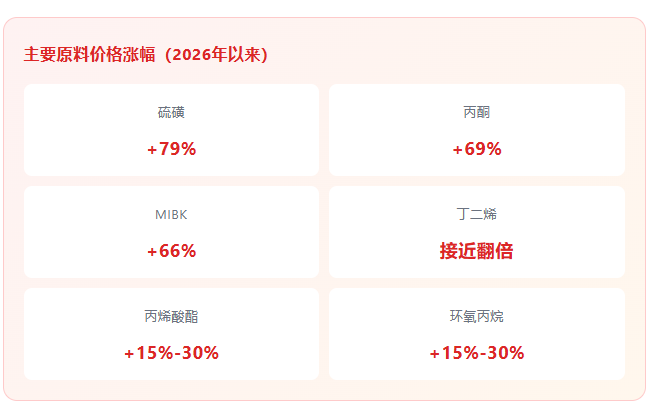
Affected by the conflict in the Middle East, prices of various chemical raw materials have risen significantly, directly driving up the production costs of additives.
Auxiliary product prices increased.
Under cost pressures, additives companies at home and abroad have announced price increases to offset rising raw material, energy, and logistics costs.
-
Plastic Additives: BASF Adjusts Prices Twice
BASF raised the prices of plastic additives twice in March and April, covering products such as antioxidants, process stabilizers, and light stabilizers, with the maximum increase reaching 25%.
-
Rubber additives: accelerators and antioxidants also rose in price.
Affected by rising prices of raw materials such as sulfur and aniline, the prices of rubber additives have increased. Among them, accelerator CZ has risen cumulatively by about 41%, and the prices of products such as antioxidant 4020 have also increased significantly.
-
The price increase of synthetic rubber is the most significant.
The prices of butadiene rubber (BR) and styrene-butadiene rubber (SBR) have increased by 60%-80%, while the price of ethylene-propylene-diene rubber (EPDM) has risen by 25%-35%.
IV. Corporate Response Strategies
-
Optimize raw material procurement strategy
Establish diversified raw material supply channels to reduce dependence on a single source;.
-
Promote product structure upgrade.
Increase R&D investment, transition to high value-added and differentiated products, and enhance non-price competitiveness and bargaining power.
-
Seize opportunities in export markets
The supply contraction in the Middle East has driven up prices in the international market, and Chinese additive companies can actively expand into emerging markets such as Southeast Asia and Latin America to increase their export share.
-
Strengthen supply chain risk management.
Establish a geopolitical risk early warning mechanism, formulate contingency plans, and enhance the resilience and shock resistance of the supply chain.
【Copyright and Disclaimer】The above information is collected and organized by PlastMatch. The copyright belongs to the original author. This article is reprinted for the purpose of providing more information, and it does not imply that PlastMatch endorses the views expressed in the article or guarantees its accuracy. If there are any errors in the source attribution or if your legitimate rights have been infringed, please contact us, and we will promptly correct or remove the content. If other media, websites, or individuals use the aforementioned content, they must clearly indicate the original source and origin of the work and assume legal responsibility on their own.
Most Popular
-

Evonik Parts Ways With The Polyester Business! A Strategic Retreat By A Germany Chemical Giant And The Global Industry Shift
-

A Look at the Material Suppliers Behind SpaceX
-

Next-generation motors of new energy vehicles: Single-Round Thousand Horsepower, Replacing Brakes, How Powerful Are They?
-

Nike mind: Neuroscience and Foam Material Innovation Merge to Lead Low-Carbon Upgrading Technology in the Footwear Industry
-
Ethylene: Production Capacity Accelerates Expansion, Global Industry Landscape Is Being Reshaped


