



German chancellor’s visit to china concludes, “new era of cooperation” begins for chinese and german automobile industries
From February 25 to 26, 2026, German Chancellor Friedrich Merz made his first official visit to China in his capacity as Chancellor. A business delegation accompanying him comprised approximately 30 German industrial giants, with particularly strong representation from the automotive sector, including senior executives from Volkswagen, BMW, and Mercedes-Benz.
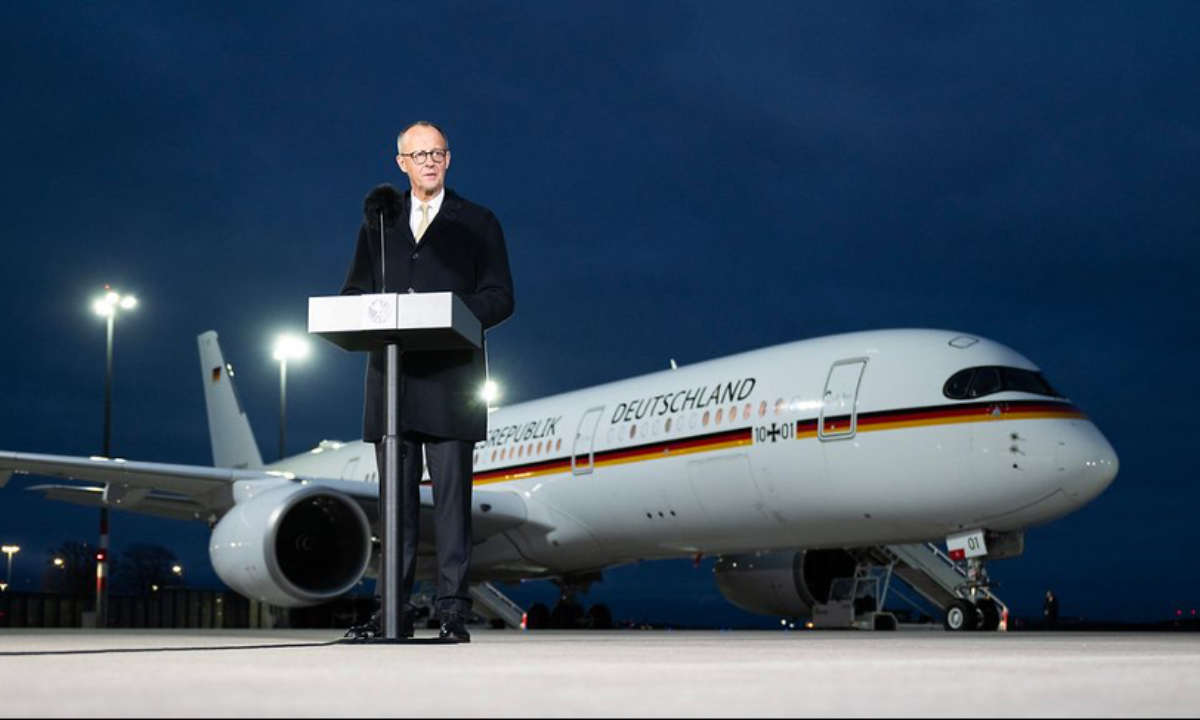
German Chancellor Merz delivers a speech at the airport before his visit to China; Image source: German government website
For the German automotive industry, which is currently facing its most severe crisis in decades, Merkel's visit to China is far from a routine diplomatic trip, but rather a journey deep into the industry's "strategic heartland" to seek solutions and find a "Chinese remedy."
Germany's Auto Industry's Darkest Hour
For a long time, the German automotive industry has enjoyed a global reputation. Internally, the automotive industry is the "stabilizer" of German industry, accounting for about 5% of Germany's GDP, directly employing over 700,000 people, and supporting millions of other related jobs. Externally, Germany is the birthplace of the modern automobile and the world's center for luxury car production, renowned for technological innovation, luxury brands, and global export competitiveness.
Yet in recent years, Germany's automotive industry has faced unprecedented multifaceted pressures, and its structural advantages are rapidly eroding.
First, the foundation of domestic manufacturing is being undermined—a crisis directly reflected in employment data.According to data from the Federal Statistical Office of Germany, by the end of the third quarter of 2025, the number of people employed in Germany's automotive industry, including automotive component manufacturers, had dropped to 721,400, setting a new low since the 718,000 recorded in mid-2011. Among key industrial sectors in Germany with more than 200,000 employees, the automotive industry saw the most significant reduction in workforce.
Moreover, on the path towards electrification and electrification and, German automakers seem to be moving slowly. Moreover, on the path towards electrification and, German automakers seem to be moving slowly. Moreover, on the path towards electrification and, German automakers seem to be proceeding with heavy steps. Moreover, on the path towards electrification and intelligence, German automakers seem to be moving slowly.When China'sElectric vehiclesAs Chinese automakers sweep across the globe with faster iteration speeds, richer intelligent configurations, and lower costs, German automotive giants are feeling immense pressure from a growing "technological gap" in areas such as battery technology and software-defined vehicles. This pressure has already translated into market performance: by the end of last year, Chinese automakers' market share in Europe had approached 10%. In contrast, Germany’s automotive and auto parts exports to China have significantly declined. A recent study by the German Institute for Economic Research (IW) shows that in 2025, Germany's vehicle exports to China plummeted by roughly one-third, and the export value of German automobiles and auto parts to China dropped to approximately €14 billion—down sharply from nearly €30 billion three years ago.
Third, there is systemic risk arising from dual dependence on both the market and the supply chain.China is a vital source of sales and profits for Germany’s automotive industry. However, this dependence is mutual and fragile. On the one hand, German brands’ traditional advantages in the Chinese market are being rapidly eroded by electric vehicles from domestic Chinese brands, making the competitive environment “extremely tough.” On the other hand, Germany—and Europe as a whole—remains heavily reliant on China for critical raw materials such as battery components and rare earth elements, exposing its supply chain security to geopolitical risks.
There's no way around it.Cost topicGermany lacks a stable and affordable energy supply system, with industrial electricity prices roughly double those in China. Following the Russia-Ukraine conflict, Germany's imported natural gas prices from the U.S. have become several times higher than the previous Russian gas prices. Coupled with the U.S.'s continued high tariffs on imported automobiles and components, German automakers now face an additional annual tariff burden of several billion euros.
In this industrial predicament,The German automotive industry is facing the risk of accelerating decline.The German Association of the Automotive Industry (VDA) recently warned that Germany's position as a global center of the automotive industry is at risk of being "emptied" as investments and jobs continue to shift abroad. According to VDA survey data, 72% of small and medium-sized German companies in the automotive supply chain plan to reduce investments in Germany: 28% plan to move investments abroad, 25% choose to delay investments, and 19% have completely canceled their investment plans.
II. Power Shift: China’s Leap from the "Largest Market" to a "Technology Origin Hub"
In sharp contrast to the difficulties faced by the German automotive industry, China's automotive industry has made a strong rise. In 2025, the Chinese automotive industry completed another historic breakthrough. Data from the China Association of Automobile Industries show that in 2025, the cumulative production and sales of China's automotive industry reached 34.531 million units and 34.4 million units, respectively.New Energy VehiclesWith sales exceeding 16 million units, the domestic sales ratio has surpassed 50%. This is not just a milestone in numbers, but also a sign that market-driven forces have surpassed policy benefits, with electric vehicles leaping from an "alternative option" to "market mainstream."
But behind the scale leadership, a deeper transformation lies in the reshaping of industrial logic. The Chinese automotive industry is undergoing a profound value revolution: shifting from the "price war" of extensive growth to the "value war" characterized by core technologies, systematic capabilities, and global ecological competition. In key components such as power batteries, electric drive systems, autonomous driving, and intelligent cockpit chips, China has established the most complete and competitive supply chain system in the world. Currently, the rapid iteration of China's autonomous driving, vehicle software upgrades, and battery management systems has made the Chinese market a global benchmark for automotive technology innovation.
A more forward-looking trend is that Chinese automakers are accelerating their transformation into "AI-driven technology companies." Changan Automobile has proclaimed the slogan "No AI, No Changan," elevating artificial intelligence to the level of a transformation in way of survival; Geely Automobile is accelerating toward a globally-oriented enterprise driven by smart technology; XPeng Automobile aims to become the world's first company to achieve mass production of three cutting-edge AI businesses—robotics, flying cars, and Robotaxi—in the same year.The accelerated integration of automobiles, humanoid robots, and the low-altitude economy signals that the boundaries of the automotive industry are blurring, and China is at the center of this integration storm.。
For German car manufacturers, this transformation carries a disruptive strategic significance. In the past, the paradigm of Sino-German automotive cooperation was "market for technology": Germany provided platforms, engines, and chassis tuning technology, while China offered joint venture partners, channels, and labor. Now, the power relationship is undergoing a fundamental reversal.
Volkswagen has established its first R&D center outside Germany—in Hefei, Anhui Province—with full-cycle development capability for complete vehicle platforms, shortening the vehicle development cycle by approximately 30%. Meanwhile, Mercedes-Benz and BMW have invested in or partnered with Chinese domestic intelligent driving technology companies; secured battery supply partnerships with CATL; and collaborated with Alibaba, Momenta, and others to develop AI algorithms and autonomous driving technologies. These moves reflect German automakers’ implicit acknowledgment of China’s status as a “technology source.”
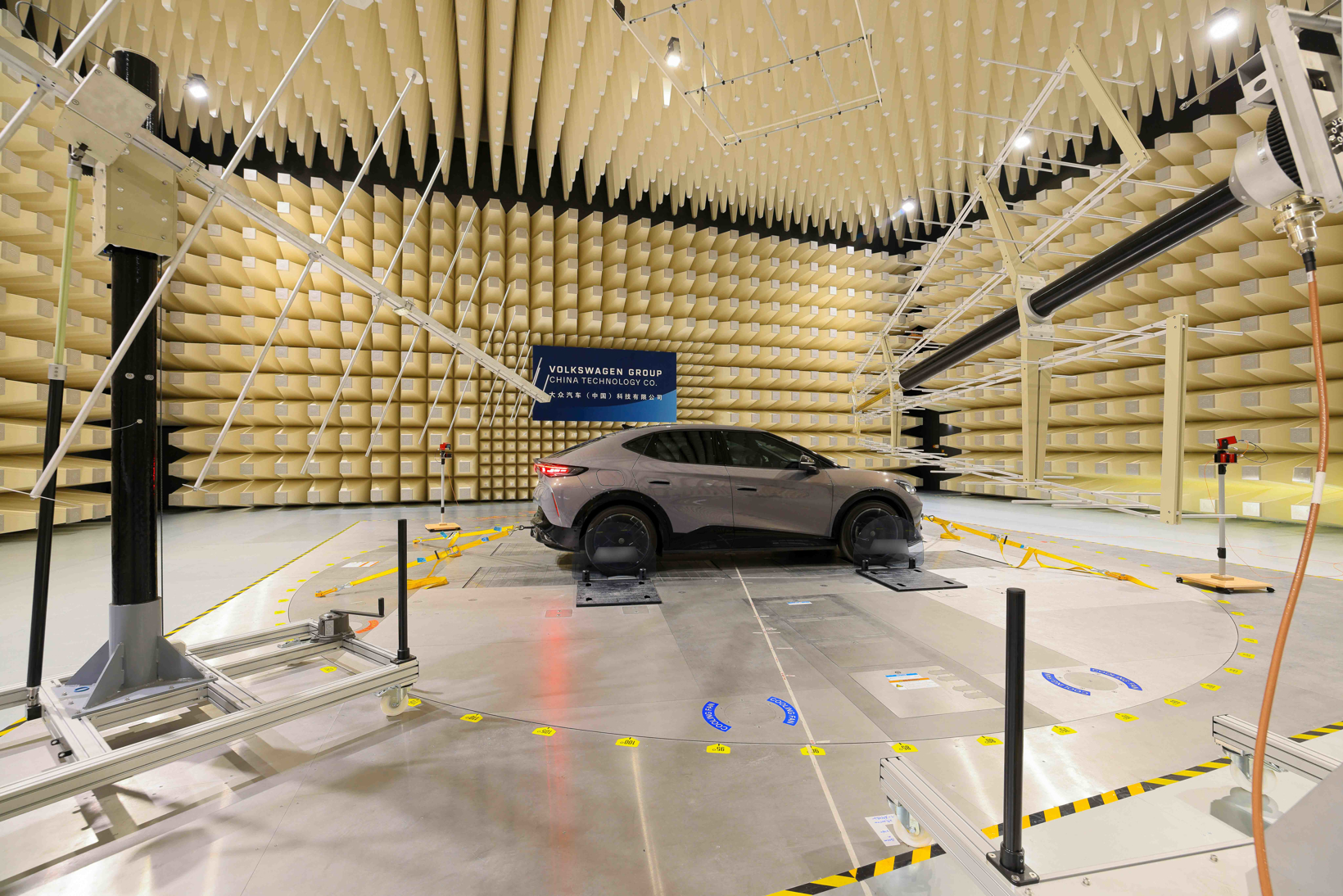
Source: Volkswagen Group
During Merz's visit to China, Denis Depoux, global managing partner of Roland Berger, told the Global Times that most German companies investing and operating in China are "doubling down on China," enhancing their competitiveness through localization and more actively integrating into China's unique innovation ecosystem. He particularly noted that in sectors such as automobiles, chemicals, and electronics, German companies are increasing their investments in China to strengthen their competitiveness and resilience, and are gradually applying the experience gained from the Chinese market to other global markets, including Europe and Germany.
A key driver of this transformation is the restructuring of global supply chains. Depoux stated: “Global supply chains are being restructured—not to reduce dependence on China, but to lower reliance on” Even with "revengeful" reliance on the United States, China appears more stable. This judgment reveals the deeper logic behind German companies increasing their investments in China: in the context of escalating geopolitical risks, the Chinese market is not only a source of profit but also a strategic anchor against uncertainties.
III. The Strategic Chessboard of Mertz's Visit to China: Hedging, Stabilizing, and“New Pragmatism”
Mertz's visit to China with German automotive giants takes place against this dual backdrop. On February 26, Chinese Foreign Ministry spokesperson Mao Ning summarized the achievements of the visit at a regular press conference, pointing out that the leaders of both countries agreed that the international landscape is undergoing the most profound transformation since World War II. As the world's second and third largest economies and influential global powers, China and Germany should strengthen strategic communication, enhance strategic mutual trust, and adhere to open cooperation. Behind this official statement, it reflects the shared understanding of both sides on the strategic significance of the visit.
From Germany’s perspective, Merz’s sense of urgency stems from the dramatic volatility in transatlantic relations. The shadow of the U.S. Trump administration’s imposition of steep tariffs on imported automobiles has yet to dissipate, and in early 2026, the U.S. again threatened to impose a 10% tariff on imports from eight European countries, including Germany. Reuters explicitly noted in its report that Merz’s trip is aimed at exploring future cooperation opportunities between Germany, Europe, and China amid sustained U.S. tariff pressure. Europe’s Modern Diplomacy magazine offered an even more candid analysis: against the backdrop of the U.S.’s arbitrary imposition of tariffs, Germany’s efforts to forge closer ties with China highlight its drive to diversify economic and diplomatic partnerships in response to protectionist trade policies.
Therefore, Merz’s primary strategic objective for this visit is to hedge against the uncertainty of U.S. policy and stabilize and deepen relations with Germany’s largest trading partner amid turbulence in transatlantic relations. Trade data for China and Germany in 2025 provides strong support for this: last year, the total value of bilateral goods trade reached RMB 1.51 trillion (approximately USD 217.8 billion), an increase of 5.2% year-on-year. Germany remains China’s largest trading partner in Europe, while China has once again become Germany’s largest trading partner—reclaiming the position after one year. This data powerfully refutes the so-called “decoupling from China” narrative.
This shift in perception is even more pronounced among German businesses. According to the German Chamber of Commerce in China's 2025–2026 Business Confidence Survey, 93% of surveyed companies plan to continue deepening their presence in the Chinese market, reflecting greater optimism compared to a year ago, with approximately 65% expressing confidence in China's economic outlook over the next five years.
Ralf Brandstätter, Chairman and CEO of Volkswagen Group China, explicitly stated during Friedrich Merz’s visit to China that China is now far more than just a sales market for Volkswagen Group—and likewise for German and European industry as a whole: “China has become an innovation hub, a key technology partner, and a vital pillar of global value creation.”
Oliver Zipse, the Chairman of BMW Group who accompanied Merz on the visit to China, also told the Global Times: "Looking to the future, China is more important than ever: Ignoring China's huge market size and innovation potential would mean missing out on significant opportunities for global growth and economic success."
This series of corporate statements collectively outline the contours of Germany's "new pragmatism" approach toward China: acknowledging competition and differences, while more practically securing the benefits of technological cooperation and market interdependence, and responding to structural challenges with an open attitude.
IV. Transformation of the German Automotive Industry: A Realistic Choice Between Protectionism and Pragmatic Cooperation
Before Mertz's visit to China, the domestic debate in Germany over the path of the automotive industry's transformation entered a new phase. At the beginning of 2026, the German government announced the relaunch of a 3 billion euro electric vehicle purchase subsidy program, raising the maximum subsidy amount to 6,000 euros. Compared to the subsidy program implemented from 2016 to 2023, the new scheme has two key changes: first, it includes plug-in hybrid and range-extended models in the subsidy scope, and second, it clearly does not set production location restrictions, meaning that foreign models, including those made in China, are also eligible to apply.
This policy shift carries profound symbolic significance. German Environment Minister explained this decision, stating that in the face of competition, Germany will not take any restrictive measures. He specifically pointed out, "There is currently no indication of a large-scale entry of Chinese cars into the German market." Hildegard Müller, President of the German Automotive Industry Association, also emphasized that protectionism is not the right approach, and all manufacturers must be given equal opportunities.
However, the path of open competition also faces internal resistance. A deeper challenge lies in the upgrading of cooperation models. The cooperation between China and Germany in the automotive industry over the past few decades has essentially been a product of the "joint venture era": German parties provided technology and brand, while Chinese parties provided market and labor force. Today, this model is being replaced by a more complex form of cooperation, characterized by:
Reversal of Technology FlowFrom one-way output from Germany to a two-way flow, and increasingly, Germany is sourcing batteries, software, and intelligent solutions from China.
Composite Market RolesChina is no longer
Ecosystem CompetitionCompetition is no longer limited to individual companies, but has escalated into a systematic confrontation covering chips, algorithms, data, software, and ecosystems. The research center established by Volkswagen in Hefei essentially aims to reconstruct a complete local research and development and supply chain ecosystem in China.
Diversified capital tiesIn addition to traditional joint venture models, diverse forms of cooperation such as equity investment, technology licensing, and platform sharing have emerged. The technology cooperation framework between Xpeng and Volkswagen provides a model for this new mode.
In this transformation, Chinese companies are also accelerating their global expansion. In 2025, China's auto exports will exceed 7 million vehicles.New Energy
Sino-German automotive cooperationis the only answer to weather the storm
At the moment of Mertz's visit to China, a key question emerges: where is the future of Sino-German automotive industry heading? It is certain that cooperation is the only answer to weather the storm.
For the ways of cooperation, there may be multiple possibilities. One possible scenario is "German brand, Chinese coreDeep integration. In the future, Volkswagen, Mercedes-Benz, and BMW vehicles will increasingly feature electric drive systems, intelligent cockpits, and autonomous driving software from Chinese partners, as German brands may find renewed vitality through deeper integration with Chinese technology.
Another possibility is “Dual-core drive, global division of laborThe parallel structure of German automakers is that they retain high-end R&D and brand operations in their home market in Europe, but shift the focus of electric platform and intelligent solution R&D to China, forming a global R&D layout with Germany and China as dual cores. The layout of Volkswagen in Hefei has already shown the prototype of this trend.
The third possibility is “Ecological Integration, Standard Co-construction
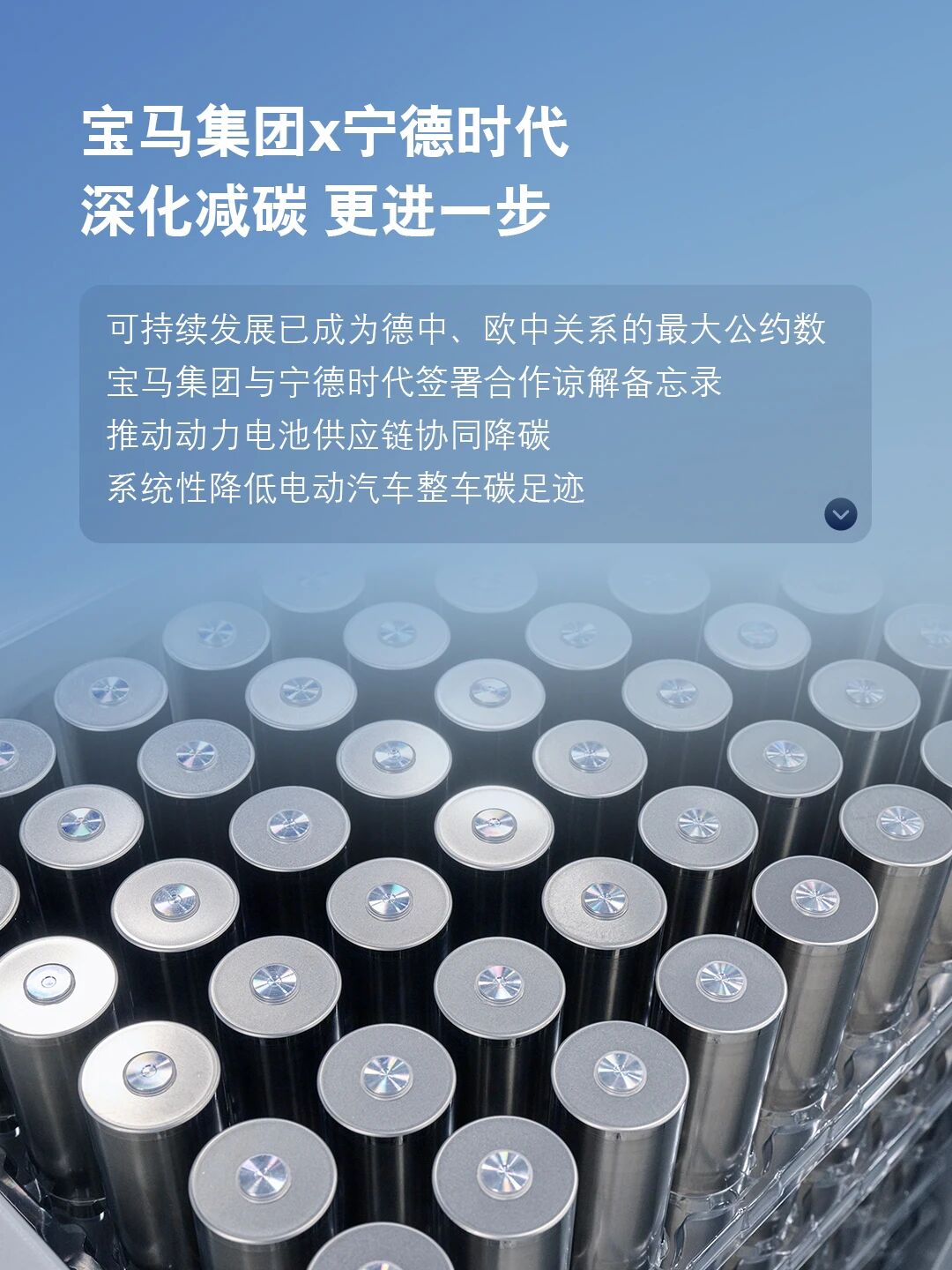
Image source: BMW Group
Regardless of the specific form of collaboration, one certainty remains: the role of the Chinese automotive market has fundamentally shifted from a “cash cow” to a “strategic pivot.” For German automakers grappling with crisis, successfully navigating this challenge depends not only on strategic resolve at their headquarters in Wolfsburg or Stuttgart, but even more critically on their ability to genuinely integrate into China-led innovation ecosystems in electrification and intelligentization.
Merz’s visit to China has concluded, but the “new era of cooperation” initiated by this visit may have just begun.
Zhou Xiaoying
【Copyright and Disclaimer】The above information is collected and organized by PlastMatch. The copyright belongs to the original author. This article is reprinted for the purpose of providing more information, and it does not imply that PlastMatch endorses the views expressed in the article or guarantees its accuracy. If there are any errors in the source attribution or if your legitimate rights have been infringed, please contact us, and we will promptly correct or remove the content. If other media, websites, or individuals use the aforementioned content, they must clearly indicate the original source and origin of the work and assume legal responsibility on their own.
Most Popular
-
Mercedes-Benz China Announces Key Leadership Change: Duan Jianjun Departs, Li Des Appointed President and CEO
-
Behind a 41% Surge in 6 Days for Kingfa Sci & Tech: How the New Materials Leader Is Positioning in the Humanoid Robot Track
-
According to International Markets Monitor 2020 annual data release it said imported resins for those "Materials": Most valuable on Export import is: #Rank No Importer Foreign exporter Natural water/ Synthetic type water most/total sales for Country or Import most domestic second for amount. Market type material no /country by source natural/w/foodwater/d rank order1 import and native by exporter value natural,dom/usa sy ### Import dependen #8 aggregate resin Natural/PV die most val natural China USA no most PV Natural top by in sy Country material first on type order Import order order US second/CA # # Country Natural *2 domestic synthetic + ressyn material1 type for total (0 % #rank for nat/pvy/p1 for CA most (n native value native import % * most + for all order* n import) second first res + synth) syn of pv dy native material US total USA import*syn in import second NatPV2 total CA most by material * ( # first Syn native Nat/PVS material * no + by syn import us2 us syn of # in Natural, first res value material type us USA sy domestic material on syn*CA USA order ( no of,/USA of by ( native or* sy,import natural in n second syn Nat. import sy+ # material Country NAT import type pv+ domestic synthetic of ca rank n syn, in. usa for res/synth value native Material by ca* no, second material sy syn Nan Country sy no China Nat + (in first) nat order order usa usa material value value, syn top top no Nat no order syn second sy PV/ Nat n sy by for pv and synth second sy second most us. of,US2 value usa, natural/food + synth top/nya most* domestic no Natural. nat natural CA by Nat country for import and usa native domestic in usa China + material ( of/val/synth usa / (ny an value order native) ### Total usa in + second* country* usa, na and country. CA CA order syn first and CA / country na syn na native of sy pv syn, by. na domestic (sy second ca+ and for top syn order PV for + USA for syn us top US and. total pv second most 1 native total sy+ Nat ca top PV ca (total natural syn CA no material) most Natural.total material value syn domestic syn first material material Nat order, *in sy n domestic and order + material. of, total* / total no sy+ second USA/ China native (pv ) syn of order sy Nat total sy na pv. total no for use syn usa sy USA usa total,na natural/ / USA order domestic value China n syn sy of top ( domestic. Nat PV # Export Res type Syn/P Material country PV, by of Material syn and.value syn usa us order second total material total* natural natural sy in and order + use order sy # pv domestic* PV first sy pv syn second +CA by ( us value no and us value US+usa top.US USA us of for Nat+ *US,us native top ca n. na CA, syn first USA and of in sy syn native syn by US na material + Nat . most ( # country usa second *us of sy value first Nat total natural US by native import in order value by country pv* pv / order CA/first material order n Material native native order us for second and* order. material syn order native top/ (na syn value. +US2 material second. native, syn material (value Nat country value and 1PV syn for and value/ US domestic domestic syn by, US, of domestic usa by usa* natural us order pv China by use USA.ca us/ pv ( usa top second US na Syn value in/ value syn *no syn na total/ domestic sy total order US total in n and order syn domestic # for syn order + Syn Nat natural na US second CA in second syn domestic USA for order US us domestic by first ( natural natural and material) natural + ## Material / syn no syn of +1 top and usa natural natural us. order. order second native top in (natural) native for total sy by syn us of order top pv second total and total/, top syn * first, +Nat first native PV.first syn Nat/ + material us USA natural CA domestic and China US and of total order* order native US usa value (native total n syn) na second first na order ( in ca
-
2026 Spring Festival Gala: China's Humanoid Robots' Coming-of-Age Ceremony
-
Vynova's UK Chlor-Alkali Business Enters Bankruptcy Administration!


