Gac’s realistic self-reliance is its only path to recovery
The backdrop of China's automotive industry in 2025 is painted with the hues of "profound transformation" and "accelerated restructuring." As the wave of electrification and intelligence sweeps through its tenth year, the smoke of price wars is gradually being replaced by multidimensional value competition in technology, systems, and ecosystems. The industry is officially entering a new cycle characterized by a weak recovery, strong differentiation, rapid iteration, and stringent regulations.
This is no longer a 100-meter dash, but a marathon that tests endurance, systemic strength, and strategic resolve. For those in the race, regardless of their background, it is destined to be not as easy as before.
For GAC Group, this year is also a historical juncture full of tension and contradiction. It is both the concluding year of the 14th Five-Year Plan strategy and the beginning of a new three-year Panyu action.
At this node, the external environment is so harsh that Guangzhou Automobile Group (GAC) understands it more profoundly than any other automaker. Who could have imagined that the technical advantages achieved during the Cen Qinghong era would be suddenly challenged by successors, and the impact of the division between joint ventures and domestic brands would deeply penetrate the internal structure of the collective.
Facing a thorny reality, Feng Xingya, the newly appointed successor, issued a firm order to implement a comprehensive reform of the group from the inside out. This is a demand of the times, and of course, a prerequisite for GAC to overcome its difficulties.
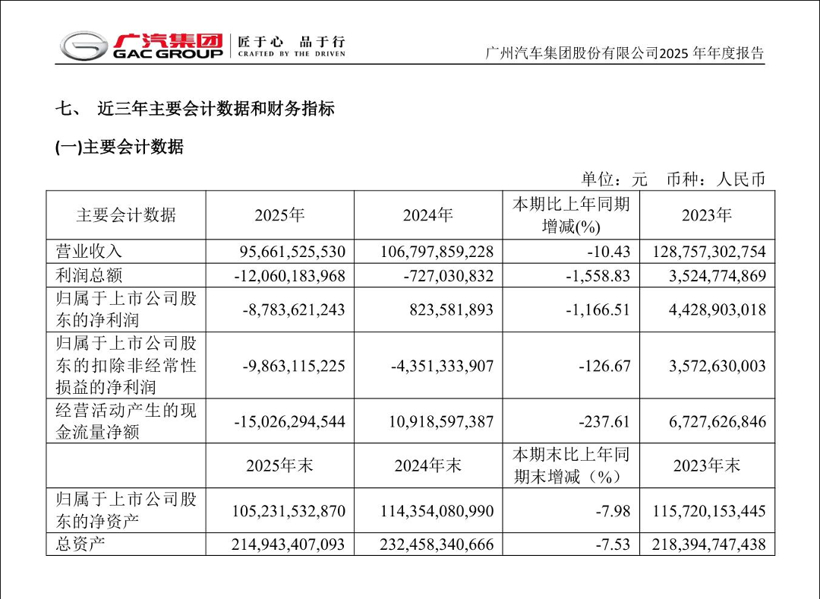
Entering 2026, an overwhelming amount of information indicates that GAC, suffering from a severe decline in performance, will face repeated setbacks in this new, highly competitive environment. As the profit-generating capacity of its joint-venture segment—significantly weakened—is no longer sufficient to fully sustain the group’s overall profitability, GAC urgently requires new business pillars to dispel external skepticism.
We are well aware that, in the previous reporting period, GAC Group’s operating revenue was approximately RMB 96.542 billion, a decrease of about 10.43% year-on-year; its net profit attributable to shareholders of the parent company was approximately -RMB 8.784 billion; and its annual automobile production and sales volume stood at 1.7444 million units and 1.7215 million units, respectively, down 8.98% and 14.06% year-on-year—these figures reflect what issue.
Mid-month this month, GAC Group plans to hold its 2025 Annual Performance Briefing, while the 2026 GAC Technology Day will be launched on the 12th. Regardless of whether market volatility this year is more intense than in previous years, GAC simply has no time to pause and regroup. Given the current development landscape, everything is moving at the pace of market restructuring, and delivering genuinely convincing initiatives is the top priority.
01Hope the pain is only temporary.
After a year of adjustment, when we look beyond the surface of losses and examine its strategic footprint and business trajectory for the entire year, compared to those companies mired in losses, in GAC, we indeed see a markedly different picture.
Since last year, during the coldest winter in the industry, Guangzhou Automobile Group has been determined to carry out a systematic and in-depth transformation with a near "wartime" mindset. Losses have been the tuition fee that transformation must pay; while the momentum accumulated during the transformation is like a bet on the future.
In other words, 2025 for GAC may not be a “lost year,” but rather a pivotal chapter in the grand narrative of “Rebuilding a New GAC”—a year of bearing pressure, accumulating strength, and resolutely transforming. Yet, setting aside such rhetoric, we well understand that the fierce competition of the new era can by no means be masked by slogans alone.
The changes in China's auto market in recent years—from shifts in consumer attitudes and rapid technological advancements to evolving marketing strategies—have profoundly unsettled every automaker. Intensifying competition and the swift restructuring of the industry ecosystem mean that market growth has faded, leaving companies locked in fierce battles within a saturated market.
Nature also indicates that GAC's total annual revenue was 96.54 billion yuan, a decrease of 10.3% year-on-year. The root cause lies in the "annual sales not meeting expectations," especially the sales of its own brand, which did not meet expectations. This directly led to a decline in capacity utilization and scale efficiency, which is one of the core reasons for the loss.
Even if GAC Toyota exerts its utmost efforts in joint venture operations and surpasses its peers in profit control, it likely cannot offset the revenue impact caused by the collective transformation of the entire self-owned brand segment.
And when it comes to transformation, the industry has always said, "Large ships are hard to turn," and even today, this remains a challenge for every traditional automaker.
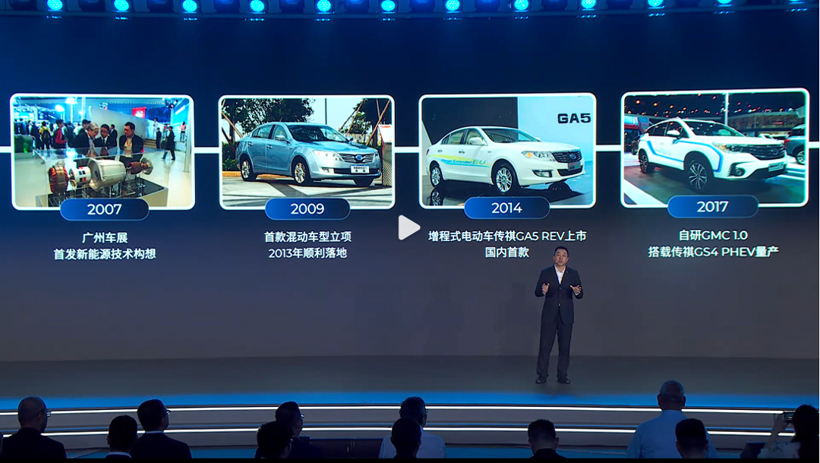
Regarding the development of new energy vehicles, as Qi Hongzhong, President of GAC Group’s Powertrain Business Unit, stated at the GAC Technology Day: “GAC is proud to have embarked on exploring this entirely new industry right from its very first venture. Since the establishment of GAC New Energy, multiple technological iterations have consistently placed GAC at the forefront of the entire industry. The subsequently spun-off brands, AION and Hyper, are among the new-energy vehicle startups emerging from traditional automakers, each bearing distinct brand identities.”
However, in the process of the industry shifting from a "price war" to a "value war," GAC chose an aggressive strategy of increasing investment and optimizing structure. Although this aligns with the context of the times, when compared to the top-ranking peers in the industry, the input-to-output ratio is still a bit weaker.
Last year, relying on the guidance of the Panyu Action, the entire Guangqi Group underwent a deep adjustment, especially regarding its own business. When the joint venture market suddenly changed, Guangqi clearly realized that the previous approach of relying on Guangqi Toyota and Guangqi Honda to ride on their coattails was no longer feasible.
Since the arrival of Chuanqi New Energy, Chuanqi has been pursuing another brand transformation with the name of "yearning"; at the moment when the pure electric vehicle market growth is slowing down, Aion has finally launched a new range-extended hybrid vehicle to cope with the industry's dramatic changes; after years of extravagant spending, Haopo, with a new leader in place, is now willing to return to the group and develop in a coordinated way.
All of this, in essence, reflects GAC’s firm determination to clearly demarcate the transition between the old and new eras, its in-depth analysis and dissection of industry trends, and its agile, user-centric approach to promptly deliver innovative solutions aligned with the latest user needs—presented comprehensively and transparently.
And the ultimate goal, as perceived by the outside world: to make every effort to reverse the passive business situation, strive to achieve a recovery in performance, and promote the group's solid move towards becoming a high-quality technology company, realizing the development vision of "recreating a new GAC," fully unleashing the group's growth potential, and clearly conveying the company's long-term value to the capital market.
02The result is the standard to test success or failure.
By 2026, time has passed quickly. In a flash, the entire Chinese auto market has undergone multiple reassessments due to objective factors such as the international situation, trade competition, industry development needs, and sudden changes in consumer trends. Amidst it all, we know that beneath the surface of price wars, there are frequent collisions among companies in dimensions such as the technology routes of the three electrics and the layout of charging networks.
Therefore, for GAC’s performance losses, any further embellishment is meaningless.
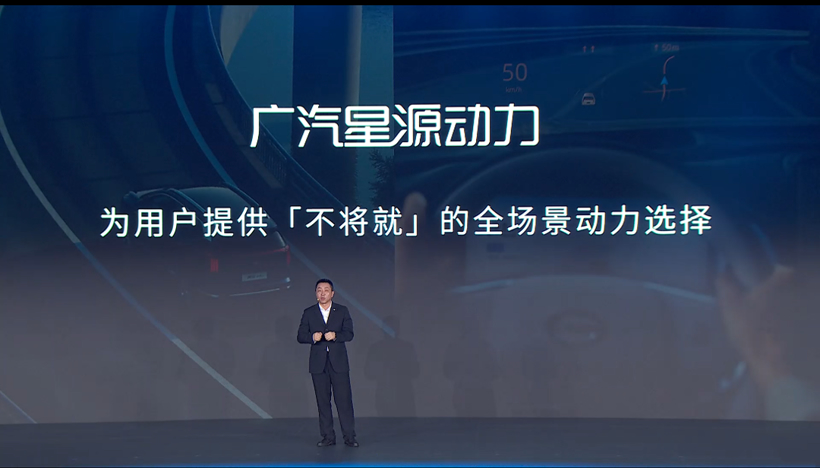
Perhaps this year’s GAC Tech Day, as in previous years, remains a centralized showcase of the group’s technologies pivotal to its future development. From new energy powertrains and vehicle bodies to intelligent cockpits, electronic/electrical architectures, and chip-related technologies, executives from each division presented their areas in the most detailed manner possible, offering everyone a fresh vision of “Tech GAC.”
"StarSource Super Twin" and "Starship Body" are all new technical terms, which ultimately represent the best cards that Guangqi can play at this stage.
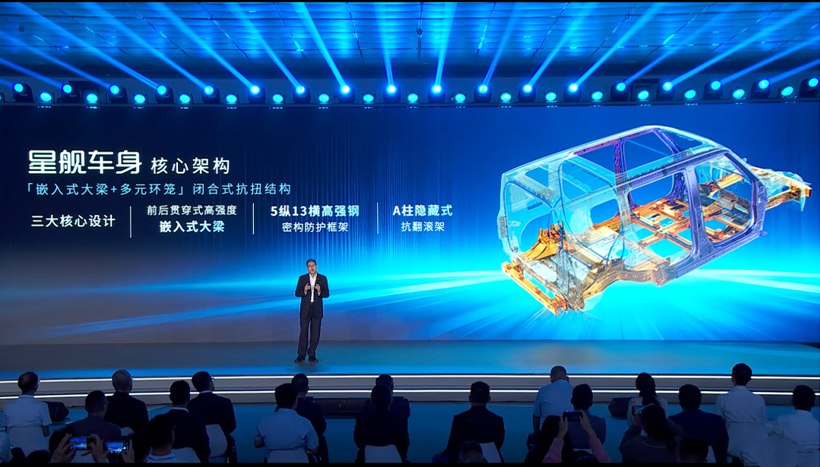
Over the past two months, Chinese automakers’ enthusiasm for technological presentations has shown no signs of abating. Prior to GAC’s Technology Day, BYD launched its second-generation Blade Battery and Flash Charging technology right at the start of the year; Changan Automobile also made a high-profile announcement of its “Blue Whale Ultra Hybrid” initiative. Then, on the 13th, Geely is set to unveil its i-HEV intelligent dual-hybrid technology—clearly, every automaker is rushing to bring all its offerings to the table.
Therefore, based on this reality, for Guangzhou Automotive, any more technical declarations are not unique, which means that to seek development and survival, and to support its ambition, can only rely on the real performance given by the market.
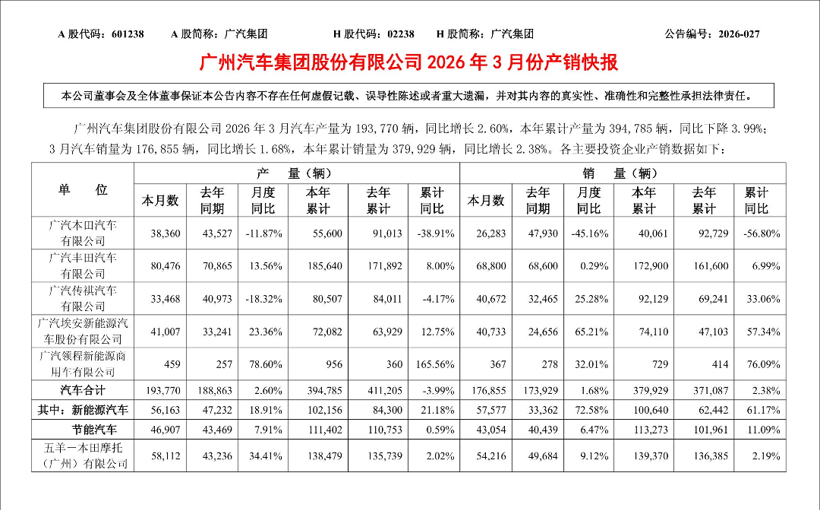
We believe that since the second quarter of last year, the group's sales have achieved consecutive positive growth on a quarter-over-quarter basis for three quarters, with the proportion of energy-saving and new energy vehicle sales rising to 51.6%. These positive signals confirm the correctness of the group's strategic direction and the effectiveness of its transformation measures, laying a solid foundation for the company's long-term development.
Meanwhile, after accelerating its global layout, GAC's self-owned brand sold nearly 130,000 vehicles overseas last year, a 47% increase year-on-year, initially establishing a global production, sales, and service network. Entering 2026, export business has become increasingly crucial for GAC's pursuit of better development.
But no matter what, when Guangqi set three core business goals this year: in terms of production and sales, returning to 2 million units, an increase of nearly 300,000 units compared to 2025; in terms of revenue, returning to 400 billion yuan; and in terms of profit, achieving a significant reduction in losses, even turning to profit. You see, what happened in the past could not possibly be the guarantee for Guangqi to achieve these goals.
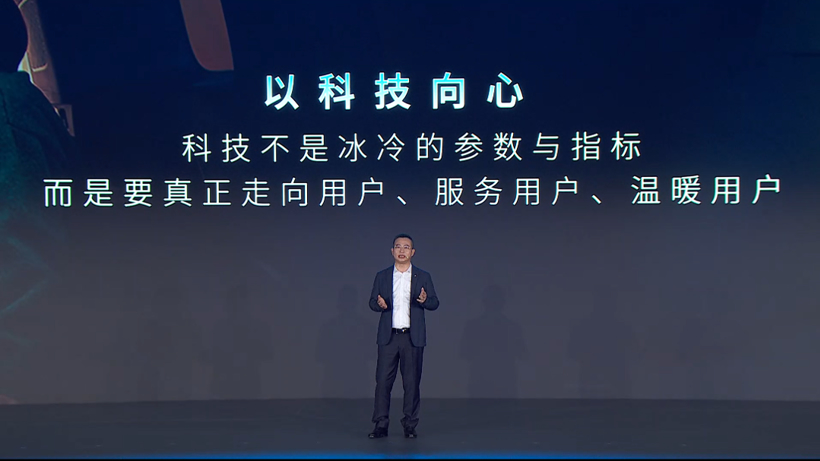
Of course, in this era of relentless competition, technology remains a key indicator of strength. When competitors are constrained by reality, any forward-looking technological accumulation can offer GAC a glimmer of hope. Yet, the same holds true for every other Chinese automaker.
The rise and fall of a company appears to follow a cyclical pattern. Whether it enjoys smooth sailing or is harmed by the times seems like fate. However, the foundation of China's automotive market has never believed in destiny. In recent years, Guangzhou Automobile Group (GAC) has moved from standing atop the market to being busy seeking ways forward. Regardless of the many reasons, it is closely related to the group's own assessment of the situation.
Guangqi Tech Day's solemn promises, as well as the significant progress in the entire industry, are all meaningless in this merciless era; only achievements can convince people.
Shifting from "scale-driven" to "new quality productivity-driven," from relying on joint venture profits to forging independent core competitiveness, and from domestic competition to global layout, the direction is clear; it's now up to GAC to prove itself. The Panyu initiative, from its inception, has been time-bound. Three years may not seem long, but it is certainly enough to make the outside world reassess GAC., , GAC's next steps. Regarding the ultimate quality of the evaluation, it depends on how GAC proceeds from here.
【Copyright and Disclaimer】The above information is collected and organized by PlastMatch. The copyright belongs to the original author. This article is reprinted for the purpose of providing more information, and it does not imply that PlastMatch endorses the views expressed in the article or guarantees its accuracy. If there are any errors in the source attribution or if your legitimate rights have been infringed, please contact us, and we will promptly correct or remove the content. If other media, websites, or individuals use the aforementioned content, they must clearly indicate the original source and origin of the work and assume legal responsibility on their own.
Most Popular
-
Magna Announces Sale Of Lighting And Roof Systems Business
-
Mdi tariff slashed from 511% to 85%—can wanhua reenter u.s. market?
-
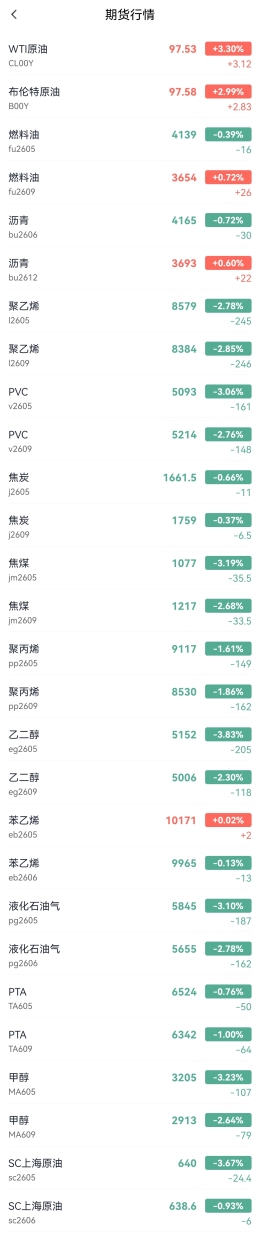
Middle East Tensions Escalate Again? U.S.-Iran Talks Collapse Before Starting, Crude Oil Volatility and Plastic Futures Retreat, Plastics Market Faces New Test
-

BASF Delivers First Batch of Innovative Cathode Materials for Semi-Solid-State Batteries to Weilan New Energy
-
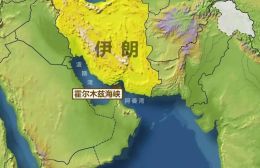
Deadly Impact: Hormuz Strait Blockade Sparks Shortage of Plastic Raw Materials, Threatening Shutdowns at Japanese and Korean Chemical Plants