Foreign visitors flood beijing auto show as global automakers enter china era
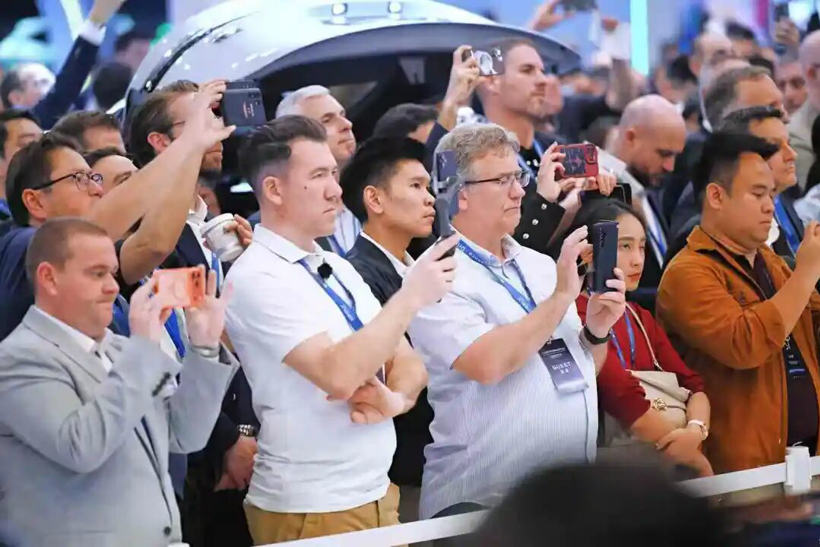
On April 24, the Beijing Auto Show's media day kicked off as scheduled. This long-awaited industry event brought the most direct shock not only from the concentration of new cars, technical displays, and a variety of concept cars, but also from a more significant phenomenon: the presence of many foreign faces throughout the venue. Foreign media journalists, brand executives, dealers, and engineers crowded around the autonomous exhibition areas, making it seem as if one were at an international top-tier auto show.
Two or three years ago, overseas visitors at domestic Tier-A auto shows in Beijing—such as this one—were mostly sporadic spectators or business partners. This year, however, every leading Chinese domestic automaker—including BYD, Chery, Geely, Great Wall, and GAC—has invited global partners and overseas media to the event, transforming the auto show into a grand stage for China’s automotive industry to export technology, products, and standards worldwide.
Not only the crowded scene, but the evaluation of Chinese cars by overseas industry professionals has already undergone a radical reversal. A senior German automotive journalist, after experiencing several new Chinese vehicles, openly stated that Chinese brands have surpassed German domestic automakers in terms of electrification, intelligence, and overall quality.
There are also professionals from the Canadian automotive industry who, upon learning that Chinese automobiles now have the opportunity to enter the Canadian market, took advantage of this chance to lead a team on a visit, seeking opportunities.
Beyond the stage, China’s automotive industry is making an equally unstoppable push into global markets. According to data from the China Passenger Car Association (CPCA), China’s cumulative automobile exports in Q1 2026 reached 2.226 million units, a year-on-year increase of 56.7%; among them, new energy vehicle (NEV) exports totaled 954,000 units, surging 120% year-on-year—a record-breaking, more-than-doubling growth. In core markets—including Europe, Australia, Southeast Asia, and Latin America—sales volume, market share, and growth rates of Chinese automotive brands have all reached historic highs.
From the crowds gathering at auto shows to sweeping through global markets, an indisputable fact has arrived: the global automotive industry has officially entered the Chinese era, with Chinese power transitioning from a follower to a leader.
01From Observation to Submission, the Grand Spectacle Stuns Foreigners
This year’s Beijing Auto Show has set a new record in scale, with the total exhibition area more than doubling compared to the previous edition; yet, even such an expansive exhibition space cannot contain the enthusiasm of overseas visitors.
Walking through the booths of various domestic automakers, one can easily spot foreigners with blond hair, fair skin, and dark skin. They either pause to gaze intently at technical explanations, bend down to measure vehicle dimensions, or hold up devices to capture intricate details—their eyes brimming with curiosity and awe, completely overturning overseas perceptions of Chinese automobiles.
The spectacle at Geely's booth best illustrates the global attention this event has drawn. On the eve of the auto show, Geely held an International Business Partners Conference in Hangzhou, inviting over 1,000 overseas dealers and partners from more than 100 countries and regions.
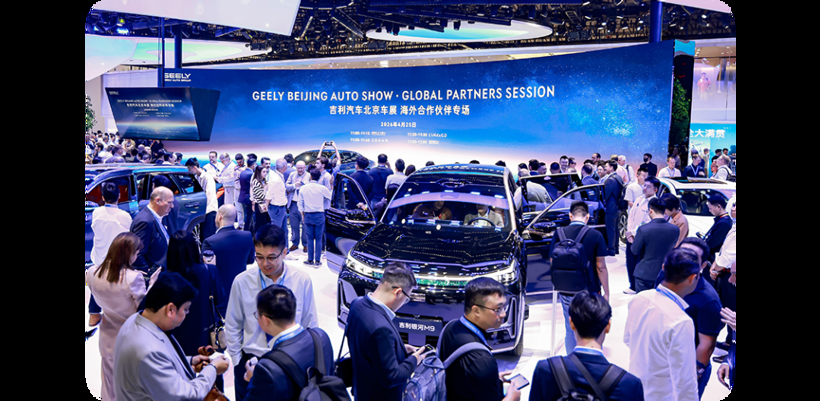
To ensure the smooth arrival of these distinguished international guests at the Beijing Auto Show, Geely chartered a high-speed rail special train—an initiative representing the largest-ever gathering of overseas partners in Geely’s history. On-site at the exhibition booth, multilingual staff fluent in German, Spanish, English, Arabic, and other languages are on standby at all times.
At Great Wall’s exhibition booth, people of diverse ethnicities are everywhere. During the press conference, the simultaneous interpretation channels are no longer limited to just Chinese (Channel 1) and English (Channel 2), but now feature eight distinct language channels, with SI equipment covering the entire event—meticulous and thorough. Chery, meanwhile, reportedly brought a delegation of 4,000 foreign visitors to the exhibition this time and plans to take them to Wuhu afterward. This precisely demonstrates that Chinese brands are fully prepared to expand globally and are embracing the world’s scrutiny with a truly international posture.
Including the Chairman of the Board of Mercedes-Benz, Ola Källenius, and the CEO of BMW.ZipseMoreover, executive teams from Volkswagen Germany successively appeared at the booths of Chinese automotive giants, including Geely, BYD, Great Wall, and Chery, to observe their latest products and technologies.
Following the pandemic, the number of overseas visitors at major auto shows has steadily increased—a fact that is now undeniable. If, in the past, they attended largely with skepticism and caution, questioning whether China’s automotive rise was merely a fleeting phenomenon, by 2026, global mainstream automakers have fully accepted a new reality: China’s technological advantages, supply chain strengths, and intelligent innovations have become an irreversible trend across the industry. To keep pace with the times, embracing “China’s solutions” is now imperative.
Therefore, at each independent booth, the actions of overseas engineers and technicians are more representative. They carefully measure the wheelbase and interior space with tape measures, take out their notebooks to record motor parameters, battery specifications, and architectural highlights, continuously photograph the design language of concept cars and the smart cockpits of production vehicles, and even engage in in-depth technical discussions with Chinese engineers.
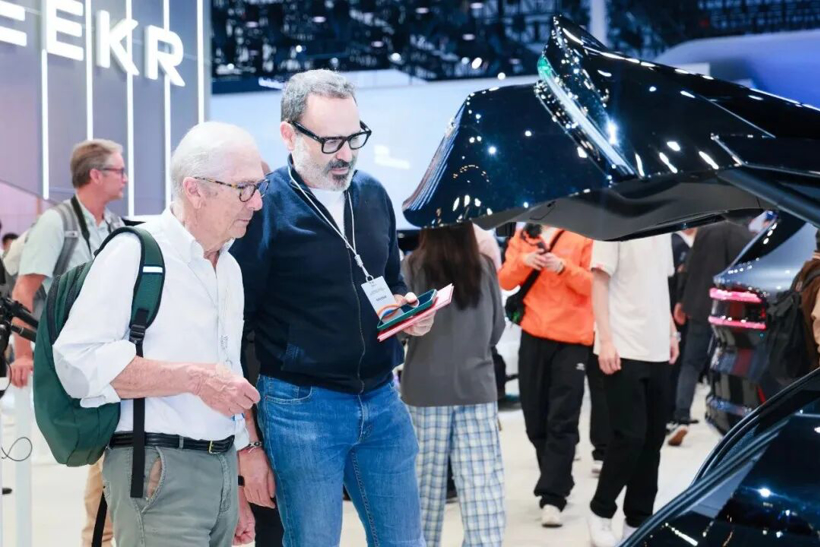
This focus and dedication convey a clear message: today's overseas professionals no longer view Chinese automobiles with the same attitude of mere curiosity or passive observation as they did three years ago. Instead, they approach Chinese cars with a mindset of learning, research, and benchmarking, seeking insights from China's technological approaches and product strategies to find ways to break through for their own brands.
Previously, after the German chancellor's visit to China, he stated at a domestic industry conference that China's automotive industry's "cutthroat" innovation has now taken the global lead, and German automakers must not continue to remain complacent. This warning not only shows that the former giant in the automotive industry can no longer remain indifferent, but also indicates the global automotive industry's respect for China's strength.
The bustling scene at the Beijing Auto Show is, in essence, a microcosm of the global automotive industry’s shifting power dynamics. Foreign visitors swarming the exhibition booths are not merely there to view a few new models; rather, they are striving to decipher the next-generation industry rules being defined by Chinese automakers. In just a few short years, China’s auto industry has undergone an unprecedented transformation—from passively showcasing products to proactively setting the agenda, and from looking up to overseas players to being looked up to by the world—achieving this leapfrog advancement through a strategic “lane change.”
02French cars have woken up, global car manufacturers collectively embrace Chinese technology
Another hallmark change at this year's Beijing Auto Show is the official return to the spotlight of French brands Peugeot and Citroën, which have been absent from A-class auto shows for three years.
Once known for being stubborn and always a step behind, French cars adhered to their unique design logic and product pace, unwilling to cater to market changes, ultimately leading to a continuous retreat in the Chinese market and paying a heavy price. Today, in 2026, French cars have no choice but to embark on a path of awakening.
The awakening of the French automakers is not just the initiative of Peugeot and Citroen, but Renault's layout is more forward-looking. Although Renault did not attend the Beijing Auto Show, in early April, Renault established in Hangzhou a wholly-owned subsidiary, Renault (Hangzhou) Automotive Technology Co., Ltd., aiming at China's top-tier supply chain and intelligent technology.
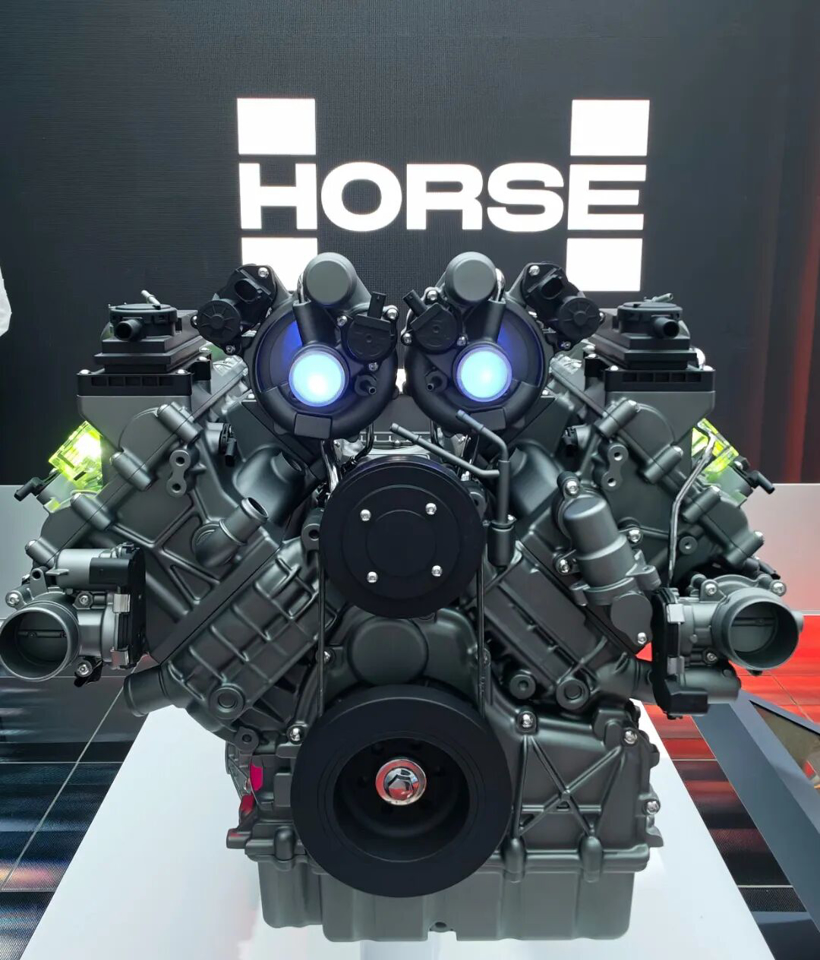
The logic behind selecting Hangzhou is very clear: it is Geely’s home base, and the two parties have already established a deeply integrated cooperative ecosystem. Geely and Renault have jointly established…Haosi PowerIt is a top three powertrain company in the world, with 17 production bases and 5 R&D centers globally, an annual production capacity of over 8 million units, and business coverage in more than 130 countries, providing hybrid and internal combustion engine powertrain solutions for dozens of brands such as Renault, Mercedes-Benz, and Geely.
In the Korean market, Renault directly adopted the technological platform of Geely’s Galaxy L7, rebranded it, and launched it, rapidly becoming a best-selling SUV that surpassed local competitors in sales. In the Brazilian market, Geely and Renault established a joint venture, investing RMB 5.1 billion to localize new-energy vehicle production, leveraging Renault’s local industrial chain to introduce Chinese technology and supply chain capabilities to South America and swiftly capture market share.
Renault did not choose to return to the Chinese market for a fight, but instead took Chinese technology as the core to support the global market. This kind of clarity has undoubtedly made Renault take the lead in the industry's transformation.
Stellantis GroupIts actions are even more decisive—besides bringing Peugeot and Citroën back to the Beijing Auto Show, it has also…Leapmotor AutomobileAchieve in-depth cooperation, leveraging Zhiyun's intelligent and electric technology to quickly open up the European market.
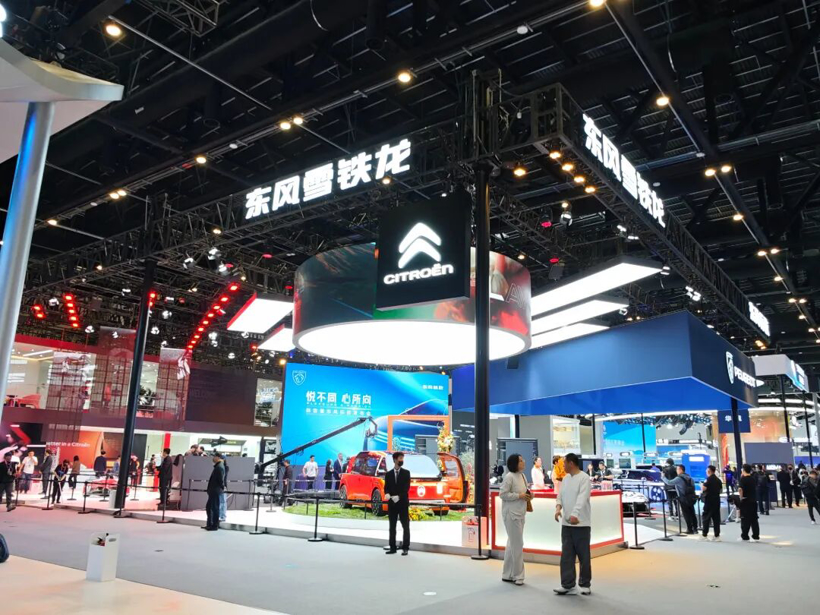
In the first quarter of 2026, Leapmotor, leveraging Stellantis’ distribution network, achieved overseas exports exceeding 40,000 units; its registration volume across 16 European countries reached 23,300 units, surging 726.5% year-on-year. In the Italian market, Leapmotor captured a 33.5% market share, ranking first among pure-electric brands—a benchmark case of collaboration between a Chinese automaker and a European automotive group.
Once mocked as "stubborn, slow, and inflexible," French cars have thoroughly awakened and embraced Chinese strength, proving the global consensus on transformation among car manufacturers. Industry giants such as Volkswagen, Mercedes-Benz, BMW, Audi, and Toyota have long embarked on the same path.
BMW is deeply integrating the core technologies of its new generation models with the Chinese market, Mercedes-Benz's fully electric GLC is fully adapted to the intelligent demands of Chinese users, and Toyota's BZ series has achieved a sales surge by relying on China's supply chain. In the product portfolios of these global giants, the imprint of Chinese technology and solutions is becoming increasingly evident.
The global automakers' collective shift underscores a harsh and realistic industry rule: refusing Chinese technology means refusing the future.
03Chinese power dominates the globe, and the automotive industry welcomes its fifth revolution.
The swarms of foreign visitors crowding around exhibits at the Beijing Auto Show vividly demonstrate China’s growing strength; meanwhile, the surging export figures and soaring global market share in the first quarter serve as hard evidence of Chinese automobiles dominating the global market. Against the backdrop of intensifying domestic market saturation and escalating industry-wide competition, Chinese automakers are channeling their mature production capacity, advanced technologies, and competitive products overseas—ushering in the most expansive and spectacular global expansion wave in history.
In the first quarter of 2026, China's auto exports surged phenomenally—every three Chinese-made vehicles included one exported overseas, consistently surpassing Japan in export volume and solidifying China's position as the world's largest automobile exporter.
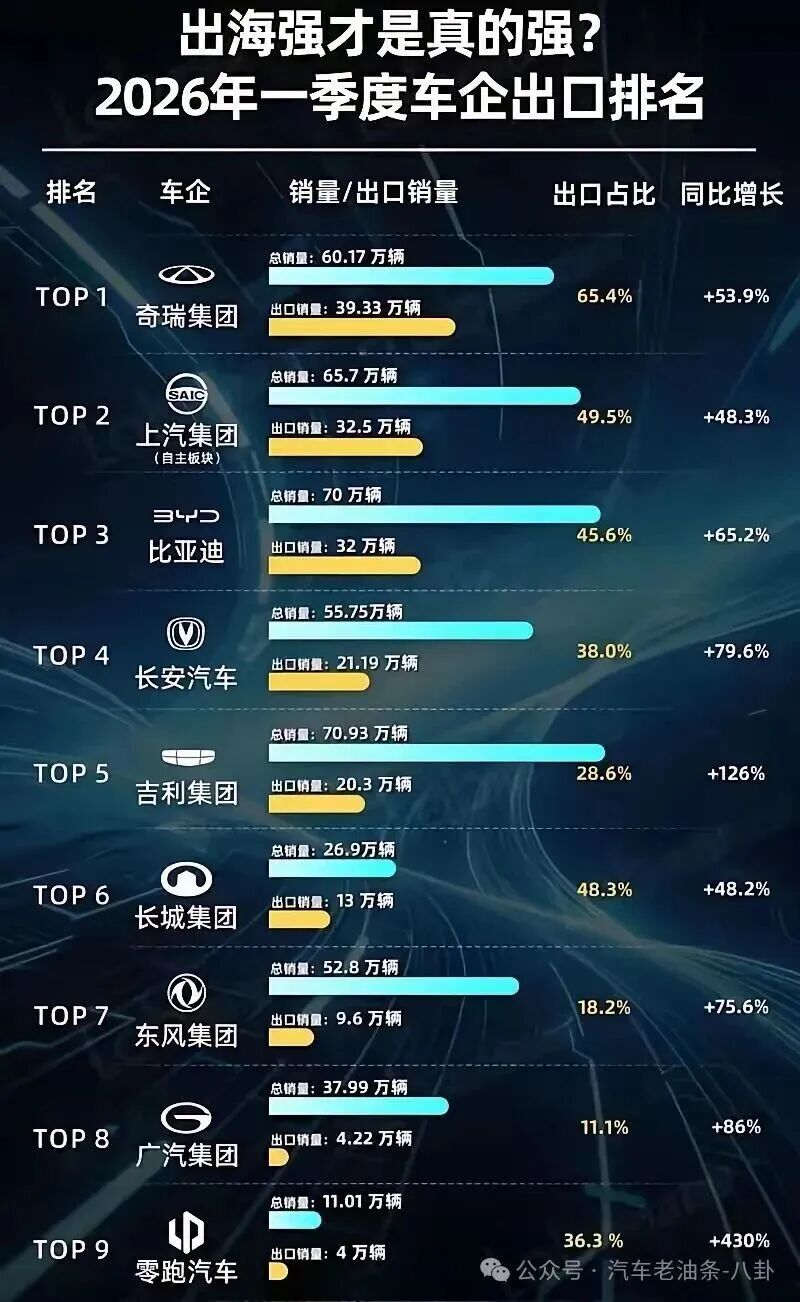
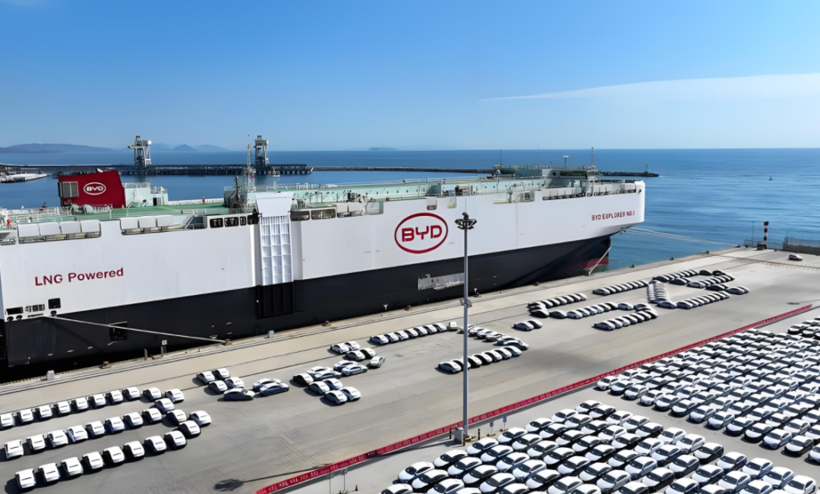
The overseas expansion plans of leading independent Chinese car manufacturers are even more ambitious. BYD has raised its 2026 overseas sales target to 1.5 million units; Chery, which has been the top Chinese brand in exports for 23 consecutive years, aims to achieve overseas sales of 1.5-1.6 million units by 2026; Changan has launched the "Haina Baichuan 2.0" strategy, targeting 750,000 overseas sales in 2026 and aiming for 1.5 million by 2030; Geely has set a challenge of 750,000 overseas sales this year and is targeting 6.5 million global sales by 2030, with overseas sales accounting for more than one-third.
The rise of Chinese brands has formed a blazing trend across major global markets. In the European market, despite tariff barriers, Chinese electric vehicle brands have achieved a market share of 14.97% in the core 15 European countries. When including Chinese-controlled brands, the share rises to 21.68%. BYD sold 25,074 all-electric vehicles in Europe in the first quarter, with a market share of 5.4%, entering the top five in electric vehicle sales in Europe for the first time.
Byd DolphinBecome a local blockbuster.
Looking back on the 140-year development of the automotive industry: Germans invented the automobile, Americans invented the assembly line, Japanese pioneered lean production, and South Koreans opened global markets with competitive pricing and value—each nation, through its own capabilities, has propelled the global automotive industry forward by a significant leap.
This time, China is initiating the fifth revolution in the automotive industry with intelligent manufacturing, full-stack independent R&D, and advantages of the entire industry chain. China possesses the most complete global powertrain supply chain, the most advanced intelligent technology, the most extreme cost control capability, and the most user-centric product definition capability. These advantages, when combined, have created an unstoppable competitiveness for Chinese automobiles in the global market.
The grand spectacle of the Beijing Auto Show is merely the opening act of China's automotive industry leading the world. The export surge in the first quarter is just the beginning of China's rising power. As foreigners flock to Chinese auto shows, global automakers embrace Chinese technology, and Chinese brands sweep across global markets, an undeniable era has arrived: the center of the global automotive industry has decisively shifted from Detroit, Stuttgart, and Tokyo to China.
【Copyright and Disclaimer】The above information is collected and organized by PlastMatch. The copyright belongs to the original author. This article is reprinted for the purpose of providing more information, and it does not imply that PlastMatch endorses the views expressed in the article or guarantees its accuracy. If there are any errors in the source attribution or if your legitimate rights have been infringed, please contact us, and we will promptly correct or remove the content. If other media, websites, or individuals use the aforementioned content, they must clearly indicate the original source and origin of the work and assume legal responsibility on their own.
Most Popular
-

Why did a century-old european dental instrument giant relocate its manufacturing hub to china?
-

$4 Billion! Medtronic Makes Another Acquisition
-
Profit and Revenue Growth Struggle to Conceal Debt Repayment Pressure; Success of Kingfa Sci & Tech's High-End Strategy Yet to Be Seen
-

Toray Industries and SGL Carbon Establish Carbon Fiber Supply Partnership for Aerospace Sector
-
Deadly Impact: Hormuz Strait Blockade Sparks Shortage of Plastic Raw Materials, Threatening Shutdowns at Japanese and Korean Chemical Plants