



Ford And SK On Split! United States Electric Vehicle Progress Stalls As These Companies Hit The Brakes
South Korean battery manufacturer SK On and Ford's joint venture BlueOvalSK have welcomed a significant structural adjustment. Originally planning to jointly explore the U.S. electric vehicle market, SK On and Ford announced on December 11 that they have reached an agreement to restructure the operations of BlueOval SK. According to the new agreement, both parties will independently own and operate battery plants, with SK On taking over the Tennessee plant and Ford receiving a portion of the Kentucky facility.
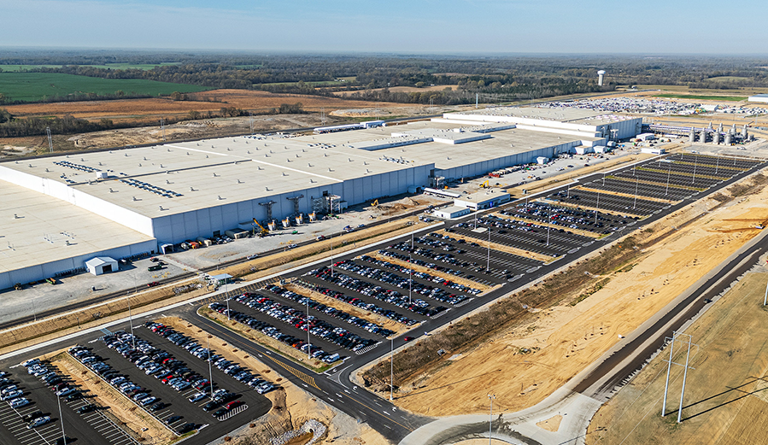
The "break-up" agreement is expected to be finalized by the end of the first quarter of 2026, but it requires approval from relevant authorities. SK On stated that the termination of the joint venture with Ford is aimed at...Improve productivity, operational flexibility, and responsiveness.to respond more effectively to the ever-changing market demands.
01 Data validation trend: The U.S. electric vehicle market is showing a significant slowdown.
SK On and Ford Motor previously formed a 50:50 joint venture, BlueOval SK, responsible for battery production in the United States. This joint venture has two factories in Kentucky and one factory in Tennessee, and was once a significant symbol of America's ambitions in electric vehicles.
After the "breakup," SK On still plans to work with Ford.Maintain close strategic partnerships.The Tennessee factory, with an annual capacity of 45 GWh, has a natural advantage in supplying batteries to Ford due to its geographical location.
Benchmark Mineral Intelligence's latest data reveals the sluggish state of the U.S. electric vehicle market. From January to November 2025, global electric vehicle sales reached 18.5 million units, marking a 21% year-on-year growth, but...Significant differences in performance across regions.China remains the largest electric vehicle market in the world with sales of 11.6 million units, a year-on-year increase of 19%. The European market showed the most robust growth, with sales reaching 3.8 million units, a year-on-year increase of 33%. In contrast, the North American market saw sales of only 1.7 million units, a year-on-year decrease of 1%.The only region in the major global markets to experience negative growth.。
After the Trump administration took office, the policy environment for the U.S. electric vehicle industry underwent dramatic changes. The complex and variable trade policies and the overall stagnation of the green transition are casting a huge shadow over the construction of related industries in the United States. The Wall Street Journal once reported that due to increased uncertainty in local U.S. policies and a slowdown in the growth of the electric vehicle market,International companies are collectively adjusting their electric vehicle and battery investment projects in the United States.。
02 Automakers and Battery Projects Withdraw: Major Shift in Electrification Strategy
Facing a slowdown in market demand and policy uncertainty,Many automobile manufacturers are.Postpone or cancel projects related to electric vehicles and batteries.
Due to "market conditions," Honda has abandoned its electric vehicle plans. American Honda Motor Co. has ceased production of the Acura ZDX, an electric midsize crossover that has been on the market in North America for only a year, with sales of less than 20,000 units. Honda CEO Toshihiro Mibe stated, "Based on the current market slowdown, we expect that electric vehicle sales will be lower than our previously set target of 30% by 2030."
Stellantis Jeep has undergone significant changes and announced the cancellation of the long-planned Jeep Gladiator 4xe hybrid model. Jeep stated that it has "reallocated funds to ensure the long-term development of the Gladiator" and will equip the Gladiator with a V-8 engine. Stellantis' Ram brand has announced the cessation of production of the Ram 1500 full-size electric pickup. The company confirmed: "As demand for full-size all-electric trucks in North America slows, Stellantis is reevaluating its product strategy and will halt the development of full-size all-electric pickups."
The release date of the new full-size electric pickup and a new commercial truck has been postponed to 2028.Ford has already lost money on electric vehicles.21.78billion dollarsThis delay may be a necessary adjustment to respond to market realities.
Luxury brands are no exception.
Bentley has abandoned the plan to completely stop selling internal combustion engine cars by 2035. Bentley CEO Frank-Steffen Walliser stated, "The demand for luxury electric cars is declining, and customer demand is not sufficient to support a fully electric strategy."
PorschePorsche and Volkswagen Group CEO Oliver Blume announced the suspension of new electric vehicle models and a shift back to internal combustion engine models, including hybrid models. He stated, "We are witnessing significant changes in the automotive industry environment. We have made crucial strategic decisions."
With the slowdown in electric vehicle demand, the U.S. battery industry also faces..."Cold Current"Multiple battery manufacturers have adjusted their investment plans in the United States.
BMW North AmericaAnd global market power battery suppliersVision PowerIn June 2025, it was announced that the battery factory project in South Carolina, USA, would be postponed until policy clarity is achieved. A spokesperson for Envision Energy stated that the company's adjustment of its pace in the U.S. is a rational decision based on "policy uncertainty" and "cost sensitivity."
General MotorsSell its stake in the Lansing, Michigan battery plant to partner LG Energy Solution.
Contemporary Amperex Technology Co., Limited (CATL) Ford Motor CompanyThe battery project in collaboration with Michigan also faces the risk of being put on hold.
American startup battery companyGroup14 TechnologiesSlowed down the construction of a battery materials factory.
According to data from the research organization Rongding Group, 2025In the first quarter of the year, there were over 60.The investment of billions of dollars in battery factories has been canceled or postponed.This figure highlights the unprecedented challenges facing the U.S. battery industry.
Global Landscape: China and Europe Advance Rapidly, While the United States Stagnates
In stark contrast to the U.S. market, the electric vehicle markets in China and Europe continue to maintain strong growth.
China remains the key support of the global electric vehicle market. From January to November 2025, retail sales in China's new energy passenger vehicle market reached 11.472 million units, an increase of 19.6%. Exports have become a major highlight of the Chinese market, with BYD's exports in November reaching 131,935 units, breaking the record of approximately 90,000 units set in June this year.
In November 2025, the European EV market grew by 36% year-on-year, with pure electric vehicle sales increasing by 35% and plug-in hybrid vehicle sales increasing by 39%. From January to November this year, the cumulative sales in Europe reached 3.8 million units, a 33% increase compared to the same period last year. In France, after experiencing negative growth for most of the year due to subsidy cuts, November marked the first time of achieving cumulative growth within the year. Italy recorded a record-breaking sales of approximately 25,000 units in November, benefiting from the newly introduced fuel vehicle replacement incentive program.
Correspondingly,Many Chinese battery companies are shifting their focus overseas to the more certain European market.。
Ningde Times has established three major bases in Germany, Hungary, and Spain; EVE Energy and Sunwoda have set up factories in Hungary; AVIC Lithium Battery has landed in Portugal; Guoxuan High-Tech is expanding to Germany and Slovakia... Europe is becoming the "second main field" for Chinese battery companies to expand overseas.
The "two extremes" situation in the global electric vehicle market.U.S. marketDue to policy uncertainty and slowing demand, automotive companies and battery manufacturers are scaling back investments and adjusting strategies, putting the brakes on the electrification process. In contrast,European marketWith stable policy expectations and strong consumer demand, it continues to maintain high-speed growth, especially attracting the intensive layout of China's battery industry chain. This differentiation indicates that the competitive landscape of the global electric vehicle industry is undergoing profound restructuring.
Editor: Lily
Source of materials: IT Home, Observer Network, Wall Street Journal, New York Times, Automotive Business Review, Gaishi Automotive, Bloomberg, Reuters, Electrive, Business Insider, Automotive News.
【Copyright and Disclaimer】This article is the property of PlastMatch. For business cooperation, media interviews, article reprints, or suggestions, please call the PlastMatch customer service hotline at +86-18030158354 or via email at service@zhuansushijie.com. The information and data provided by PlastMatch are for reference only and do not constitute direct advice for client decision-making. Any decisions made by clients based on such information and data, and all resulting direct or indirect losses and legal consequences, shall be borne by the clients themselves and are unrelated to PlastMatch. Unauthorized reprinting is strictly prohibited.
Most Popular
-

List Released! Mexico Announces 50% Tariff On 1,371 China Product Categories
-
Nissan Cuts Production of New Leaf EV in Half Due to Battery Shortage
-

New Breakthrough in Domestic Adiponitrile! Observing the Rise of China's Nylon Industry Chain from Tianchen Qixiang's Production
-
Dow, Wanhua, Huntsman Intensively Raise Prices! Who Controls the Global MDI Prices?
-
Clariant Unveils Cost-Cutting Plan Details, Plans to Shut Down Multiple Plants

