



Evonik Parts Ways With The Polyester Business! A Strategic Retreat By A Germany Chemical Giant And The Global Industry Shift
According to Special Plastics Insight, on June 18, 2026, German specialty chemicals giant Evonik dropped a bombshell: it announced that it would completely exit the global polyester business in 2027. Its plants in Witten and Marl, Germany, as well as Shanghai, China, will cease production in April 2027. The business segment, with annual sales of approximately €150 million, will be entirely discontinued, affecting around 350 employees worldwide.
This is not merely a business adjustment by one company, but another reflection of the European chemical industry’s deepening structural woes.
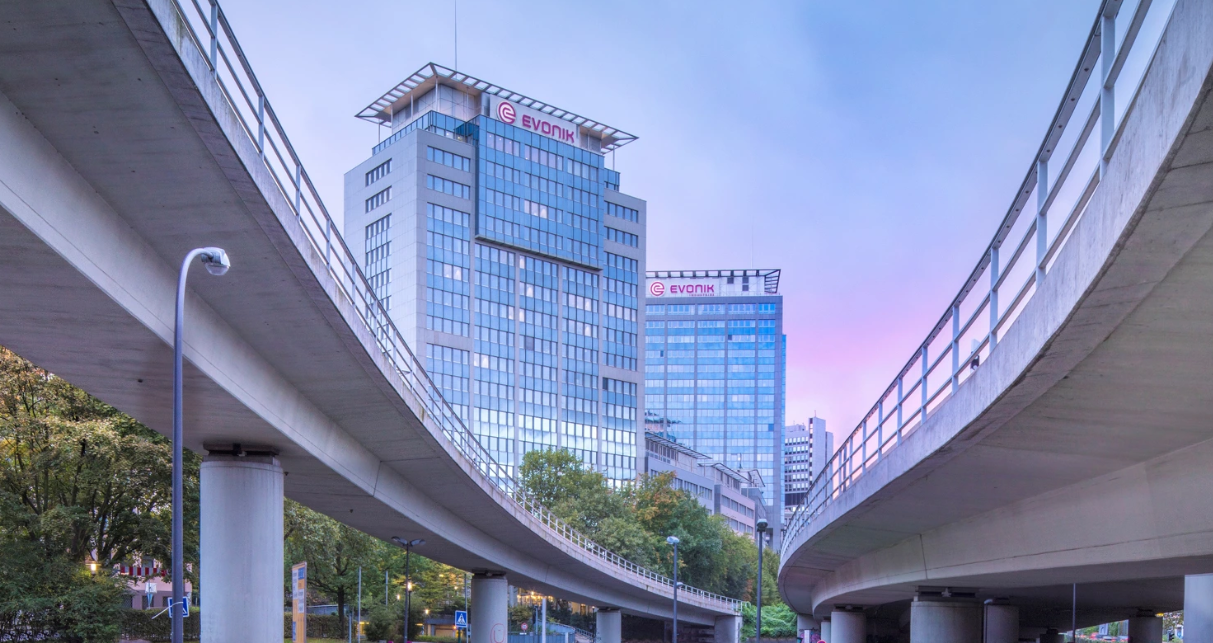
Image source: Evonik
From “for sale” to “shutdown”: a two-year-long retreat
Evonik's disposal of its polyester business was not an impulsive decision.
In October 2024, Evonik announced the restructuring of its coatings and adhesives resins business line, putting its polyester business up for sale. At that time, Evonik hoped to find a new owner for this business, which has an annual turnover of approximately 150 million euros but has long failed to achieve profitability. The business has around 330 employees globally, with the largest factory located in Witten, Germany, employing about 250 people; there is also a smaller factory in Shanghai with around 30 employees.
However, the market did not give Evonik a chance. Over the following year and more, Evonik actively sought potential buyers, hoping they would develop the business strategically and make it profitable. But with market conditions continuing to deteriorate and its competitive position remaining unfavorable, no deal was ever reached. In the end, the polyester business, which had failed to be sold, was headed for shutdown.
From a timeline perspective, the retreat path is clear: in October 2024, a restructuring was announced and a sale was sought; from late 2024 to 2025, buyers were actively sought but no deal was reached; in June 2026, the company officially announced its exit and began employee resettlement; and in April 2027, the Witten and Shanghai factories officially ceased production.
Lauren Kjeldsen, head of Evonik's customized solutions business segment, candidly stated: "From an economic perspective, ending the polyester business and closing related production has become inevitable. Intensified global competition, Europe's structural disadvantages, and weak market demand have made all alternative options unable to achieve the long-term sustainable development of this business."
The Loss-Making Polyester Business: Why Has It Become a Discarded Asset?
The polyester business from which Evonik exited refers to products used in coatings and adhesive applications.Saturated polyester resinrather than PET fiber-grade polyester used for spinning. This type of polyester is produced through polycondensation of diols and dibasic acids and is an important film-forming material in the coatings and adhesives industries. It is widely used in coil coatings, automotive refinish coatings, industrial anti-corrosion coatings, hot-melt adhesives, packaging adhesives, and other fields.
In the coatings field, polyester resins are one of the mainstream base materials for coil coatings and automotive OEM paints; in the adhesives field, polyester hot-melt adhesives are widely used in automotive interiors, textile lamination, and the packaging industry due to their heat resistance and bonding strength.
This was originally a business with a certain technical threshold. However, polyester resin production capacity in Asian countries such as China and India has been expanding rapidly, with a clear cost-performance advantage. Coupled with persistently high energy costs in Europe, Evonik is unable to compete on the cost side. For a business with annual sales of EUR 150 million that has been unable to turn a profit for years, in the context of pressure on the group’s overall performance, its elimination was only a matter of time.
The Anxiety Behind the Numbers: Evonik's Financial Predicament
Evonik's decision to cut its polyester business is not an isolated one, but part of the group's overall strategy to reduce costs and increase efficiency.
On June 18, 2026, Evonik also announced that it would extend its “Evonik Tailor Made” efficiency program to 2029, advancing organizational restructuring and cost-cutting measures worldwide. The company plans to cut a total of approximately 3,200 jobs, including about 2,150 in Germany. The related measures will begin in 2027 and continue through the end of 2029.
Including this round, through the current “Evonik Tailor Made” efficiency enhancement program and the efficiency improvement plans across its operating businesses, Evonik will have eliminated a total of about 2,800 positions between October 2023 and the end of 2026. The original “Evonik Tailor Made” plan aimed to cut 2,000 jobs globally and reduce annual costs by €400 million by the end of 2026.
The financial data reveals Evonik’s anxieties: in 2025, sales reached €14.069 billion, down about 7% year on year; in the first quarter of 2026, sales fell 9% year on year to €3.43 billion, and net profit dropped sharply by 46.4% to €125 million from €233 million in the first quarter of 2025. Christian Kullmann, Chairman of the Executive Board and CEO of Evonik Industries, frankly admitted: “The current global political situation is full of uncertainty, economic growth remains weak, and international competition is becoming increasingly fierce. In such circumstances, we must strengthen ourselves.”
Europe’s Chemical Industry’s “Darkest Hour”
Evonik is not an isolated case. The European chemical industry is undergoing an unprecedented deep adjustment.
Energy CostsIt was the last straw that broke the camel's back. European industry is facing the highest energy costs in the world, with industrial natural gas prices consistently three to four times higher than those of its American competitors. Since the geopolitical conflict in 2022, European natural gas and electricity prices have fluctuated significantly and risen sharply, directly breaching the economic viability threshold of numerous chemical production lines.
Capacity shutdownIt has become a wave. Data shows that since 2022, more than 25 million tonnes of chemical production capacity has been shut down or sold off, accounting for about 9% of the region’s total chemical capacity in 2021. Germany has been the hardest-hit country, with around 7 million tonnes of chemical capacity already withdrawn or set to exit the market.
Investment cliffEven more alarming, investment in Europe’s chemical industry plunged by more than 80% year-on-year in 2025. From 2022 to 2025, annual new investment and capital expenditure in Europe’s chemical industry fell from 2.7 million tons to 300,000 tons. At present, about three-quarters of Germany’s energy-intensive chemical companies are shifting their investment overseas.
Industry ProfitFalling to a freezing point. By 2025, the average profit margin of the European chemical industry has dropped to its lowest level since 2010, with more than one-third of listed companies operating at a loss or on the brink of break-even. The German Chemical Industry Association warns that if the current trend continues, Europe could permanently lose 15% to 20% of its chemical production capacity by 2030.
BASF, Celanese, Syensqo, and Mitsubishi Chemical have all recently announced major business divestitures. BASF has cumulatively cut about 4,800 jobs and relocated some positions from Germany to Asia; in October 2025, BASF divested its global coatings business at an enterprise value of €7.7 billion. LyondellBasell has shut down its polypropylene plant in Italy. Huntsman continues to downsize and sell non-core assets. INEOS has permanently closed its phenol plant in Germany, which had an annual capacity of 650,000 tonnes.
According to data from the European Chemical Industry Council (Cefic), Europe's share of the global chemical market has dropped to 13%. A report from France 24 television bluntly states that a crisis is accelerating the impact on this energy-intensive industry.
Who will fill the void?
Evonik's exit means that approximately 150 million euros of market share will be released each year. Where will these orders go?
The answer points to Asia, especially China.
In recent years, China’s polyester industry has undergone rapid capacity expansion, with a highly competitive cost-performance advantage. In 2025, China’s polyester product exports delivered an outstanding performance: cumulative exports from January to November reached 13.25 million tons, surpassing the total export volume for the whole of 2024, representing an increase of 14.59%. In the polyester resin segment, China exported approximately 223,000 tons of polyester resin varnish in 2025, mainly to Southeast Asia, the Middle East, and Africa, with export value reaching USD 540 million.
China’s cost advantage in the chemical industry is continuing to expand. World-class industrial park clusters, globally leading mega-scale facilities, and the most complete supporting industrial chain are making China’s overall cost advantage in chemicals increasingly prominent. BASF’s continued investment in its integrated Verbund site in Zhanjiang shows that capital is voting with its feet, and the direction is self-evident.
Of course, opportunities and challenges go hand in hand. Evonik’s polyester business is aimed at mid- to high-end coatings and adhesive applications, which place high demands on product quality and consistency. To fill this gap, domestic manufacturers need to deliver products with strong and stable quality. But the trend is already clear: European chemical giants are continuing to divest inefficient businesses, and Asian companies are expected to benefit from this round of capacity transfer.
From "Europe Retreat" to "Asia Advance," the global chemical industry landscape is being redrawn. Evonik's closure of its polyester plant is just one stroke in this grand picture. As predicted by INEOS when shutting down its German facility, "Unless regulators wake up and take action, this will not be the first, nor the last affected plant."
Editor: Winnie
【Copyright and Disclaimer】This article is the property of PlastMatch. For business cooperation, media interviews, article reprints, or suggestions, please call the PlastMatch customer service hotline at +86-18030158354 or via email at service@zhuansushijie.com. The information and data provided by PlastMatch are for reference only and do not constitute direct advice for client decision-making. Any decisions made by clients based on such information and data, and all resulting direct or indirect losses and legal consequences, shall be borne by the clients themselves and are unrelated to PlastMatch. Unauthorized reprinting is strictly prohibited.
Most Popular
-

A Look at the Material Suppliers Behind SpaceX
-
United States Imposes 208.49% Tariff On Chinese Glass Fiber Products
-
Celanese Joins Forces With Aisan Industry to Reshape the Low-Carbon POM Competitive Landscape, Changing the Automotive Supply Chain
-
Next-generation motors of new energy vehicles: Single-Round Thousand Horsepower, Replacing Brakes, How Powerful Are They?
-
56 Billion Capital Enters Market! Q2 New Materials Investment Boom Erupts, Modified Plastics and Specialty Engineering Plastics Increase Across The Board


