Creality’s Hong Kong Listing Signals a 3D Printing Boom, with PLA Consumption Set to Reach 120,000–140,000 Tons This Year
In 2025, global demand for polylactic acid will be approximately 300,000 tons, while growth in the 3D printing sector is expected to reach around 50% in 2026, making it a major growth driver.
On May 29, Creality officially debuted on the Hong Kong Stock Exchange.The stock code is 03388.HK.Become the first listed consumer-grade 3D printing stock in Hong Kong. As a leading enterprise in the global consumer-grade 3D printing sector, Creality ranks among the top in global market share. The company’s listing has been met with strong market enthusiasm, raising approximately HK$1.38 billion in total proceeds. On its first trading day, the stock opened at HK$33.88, more than 80% above the offer price.Market capitalization surpassed HK$10 billion.
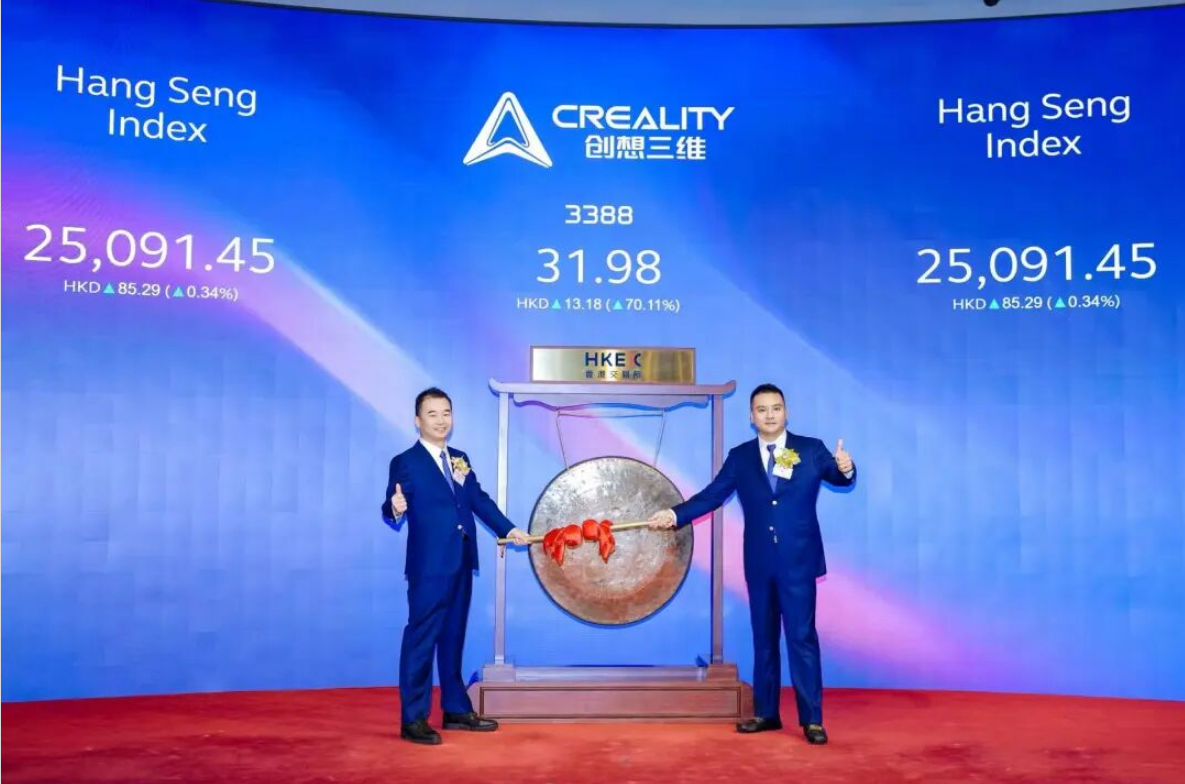
As brand influence continues to grow, since May this year, several leading consumer-grade 3D printing equipment companies, including Creality and Bambu Lab, have accelerated their offline expansion. Physical stores have opened one after another, and their products have also entered major offline supermarkets such as Sam’s Club. With both online and offline channels expanding in parallel, 3D printing products are being brought into ordinary households.
The favor of the capital market is not an isolated case.
On May 21, Anhui Sanlv Technology, a 3D printing materials company, successfully listed on the New Third Board. In the first quarter of this year, the domestic 3D printing industry saw more than 20 financing events, with investments covering all sub-sectors including metal printing, printing materials, core components, and consumer-level equipment, continuously nurturing the development of the industry with capital.
Consumables companies are seeing a performance windfall.
Downstream consumable companies in the industry chain are the first to benefit from performance dividends. Several A-share listed companies have significantly improved their performance thanks to the growing demand for 3D printing consumables.
Jialian TechnologyQ1 2026Revenue reached RMB 753 million, up 48.89% year on year, with the expansion of 3D printing product sales serving as the core driver of revenue growth. The company stated that it will continue to accelerate the expansion of its 3D printing business and customer development, building it into the company’s second growth curve.
Similarly benefiting is the leading polylactic acid company, Haizheng Biomaterials. In the first quarter of 2026, the company's revenue rose by 30.28% year-on-year, while net profit surged by 348.06%. The explosive performance is primarily driven by a significant increase in demand for 3D printing materials, which has led to a substantial rise in sales of its core product, polylactic acid resin. Currently, polylactic acid has become the mainstream material in the 3D printing field, with market demand continuing to grow.
In addition, many chemical companies have entered the 3D printing materials market. Silver Age Sci & Tech has launched a range of products, including PLA filament and TPU composite powders, and leverages mainstream e-commerce platforms to fully cover both B2B and B2C users. Companies such as Nanjing Julong and Oriental Energy are also continuing to advance R&D projects related to 3D printing materials, further enriching the industry’s competitive landscape.
PLA consumption in the 3D printing industry will reach 120,000–140,000 tons.
From a market demand perspective, polylactic acid has considerable growth potential in the 3D printing field.
The global demand for polylactic acid in 2025 is approximately 300,000 tons.The 3D printing sector alone will contribute more than 40% of the incremental growth.Become the core engine driving the growth in demand for polylactic acid.
Industry forecasts predict that by 2026, the consumption of polylactic acid in the 3D printing industry will reach 120,000 to 140,000 metric tons.
Nowadays, consumer-grade 3D printing is making the transition from a “niche gadget” to a “mass consumer product.” With the capital market stepping up investment, offline channels expanding, and demand for printing materials surging, China’s 3D printing industry is entering a fast lane of rapid growth amid the convergence of multiple favorable factors.
【Copyright and Disclaimer】The above information is collected and organized by PlastMatch. The copyright belongs to the original author. This article is reprinted for the purpose of providing more information, and it does not imply that PlastMatch endorses the views expressed in the article or guarantees its accuracy. If there are any errors in the source attribution or if your legitimate rights have been infringed, please contact us, and we will promptly correct or remove the content. If other media, websites, or individuals use the aforementioned content, they must clearly indicate the original source and origin of the work and assume legal responsibility on their own.
Most Popular
-

A Look at the Material Suppliers Behind SpaceX
-
Eastman France PET Depolymerization Plant: Project "Alive," But Construction Paused
-
Ethylene: Production Capacity Accelerates Expansion, Global Industry Landscape Is Being Reshaped
-

Amer Sports Releases 2025 Sustainability Report, Apparel And Footwear Recycled Material Proportion Reaches 19.3%
-

Mitsubishi Chemical Plans To Split Petrochemical Business By 2028