



Complete Analysis of Resin Processing Lubricants: Principles, Models, and Application Guide
Introduction: The "Golden Duo" of Plastic Processing
In plastic processing, lubricants are indispensable key additives. Acting like a “lubricant” for plastic melts, they effectively reduce frictional resistance between molecules and between the material and equipment, improve melt flowability, and enhance processing efficiency and product quality. Statistics show that the proper use of lubricants can increase production efficiency by 15–30% and reduce energy consumption by 10–20%.

More than 90% of plastic processing requires lubricants.
Two major categories: internal lubrication / external lubrication
6+ Main Application Resins
5 Main Types of Lubricants
1. Working Principle of Lubricants
1.1 Basic Concepts
Resin processing lubricants are a type of additive that can improve the flow properties of plastic melts. Their molecular structure typically consists of a non-polar long chain and a polar group, functioning by forming a lubrication layer between polymer molecular chains or between the polymer and the metal surface of processing equipment.
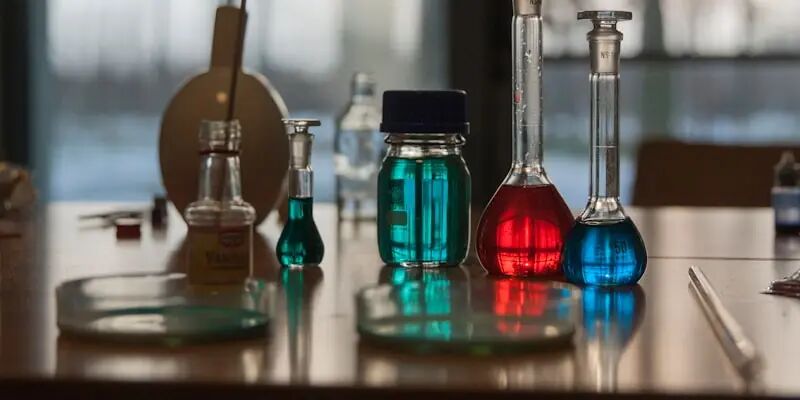
The core function of lubricants.
1.2 Mechanism of Action of Internal and External Lubrication
Internal Lubricant
Mechanism of action: Internal lubricants have good compatibility with polymers and can penetrate between polymer molecular chains, reducing internal friction between the chains and enabling the chain segments to slide relative to each other more easily.
Characteristics of internal lubricants:
Good compatibility
Reduce internal friction
Reduce melt viscosity
Promote plasticization
External Lubricant
Mechanism of action: External lubricants have poor compatibility with polymers and migrate to the surface of the melt, forming a lubricating film between the polymer and the metal surfaces of processing equipment.
Characteristics of external lubricants:
Poor compatibility
Interfacial lubrication
For easy demolding
Adjust the plasticizing point
1.3 Balance Between Internal and External Lubrication
Most lubricants serve both internal and external lubrication functions, but some are more oriented toward internal lubrication, while others are more oriented toward external lubrication. The same lubricant may exhibit different lubricating effects in different resins or under different processing conditions.
|
|
|
|
|---|---|---|
| Compatibility |
|
|
| Polar groups |
|
|
| Migration Direction |
|
|
| Main function |
|
|
2. Main Types of Lubricants
2.1 Hydrocarbon Lubricants
🟡 Polyethylene Wax (PE Wax)
Model examples: OPE wax (Oxidized Polyethylene Wax), ordinary polyethylene wax.
Melting point range: 100-120°C
|
|
|
|
|---|---|---|
| Ordinary PE wax |
|
|
| Oxidized PE wax |
|
|
| High molecular weight PE wax |
|
|
Yellow Polypropylene Wax (PP Wax)
Features: good compatibility with PP resin, suitable for polyolefin processing
Applications: PP, PE films, pipes, injection molded parts
🟡 Paraffin Waxes
|
|
|
|
|
|---|---|---|---|
| Liquid paraffin |
|
|
|
| Solid paraffin |
|
|
|
| Microcrystalline wax |
|
|
|
2.2 Fatty Acids and Their Derivatives
Stearic Acid
Chemical formula: CH₃(CH₂)₁₆COOH
Melting point: 69-71°C
Dual functionality: acts as an internal lubricant at low temperatures and as an external lubricant at high temperatures.
Fatty acid metal soaps
|
|
|
|
|
|---|---|---|---|
| Calcium stearate |
|
|
|
| Zinc stearate |
|
|
|
| Lead stearate |
|
|
|
| Barium stearate |
|
|
|
2.3 Fatty Acid Amides
|
|
|
|
|
|
|---|---|---|---|---|
| Oleamide |
|
|
|
|
| Erucamide |
|
|
|
|
| Stearamide |
|
|
|
|
| EBS (Ethylene Bis Stearamide) |
|
|
|
|
2.4 Ester Lubricants
🟢 Glyceryl Monostearate (GMS)
Structure: glycerol + 1 molecule of stearic acid
Characteristics: Combines internal and external lubrication effects, good transparency.
Applications: PVC, ABS, food packaging materials
Dosage: 0.3–2.0%
Butyl stearate
Characteristics: Significant internal lubrication effect, good transparency.
Application: PVC transparent sheet, injection molding, calendering
Dosage: 0.5-1.5%
Glyceryl trihydroxystearate
Applications: PVC, ABS, MBS lubricants, synthetic rubber release agents
Usage: 0.25–1.5%
2.5 Special Function Lubricants
|
|
|
|
|
|---|---|---|---|
| Processing additives |
|
|
|
| Composite lubricant |
|
|
|
| Polymer lubricant |
|
|
|
3. Key Performance Indicators
|
|
|
|
|
|---|---|---|---|
|
|
|
|
|
|
|
|
|
|
|
|
|
|
|
|
|
|
|
|
| Thermogravimetric analysis |
|
|
|
IV. Detailed Explanation of Application Areas
4.1 PVC Resin Processing
PVC is the resin type that uses the largest amount of lubricants, accounting for more than 60% of the total lubricant consumption in plastics.
Key Points for the Design of PVC Processing Lubrication Systems
Balance between internal and external factors
Thermal stability matching
Plasticization control
Transparency considerations
|
|
|
|
|
|---|---|---|---|
|
|
|
|
|
|
|
|
|
|
| Transparent sheet material |
|
|
|
| cable material |
|
|
|
| Soft products |
|
|
|
4.2 Polyolefin (PE/PP) Processing
🟦 Polyethylene (PE)
|
|
|
|
|
|---|---|---|---|
| LDPE |
|
|
|
| LLDPE |
|
|
|
| HDPE |
|
|
|
| PE wood-plastic composite |
|
|
|
Polypropylene (PP)
Common lubricants: Oleamide, EBS, PP wax
Special application: BOPP film requires the selection of high-purity erucamide (opening agent + slip agent).
4.3 Engineering Plastics
|
|
|
|
|
|---|---|---|---|
| ABS |
|
|
|
| PS |
|
|
|
| PA |
|
|
|
| PC |
|
|
|
| POM |
|
|
|
| PET/PBT |
|
|
|
4.4 Other Application Areas

Color masterbatch processing
Main lubricants: PE wax, EBS
Function: Pigment dispersant, anti-sticking mold agent
Dosage: 2–5%
🔹 Wood-Plastic Composites (WPC)
Main lubricants: OPE wax, calcium/zinc stearate composite system
Dosage: 1.0-3.0%
Feature: Requires simultaneous lubrication of wood powder and plastic components.
Rubber Processing
Main lubricants: stearic acid, paraffin wax, PE wax
Function: Release agent, processing aid
V. Comparative Analysis of Advantages and Disadvantages
5.1 Comprehensive Comparison of Various Lubricants Translate the above content into English and output only the translation result, with no explanation.
|
|
|
|
|
|
|
|
|---|---|---|---|---|---|---|
|
|
|
|
|
|
|
|
| PE wax |
|
|
|
|
|
|
| Stearic acid |
|
|
|
|
|
|
| Metal soap |
|
|
|
|
|
|
| Oleamide |
|
|
|
|
|
|
| Erucamide |
|
|
|
|
|
|
| EBS |
|
|
|
|
|
|
| GMS |
|
|
|
|
|
|
5.2 Advantages and Disadvantages of Internal/External Lubricants
|
|
|
|
|
|---|---|---|---|
| Internal lubricant |
Promote plasticization Improve product toughness Improve transparency |
Possible reduction of heat distortion temperature High compatibility requirements |
Transparent products Need to promote plasticization. |
| External lubricant |
Protect the mold. Improve surface gloss Adjust plasticizing point |
May reduce mechanical properties. May affect welding strength |
High-gloss products Delayed plasticization is required. |
VI. Selection Guide and Precautions
6.1 Selection Procedure
- 6-Step Method for Selecting Lubricants
- Clearly identify the resin type:
PVC/PE/PP/ABS/Engineering Plastics - Determine the processing technology:
Extrusion / Injection Molding / Calendering / Blow Molding - Analyze product requirements:
Transparency / Mechanical Properties / Surface Quality - Select lubrication type:
Internal lubrication / external lubrication / composite system - Matching performance indicators:
Melting Point / Acid Value / Thermal Stability - Pilot-scale validation and optimization:
Determine the optimal formulation and dosage.
6.2 Common Problem Solutions
|
|
|
|
|---|---|---|
| Poor plasticization |
|
|
| Product sticking to mold |
|
|
| Surface fogging |
|
|
| Melt rupture |
|
|
| Mechanical performance degradation |
|
|
| Poor transparency |
|
|
6.3 Formula Balancing Principles
⚖️ Key Points for Balancing Internal and External Lubrication
- Plasticization degree control:
Adjust the material plasticization rate by varying the ratio of internal and external lubricants. - Torque balance:
Maintain a stable machining torque - Extraction Control:
Ensure the lubricant dosage is within the allowable range of compatibility. - Synergistic effect:
The effect of using multiple lubricants in combination is better. - Stabilizer formulation:
Synergistic with heat stabilizers, without producing any negative effects
6.4 Dosage Reference
|
|
|
|
|---|---|---|
|
|
|
|
| PE wax |
|
|
| Stearic acid |
|
|
| metal soap |
|
|
| Oleamide |
|
|
| EBS |
|
|
VII. Future Development Trends
7.1 Trend Toward Environmental Protection
With increasingly strict environmental regulations, plastic lubricants are developing towards non-toxic, low volatile, and biodegradable directions.
|
|
|
|
|---|---|---|
|
|
|
|
|
|
|
|
|
|
|
|
7.2 Functionalization Trends
🚀 New Type of Functional Lubricant
- Multifunctional composite lubricant:
Lubrication + Stability + Antioxidant Composite Function - Nano Lubricant:
Nanomaterial-enhanced lubrication performance - Self-healing lubricant:
Maintain lubrication effect continuously during processing. - Smart-responsive lubricants:
Automatically adjust lubrication performance according to processing conditions
7.3 Trends in High Performance
- High-temperature lubricants:
Suitable for high-temperature processing of engineering plastics (>300°C) - Low-friction lubricant:
For self-lubricating products - Long-life lubricant:
For maintenance-free products - Compatibility-adjustable lubricant:
Adjust compatibility according to formulation requirements.
7.4 Market Development Forecast
According to data from market research institutions, the global plastic lubricants market is expected to continue growing at an annual rate of 5–6%, in which:
- Asia-Pacific Region:
The fastest-growing markets, with China and India as the main drivers. - Engineering plastics sector:
The fastest-growing application area - Environmentally friendly products:
Faster growth than traditional products

📝 Conclusion
As an important additive in plastics processing, resin processing lubricants directly affect product quality and production efficiency through their selection and application. Mastering the working principles, types, characteristics, and application techniques of lubricants is an essential skill for every plastics processing engineer.
💡 Key Points Recap
- Internal lubrication:
Reduce internal friction in the melt and promote plasticization. - External lubrication:
Interface isolation for easy demolding. - Balance is key:
Adjust the ratio of internal and external lubricants according to product requirements. - Compatibility is fundamental.
Choose a lubricant with moderate compatibility with resin. - Environmental protection is the trend.
Develop toward being non-toxic and biodegradable.
【Copyright and Disclaimer】The above information is collected and organized by PlastMatch. The copyright belongs to the original author. This article is reprinted for the purpose of providing more information, and it does not imply that PlastMatch endorses the views expressed in the article or guarantees its accuracy. If there are any errors in the source attribution or if your legitimate rights have been infringed, please contact us, and we will promptly correct or remove the content. If other media, websites, or individuals use the aforementioned content, they must clearly indicate the original source and origin of the work and assume legal responsibility on their own.
Most Popular
-

Evonik Parts Ways With The Polyester Business! A Strategic Retreat By A Germany Chemical Giant And The Global Industry Shift
-

A Look at the Material Suppliers Behind SpaceX
-
Next-generation motors of new energy vehicles: Single-Round Thousand Horsepower, Replacing Brakes, How Powerful Are They?
-

Nike mind: Neuroscience and Foam Material Innovation Merge to Lead Low-Carbon Upgrading Technology in the Footwear Industry
-
Ethylene: Production Capacity Accelerates Expansion, Global Industry Landscape Is Being Reshaped


