



China Chemical Signs 352.569 Billion Yuan! 12 Billion Yuan Large-Scale High-End New Materials Project Will Be Put Into Operation
Weekly New Materials Update
This week, the chemical and new materials sectors have seen frequent developments, including strategic adjustments by companies, capacity expansions, and technological breakthroughs.
In terms of company dynamics, Xihua Chemical will shut down its fourth plant in the U.S. on December 15, 2025, following the closure of its plant in the Netherlands; Wanhua Chemical has raised prices for MDI and TDI products in the Latin American region; the Volkswagen Group has shut down its Dresden plant in Germany for the first time; and Wanhua Chemical is converting its PBAT production facility with an annual capacity of 60,000 tons to produce PETG.01
Company News
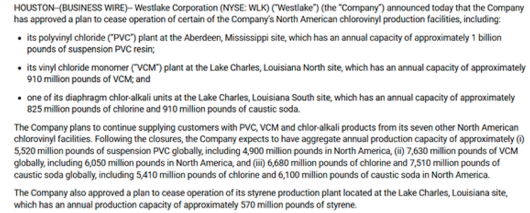
Xihu Chemical shuts down its fourth plant! High costs and overcapacity weigh heavily, and the "de-Europeanization" of the global chemical chain has become a determined trend.
On December 15, 2025, Westlake announced the closure of four factories in the United States, affecting approximately 295 employees. This marks the company's second major capacity adjustment this year—six months ago, it permanently closed the Pernis plant in the Netherlands, laying off 230 employees.
The continuous withdrawal of this world's second-largest PVC producer is not an isolated incident. From Europe to the Americas, chemical giants such as BASF, INEOS, and Dow are globally reallocating assets, marking the beginning of a sweeping restructuring of the chemical industry chain.
Korea's four major plastic giants are betting on immersion cooling technology! Polymer materials become key support.
As the power demand of artificial intelligence (AI) data centers surges, the limitations of traditional air cooling technology, such as insufficient cooling efficiency and high energy consumption, are gradually becoming apparent.
In this context, Zhuan Su Shijie has observed that the four major petrochemical companies in South Korea—SK Innovation, GS Caltex, HD Hyundai Oilbank, and S-Oil—are accelerating the validation of immersion cooling technology, attempting to solve the thermal load challenges posed by high-density computing in data centers through this new cooling solution.
For example, HD Hyundai Oilbank signed a cooperation agreement with Seoul National University's AI Data Center to plan tests of the performance of its self-developed coolant in a real server environment; SK Innovation became the first company in Korea to enter this field by investing in the American company GRC and established a technology verification system in collaboration with LG Electronics; GS Caltex completed commercial supply validation with LG U+; and S-Oil launched the "e-Cooling Solution" coolant and developed energy storage system (ESS) applications in partnership with G2 Power.
Wanhua Chemical announced an increase in the prices of MDI and TDI products in the Latin America region.
On December 15, 2025, Wanhua Chemical announced that it will increase the prices of all MDI and TDI products sold in the Latin American region by USD 200 per ton (or equivalent in local currency). This price adjustment will take effect from December 15, 2025, or be executed according to established contract terms. According to Wanhua Chemical, this price adjustment aims to respond to current market environment changes, ensure the sustainable operation of the company's business, and continue to provide customers with stable, high-quality products and services.
BASF commits to safeguarding jobs at the Ludwigshafen plant until 2028, with investments amounting to several billion euros.
On December 15th, BASF announced that for at least the next three years, the company's main plant in Ludwigshafen, Germany, will not undergo any mandatory layoffs. Additionally, BASF has committed to investing 1.5 to 2 billion euros annually to modernize the plant. BASF stated that it has reached a new agreement with employee representatives called "Shaping the Future, Creating a Region of Strong Development," effective from January 2026 to December 2028, which can be extended for two more years if the agreed profitability targets are met. As part of the agreement, BASF promises not to enforce layoffs due to operational reasons during the validity period of the agreement, ensuring job security for approximately 33,000 employees. The BASF Ludwigshafen headquarters plant is the largest chemical plant in Europe, with employees accounting for about one-third of the company's total global workforce.
Michelin, IFPEN, and Axens announce progress in the production of 100% bio-based butadiene.
Michelin, the French Institute of Petroleum and New Energies (IFPEN), and Axens have jointly announced significant progress in their BioButterfly™ project, supported by the French Environment and Energy Management Agency (ADEME), the New Aquitaine region, and the Bordeaux metropolitan area. The project aims to produce bio-based butadiene from bioethanol. Following the successful commissioning of the first industrial-scale demonstration unit in July 2023, the project has achieved several key milestones, further validating the feasibility of this innovative technology.
Volkswagen Group shuts down its first factory in Germany.
According to reports from the Financial Times and other foreign media, the Volkswagen Group officially ceased vehicle production at its Dresden plant in Germany starting December 16. This marks the first time in its 88-year history that the automotive giant has shut down a factory in its home country. The reasons include a decline in demand in China and Europe, as well as the impact of U.S. tariffs, among other adverse factors contributing to the shutdown of the Dresden plant.
Saudi Basic Industries Corporation (SABIC) expands PPE oligomer production capacity for PCBs and 5G applications.
Saudi Basic Industries Corporation (SABIC) announced that its production of specialty oligomers based on polyphenylene ether (PPE) technology will enter another incremental expansion phase. This commitment builds on previous capacity increases in Asia to meet the rapidly growing demand for high-performance printed circuit boards (PCBs) in data centers for artificial intelligence (AI) and 5G applications.
The further expansion plan for oligomers is expected to be completed in the second half of 2026, which will help PCB manufacturers maintain fast delivery times amid the continued growth in product demand. SABIC's flagship product in this field is NORYL SA9000, a high-performance modified low molecular weight bifunctional PPE oligomer grade used for multilayer copper-clad laminates (CCL) in 5G base stations and high-speed AI server PCBs.
Celanese's polyoxymethylene (POM) grade products have obtained the International Sustainability and Carbon Certification (ISCC) carbon footprint.
Celanese Corporation's production sites in Frankfurt, Germany, and Bishop, Texas, have received Carbon Footprint Certification (CFC) from the International Sustainability and Carbon Certification (ISCC) for their eco-friendly grades of Hostaform® and Celcon® polyoxymethylene products. This move further expands Celanese's network of certified production sites, helping customers reduce the carbon footprint of their products and accelerate the transition to a circular economy. This milestone achievement underscores Celanese's steadfast commitment to sustainability and innovation.
02
Production Dynamics
The large-scale high-end new materials project with a total investment of 12 billion yuan is about to commence operations!
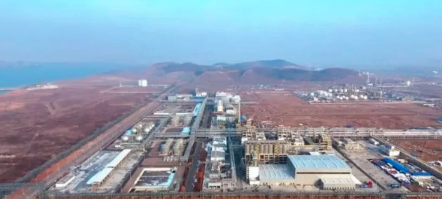
Liaoning Dingjide Petrochemical Technology Co., Ltd. has entered a new stage of stable production for its high-end POE materials project in the Dalian Changxing Island Economic and Technological Development Zone. Officially commenced in March 2024, the project underwent 18 months of efficient construction, achieving trial production in June 2025, and successfully completed the first feeding of the main device's Line 1 in October. Currently, Line 1 of the main device is operating steadily and strongly, driving a leap-forward development of domestic high-end polyolefin elastomers.
China Chemical! Signed a contract worth 352.569 billion!
On the evening of December 18, China National Chemical Engineering Co., Ltd. released the main operating conditions for January to November 2025. From January to November, the total number of signed projects amounted to 4,332, with a total contract value of 352.569 billion yuan, including 260.192 billion yuan domestically and 92.377 billion yuan internationally, with industrial and new materials sales reaching 8.802 billion yuan.
The world's first! This ten-thousand-ton hyperbranched polyolefin elastomer unit is about to be put into production.
Recently, in the Chengnan Chemical Park of the Longyou Economic Development Zone, the H-POE project of Xingchuan New Materials has entered the critical final sprint phase. At the construction site, sparks are flying from the welding on the pipe corridor, and technicians are carefully debugging the equipment, while excavators and cranes are busy at work. "We will fight every day," said Wang Peng, Executive President of Hangzhou Xingchuan and General Manager of Quzhou Xingchuan. "Currently, the civil engineering has been basically completed, the installation progress has reached 40%, and the equipment arrival rate is over 80%. By December 15, the installation volume will exceed 85%, and the equipment placement rate will exceed 90%."
Wanhua Chemical has upgraded its PBAT production facility to an annual capacity of 60,000 tons, producing PETG.
On December 15th, Wanhua Chemical announced the public notice for the transformation project of producing 60,000 tons of biodegradable polyester annually.
The total investment for the project is 56.34 million yuan, which involves the renovation of the existing 60,000-ton biodegradable polyester project without requiring additional land. By adding front-end and back-end equipment, the original 60,000-ton PBAT production line can achieve a production capacity of either 60,000 tons of PBAT or 60,000 tons of PETG. After the renovation, the initial annual production plan will allocate 40,000 tons/year for PBAT (operating 5,280 hours per year) and 20,000 tons/year for PETG (operating 2,720 hours per year).
Gracell's BOPP film dual projects are now in production, marking another achievement in the localization of domestic high-end equipment.
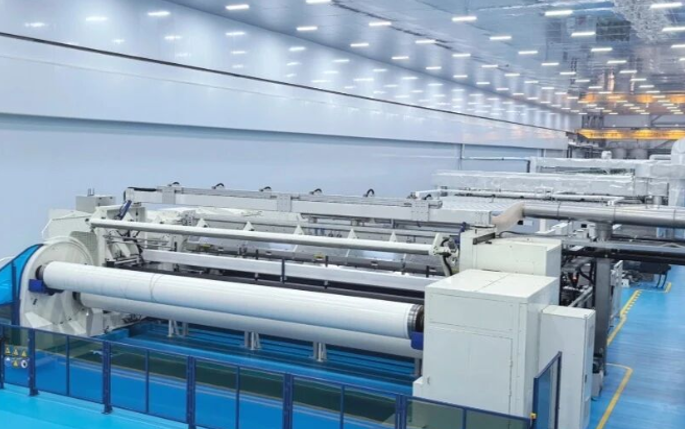
Recently, the two major projects of Grace in Sichuan and Anhui for the biaxially oriented polypropylene (BOPP) film production lines have successfully commenced material feeding and film production, officially entering the stage of large-scale production. These two domestically advanced production lines, with a strong momentum of "dual-line launch," demonstrate Grace's strategic layout and technical strength in the high-end film manufacturing field, injecting new momentum into the high-quality development of the industry.
100 billion planned! The country's first! Another high-end chemical new material production launched.
Recently, the second phase of Tuoxin Technology's optical resin project with an annual production capacity of 41,000 tons has officially commenced full-scale production, breaking the long-standing reliance on imports for high-end optical resin in China. This marks the company as the first in the country to achieve industrial-scale production of cyclic olefin copolymer (COC) and as a nationally recognized "Little Giant" enterprise specializing in innovation. Furthermore, it is the first and currently the only company in China to achieve large-scale production of high-refractive PC.
The project includes an annual production of 1,000 tons of TOPC® (high-end optical PC) and 40,000 tons of TOPM® (optical-grade acrylic copolymer). TOPC® has achieved large-scale stable production, while the TOPM® production unit is operating at full capacity, with cumulative sales exceeding 10,000 tons. It has been successfully introduced into high-value-added fields such as high-end display panels, key automotive components, and biomedical applications.
03
Innovative materials
"Fluorine-free 'forever chemicals'! Sabic's new PC copolymer resin has received UL certification."
Global chemical giant Sabic recently announced the launch of its first polycarbonate (PC) copolymer resin that is free of fluorine and per- and polyfluoroalkyl substances (PFAS, commonly known as "forever chemicals").
The LNP Elcres NPCRX9612U resin released this time has passed UL 746G certification, which is a special testing outline for materials free of fluorine, perfluorinated, and polyfluorinated alkyl substances. According to information on the UL website, this standard clarifies the evaluation methods for perfluorinated and polyfluorinated alkyl substances in both virgin and recycled resins, and establishes clear sample requirements and testing specifications based on material types.

BASF has launched a new generation of closed-cell spray polyurethane foam, WALLTITE® RSB, based on recycled and bio-based raw materials.
Recently, BASF announced the launch of the next generation closed-cell spray polyurethane foam WALLTITE® RSB, further expanding its spray polyurethane foam (SPF) product portfolio. In response to the growing demand for sustainable building materials, WALLTITE® RSB combines industry-leading performance with recycled and renewable materials, significantly reducing the overall carbon footprint of the product.
Samsara Eco collaborates with global outdoor brands to tackle the challenge of synthetic fiber recycling and create circular nylon.
Recently, significant progress has been made in the field of synthetic fiber recycling. The Nylon Materials Alliance has closely linked a recycling technology startup with a European outdoor brand to collaboratively tackle the challenges of synthetic fiber recycling, bringing new hope for sustainable development in the industry.
News from Gerabomberra, Australia, indicates that the Samsara Eco commercial synthetic recycling plant located there officially commenced production in September this year. Currently, there is a significant circular gap in the nylon sector. As a high-performance material, nylon has an annual production of 7 million tons, but its recycling rate is less than 2%, with the main sources of recycling limited to fishing nets and carpets. At the same time, nylon is the second largest synthetic fiber after polyester, widely used in the production of windbreakers, backpacks, swimsuits, and more. However, most of these products ultimately end up in landfills, causing serious resource waste and environmental burdens.
04
Material Application
Evant Company launches deoxidizer to enhance the recyclability of PET packaging.
Avient Corporation has announced the launch of the first product in its new ColorMatrix™ Amosorb™ Oxyloop™ oxygen scavenger portfolio — ColorMatrix™ Amosorb™ Oxyloop-1. This cutting-edge oxygen scavenger additive is specifically developed to enhance the recyclability of polyethylene terephthalate (PET) packaging, providing a reliable solution for brands striving to extend product shelf life, achieve sustainability goals, and contribute to a more robust circular economy.
Covestro accelerates coating innovation for automotive interior and exterior parts using direct coating process (in-mold coating technology).
Covestro is strengthening its global support for the "Direct Coating Process - In-Mold Coating Technology," an improved two-shot molding process that combines injection molding with polyurethane coating. This technology reduces costs and energy consumption, simplifies the production process, and produces higher quality and more flexible coated plastic parts for automotive applications.
The importance of this technology lies in the fact that traditional automotive component coating processes typically involve multiple steps, each of which increases costs, consumes energy, and limits design freedom. Covestro's direct coating process transfers the molded part to a second cavity, where low-viscosity two-component polyurethane (2K PU) is injected and cured inside the mold. This integrated process eliminates the need for traditional coating or painting production lines, shortens cycle times, simplifies operational procedures, and enables more flexible coating designs (including tactile and visual effects) that can be scaled for mass production.
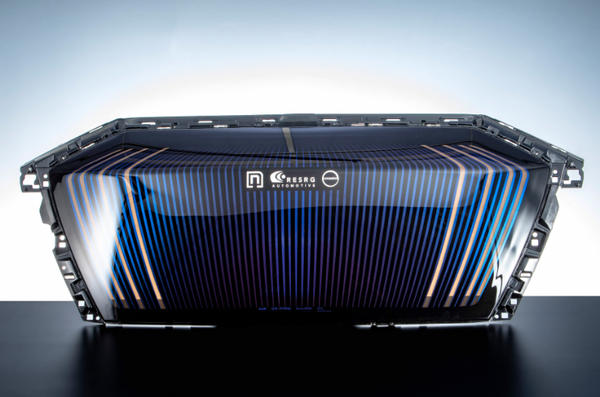
Amcor has joined a new three-year project aimed at advancing the circular recycling of food packaging.
Amcor announced that it will participate in a three-year plastic recycling project led by the Technical University of Denmark. The project aims to achieve full circular recycling of polyethylene (PE) and polypropylene (PP) rigid plastic packaging collected from households.
The joint funded innovation partnership named "Circular Recycling Innovation for Sustainable Packaging (CRISP)" will also involve food manufacturers and waste management experts. Amcor stated that it will contribute its recycling and technical knowledge accumulated at its CleanStream facility in Leamington Spa, UK, and its packaging production facility in Randers, Denmark, while sharing its skills and experience in producing and designing recyclable material food packaging.
Yizheng Chemical Fiber's film-grade polyester material technology gains recognition.
Recently, the "Industrialization of Membrane-grade Polyester Material Patent Technology and Expansion into High-end Applications" by Sinopec Yizheng Chemical Fibre Company was selected as a typical case in the "Hundred Chains, Thousand Enterprises" patent industrialization promotion project for 2025, announced by the China Patent Protection Association.
According to the introduction, this technology has built a patent portfolio covering formulation, process, and application. Through tackling challenges in polyester film technology, it has overcome the bottleneck of continuous polymerization technology with high-content additives and developed polyester for film use. Around this technology, Yizheng Chemical Fiber has led the formulation of national standards and has been awarded as the "National Manufacturing Single Champion" and "Patent-Intensive Product" certification. It has achieved domestic industrial production at the ten-thousand-ton level, with products covering strategic emerging industries such as optics and photovoltaics. The cumulative production has reached 7.69 million tons, promoting the localization rate of polyester for film use to 90%.
【Copyright and Disclaimer】This article is the property of PlastMatch. For business cooperation, media interviews, article reprints, or suggestions, please call the PlastMatch customer service hotline at +86-18030158354 or via email at service@zhuansushijie.com. The information and data provided by PlastMatch are for reference only and do not constitute direct advice for client decision-making. Any decisions made by clients based on such information and data, and all resulting direct or indirect losses and legal consequences, shall be borne by the clients themselves and are unrelated to PlastMatch. Unauthorized reprinting is strictly prohibited.
Most Popular
-

List Released! Mexico Announces 50% Tariff On 1,371 China Product Categories
-

EU Changes ELV Regulation Again: Recycled Plastic Content Dispute and Exclusion of Bio-Based Plastics
-
Clariant Unveils Cost-Cutting Plan Details, Plans to Shut Down Multiple Plants
-
Mexico officially imposes tariffs on 1,400 chinese products, with rates up to 50%
-

Nissan Cuts Production of New Leaf EV in Half Due to Battery Shortage

