Cassava Starch Blended With PBAT/PLA: Vietnam's New Biodegradable Film R&D Goes Live
Vietnam generates over 45 million tons of agricultural by-products annually. Today, raw materials such as cassava starch, avocado seeds, seaweed, and even rice husks are being processed into biodegradable films and bioplastic packaging.
A team led by Professor Dang Thi Kim Chi of the Vietnam Association for Nature and Environmental Protection has developed a film prepared by blending cassava starch, PBAT, and PLA. The film achieves a tensile strength of 17.4 MPa and a degradation rate of 96% within 53 days.
Meanwhile, students at Ho Chi Minh City University of Technology and Education have developed bio-based films that balance strength and biodegradability using avocado seeds and cassava residue. Additionally, a seaweed extraction project in Ninh Thuan Province has successfully produced transparent, water-resistant films.
However, as this material transitions from the laboratory to the market, it faces two major challenges: cost and standards. Experts point out that bio-based materials should be prioritized for lightweight, hard-to-recycle disposable products (such as food packaging), while recycled plastics are better suited for high-strength, durable goods. Small-scale production has driven up the price of green materials; meanwhile, the lack of comprehensive life-cycle assessments raises the risk of merely shifting environmental burdens rather than addressing the root causes.
To bridge the “last mile” of commercialization, Vietnam is implementing a range of measures: Hanoi plans to introduce national standards for bio-based materials, encouraging government agencies, hotels, and tourist attractions to prioritize the procurement of certified alternative products; retail giant Saigon Co.op has been gradually phasing out conventional plastics since 2012; and the 2025 Plastic Innovation Project has incubated 25 cutting-edge R&D teams. The tourism sector has also become an important testing ground—while over 80% of tourism businesses in regions such as Ninh Binh and Da Nang still heavily supply single-use plastic products, hotels and tourist attractions are regarded as key entry points for the adoption of alternative products.
With the improvement of standards, declining costs, and increasing market acceptance, Vietnam’s agricultural waste is poised to become a viable solution to plastic pollution.
【Copyright and Disclaimer】This article is the property of PlastMatch. For business cooperation, media interviews, article reprints, or suggestions, please call the PlastMatch customer service hotline at +86-18030158354 or via email at service@zhuansushijie.com. The information and data provided by PlastMatch are for reference only and do not constitute direct advice for client decision-making. Any decisions made by clients based on such information and data, and all resulting direct or indirect losses and legal consequences, shall be borne by the clients themselves and are unrelated to PlastMatch. Unauthorized reprinting is strictly prohibited.
Most Popular
-

Mexico Imposes Tariff Up to 36% on Cross-Border E-Commerce Products, Effective January 1, 2026; Plastic Shows Partial Fluctuation Today
-

[Overseas News] Sumitomo Chemical Acquires Solvay's LCP Business! SK Chemicals Builds Circular Economy Model For Waste Banners!
-

Trump Delays Tariff Increase on Furniture, Cabinets, and Vanities
-
4.5 Million Tons! Wanhua Chemical Dominates Globally in MDI, Heavy Investment in Battery Materials Spurs New Storm
-
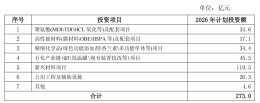
Wanhua Chemical Invests $27.3 Billion, 2026 Investment Map Revealed, $1.1 Billion Bet on Battery Materials