First Time Surpassing $3 Billion! First Time Surpassing 100,000 Tons! Cathay Biotech’s 2025 Performance: Chemical Production Fully Phased Out, Biological Method Wins
The industrial narrative of bio-based materials is shifting from "telling stories" to "showing numbers."
On April 23rd, KaiSai Biotechnology released its 2025 annual report.Revenue surpasses RMB 3 billion for the first time; annual production and sales of long-chain dicarboxylic acids exceed 100,000 tons for the first time.。
This synthetic biology leader is already a full step ahead of its domestic competitors in both technology and production capacity.
01 Thirty Billion and Ten Thousand Tons: The Dual Breakthroughs Behind the Numbers
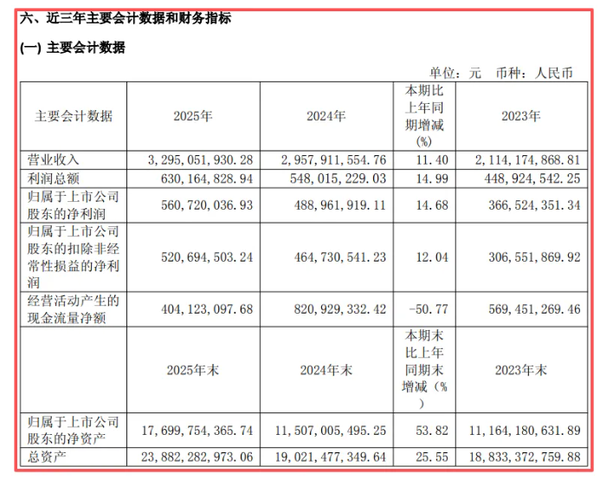
In 2025, Cathay Biotech delivered a set of solid figures:
Full-year revenue of RMB 3.295 billion, an 11.4% year-on-year increase, marking the first time surpassing the 3 billion mark.
Attributable net profit of RMB 561 million, an increase of 14.68% year-on-year
Net profit of 521 million yuan12.04% increase year-over-year
Three profit indicators grow simultaneously.
What deserves more attention is the core product line:The annual production capacity of the long-chain dicarboxylic acid series is 115,000 tons, with a capacity utilization rate as high as 96.2%.Production of 111,000 tons, an increase of 33.54% year-on-year.Sales volume surpasses 100,000 tons for the first timeIt increased by 10.97% year-on-year.
This means that Cathay Biotech's supply capacity in the global bio-based long-chain dicarboxylic acid market is approaching full production capacity.
02 Chemical Methods Recede, Biological Methods Build a Global Moat
The reason why long-chain dicarboxylic acids have become the focus is not only due to their scale, but also because of the fundamental changes in the competitive landscape.
The annual report explicitly states:Traditional chemical methods for long-chain diacids, represented by NVIDIA, have gradually exited the market.The biological route has established an absolute advantage in both economic efficiency and green, low-carbon performance.
This trend is directly reflected in profitability:
Long chain dicarboxylic acid series revenue2.935 billion yuanRevenue accounts for nearly 90%
Gross profit margin increased by 3.17 percentage points year-on-year, reaching42.88%
This product has become the core cash flow generator for Cathay, with applications spanning long-chain nylons, high-end fragrances, pharmaceutical intermediates, lubricants, coatings, and hot-melt adhesives.
In addition, CaiSai's biosynthetic sebacic acid is also accelerating the replacement of chemically synthesized counterparts, becoming the dominant market solution.A relatively solid global moat has been formed.
03 Second Growth Engine: Polyamide Materials Enter Commercialization Sprint
If long-chain dicarboxylic acids are the ballast of performance, thenBio-based polyamide composites are the future imagination of Cathay Industrial Biotech.。
The most noteworthy piece of information in the annual report:Several key cooperation projects have entered the equipment debugging phase.。
Hefei High-tech ZoneThe bio-based polyamide composite material production line, a joint venture with China Merchants Chuangke, and the battery case production line, a joint venture with a related party of CATL and Hangzhou CarLight, have both entered the equipment debugging phase.
Japanese marketCo-established Hefei H2 with 3p.com, focusing on hydrogen storage and transportation.
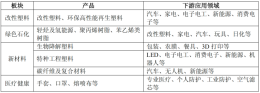
In practical applications, Kasei's bio-based composite materials have been applied inRefrigerated container fieldPioneering implementation. The world's first batch of bio-based composite material coolers, using the material for key parts of the box.
Density is only one-quarter that of steel and two-thirds that of aluminum.
Replace steel and aluminum with plastic, significantly reduce weight, and lower transportation energy consumption.
Significantly lower lifecycle carbon emissions compared to traditional metal materials
Kase has registered the trademarks "Tailun" and "ECOPENT", focusing respectively on the textile and engineering materials fields.
It should be objectively noted that bio-based polyamide series are still in the commercialization and promotion stage.
Revenue of 127 million yuan was achieved in 2025, accounting for less than 4% of total revenue, with a gross profit margin of -14.69%, and no scale effect has been formed yet.
04 Capital and Strategy: Central SOE Backing Opens Up New Possibilities
The key to supporting Kasei's large-scale expansion and the advancement of R&D is a significant amount of funding.
2025Morgan Stanley completed a private placement in Cepheid.Net proceeds from fundraisingRMB 5.915 billionThe company's asset size has grown significantly, and its debt-to-asset ratio has decreased from 20.61% to10.75%。
Combined with the 5.7 billion yuan private placement funds and the progress of real estate line debugging in Hefei, a basic judgment can be made.
The commercialization tipping point for bio-based polyamides is likely imminent.2026-2027。
Long-chain diacids will continue to contribute stable profits and cash flows in the medium term.
CaiSai's strategic positioning is also undergoing a transformation. The company has clearly stated: it will focus on investment, M&A, and deep cooperation with leading downstream enterprises.Automobile, construction, new energy...key scenarios, driving enterprises to leap from "standalone leaders" to "polymer giants."
Taiyuan 500,000 tons per year Bio-based Glutaric Diamine and 900,000 tons per year Bio-based Polyamide Project, expectedTo be completed by the end of 2027At that time, the company's overall production capacity will step up to a new level.
05 Conclusion: Three Events Coincide—A Critical Juncture Has Arrived
Against the backdrop of the "biobased materials" being written into the national five-year plan for the first time in the "15th Five-Year Plan," this annual report from Kai Sai provides an important benchmark for gauging the industry's level.
Three things stacked together:
· Long-chain dicarboxylic acids approaching full production capacity
Biobased polyamide composite production line enters commissioning
Morgan Stanley funds in place
Caiser Biology is at a critical transition point from "establishing a solid foundation" to "laying out new business for growth."
For the industry, the real question to ask has never been: "Can biobased materials replace traditional chemical ones?"
Instead:
After the ebb of chemical methods, how far can the technological evolution and scale expansion of biological methods go?
The 2025 annual report of Caiye provides some answers.
A more complete answer will depend on market validation over the next two or three years—after the production line comes online.
【Copyright and Disclaimer】This article is the property of PlastMatch. For business cooperation, media interviews, article reprints, or suggestions, please call the PlastMatch customer service hotline at +86-18030158354 or via email at service@zhuansushijie.com. The information and data provided by PlastMatch are for reference only and do not constitute direct advice for client decision-making. Any decisions made by clients based on such information and data, and all resulting direct or indirect losses and legal consequences, shall be borne by the clients themselves and are unrelated to PlastMatch. Unauthorized reprinting is strictly prohibited.
Most Popular
-

Why did a century-old european dental instrument giant relocate its manufacturing hub to china?
-

$4 Billion! Medtronic Makes Another Acquisition
-

Toray Industries and SGL Carbon Establish Carbon Fiber Supply Partnership for Aerospace Sector
-
Profit and Revenue Growth Struggle to Conceal Debt Repayment Pressure; Success of Kingfa Sci & Tech's High-End Strategy Yet to Be Seen
-

Deadly Impact: Hormuz Strait Blockade Sparks Shortage of Plastic Raw Materials, Threatening Shutdowns at Japanese and Korean Chemical Plants