



Bcomp's Flax Composite Drives Polestar 5 Forward
Bcomp’s flax-based composite materials are now featured in the seatbacks and tailgate of the Polestar 5, significantly reducing the use of fossil-based materials and vehicle weight.
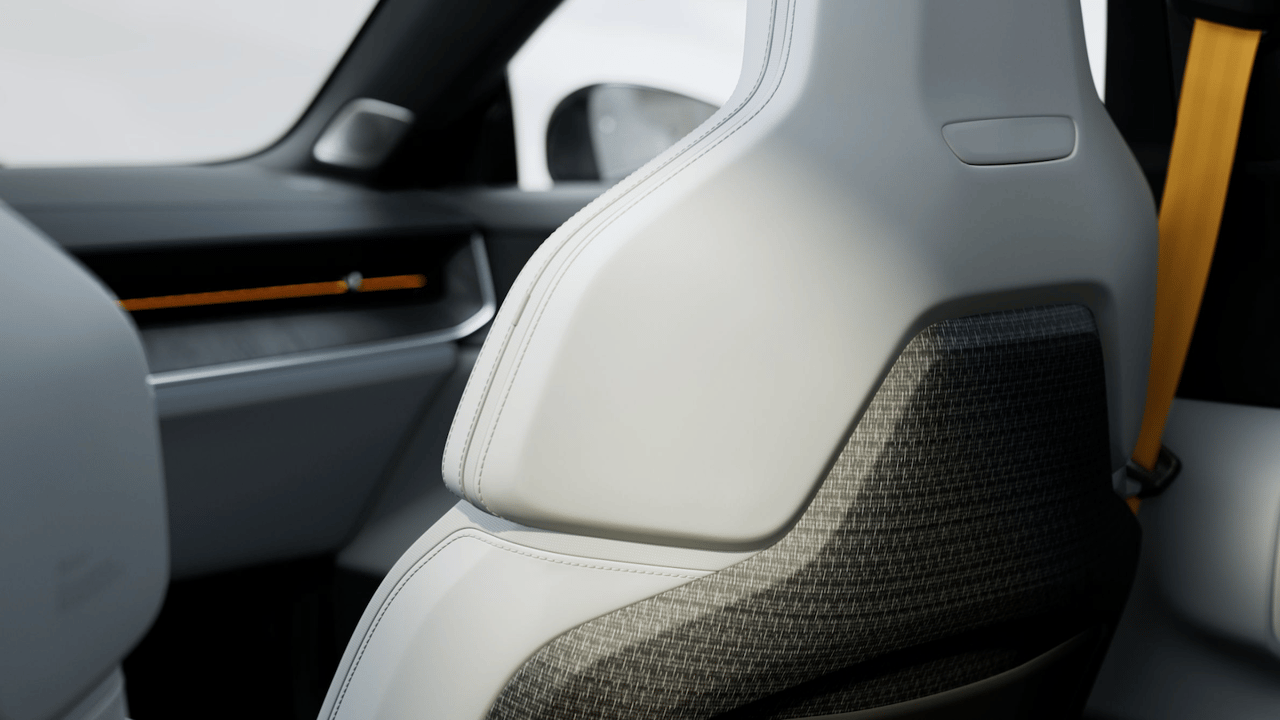
Bcomp, a pioneer in high-performance flax composites, has partnered with Polestar to introduce its lightweight bio-based materials into the new Polestar 5 four-door electric grand tourer (GT). The vehicle incorporates Bcomp’s ampliTex and powerRibs technologies in the front seatbacks and tailgate structure, reducing the use of virgin plastics.
The collaboration began with the development of the Polestar Precept concept car and evolved into the mass production of the Polestar 5. Together, the two companies developed a custom ampliTex flax fabric called Polestar Signature Weave, designed to provide both structural and aesthetic functions for the interior cabin. Since then, this material has become a defining feature of Polestar’s minimalist and transparent design language, having been designed and tested for durability and performance in thousands of vehicles across global markets.

The cradle-to-gate carbon footprint of each Polestar 5 is 23.8 tonnes of CO2 equivalent (tCO2e). Image courtesy of Polestar.
Promoting Sustainability Transparency
The cradle-to-gate carbon footprint of each Polestar 5 is 23.8 tonnes of CO2 equivalent (tCO2e). Polestar states that Bcomp’s flax-based composite materials reduce the use of fossil-based materials by 50% and are 40% lighter than the conventional plastics they replace. Depending on the application, Bcomp’s natural fiber composites can also reduce the cradle-to-gate carbon footprint of components by up to 60%.
Since 2020, Polestar has published life cycle assessments (LCA) for its entire vehicle lineup, including the Polestar 5 released in March 2026. These cradle-to-gate assessments account for emissions generated from raw material extraction through vehicle manufacturing, providing a transparent baseline for future reductions.
From the site to the finished interior
The front seatbacks of the Polestar 5 combine Bcomp’s core ampliTex and powerRibs technologies with natural fiber polypropylene (NFPP).
-
ampliTex is a reinforcing fabric woven from European flax fibers, which, through mechanical processing, reduces energy and emission intensity compared to synthetic alternatives such as carbon fiber or glass-reinforced plastics.
-
powerRibs is a proprietary three-dimensional reinforcing mesh made from flax, inspired by the vein structure of leaves. Applied to the back of panels, it increases bending stiffness, allowing components to become thinner and lighter without compromising structural integrity.
The visible interior surfaces feature Bcomp’s Polestar Signature Weave, a two-tone material that serves as both a structural element and a design surface, eliminating the need for additional decorative layers.
The tailgate structure of the Polestar 5 also incorporates Bcomp’s powerRibs technology, extending the use of natural fiber composites beyond the interior. All Bcomp components used in the vehicle have been validated to meet stringent automotive standards for durability, safety, UV resistance, scratch resistance, and long-term aging performance.
Unlike traditional carbon fiber composites, Bcomp’s flax-based materials offer more practical end-of-life pathways. Such conventional materials are typically landfilled or incinerated without energy recovery at the end of their service life. In contrast, production waste from Bcomp’s materials can be recycled into feedstock for injection molding applications, and thermoset flax composites can be incinerated to recover energy, thereby helping to reclaim value from the biogenic carbon stored in the materials.
Design for Disposal
Per Martensson, Chief Revenue Officer at Bcomp, said: “Our years of collaboration with Polestar have given us the opportunity to demonstrate that the journey from material concept to mass-produced components may be long and rigorous, but it is ultimately worthwhile. The Polestar 5 seatback combines lightweight performance, a reduced carbon footprint, and end-of-life design capabilities that traditional composites cannot offer. Polestar is leading the way in accountability for material selection, and we are proud to be part of this effort.”
Maria Uggla, Polestar’s CMF Design Lead, stated: “The materials we use in our vehicles are critical in terms of both their environmental impact and performance. With the Polestar 5, we aim to create a performance-focused Grand Tourer without compromising our sustainability goals. Bcomp’s materials enable us to build a performance-oriented seatback while meeting our sustainability requirements.”
【Copyright and Disclaimer】The above information is collected and organized by PlastMatch. The copyright belongs to the original author. This article is reprinted for the purpose of providing more information, and it does not imply that PlastMatch endorses the views expressed in the article or guarantees its accuracy. If there are any errors in the source attribution or if your legitimate rights have been infringed, please contact us, and we will promptly correct or remove the content. If other media, websites, or individuals use the aforementioned content, they must clearly indicate the original source and origin of the work and assume legal responsibility on their own.
Most Popular
-

Differences Between Pc, As, Pp, And Tritan Four Common Water Bottle Materials
-

How to Set Injection Molding Filling Stage Process?
-

Blown Film Always Has Problems? Root Causes and Solutions for 9 Major Pain Points Are All Here
-

[Overseas News] US Launches Dual Anti-Dumping Investigation on Amine Compounds from China; Borealis International Expands European Recycled Polyolefin Production Capacity
-
2026 First-Half Polypropylene Market Review And Trend Outlook