



Anchor Pricing And Revival Mechanism To Be Implemented In May: Post-Anti-Internal-Competition Medical Consumables Centralized Procurement Spurs Corporate Performance Recovery
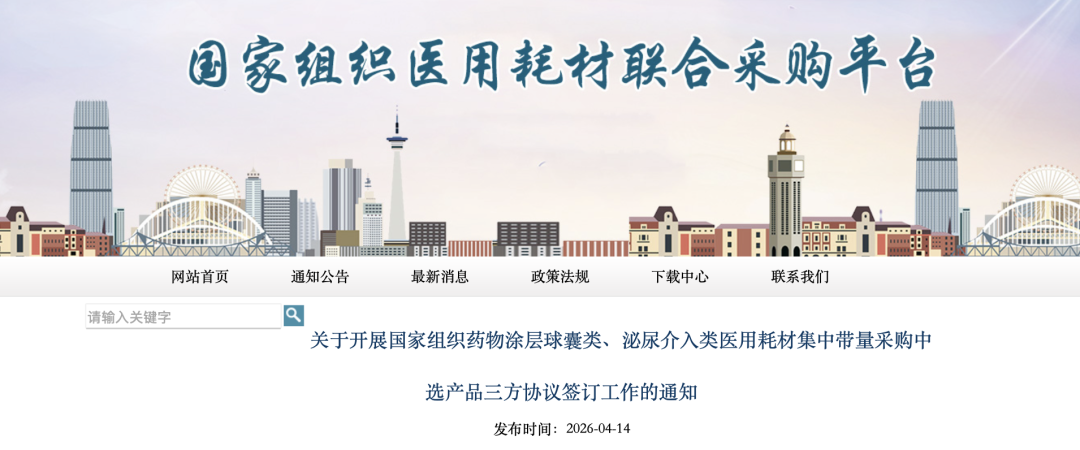
On April 14, the Office of the National High-Value Medical Consumables Joint Procurement issued the "Notice on Commencing the Signing of Tripartite Agreements for Selected Products under the National Centralized Volume-Based Procurement of Drug-Coated Balloons and Urological Interventional Medical Consumables." According to the schedule, the confirmation of distribution arrangements will be carried out intensively from April 15 to April 24. The Joint Procurement Office reminds all relevant parties to complete the signing of the tripartite agreements for selected products on time, ensuring the implementation of the results of the national centralized volume-based procurement of drug-coated balloons and urological interventional medical consumables.May 2026Implementation.
The sixth round of national centralized procurement covers two categories of medical consumables—drug-coated balloons and urological interventional devices—comprising 12 product types, with a pre-procurement market size of approximately RMB 11 billion. In this round, all 42 products from 32 companies bidding for drug-coated balloons were selected, while in the urological interventional category, 398 products from 170 companies were selected out of 454 products submitted by 195 companies. Notably different from the previous five rounds, this sixth round introduced, for the first time, an "anchor price" mechanism and a "revival" mechanism, explicitly aiming to counter excessive price competition ("anti-involution"). This marks a clear shift away from the previous "lowest-price-only" approach, ushering in a new phase of medical consumables procurement focused on selecting products at "reasonable prices."
“Anchor Price” Makes Its Debut, Ending the “Suicidal Bidding” Era in Medical Consumables Centralized Procurement
The most notable rule innovation in this procurement is the first implementation of the "anchor price" mechanism. According to the rules, when the lowest bid is too low, 65% of the average entry price is set as the price difference control benchmark. If a company's bid is below this anchor, it must submit a detailed cost structure statement and commit to a "not lower than cost" bid. The essence of this mechanism is to transform the previously implicit "lowest price wins" logic into a "reasonable price wins" orientation. Lu Yun, director of the Medical Price Research Center at China Pharmaceutical University, explains: "To avoid individual companies bidding too low, this procurement does not simply select the lowest price to calculate the price difference. When the lowest price is too low, 65% of the average entry price is used as the price difference control benchmark." In all 20 competitive groups, 8 groups triggered this rule, effectively preventing individual companies from setting excessively low prices that would pull down the overall price of the group.
Moreover, the centralized procurement scheme has introduced a “multi-stage revival mechanism,” allowing non-winning enterprises to gain eligibility for inclusion by proactively lowering their prices, thereby significantly reducing the risk of enterprise elimination.
In the field of drug centralized procurement, similar "anti-circular competition" signals were released earlier. In July 2025, the National Medical Insurance Administration clearly stated that the rules for the next round of drug centralized procurement had been optimized, and the "anchor point" calculation would no longer simply take the lowest bid as the basis. The company with the lowest bid must publicly explain the rationality of its quotation. This policy orientation has been extended from drugs to high-value medical supplies, in line with the design of the sixth national procurement round.
Urological interventional procedures have been included for the first time, presenting an opportunity for domestic substitution.
In terms of procurement volume, the annual demand for ureteral intervention guidewires reaches 1.37 million units, the annual demand for ureteral intervention sheaths exceeds 500,000 units, and the annual demand for urological stone retrieval baskets exceeds 280,000 units. The urological intervention market has long been dominated by imported brands such as Boston Scientific, Medtronic, and Cook. This centralized procurement is viewed by the industry as a critical opportunity for domestic product substitution.
Drug-coated balloon (DCB) is currently in a period of rapid growth. The Chinese market size reached 4.5 billion yuan in 2023, with a year-on-year growth of 22.7%, and is expected to exceed 12 billion yuan by 2025. Domestic brands have captured about 70% of the market share, with the demand from medical institutions of companies such as YinYi Biotechnology, Lepu Medical, and Shenqi Medical ranking at the forefront. The inclusion of drug-coated balloons, combined with the previously centralized procurement of coronary stents and peripheral vascular stents, has formed an effective synergy, building a more complete cardiovascular interventional treatment security system.
The price of drug-coated balloons has dropped back into the “2,000-yuan era,” with Lepu maintaining the most stable price differential.
Although the official authorities have not uniformly disclosed the winning prices, the price reductions from the centralized procurement can be inferred from data disclosed by some companies. For example, the winning prices for the Vesselin drug-coated coronary balloon catheter and the Vitality Mini drug-coated coronary balloon catheter from Lepu Medical are both 2,678 yuan, and the winning price for the ReVas drug-coated coronary balloon catheter is 1,978 yuan. Previously, the sales prices for these balloons were around 6,000 yuan, which means the price reductions are approximately 52.18%, 52.18%, and 64.68%, respectively. The winning price for the drug-coated coronary balloon catheter from Jiwei Medical, a subsidiary of Blue Sail Medical, is 2,524 yuan. Guojin Securities analysts believe that the overall winning results for domestic listed companies are good, and leading domestic enterprises are expected to gain more market share through the centralized procurement.
Interestingly, Lepu secured the highest price in the entire group this time, and a staff member from its Board Secretary Office told Jiemian News that they were “generally satisfied.”
The "pain period" of centralized procurement is over, and cardiovascular companies' performance has rebounded strongly.
While the rules for centralized procurement are gradually being optimized, medical device companies that were previously hit hard by centralized procurement are now experiencing a significant rebound in performance.
Lepu MedicalAfter two consecutive years of significant performance decline, the company experienced a strong rebound in 2025. Its earnings forecast indicates that the attributable net profit for 2025 is expected to reach RMB 800 million to RMB 1.2 billion, representing a surge of 223.97% to 385.95% year-on-year. Previously, under the impact of centralized procurement, Lepu’s stent products subject to centralized procurement experienced a 38.5% year-on-year decline, while its pharmaceutical segment declined by 11.35%. The performance recovery is underpinned by the stabilization and modest growth of its core traditional businesses—revenue from cardiovascular interventional and implantable devices remained steady with slight growth, and inventory clearance in the pharmaceutical segment’s retail channel has been largely completed, enabling double-digit revenue growth. More notably, Lepu’s strategic expansion into emerging sectors—particularly medical aesthetics—has begun generating incremental contributions: its “youthful facial injectable” product, launched just three months ago, has already generated RMB 100 million in revenue (tax-inclusive); the company targets RMB 1 billion in revenue from its medical aesthetics segment in 2026.
Sanuomedical
HeartCare MedicalSimilarly, a critical turning point was reached. In 2025, revenue reached 408 million yuan, a year-on-year increase of 46.9%; net profit attributable to shareholders was 83.34 million yuan, a significant improvement from a net loss of about 13.62 million yuan in 2024, with an improvement rate exceeding 710%, crossing the break-even line for the first time. All three business segments saw robust growth: ischemic stroke revenue increased by 31.8%, hemorrhagic stroke revenue surged by 223.2%, and the star product in the interventional access field, the vascular closure device, generated over 100 million yuan in revenue from a single product. Gross margin increased from 65.4% in 2024 to 70.9%, and net operating cash flow reached 155 million yuan. The company's management stated that they plan to maintain an annual revenue growth of no less than 35% over the next three years, and by 2028, the contribution of overseas revenue is expected to reach more than 10%.
It is worth noting that companies in the neurointerventional sector—such as Sino Medical and Sinovas—have experienced significant performance growth under the centralized procurement environment, largely benefiting from accelerated domestic substitution of products such as intracranial stents and thrombectomy stents in this niche segment. Sinovas’ intracranial thrombus aspiration catheter has been included in the “Chinese Expert Consensus on Endovascular Treatment for Acute Ischemic Stroke (2025)” and is now used in over 450 hospitals; its penetration rate among nearly 1,000 leading hospitals has reached 26%.
The orthopedics sector is rebounding simultaneously, and Weigao Chunli is accelerating its “going global” strategy.
The orthopedic sector has also seen a recovery in performance. After enduring the impact of centralized procurement of high-value consumables—such as joints and spinal implants—which led to an average price reduction of 84%, leading orthopedic companies collectively emerged from their "adjustment period" in 2025.
Weigao OrthopedicsIn 2025, the company achieved revenue of 1.523 billion yuan, an increase of 4.82% year-over-year, and net profit attributable to shareholders of 269 million yuan, an increase of 20.06% year-over-year. The company fully promoted the implementation of its internationalization strategy. In 2025, it obtained 25 overseas registration certificates, with overseas revenue reaching 86.3621 million yuan, an increase of 59.70% year-over-year. The products covered spinal, trauma, and joint lines, mainly concentrated in the European Union, Southeast Asia, Latin America, and Africa markets.
Spring Orthopaedics
Dabio MedicalThe net profit attributable to the parent company in 2025 is expected to be between 580 million and 610 million yuan, representing a year-on-year growth of 62.55% to 70.96%.SanYou MedicalNet profit attributable to shareholders was RMB 63.2895 million, surging 451.85% year-on-year.
Domestic orthopedic leaders have collectively seen a recovery in performance, benefiting both from the "volume-for-price" effect as the impact of centralized procurement gradually dissipates and from accelerated expansion into overseas markets, as well as sustained growth in non-centralized-procurement products such as minimally invasive surgery and surgical robotics.
The Logic of Centralized Procurement Changes: From "Price Discovery" to "Value Purchasing"
The development of the centralized procurement policy has seen a shift from "only low price" to "reasonable price winning" that did not happen overnight. The "floor price" in the first round of coronary stent procurement in 2021 had a significant impact on the performance of the winning enterprises. In the second round of coronary stent follow-up bidding, the National Medical Insurance Administration no longer pursued "intensified competition," and only required the bid to be lower than 798 yuan per unit. It also actively added a service fee. The 10th batch of drug procurement in 2024 was called the "most intense" procurement, sparking public debate, which made policy optimization urgent. In July 2025, the National Medical Insurance Administration clearly stated at a press conference of the State Council Information Office that the procurement policy would "oppose intense competition," no longer using the lowest price as a reference, and increasing requirements for quality assurance. This orientation quickly extended from drugs to medical devices, with the sixth batch of national medical device procurement becoming a landmark implementation of the rule optimization.
The head of the Pricing and Procurement Division of the National Medical Security Administration stated that the NMSA, under the guidance of the Joint Procurement Office, adheres to the principles of “ensuring clinical stability, guaranteeing quality, preventing bid-rigging, and countering internal competition,” further optimizes procurement rules, and no longer simply uses the lowest bid as the reference for calculating price differentials, thereby reducing the disruptive impact of low bids.
At the same time, the normalization of centralized procurement is driving industry consolidation. Since 2020, the medical insurance department has conducted six rounds of national organized high-value medical consumables centralized procurement, successfully purchasing 142 types of medical consumables across 9 major categories, covering main clinical areas such as cardiology, orthopedics, ophthalmology, vascular surgery, otolaryngology, and urology. As the range of centralized procurement expands from core products like stents and joints to areas such as drug-eluting balloons and urological interventions, the industry landscape is accelerating towards a concentration among the top players. The ongoing optimization of rules provides a transformation window for leading domestic enterprises, shifting from "trading volume for price" to "winning by quality."
As a sales executive at a medical device company stated, “The industry is now beginning to recognize that centralized procurement is not a ‘price war,’ but rather a ‘value-for-money competition.’ Companies need to submit competitive prices while ensuring profit margins and leveraging economies of scale to reduce production costs.”
Centralized procurement, once considered an industry "disaster," is transforming into a round of "reshuffling" that weeds out the weak and promotes the strong. Companies that relied on low bids to win contracts are starting to be eliminated, while those with genuine technology, scale, and cost control capabilities are quietly making a comeback.
【Copyright and Disclaimer】This article is the property of PlastMatch. For business cooperation, media interviews, article reprints, or suggestions, please call the PlastMatch customer service hotline at +86-18030158354 or via email at service@zhuansushijie.com. The information and data provided by PlastMatch are for reference only and do not constitute direct advice for client decision-making. Any decisions made by clients based on such information and data, and all resulting direct or indirect losses and legal consequences, shall be borne by the clients themselves and are unrelated to PlastMatch. Unauthorized reprinting is strictly prohibited.
Most Popular
-
Magna Announces Sale Of Lighting And Roof Systems Business
-

Mdi tariff slashed from 511% to 85%—can wanhua reenter u.s. market?
-
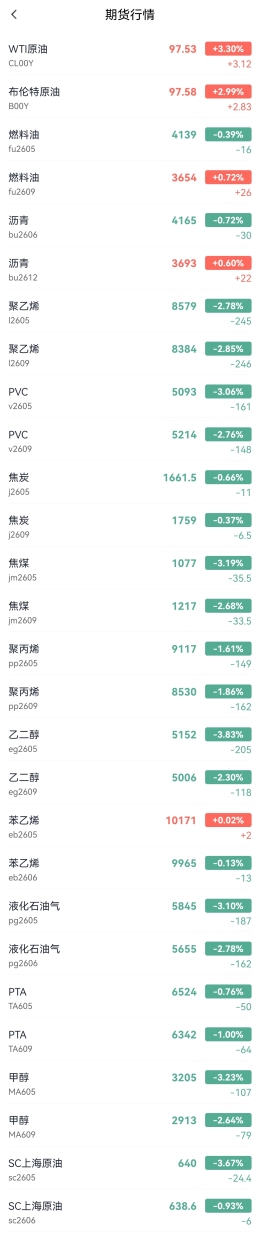
Middle East Tensions Escalate Again? U.S.-Iran Talks Collapse Before Starting, Crude Oil Volatility and Plastic Futures Retreat, Plastics Market Faces New Test
-

BASF Delivers First Batch of Innovative Cathode Materials for Semi-Solid-State Batteries to Weilan New Energy
-
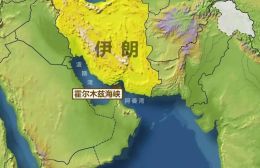
Deadly Impact: Hormuz Strait Blockade Sparks Shortage of Plastic Raw Materials, Threatening Shutdowns at Japanese and Korean Chemical Plants


