



A box of fuel costs €35 more—global shift from oil to electricity begins?
With soaring fuel prices, will your next car still be a gasoline-powered vehicle?
On April 9, the price of the May-delivery light crude oil futures contract on the New York Mercantile Exchange rose by $3.46 to close at $97.87 per barrel, a gain of 3.66%; the price of the June-delivery Brent crude oil futures contract on the London ICE rose by $1.17 to close at $95.92 per barrel, a gain of 1.23%.
Behind a series of numbers are the near-paralyzed shipping in the Strait of Hormuz, the reduced supply gap after attacks on Saudi oil facilities, and the continuously rising numbers on countless households' fuel bills.
Three weeks ago, when the U.S. and Israel launched a military operation against Iran, WTI crude oil was still trading below $70 per barrel; today, prices below $90 per barrel have become history.
The U.S. Energy Information Administration's (EIA) latest energy outlook states that fuel prices will continue to rise over the coming months, even if the Strait of Hormuz reopens.
The EIA forecasts that Middle East production cuts will rise to 9.1 million barrels per day in April, global demand growth will halve to 600,000 barrels per day, and the diesel supply-demand gap will become more pronounced. The EIA has also raised its forecast for the average Brent crude price in 2026 to $96 per barrel.
Looking ahead, delayed supply-demand rebalancing will support oil prices remaining in the high range of $90–$100 per barrel in the short to medium term. Some institutions believe that WTI is unlikely to break below $90 before the situation stabilizes, and could fall back to $80 if full normalization occurs—but this is unlikely within the next two weeks.
If resumption of flights falls behind expectations or conflicts resurge, oil prices could still rise again above $100.
Meanwhile, the ripples stirred by this geopolitical storm are triggering a more enduring structural transformation deep within the automotive industry: global consumers are voting with their feet, propelling new energy vehicles toward an unprecedented tipping point.
A global electric vehicle boom catalyzed by war-related accidents
On April 10, Xinhua reported that in a Chinese brand electric vehicle showroom in the center of Berlin, Germany, customer Andreas Hoymann told a reporter a thought-provoking comment: "The cost to fill up my gasoline car is 35 euros higher than before the Middle East conflict."
"If this situation continues, switching cars will no longer be just an environmental issue, but an economic one."
This statement reveals the core logic behind the current global surge in demand for new energy vehicles: when travel costs shift from predictable, fixed expenses to uncontrollable variables, electrification transforms from a distant environmental aspiration into an urgent economic calculation.
Recently, this logic has been continuously validated numerically in the global automotive market.
According to data released by the German Federal Motor Transport Authority on April 7, in March this year, the registration of pure electric vehicles in Germany reached 70,663 units, an increase of 66.2% year-on-year, becoming the core factor driving growth in the automotive market. At the same time, traditional fuel vehicle sales continued to face pressure. The registration of gasoline vehicles in Germany in March was 66,959 units, a decrease of 4.9% year-on-year. Diesel vehicles saw a slight decrease of 0.6% year-on-year.
In March, registrations of battery electric vehicles in Germany surpassed those of gasoline-powered cars.
This is not only a milestone for Germany, but also a signal: in the heart of Europe, one of the world's largest automotive markets, the era of internal combustion engine dominance has been broken.
Meanwhile, Chinese brands played an especially prominent role: According to data released by Germany’s Federal Motor Transport Authority, registrations of Chinese brands BYD and Leapmotor surged more than threefold year-on-year, while XPeng Motors’ registrations rose more than twofold year-on-year.
German fuel prices have reached historic extremes. According to data released by the ADAC, Germany's largest automobile association, on April 7, the price of diesel in Germany rose to about 2.5 euros per liter, setting a new record high for several consecutive days; the price of E10 gasoline was about 2.24 euros per liter, reaching the highest level of the year.
The German government tried to stabilize price fluctuations by limiting gas stations to adjusting prices only once per day at noon, but the policy had limited effect, and prices continued to rise.
The driving force behind the shift in demand is clear and straightforward: Zheng Yun, Senior Partner of Roland Berger, pointed out, "Due to the recent surge in oil prices increasing the operating costs of gasoline vehicles, some consumers have turned to electric vehicles."
It is worth noting that Germany is not an isolated case.
According to data from the American Automobile Association (AAA), the average price of gasoline in the U.S. on April 7 was $4.14, a significant increase from $3.41 a month earlier.
A non-profit organization based in Seattle, USA, Coltura, recently analyzed that due to supply disruptions caused by the Iran conflict, U.S. gasoline prices have surged by more than 30% since late February. American drivers can save an average of $1,805 per year on fuel and maintenance costs by switching from gasoline vehicles to electric vehicles.
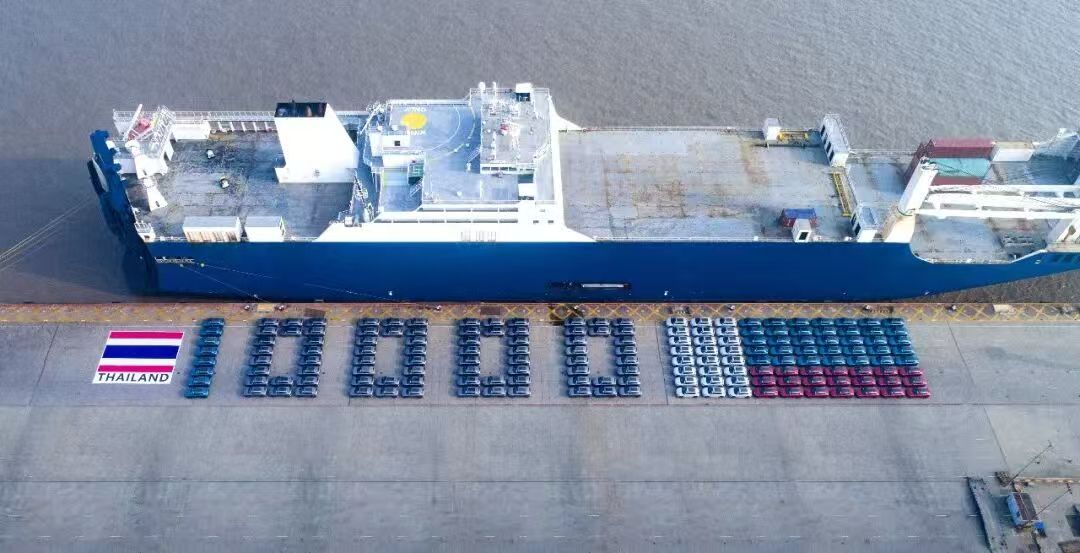
Image source: BYD
In the United States, the direction of consumer car purchases is changing.
Sales data for March and the first quarter show that high vehicle prices, severe weather, the expiration of the federal electric vehicle tax credit, and recent spikes in gasoline prices driven by geopolitical conflicts are collectively suppressing demand for new vehicles in the U.S. Sales have declined across multiple mainstream automakers, and the market is gradually returning to normalcy from the elevated levels seen over the past two years.
Latest industry data shows that U.S. new vehicle deliveries in March declined 14% year-on-year to 1.39 million units, with retail sales down 16% and fleet sales down 2.3%. In terms of sales pace, the seasonally adjusted annualized sales rate (SAAR) for March stood at 16.2 million units—above the prior forecast range of 15.8 to 16.0 million units, but significantly lower than 17.9 million units in March 2025 and slightly higher than 15.7 million units in February.
In the first quarter, sales of most major automakers in the U.S. market declined, including General Motors, Toyota, Ford, Honda, Nissan, Subaru, and BMW.
In Australia, the shortage of refined oil has made fuel costs for gasoline vehicles four times higher than electricity costs for electric vehicles, and the BYD Melbourne store recorded a new monthly sales high for new energy vehicles in March.
In Italy, in March this year, Leapmotor ranked first in the country’s battery electric vehicle (BEV) market with 5,513 new registrations, representing a staggering year-on-year increase of 2,827%; in Q1, its cumulative new registrations reached 11,637 units, capturing a 33.5% share of the local BEV market and an even higher 44.6% share in the BEV retail passenger vehicle channel.
Even in traditional oil-producing countries like Azerbaijan, Chinese new energy vehicles have begun to become a major type of taxi.
However, it should be noted that short-term fluctuations do not represent the long-term trend.
So, is the current rebound in demand for electric vehicles, driven by soaring oil prices, a short-term spike or a long-term structural turning point?
Cao Guangping, a consulting partner at Chefu, stated in an interview with Gasgoo Auto that the impact of this oil price surge “is both short-term and long-term, and the short-term impact will undoubtedly affect the long-term outlook.”
He believes that a short-term rise in oil prices will directly affect the energy strategies, automotive industry policies, and investment directions for charging facilities of various countries. It will also change consumers' long-term usage expectations: when the cost of maintaining a car is highly correlated with international oil prices, consumers will realize that the risk of volatility always exists, while the government's continuous and increasing investment in power generation capacity and charging network construction is irreversible.
Therefore, the shift in the consumption of new energy vehicles is ongoing, and more robust energy strategies in various countries will provide long-term support.
Are Chinese automakers "ambitious," and is their overtaking moment arriving?
Undoubtedly, the structural changes in the global automotive market are bringing positive signs to Chinese car manufacturers in overseas markets.
According to Nikkei News, sources said that as the Middle East conflict has driven up gasoline prices and significantly boosted the appeal of electric vehicles, China's leading electric vehicle company BYD has unexpectedly gained benefits.
Several sources said that Wang Chuanfu, chairman and founder of BYD, mentioned during a closed-door analyst meeting on March 30 that rising oil prices are expected to push the company's overseas sales to a new level this year. Wang specifically mentioned markets such as Australia, New Zealand, and the Philippines, stating that the daily sales in these regions have already reached the total sales of the company in the previous two weeks.
It was reported that Wang Chuanfu had already told analysts last week, and reiterated at the meeting on March 30, that BYD has raised its annual overseas sales target to 1.5 million units, an increase of 15% from the previous target of 1.3 million units.
In addition, sources revealed that BYD plans to launch ultra-fast charging stations overseas starting from 2027.
Regarding the above report, BYD has not yet responded to requests for comment.
In the first two months of this year, China’s exports of new energy vehicles—including battery electric vehicles and plug-in hybrid electric vehicles—surged by over 110%, reaching 583,000 units. Among them, Chery Automobile exported 243,000 units, a year-on-year increase of 45.6%, accounting for 18% of China’s total automobile exports; Geely Automobile exported 156,000 units, with a year-on-year growth of over 150%.
Eugene Hsiao, an analyst at Macquarie, stated in an interview that “2026 was already expected to be another strong year for Chinese electric vehicle exports, even without the Iran conflict driving up oil prices,” as domestic Chinese automakers continue to enhance their global sales networks and optimize their product portfolios.
“Following a sharp increase in oil prices, the market logic has already changed,” noted Eugene Hsiao, adding that regions with high oil import dependency—such as Europe, Southeast Asia, and Northeast Asia—may see accelerated interest in purchasing electric vehicles, whereas the U.S. market may benefit more from the widespread adoption of hybrid vehicles.
Eugene Hsiao said, "Overall, geopolitical tensions are beneficial for Chinese electric vehicle companies. China's diplomatic relations with developed markets such as the EU and Canada continue to improve, which is expected to open up new sales opportunities."
Bernstein analysts stated in their research report last week that “Chinese automakers with deep exposure to the electric vehicle or hybrid vehicle sectors—and with substantial overseas operations—would benefit significantly if oil prices remain elevated over the long term.”
The report added, "BYD is expected to benefit from the high margins in overseas electric vehicle sales with its high-value product portfolio; Geely is expanding its export volume from a low base and accelerating its hybrid product strategy."
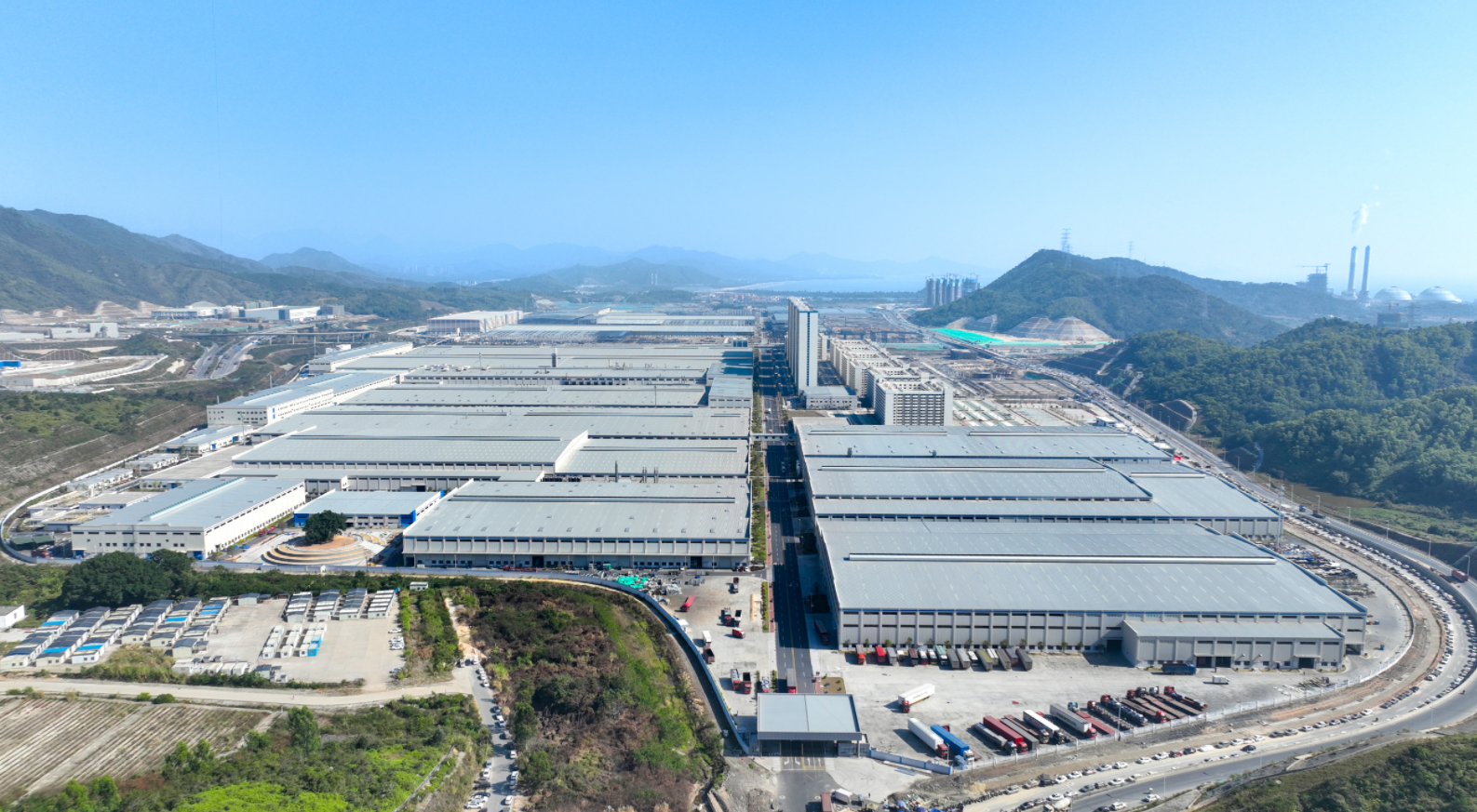
Image source: BYD
Chinese electric vehicle company Zhiyun Auto said last week that volatile oil prices could help it achieve its overseas sales target of 150,000 units this year. The company's founder and chairman, Zhu Jiangming, said, "Although the Middle East situation has hindered sales in some regions, rising gasoline prices have generally boosted demand for electric vehicles."
Moreover, when discussing the company’s overseas automotive business, he expects XPeng’s overseas sales to double by 2026 and reach one million units by 2030, contributing over 70% of its profits.
He Xiaopeng summarized the overseas strategy into eight characters: "Sharp Knife" for breakthrough and "Red Carpet" for retaining people. "Sharp Knife" refers to products and markets: six models, covering price ranges from 100,000 to 200,000 yuan, targeting five markets including Israel, Germany, Norway, Thailand, and France. The number of channel outlets will double to 680 this year, with lead volume also doubling. "Red Carpet" refers to delivery and service: it means enhancing certainty in every link, including delivery time, service response, and energy charging.
However, this global electric vehicle wave has not been smooth sailing in all markets.
The pace and scale of demand release depend on the compounded effects of charging infrastructure, policy subsidies, and consumer awareness. In a mature market like Germany, where policies and infrastructure are relatively well-established, the stimulating effect of rising oil prices can be quickly transmitted to end consumers.
In some regions where charging infrastructure remains underdeveloped, consumers may still find themselves in the dilemma of “wanting to buy but hesitating to do so,” even if fuel prices are extremely high.
From "Selling Cars" to "Building Factories": Overseas Expansion Enters a New Stage of "Industrial Output"
Then, after this wave of going global, how will Chinese automakers’ strategies for entering the global automotive market change?
From “selling vehicles” to “building factories,” and from “product globalization” to “industrial globalization.”
A relevant official from the China Association of Automobile Industries stated in an interview with CCTV that the trend is clear: Chinese autonomous automotive brands are transitioning from simple product exports to a strategic transformation of integrating global resources.
BYD's global layout is quite representative. In March this year, Nikkei News, based on data from S&P Global Mobility, compared the sales of BYD and Tesla in 2020 and 2025. The results showed that BYD has surpassed Tesla in sales in 22 countries and regions. In addition to European countries such as the UK, Spain, and Italy, BYD has also achieved a lead in Hong Kong, China, and Singapore, where the luxury car market is highly represented. In 2025, BYD will take the top spot, becoming the global champion in electric vehicle sales.
To avoid trade tariff barriers, BYD is shifting from "export-oriented" to "local production." Following the establishment of new factories in Thailand in 2024 and Brazil in 2025, its passenger car factory in Hungary is expected to start production as early as 2026.
Chery's overseas market performance is even more impressive. In 2025, Chery's global sales were approximately 2.8 million units, an increase of nearly 7% year-on-year, with sales outside China accounting for over 47%.
In addition, Gasgoo noticed that the Society of Motor Manufacturers and Traders (SMMT) announced on April 7th that the UK's new car registrations in March reached 380,627, the highest monthly record since 2019. Among these, plug-in hybrid models performed the most impressively, with sales surging by 47%. The best-selling model of the month was an SUV from Chinese automaker Chery.
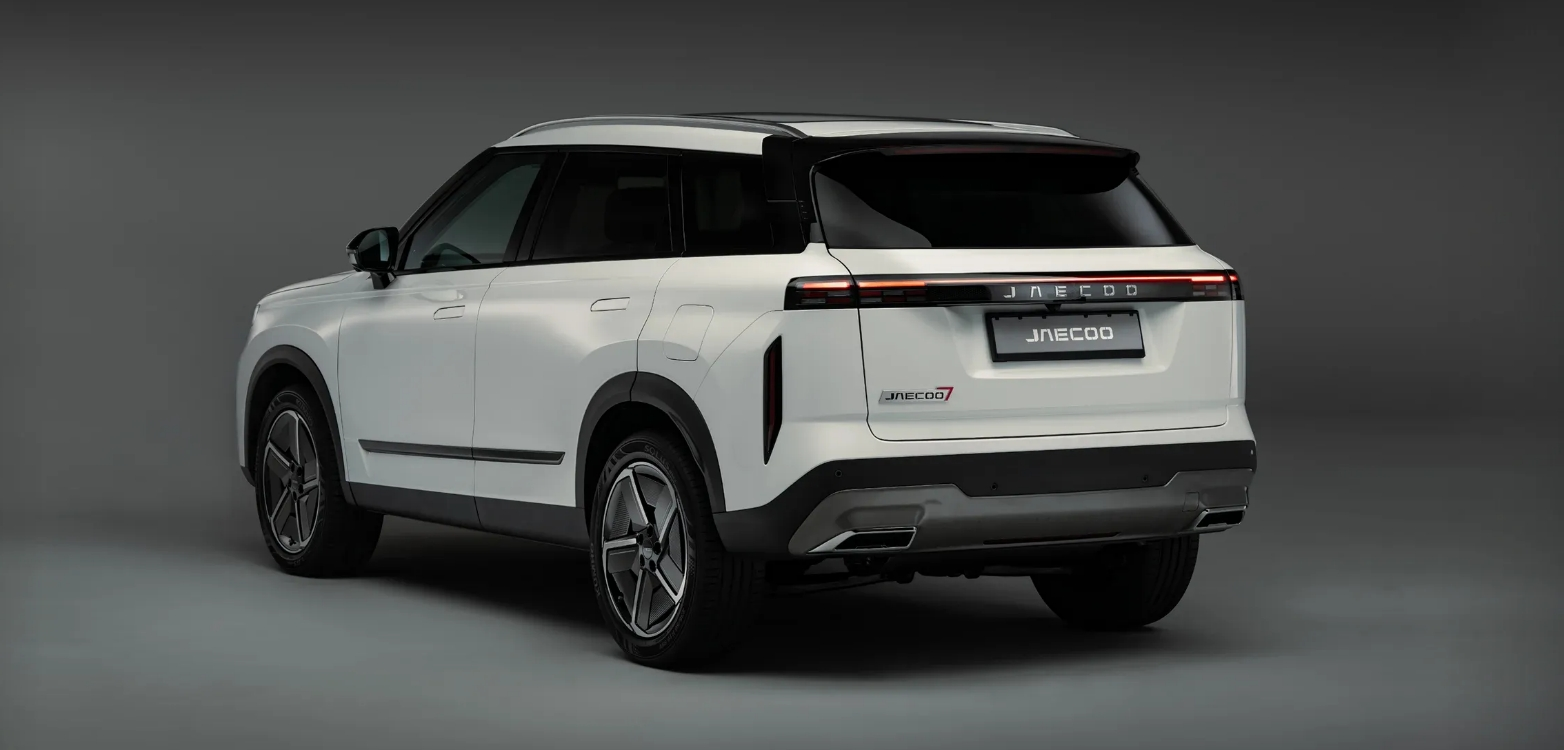
The Jaecoo 7, a model under Chery, ranked as the best-selling vehicle in the UK in March, surpassing the Ford PUMA and Nissan Qashqai for the first time. This SUV, dubbed the “affordable Range Rover” due to its competitive pricing, is sold for approximately £30,000. The Jaecoo 7’s strong sales performance is not an isolated case; amid fierce price competition in the domestic market, Chinese automakers—including Chery, BYD, and SAIC Motor’s MG—are continuously expanding into the European market.
Jaecoo 7; Image source: Jaecoo
According to Reuters, a senior executive of Chinese automaker Chery Automobile stated at an event in Paris that Chery plans to expand automobile production in Europe by collaborating with other automakers and utilizing existing factories.
On the evening of April 10, Chery Automobile held a launch event for its Omoda and Jaecoo brands in France. During a break in the event, Lionel French Keogh, Chery’s Chief Commercial Officer for France, told Reuters in an interview: “The company is seeking additional production capacity in Europe.”
Chery Chairman Yin Tongyue revealed to reporters that the company is more inclined to utilize its existing production capacity rather than spend a fortune on building new vehicle assembly plants. Yin said, "These processes take time and investment, but the key is to establish appropriate local partnerships. I am very hopeful that in the coming months, there will be new developments to share with everyone."
This strategic shift is based on a precise understanding of the different market realities around the world.
In markets where charging infrastructure remains underdeveloped and consumer range anxiety persists, hybrid vehicles often hold greater practical appeal than fully electric vehicles. As a Canadian dealer put it, “Hybrid models represent the most cost-effective and impactful products for Chinese brands entering the Canadian market.”
Among them, represented by Great Wall Motors, Chinese brands have been deeply cultivating the Australian market for many years. With a full range of powertrains including gasoline, diesel, and new energy, they cater to local consumers' preferences for SUVs and pickups. In February 2026, China surpassed Japan for the first time to become the largest single-month car import source for Australia, with sales accounting for about 25% that month.
According to its financial report, BYD’s revenue exceeded RMB 800 billion for the first time in 2025, with overseas revenue accounting for nearly 40%; net profit amounted to RMB 32.62 billion.
【Copyright and Disclaimer】The above information is collected and organized by PlastMatch. The copyright belongs to the original author. This article is reprinted for the purpose of providing more information, and it does not imply that PlastMatch endorses the views expressed in the article or guarantees its accuracy. If there are any errors in the source attribution or if your legitimate rights have been infringed, please contact us, and we will promptly correct or remove the content. If other media, websites, or individuals use the aforementioned content, they must clearly indicate the original source and origin of the work and assume legal responsibility on their own.
Most Popular
-
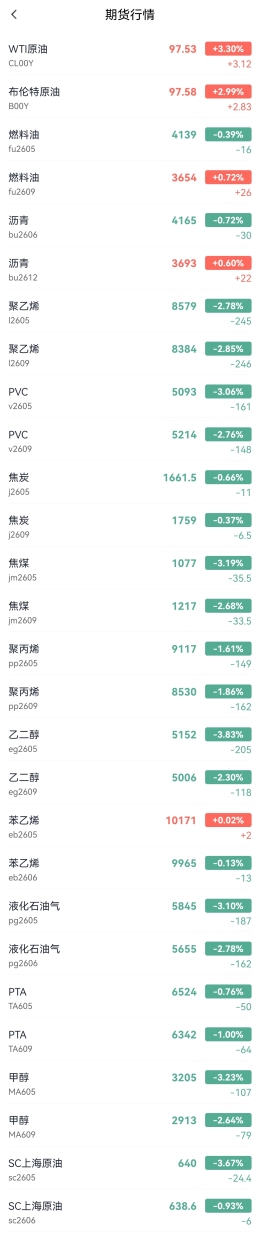
Middle East Tensions Escalate Again? U.S.-Iran Talks Collapse Before Starting, Crude Oil Volatility and Plastic Futures Retreat, Plastics Market Faces New Test
-
Magna Announces Sale Of Lighting And Roof Systems Business
-

Deadly Impact: Hormuz Strait Blockade Sparks Shortage of Plastic Raw Materials, Threatening Shutdowns at Japanese and Korean Chemical Plants
-

BASF Delivers First Batch of Innovative Cathode Materials for Semi-Solid-State Batteries to Weilan New Energy
-

Mdi tariff slashed from 511% to 85%—can wanhua reenter u.s. market?


