



Why using only main antioxidants is not the best solution for aging resistance of engineering plastics?
This is a very professional and critical question. Simply put,The unsatisfactory effect of using a single primary antioxidant is due to the fact that the aging of polymer materials involves a complex chain reaction involving various radicals and peroxides, and an antioxidant with a single mechanism cannot "cover all bases."。
I. From the perspective of aging mechanisms: a "multi-target" coordinated approach is needed.
The thermal oxidative aging of polymer materials (such as plastics and rubber) is aAutocatalytic chain reaction...mainly includes three stages:
TriggerUnder the action of heat, light, metal ions, etc., polymer chains generate alkyl radicals (R•).
2. Growth: R• 迅速与氧气结合,生成过氧自由基(ROO•)。ROO• 再去夺取其他高分子链上的氢,生成氢过氧化物(ROOH)和新的R•。这是最关键的传播步骤。
3.终止: 自由基相互结合,形成稳定产物。
In this process, two main harmful substances are produced:
🔺自由基: 如 R•, ROO•
🔺氢过氧化物: ROOH,它非常不稳定,在热或光下会分解产生 两个新的自由基,导致反应呈指数级加速。
二、 主抗氧剂的局限性与辅助抗氧剂的作用
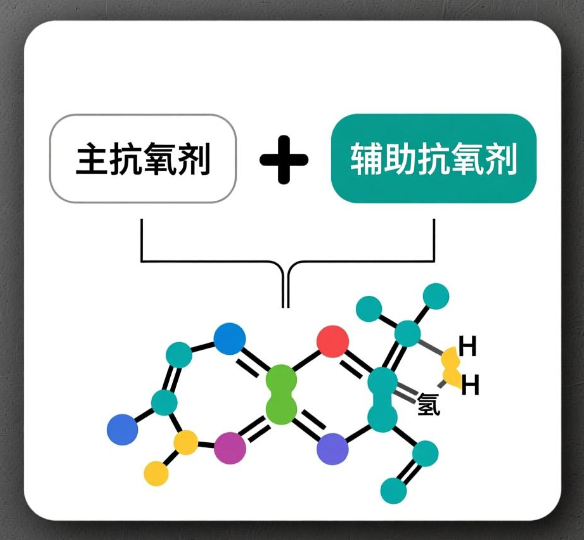
1.主抗氧剂(自由基捕获剂,如受阻酚类、胺类)
作用机理: 主要捕获和消灭 烷基自由基和过氧自由基。它们通过提供氢原子给自由基,使其变成稳定物质,自身则生成稳定的自由基,从而打断链增长反应。
局限性:
治标不治本: 它无法消除老化反应的“根源”——氢过氧化物。只要ROOH存在,它就会不断分解产生新的自由基。主抗氧剂就像不断扑灭火灾点,但火源(ROOH)还在持续冒火。
自身消耗: 主抗氧剂在发挥作用后会被消耗掉。一旦耗尽,保护作用立即消失。
2.辅助抗氧剂(氢过氧化物分解剂,如亚磷酸酯类、硫代酯类)
作用机理: 将不稳定的 氢过氧化物 还原成稳定的醇类等物质,在它分解成自由基之前就将其清除。
: 相当于切断了自由基的“弹药补给”,从源头上减缓了链式反应的爆发。
三、 为什么“主+辅”协同效果最佳?
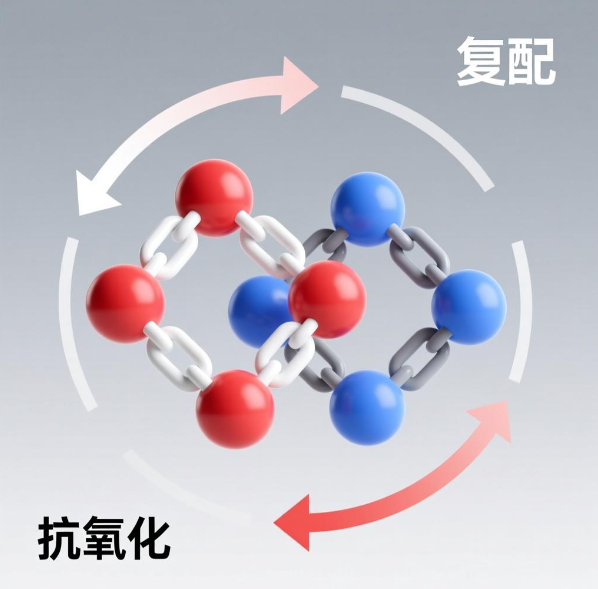
协同效应是核心。两者配合,形成了完美的“立体防御”体系:
1.分工明确,覆盖全面:
主抗氧剂: 对付已产生的自由基。
辅助抗氧剂: 清除产生自由基的 。
两者结合,同时攻击老化反应链的 “士兵” 和 “兵工厂”。
2.相互增效,延长寿命:
辅助抗氧剂通过分解ROOH,极大地减轻了主抗氧剂的负担,使得主抗氧剂的消耗速度变慢,从而显著延长了整个稳定体系的寿命。
实验表明,主辅复配的长期热稳定性远高于两者单独使用效果之和。
4. A Vivid Metaphor
Comparing polymer aging to a fire:
Free radicalsIs burning 。
Hydrogen peroxideIt is piled up to the side.。
Primary antioxidant 是 Fire extinguisher,可以扑灭火苗。
Auxiliary antioxidant 是 搬运工,负责把汽油桶搬走。
单用主抗氧剂: 你不断地用灭火器扑灭火苗,但旁边的汽油桶不断爆炸(分解)产生新的、更大的火苗。很快你的灭火器就用完了,火势彻底失控。
主辅复配: 灭火器扑灭火苗的同时,搬运工不断把汽油桶搬走。火苗失去了补充,灭火器的压力大大减轻,火灾被长时间有效控制。
五、 其他影响因素
除了主辅协同,实际配方中还需考虑:
✔加工稳定性: 聚合物在高温加工时(如挤出、注塑)会发生严重的氧化,需要添加在高温下快速起效的抗氧剂(如亚磷酸酯类辅助抗氧剂常作为加工稳定剂)。
✔长期热稳定性: 制品在使用寿命期间需要长期保护,这更多依赖于受阻酚类主抗氧剂和硫代酯类辅助抗氧剂的协同。
✔颜色保护: 某些主抗氧剂(如胺类)本身会变色,在浅色制品中需选用不染色的酚类。辅助抗氧剂(如亚磷酸酯)也有助于防止颜色变黄。
单用主抗氧剂效果不是最佳,根本原因在于其作用机理的单一性,无法同时应对自由基和氢过氧化物这两大破坏因素。而主抗氧剂与辅助抗氧剂的复配使用,通过协同效应,实现了对聚合物热氧老化全过程、多靶点的有效抑制,从而在加工稳定性、长期热稳定性和经济性上达到最优平衡。这是高分子材料稳定化技术中最经典和核心的配方原则。
【Copyright and Disclaimer】The above information is collected and organized by PlastMatch. The copyright belongs to the original author. This article is reprinted for the purpose of providing more information, and it does not imply that PlastMatch endorses the views expressed in the article or guarantees its accuracy. If there are any errors in the source attribution or if your legitimate rights have been infringed, please contact us, and we will promptly correct or remove the content. If other media, websites, or individuals use the aforementioned content, they must clearly indicate the original source and origin of the work and assume legal responsibility on their own.
Most Popular
-
Key Players: The 10 Most Critical Publicly Listed Companies in Solid-State Battery Raw Materials
-

Vioneo Abandons €1.5 Billion Antwerp Project, First Commercial Green Polyolefin Plant Relocates to China
-
EU Changes ELV Regulation Again: Recycled Plastic Content Dispute and Exclusion of Bio-Based Plastics
-
Clariant's CATOFIN™ Catalyst and CLARITY™ Platform Drive Dual-Engine Performance
-

List Released! Mexico Announces 50% Tariff On 1,371 China Product Categories

