



Waves of Production Capacity Adjustment in the European Phenolic Industry Chain Are Coming!
Currently, the European phenolic industry is facing unprecedented systemic pressures. On the demand side, the consumption of phenol, acetone, and their derivatives has significantly declined; on the supply side, high production costs continue to erode profit margins, making European producers increasingly passive in global competition. This double squeeze is accelerating the transition of the European phenolic industry into a new round of capacity adjustment cycle.
From the analysis of cost structure, European producers are clearly at a disadvantage. According to S&P Global Energy data, the production cost of phenol in Europe is about 41% higher than in Southeast Asia and about 45% higher than in the Middle East. This gap is mainly due to the sharp rise in energy prices following Europe's reduction in Russian pipeline natural gas imports since 2022, while raw material costs have remained high for a long time. Currently, phenol production in Europe is still primarily based on the naphtha steam cracking route, with propylene as a by-product, whose price is highly dependent on the operating conditions of the cracking units. In the context of weak demand, the load of cracking units decreases, exacerbating fluctuations in propylene prices, thereby pushing up the overall cost of phenol. Additionally, Europe's propane dehydrogenation (PDH) capacity is relatively limited, resulting in a lack of flexibility in raw material supply. Coupled with stringent carbon emission compliance requirements, aging facilities, and low energy efficiency, the operating costs of European phenol producers further increase.
Downstream consumption continues to weaken, exacerbating market imbalance. Since March 2024, European phenol spot prices have cumulatively dropped by approximately 49%, with acetone prices falling even more sharply by 61.5%. In the past, the phenol-acetone co-production model could balance supply and demand to some extent, but currently, this adjustment mechanism has clearly failed. Demand for phenol downstream products such as bisphenol A and phenolic resin is sluggish, while fields like solvents and methyl methacrylate (MMA), which are downstream for acetone, are also performing weakly, ultimately leading to both major products simultaneously facing structural oversupply. Even though companies have actively reduced the load of phenol units, this has not tightened acetone supply; rather, both product lines are struggling to achieve profitability, further squeezing the profit margins of producers.
The trend of demand contraction has persisted for many years. According to S&P Global Energy data, under the influence of continuous adjustments in downstream facilities, European phenol demand has cumulatively decreased by about 30% since 2019. In 2025 alone, the consumption in the European phenol and acetone industrial chain showed a significant decline. Among them, Westlake Chemical shut down its 150,000-ton-per-year BPA plant in Pernis, Netherlands at the end of the third quarter of 2025; Trinseo also closed its 100,000-ton-per-year MMA plant in Rho, Italy.
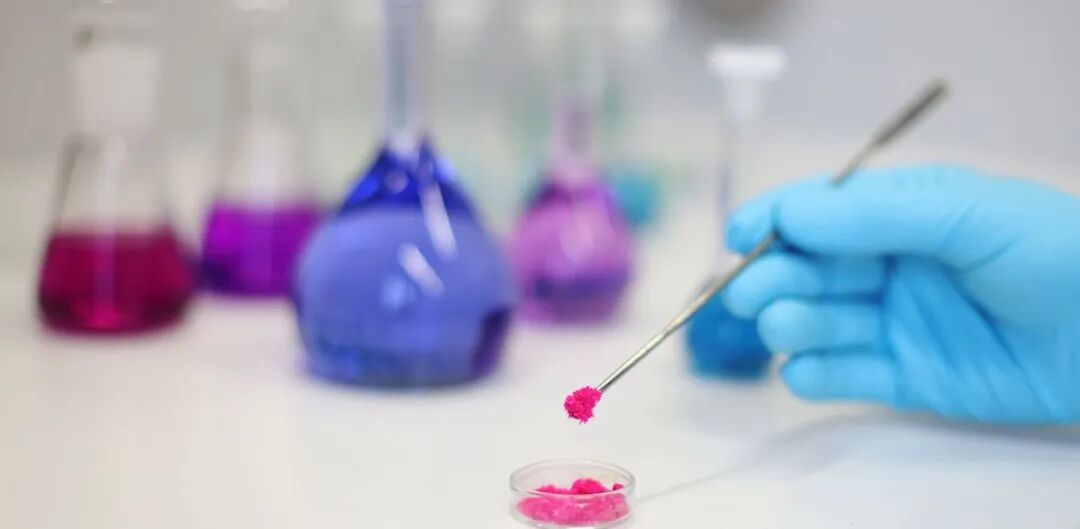
Image source: Internet
In stark contrast to the demand side, the adjustment on the supply side of phenol in Europe is limited. Since 2022, only one phenol unit of Orlen in Poland has been shut down, resulting in a nominal capacity decrease of roughly 3.1% in Europe. Even if the overall operating rate remains in the 60%–70% range, the market still struggles to escape the situation where phenol and acetone are consistently oversupplied.
Some companies' capacity planning has further increased uncertainty. INEOS Group has announced that it will close its 660,000-ton-per-year phenol plant in Gladbeck, Germany, by the end of 2027. Meanwhile, the company plans to restart its 680,000-ton-per-year phenol capacity in Antwerp, Belgium. Additionally, the isopropanol project planned by Spain's Mof Company has been confirmed to be delayed until the first quarter of 2026. Whether this project will affect the load of phenol plants upon commissioning remains to be seen. These factors add variability to the supply-demand balance of the European phenol market in 2026.
Globally, the capacity of phenol and related industrial chains continues to expand. The new capacity is mainly concentrated in integrated projects of bisphenol A and its downstream polycarbonate and epoxy resin. Data shows that from 2024 to 2029, the global nominal capacity of bisphenol A is expected to increase from approximately 11.5 million tons to nearly 13.3 million tons.
Asian low-cost products continue to impact the European market. By December, the spot price of Bisphenol A, a raw material, has exceeded the price of polycarbonate finished products. Data shows that in the first nine months of 2025, the quantity of polycarbonate imported by Europe from China increased by nearly 44% year-on-year, with some products already stored locally in Europe, ready to be launched into the market at any time. Meanwhile, since August 2024, the price of polycarbonate extrusion-grade products assessed by Platts Energy Information has cumulatively fallen by approximately 38%.
The effect of anti-dumping measures is also less than expected. The anti-dumping duties imposed on epoxy resin products from some Asian countries have failed to effectively support prices, and the current spot prices of related products are already below the levels before the duties were imposed. It is noteworthy that Westlake Chemical, one of the three companies that initially filed the anti-dumping complaint jointly with Olympic Company and Spolachemi Company, officially withdrew from the European market in 2025.
As 2026 approaches, the European phenolic industry chain and its upstream and downstream markets will still be in a deep adjustment period. Under the dual pressures of capacity optimization and trade pattern reshaping, the overall risk-bearing capacity of the industry will face more severe challenges.
【Copyright and Disclaimer】The above information is collected and organized by PlastMatch. The copyright belongs to the original author. This article is reprinted for the purpose of providing more information, and it does not imply that PlastMatch endorses the views expressed in the article or guarantees its accuracy. If there are any errors in the source attribution or if your legitimate rights have been infringed, please contact us, and we will promptly correct or remove the content. If other media, websites, or individuals use the aforementioned content, they must clearly indicate the original source and origin of the work and assume legal responsibility on their own.
Most Popular
-

Key Players: The 10 Most Critical Publicly Listed Companies in Solid-State Battery Raw Materials
-
Vioneo Abandons €1.5 Billion Antwerp Project, First Commercial Green Polyolefin Plant Relocates to China
-

EU Changes ELV Regulation Again: Recycled Plastic Content Dispute and Exclusion of Bio-Based Plastics
-
Clariant's CATOFIN™ Catalyst and CLARITY™ Platform Drive Dual-Engine Performance
-

List Released! Mexico Announces 50% Tariff On 1,371 China Product Categories

