



The Divergence of Ice and Fire Amidst Refining Reshuffle: The Rise of Major Bases and the Survival Dilemma of Small and Medium Refineries
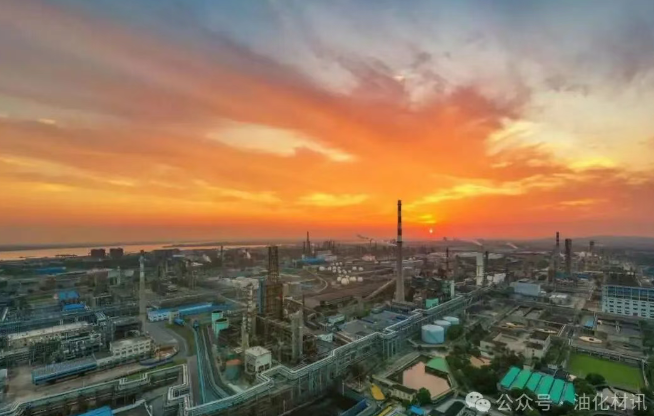
"The resonance and acceleration of the five core elements are reshaping the refining industry," and "the eight major petrochemical industrial bases are laid out along the north and south coasts." Recently, an industry analysis video on the refining sector has sparked heated discussions, while the topic of "HSBC's cancellation of quotas" has led to intense debates among netizens, exposing the survival dilemma faced by small and medium-sized refineries in this transformation. On one side, major refining bases are seizing high-end markets with their advantages in scale and integration, while on the other side, small and medium-sized refineries are struggling to survive under the multiple pressures of quotas, environmental regulations, and transformation. The refining industry is presenting an unprecedented "ice and fire" duality.
I. Headquarter Clustering: Eight Major Bases Outline a New Blueprint for the Refining Industry
From Ningbo to Dalian, from Caofeidian to Zhoushan, the layout of eight major refining and chemical integration bases along the north-south coast clearly demonstrates the national strategic intent to concentrate the refining and chemical industry among leading enterprises. These bases are centered around ultra-large refining and chemical integration projects, with Zhejiang Petrochemical's capacity of 40 million tons per year for refining, 8.8 million tons per year for paraxylene, and 4.2 million tons per year for ethylene, setting a new record for the world's largest single refining and chemical project.
The resonance of five core elements - policy, market, technology, environmental protection, and resources - has become the key driving force for the rise of leading bases. On the policy front, the strict control of new refining capacity through "controlling refining, reducing oil, and increasing chemicals" accelerates the elimination of outdated facilities, with resources tilted towards leading enterprises. On the market front, the demand for refined oil has peaked, while the demand for high-end chemical new materials has surged, forcing refineries to transform into "simultaneous oil and chemical production." On the technology front, the application of advanced processes such as refining integration and light hydrocarbon cracking significantly enhances the product added value and production efficiency of leading enterprises. On the environmental protection front, leading enterprises are capable of deploying green projects such as CCUS and ultra-low emissions, building environmental protection barriers. On the resource front, crude oil import quotas are concentrated towards large bases, further consolidating their raw material advantages.
The completion and operation of the eight major bases not only realize the centralized processing of raw materials but also establish a complete industry chain of "crude oil—chemical—new materials." The produced POE, high-end polyolefins, aromatics, and other products precisely meet the needs of the new energy and high-end manufacturing sectors, becoming the core engine for high-quality development in the refining and chemical industry.
The Predicament of Small and Medium-sized Refineries: The Transformation Pains Reflected by the HSBC Petrochemical Incident
In stark contrast to the rapid progress of major refineries, small and medium-sized refineries are facing significant challenges amid industry restructuring, with the cancellation of the quota for HSBC Petrochemical being a typical example. Comments in the related video section, such as "Without Xiao Bai, it will go bankrupt" and "Leadership without action," reflect market doubts about the management of small and medium-sized refineries. Meanwhile, opinions like "Collectively transitioning to high-end chemicals will lead to new overcapacity" and "Abandoning the gasoline and diesel market will lose the foundation" reveal the core anxieties of small and medium-sized refineries in their transformation efforts.
The difficulties faced by small and medium-sized refineries stem from multiple real constraints. First, there is...Resource access restrictedThe tightening of crude oil import quotas has led to insufficient raw material supply for medium-sized refineries like HSBC Petrochemical, making it difficult to fully utilize their production capacity.High environmental costsIn 2025, environmental protection policies will continue to tighten, and small and medium-sized refineries, due to insufficient funding, will face the risk of production suspension for rectification. Furthermore,Insufficient transformation capabilityThe transition to high-end chemicals requires long-term investment in technology and capital. However, small and medium-sized refineries lack core technological reserves and find it difficult to endure the "zero profit waiting period" of high-end projects, as netizens have questioned, "Where will the funds and technology come from?" Lastly, it is...The market space is being squeezed.The scaled production capacity of the headquarter base continues to be released, and the competition in the finished oil and basic chemical raw material markets is becoming increasingly fierce, amplifying the cost and scale disadvantages of small and medium-sized refineries.
Even if some small and medium-sized refineries attempt to transform, they face numerous challenges. Some netizens suggest investing in high-end chemical projects like photoresist, but such projects require large investments and have long cycles, making them difficult for small and medium-sized refineries to undertake. Focusing on niche areas such as clean fuel additives can easily lead to new homogenized competition, echoing concerns that "collective transformation may cause new overcapacity."
3. Transformation Choices: What is the Path for Breakthrough for Small and Medium-sized Refineries?
The reshuffling in the refining industry is irreversible. If small and medium-sized refineries want to survive in this transformation, they must abandon the mindset of "following the trend" and identify a differentiated path based on their own realities.
Medium-sized refinery(For example, HSBC Petrochemicals) can rely on its existing refining foundation to focus on niche areas such as light hydrocarbon dehydrogenation and comprehensive utilization of C4, revitalizing by-product resources to produce chemical raw materials. At the same time, it can collaborate with leading enterprises to undertake raw material processing business, becoming a supporting node in the industry chain. As netizens have pointed out, there is no need to blindly pursue "high-tech and cutting-edge" solutions, but rather to "look further ahead" and build in niche markets, such as producing specialized chemical solvents and clean fuel additives based on regional market demand, thereby avoiding direct competition with leading enterprises.
Small refineryIf so, it is advisable to decisively exit the independent refining business and transform into a service provider for the refining and chemical industry chain, engaging in areas such as storage, logistics, and chemical product testing, or to settle in chemical industry parks to share infrastructure and resources. Some small refineries could also consider collaborating with research institutions to develop small-batch, customized fine chemical additives production, tapping into the market with niche products.
In addition, support at the policy level is also crucial. Local governments can introduce subsidies for the elimination of old equipment and special funds for transformation, assisting small and medium-sized refineries in completing environmental upgrades and technological advancements. Industry associations can promote the establishment of industrial alliances between small and medium-sized refineries and leading enterprises, achieving resource sharing and collaborative development.
The major reshuffle in the refining industry is both a restructuring of the industrial landscape and a transformation of the development logic. The rise of leading bases marks the industry's entry into a new stage of scale and high-end development, while the transformation pains of small and medium-sized refineries are an inevitable part of industrial upgrading. Only by finding the right position and pursuing differentiated development can small and medium-sized refineries find a way to survive amid industry changes. Meanwhile, the entire refining industry will achieve a transformation from "scale expansion" to "value enhancement" through the synergy of leadership by major players and breakthroughs by smaller ones.
【Copyright and Disclaimer】The above information is collected and organized by PlastMatch. The copyright belongs to the original author. This article is reprinted for the purpose of providing more information, and it does not imply that PlastMatch endorses the views expressed in the article or guarantees its accuracy. If there are any errors in the source attribution or if your legitimate rights have been infringed, please contact us, and we will promptly correct or remove the content. If other media, websites, or individuals use the aforementioned content, they must clearly indicate the original source and origin of the work and assume legal responsibility on their own.
Most Popular
-

Key Players: The 10 Most Critical Publicly Listed Companies in Solid-State Battery Raw Materials
-
Vioneo Abandons €1.5 Billion Antwerp Project, First Commercial Green Polyolefin Plant Relocates to China
-
EU Changes ELV Regulation Again: Recycled Plastic Content Dispute and Exclusion of Bio-Based Plastics
-
Clariant's CATOFIN™ Catalyst and CLARITY™ Platform Drive Dual-Engine Performance
-

List Released! Mexico Announces 50% Tariff On 1,371 China Product Categories

