



Tariff Cut To 15%! US-India Trade Agreement Nears, What Is The Impact On China’s Textiles?
In 2025, the global trade landscape is facing significant changes. The United States is close to finalizing a long-sought bilateral trade agreement with India, with the U.S. planning to dramatically reduce tariffs on Indian goods from the current high of 50% to 15%-16%. This breakthrough in trade, spanning energy, agriculture, and manufacturing, not only targets the U.S.-India trade goal of $500 billion but also hints at deep strategic games in the restructuring of global supply chains, sparking market speculation about the triangular trade dynamics between the U.S., China, and India, as well as potential shifts in industries.
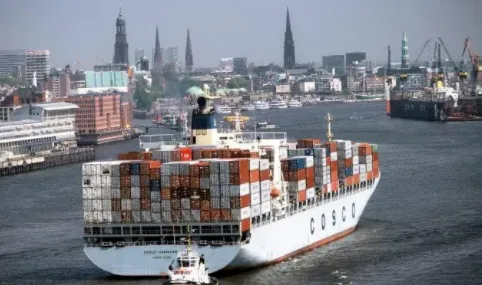
The overall tax rate has been reduced to the range of 15%-16%.
The core of the trade negotiations between the U.S. and India is a precise mutual concession.
The significant reduction in tariffs is a key highlight, as the United States will cancel the 25% punitive tariffs on Russian oil imports from India and the corresponding 25% tariffs, bringing the overall tax rate down to the range of 15%-16%. This covers India's competitive export sectors, including textiles, gems, leather, and engineering machinery. This will directly alleviate the pressure from India's declining exports to the U.S., which have dropped for four consecutive months—data shows that India's exports to the U.S. fell from a peak of $8.8 billion in May to $5.5 billion in September, a decrease of $3.3 billion over three months.
India has brought out key bargaining chips in exchange for tariff reductions, pledging to gradually reduce Russian oil imports. Its state-owned refineries and Reliance Industries have started shifting to Middle Eastern procurement. Meanwhile, India will ease import restrictions on non-GMO American corn and soybean meal, opening up a market worth hundreds of billions for U.S. agricultural products.
Both parties plan to establish a regular review mechanism for tariff levels and market access, creating a long-term framework for subsequent trade cooperation. The advancement of the US-India trade agreement is essentially a dual game of political will and market forces, and its impact has already spread to major global economies.
The United States is reaping multiple benefits, expanding its energy and agricultural export channels, alleviating domestic industry pressure, and deepening its economic influence over India through trade ties, paving the way for the implementation of the "Indo-Pacific Economic Framework." More importantly, leveraging India's cheap labor, the U.S. is attempting to create a backup supply chain to replace China.
India faces both opportunities and risks. The reduction of tariffs will directly boost orders for export enterprises, but the increase in U.S. agricultural imports may impact the domestic agricultural system. Additionally, reducing oil imports from Russia could raise domestic energy costs. Furthermore, 70% of India's air conditioning compressors and 58% of mobile phone components rely on imports from China, making the "de-Sinicization" of the supply chain difficult to achieve in the short term.
The Triple Pressure of the US-India Agreement on China
One of the core demands of the United States in promoting U.S.-India trade cooperation is to establish a technology and industry alliance that excludes China, which brings threefold direct pressure on China: Indian labor-intensive products may encroach on China's export share to the United States; cooperation among the U.S., Japan, South Korea, and India in the semiconductor and critical minerals sectors may tighten the technological blockade against China; and competition for global resource pricing power is intensifying.
Challenges also bring opportunities. On one hand, external pressures will force Chinese enterprises to accelerate technological research and development and industrial upgrading, thereby increasing product value-added. On the other hand, China can further expand markets along the "Belt and Road" initiative, reducing dependence on a single market while leveraging the domestic demand market to enhance economic resilience. It is worth noting that the tightening of China's rare earth exports has already led to a 22% increase in the cost of batteries for India's new energy vehicles, indicating China's irreplaceable role in the global supply chain.
Although the current US-India agreement has made substantial progress, there are still uncertainties: India has clearly stated that it will not sign a "rushed agreement" under pressure, the specific extent and timeline for reducing Russian oil imports have yet to be determined, and the US's demand for India to open its retail market may trigger domestic social controversies. The market expects that the two sides may complete final negotiations and officially announce the agreement at the ASEAN summit.
Textile enterprises need to focus on.
With the advancement of the US-India trade agreement, Indian textile companies can exert strong competitive pressure on Chinese textile exports due to low tariffs and cheap labor costs. For labor-intensive industries such as textiles and electronics, it is essential to strengthen technological innovation, enhance the competitive advantage of high-end products, reduce reliance on low-cost products, accelerate the independence of core technologies, and decrease dependence on single technologies and products.
The deep embedding of global industrial chains makes "de-coupling" difficult to achieve overnight. The advancement of the US-India trade agreement is more like a microcosm of the adjustment in the globalization pattern—political games may change trade flows, but market rules will ultimately dominate the final allocation of supply chains. China can only take the initiative in this global trade reconstruction by continuously strengthening its advantages across the entire industrial chain and enhancing its technological innovation capabilities.
【Copyright and Disclaimer】The above information is collected and organized by PlastMatch. The copyright belongs to the original author. This article is reprinted for the purpose of providing more information, and it does not imply that PlastMatch endorses the views expressed in the article or guarantees its accuracy. If there are any errors in the source attribution or if your legitimate rights have been infringed, please contact us, and we will promptly correct or remove the content. If other media, websites, or individuals use the aforementioned content, they must clearly indicate the original source and origin of the work and assume legal responsibility on their own.
Most Popular
-

Key Players: The 10 Most Critical Publicly Listed Companies in Solid-State Battery Raw Materials
-

Vioneo Abandons €1.5 Billion Antwerp Project, First Commercial Green Polyolefin Plant Relocates to China
-
EU Changes ELV Regulation Again: Recycled Plastic Content Dispute and Exclusion of Bio-Based Plastics
-
Clariant's CATOFIN™ Catalyst and CLARITY™ Platform Drive Dual-Engine Performance
-

List Released! Mexico Announces 50% Tariff On 1,371 China Product Categories

