



Solid-State Battery Race: No More "Outsiders"
Recently, Jinghe Energy, a solid-state battery startup controlled by Yu Hao, the founder of Dreame Technology, announced the completion of an angel round of financing worth tens of millions of yuan. Almost simultaneously, FAW Group, the "eldest son" of China's auto industry, officially announced the successful roll-off of the first prototype vehicle equipped with its self-developed Hongqi all-solid-state battery.
These two updates—one from a breakout crossover newcomer and the other from a steady industry giant—point together to an irrefutable industry consensus: the race for the technological high ground of solid-state batteries has entered a white-hot phase of "beachhead jumping."
Solid-state batteries, hailed as the "holy grail" of new energy vehicles, derive their appeal from directly addressing the two core pain points of current electric vehicles: range and safety. Higher energy density translates to longer range, while better thermal stability inherently and effectively reduces the risk of thermal runaway in batteries.
Therefore, with "range anxiety" and "safety concerns" not yet fully eliminated, solid-state batteries have naturally become a "must-win battleground" for all players betting on the future.
Cross-border New Force: "Surprise Attack" with Capital and Ecosystem
Dreame Technology's solid-state battery layout is the latest piece in its grand cross-industry blueprint. From robot vacuum cleaners and floor scrubbers to the "Nebula Next 01 Concept" supercar concept car unveiled at CES 2026, Dreame defines automobiles as "highly integrated intelligent terminals." Within this framework, the power and energy storage system, as the "heart," is inevitably a core technology module. Jinghe Energy, established just over a month ago, is the vehicle carrying this strategy.
Founded in December 2025, the company focuses on all-solid-state battery cells and system solutions. Unlike many startups that remain in the realm of technological fantasy, Jinghe Energy demonstrates a clear commercial intent and a clear technological path.
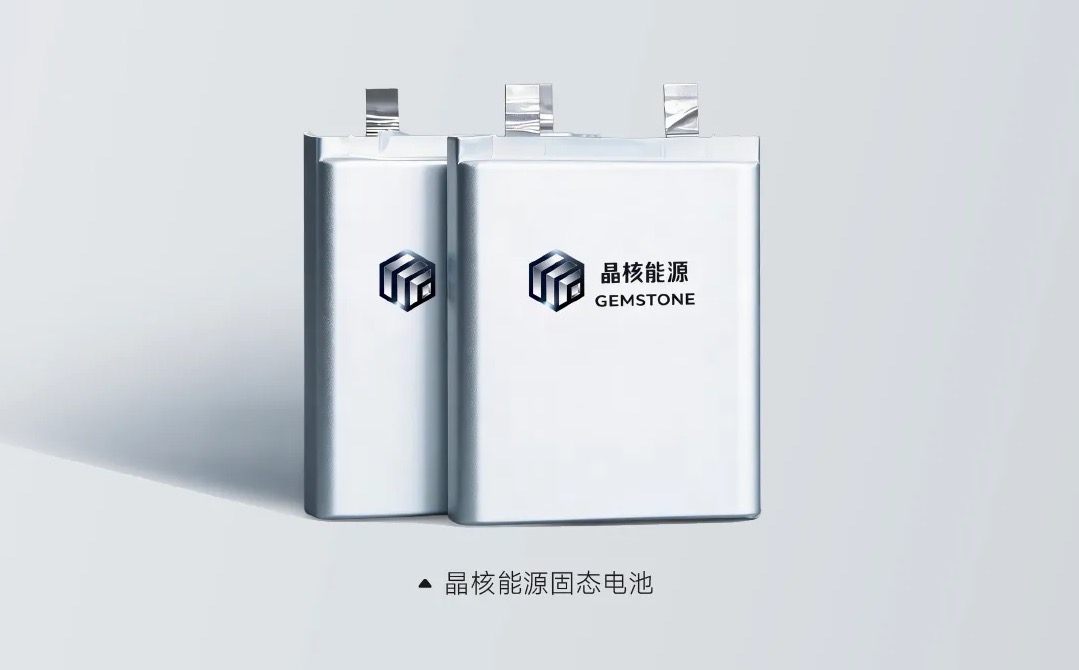
Image source: Star Project
It is reported that the company's founder, Li Yantao, has clearly pointed out the biggest bottleneck in the mass production of all-solid-state batteries: the "solid-solid interface impedance" problem. To this end, Jinghe Energy has proposed a positive and negative electrode material coating technology solution, which improves interface density and conductivity by coating the positive and negative electrode materials with a layer of sulfide. Its goal is also extremely clear: to increase the charge and discharge rate of all-solid-state batteries to 2C by the end of 2027, and to target a cell energy density of 800Wh/kg by using lithium-rich manganese-based cathode materials.
Sky9 Capital's Managing Director Yu Jiabin believes that, driven by the "dual carbon" goals, the solid-state battery sector is on the verge of a trillion-dollar market explosion, with technological barriers and commercialization capabilities being key to breaking through.
For Dreame, the layout of solid-state batteries is not only the technological cornerstone of its car-making dream, but also a key piece in building an integrated ecosystem of "smart home appliances - service robots - smart cars."
Therefore, this round of financing will focus on technology commercialization, team expansion, and global deployment. We have already reached cooperation intentions with 3 leading commercial vehicle companies and 2 energy manufacturers, and plan to complete the first batch of engineering prototype vehicle testing in Q4 2026, covering smart cars, energy storage, and eVTOL three major scenarios, accelerating the realization of technology into value.
However, Dreame is not an isolated case of cross-industry entry. From Shaanxi Forestry Group in the traditional forestry sector and auto parts giant Huayu Automotive, to cable manufacturer Jinlongyu seeking transformation, and even international specialty chemical titans, various players are flooding into this track through investment, cooperation, or independent R&D. The influx of these "outsiders," armed with flexible capital, differentiated resources, and a hunger for new markets, is disrupting the traditional landscape of the solid-state battery industry.
Traditional automakers: Besieged by systems and engineering
When cross-industry players launch "surprise attacks" with capital and agility, traditional automotive giants like China FAW are demonstrating the "encirclement" advantage of their deep-rooted, systematic R&D and engineering manufacturing capabilities.
Solid-state batteries are no longer just blueprints in the lab. Traditional automotive giants, represented by China FAW, are leveraging their robust engineering capabilities to accelerate the transformation of theoretical advantages into verifiable and mass-producible engineering realities. The roll-off of the first Hongqi all-solid-state battery prototype vehicle marks a landmark breakthrough in this process.
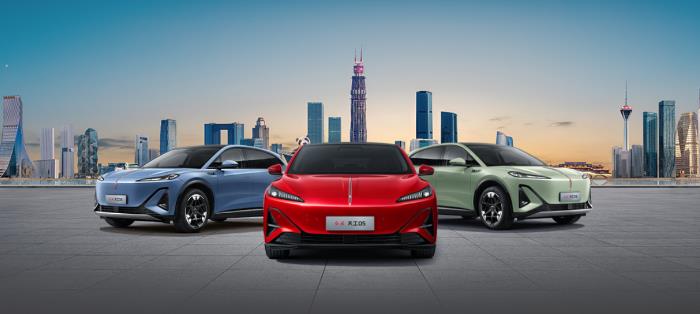
Image source: FAW Group
This sulfide-based battery, developed through 470 days of intensive research, incorporates a 66Ah all-solid-state cell and has passed a 200℃ extreme thermal abuse test, achieving an industry-leading ionic conductivity exceeding the 10mS/cm threshold. FAW stated that the upcoming vehicle testing will focus on evaluating the battery system's comprehensive performance, durability, and reliability in real-world operating conditions, which is a crucial and unavoidable step towards industrial application of the technology.
The collective action of Chinese car companies goes far beyond this. In November 2025, SAIC Motor announced that its all-solid-state battery production line in cooperation with Qingtao Energy had been fully connected in Anting, Shanghai, and planned to officially achieve mass production and delivery in 2027. During the 2025 Guangzhou Auto Show, Feng Xingya, Chairman of GAC Group, also revealed that GAC's all-solid-state battery pilot production line had been built and put into trial production, taking the lead in possessing the batch manufacturing conditions for automotive-grade all-solid-state batteries.
The race surrounding solid-state batteries is an all-out global competition. International giants are already on high alert: Toyota plans to gradually mass-produce all-solid-state batteries in 2026-2027, aiming for a range of 1200 kilometers. South Korean companies such as Samsung SDI and LG Energy Solution have also locked in their mass production timelines for 2027-2030. At CES 2026, ProLogium, a global leader in solid-state batteries, unveiled its "Super Fluid All-Inorganic Solid-State Battery" platform, showcasing breakthrough results with a volumetric energy density of up to 860 Wh/L and a room-temperature ionic conductivity 5 times higher than traditional solutions, and announced that its French gigafactory will officially commence construction in 2026.
It can be said that the solid-state battery race has never been as crowded and vibrant as it is today. The essence of this competition is not a simple dispute over technological routes, but a strategic positioning for the right to speak in the global new energy vehicle industry over the next decade.
【Copyright and Disclaimer】The above information is collected and organized by PlastMatch. The copyright belongs to the original author. This article is reprinted for the purpose of providing more information, and it does not imply that PlastMatch endorses the views expressed in the article or guarantees its accuracy. If there are any errors in the source attribution or if your legitimate rights have been infringed, please contact us, and we will promptly correct or remove the content. If other media, websites, or individuals use the aforementioned content, they must clearly indicate the original source and origin of the work and assume legal responsibility on their own.
Most Popular
-
Key Players: The 10 Most Critical Publicly Listed Companies in Solid-State Battery Raw Materials
-
Vioneo Abandons €1.5 Billion Antwerp Project, First Commercial Green Polyolefin Plant Relocates to China
-

EU Changes ELV Regulation Again: Recycled Plastic Content Dispute and Exclusion of Bio-Based Plastics
-
Clariant's CATOFIN™ Catalyst and CLARITY™ Platform Drive Dual-Engine Performance
-

List Released! Mexico Announces 50% Tariff On 1,371 China Product Categories

