



Semiconductors this plastic will be replaced! material tech giants bet on glass substrates, a dark horse for 2026 has already emerged
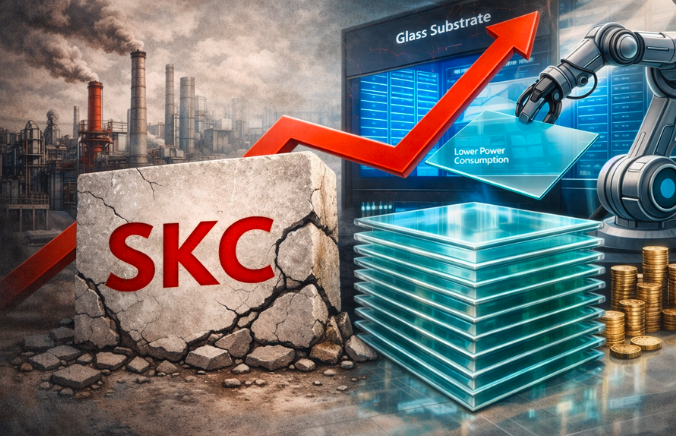
Specialized VisionOn January 13th, it was observed that as a flagship company in South Korea's materials industry, SKC has been deeply mired in poor performance in recent years. SKC has reported losses for three consecutive years from 2023 to the third quarter of 2025: a loss of 213.7 billion Korean won (approximately 1.13 billion RMB) in 2023, which expanded to 276.8 billion Korean won (approximately 1.46 billion RMB) in 2024, and a cumulative loss of 197.4 billion Korean won (approximately 1.04 billion RMB) for the first three quarters of 2025.
Source: Time Magazine
This series of numbers directly shook investor confidence.In August 2025, NICE Credit Rating Agency downgraded SKC's unsecured bond credit rating from A+ to A and its short-term credit rating from A2+ to A2, leading to a significant increase in the company's financing costs.
The key to change lies in major losses for giants.
SKC has incurred losses for three consecutive years.The root of the crisis lies in the simultaneous pressure on two major business pillars. In terms of petrochemical business, the expansion of production capacity by Chinese enterprises has led to a global oversupply, resulting in continuous declines in product prices and increased cost pressures, making short-term recovery difficult. In the field of core materials for secondary batteries, there are also many lurking crises.SK Nexilis's copper foil business, once considered a pillar of growth, is now facing challenges as the global electric vehicle market's growth slows, leading to decreased operating rates. Additionally, the depreciation burden from large-scale initial investments is further eroding profits, with the market environment changing faster than expected.
To address the crisis,SKC launches "rebalancing" strategy: from 2023, it will accelerate the divestment of non-core assets, including the sale of SK PUCORE (polyol) and SK Npulse wet chemical division in 2023, liquidation of SK Npulse CMP pad division and SK Nexilis FCCL division in 2024, and further sale of SK Enpulse blank mask and CMP slurry division in 2025. Meanwhile, the originally planned entry into the anode material business is completely abandoned, focusing on areas with proven competitive advantages.
Glass substrate Technological breakthroughs of dark horses in 2026
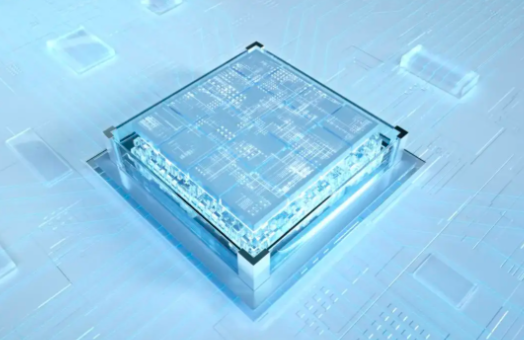
In the midst of transformation pains, the semiconductor glass substrate business becomesThe core chips of SKC's counterattack. Compared to traditional plastic substrates,Zhuan Su Shijie understands that glass substrates demonstrate overwhelming advantages in three dimensions: micro-fabrication, electrical performance, and thermal management.
Microfabrication capability:The surface roughness of the glass substrate can be controlled at.Below 1 nanometer, sub-micron wiring can be achieved without additional polishing, with line width and spacing reaching 2 microns/2 microns, and via density as high as 10⁵/cm², which is more than 10 times that of traditional plastic substrates, directly enhancing circuit integration and signal transmission efficiency.
Electrical performance: At the 10GHz frequency band, the signal transmission loss on glass substrates is only 0.3dB/mm, which is more than 50% lower than traditional substrates, effectively reducing delay, attenuation, and crosstalk in high-speed signal transmission. This is crucial for high-frequency applications such as AI chips.
Thermal Management:Coefficient of thermal expansion of glass substrateThe CTE can be adjusted to 3-5 ppm/℃, highly matching with silicon chips, reducing warpage caused by thermal cycling by 70%, and significantly enhancing the packaging stability of large-size AI processors.
Source: Photostock.com
This technological advantage stems from the innovation in material properties. Traditional plastic substrates use epoxy encapsulants (EMC, composed of epoxy resin, phenolic resin, silica powder, and additives, has a thermosetting characteristic that results in high dielectric loss and poor thermal expansion coefficient matching in high-frequency applications. However, glass substrates have achieved breakthroughs in material science
In this key area, plastic will be replaced.
The replacement of traditional plastic substrates with glass substrates is essentially an inevitable trend in the iteration of semiconductor material technology.AI models are evolving towards a trillion-parameter scale, and the computational infrastructure is facing severe physical bottlenecks: traditional organic substrates have reached their limits in terms of thermal efficiency, large-size processing stability, and interconnection density.
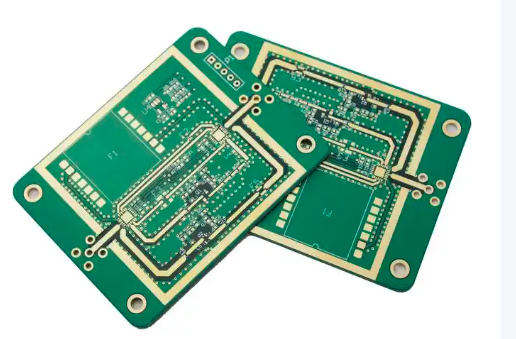
Epoxy encapsulation materialTraditional plastic substrates represented by EMC (Epoxy Molding Compound).The core components include epoxy resin (providing cross-linked network), phenolic resin (curing agent), silica micro powder (reducing thermal expansion coefficient and improving mechanical strength), coupling agent, release agent, flame retardant, and other additives. This thermosetting composite material has inherent disadvantages in high-density interconnect and high-frequency signal transmission scenarios: high dielectric loss leads to low signal transmission efficiency, and the thermal expansion coefficient not matching the silicon chip results in poor stability of the packaging structure.
Source: Titanium Media
And the glass substrate, through innovation in material properties, directly addresses these pain points: sub-micron level wiring capability meets...AI chips demand high-density interconnections, low dielectric loss characteristics to accommodate high-frequency signal transmission, and improved thermal stability to ensure the reliability of large-sized chip packaging. Market dynamics confirm this trend—despite rumors in mid-2025 about Intel abandoning glass substrate technology, the goal of "mass production in 2026" appeared on manufacturers' roadmaps six months later, with research institutions providing optimistic market growth forecasts.
Multiple giants are entering the glass substrate market.
The strategic value of glass substrates has prompted global tech giants to compete in positioning themselves.IntelAs the earliest explorer,In September 2023, the industry's first glass substrates for next-generation advanced packaging were announced, with plans for commercialization from 2026 to 2030. Intel's Arizona plant has invested $1 billion to establish a research and development line. However, due to financial pressures, Intel shifted its strategy to prioritize outsourcing. In 2025, core packaging expert Duan Gang moved to Samsung Electro-Mechanics, causing a dramatic change in the technological landscape. Samsung Electro-Mechanics subsequently accelerated the advancement of its trial production line at the Sejong plant, planning to begin mass production in Q2 2025 and achieve large-scale glass substrate production by 2026. They have already supplied samples to 2-3 American technology companies.
TSMCConsolidate its leading position through diversified advanced packaging technology.The production capacity of CoWoS is expected to reach 125Kwpm by the end of 2026 and increase to 170Kwpm by 2027, while also deploying SoIC, WMCM, and CoPoS technologies to support AI/HPC chip demand. Corning and AGC, as traditional glass giants, dominate the display glass market with their fusion draw process technology and global supply network. Corning's latest Corning® Astra™ Glass has achieved 8K TV-level image quality, while AGC's Dragontrail™ glass has become the preferred choice for foldable devices due to its impact resistance and scratch resistance features.
Mainland manufacturers are also accelerating their pursuit.:BOEA G8.6 AMOLED production line will be launched in 2026.Monthly production32,000 glass substrates;TCL Technology's China Star Optoelectronics plans to build an 11th generation ultra-high-definition display production line.Monthly production capacity reaches90,000 pieces;Rainbow HoldingsG8.5+ glass substrate production line adopts advanced overflow method.Annual production capacityWith an annual production capacity of 5.8 million units, Dongxu Optoelectronics' G8.5 TFT-LCD glass substrates have a capacity of 5.4 million units, both ranking among the top in global production capacity.
Epilogue:
SKC's subsidiary Absolix is advancing the world's first glass substrate commercialization project, which, if it achieves mass production by 2026, combined with the low-cost electricity advantage of the copper foil plant in Malaysia, could become a crucial turning point for transformation. Meanwhile, the coordinated advancement of the global industrial chain is moving glass substrates from "optional solutions" to "mandatory pathways," reshaping the future landscape of the semiconductor industry.
【Copyright and Disclaimer】This article is the property of PlastMatch. For business cooperation, media interviews, article reprints, or suggestions, please call the PlastMatch customer service hotline at +86-18030158354 or via email at service@zhuansushijie.com. The information and data provided by PlastMatch are for reference only and do not constitute direct advice for client decision-making. Any decisions made by clients based on such information and data, and all resulting direct or indirect losses and legal consequences, shall be borne by the clients themselves and are unrelated to PlastMatch. Unauthorized reprinting is strictly prohibited.
Most Popular
-
Supply Extremely Tight! LG Chem Declares Force Majeure on Export Contracts for Di-Octyl Terephthalate (DOTP)
-

Deadly Impact: Hormuz Strait Blockade Sparks Shortage of Plastic Raw Materials, Threatening Shutdowns at Japanese and Korean Chemical Plants
-
Huntsman Introduces “War Surcharge” Amid Shipping Disruption and Soaring Energy Costs, Global MDI Prices Continue to Rise
-
Catl “wins big”: Beyond Batteries, What Else Can It Sell?
-

Tao Lin: Tesla’s Supercharger Stations in China Surpass 2,500


