



Robotic Dexterous Hands Enter Mass Production "Positioning War"! What Materials Are Used in the Future?
In 2025, humanoid robots ushered in their first window of industrialization. According to the latest statistics from the Ministry of Industry and Information Technology, the number of complete machine enterprises in China exceeded 140 in that year, with over 330 humanoid robot products released throughout the year. Subsequently, leading enterprises entered the mass production stage one after another, boosting the annual shipment volume of humanoid robots from the thousand-unit level in 2024 to over ten thousand units. As humanoid robots rapidly transition from concept to reality, the value of upstream core components is being re-evaluated, with dexterous hands, as a key component, attracting significant attention.
Dexterous Hands: The Key "Hands" for Robots to Interact with Reality
Dexterous hands are arguably the "ultimate actuator" for robots interacting with the physical world, and their performance directly determines the upper limit of a robot's manipulation capabilities and the breadth of its commercialization. If AI large models are considered the "brain" of humanoid robots, and motors and reducers are the "skeleton" and "muscles," then dexterous hands are the "nerve endings" connecting the "brain" to the physical world, responsible for translating the robot's intelligence from "perception and decision-making" into "executable value actions." Without high-performance dexterous hands, even with advanced AI algorithms, robots will struggle to complete fine manipulations and may become nothing more than "walking ornaments."
Industry exploration of dexterous hands can be traced back to the 1970s. However, constrained by factors such as high costs, complex control, insufficient reliability, and a lack of large-scale application scenarios, early dexterous hands mostly remained at the laboratory prototype stage, making it difficult to bridge the gap from "sample" to "product." For instance, the Shadow Hand from the British company Shadow Robot was priced as high as one million yuan, rendering it unviable for large-scale commercialization.
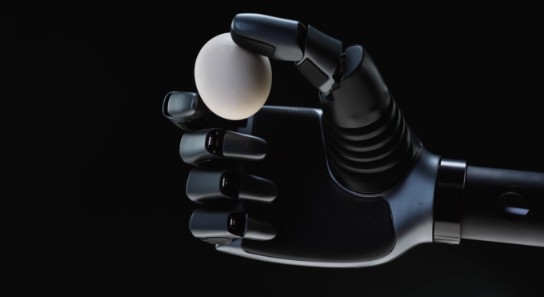
Image source: Zhenhe Industry
In the past two years, the downstream humanoid robot industry has seen a boom, releasing clear and urgent large-scale demand, which has become the key to breaking the deadlock. Humanoid robot products from companies such as Unitree, LimX Dynamics, and UBTECH are continuously being put into industrial application. The market's demand for dexterous hands has shifted from "usable" to "functional, durable, and cost-effective," driving dexterous hands into a new stage of mass production and practical implementation.
Agile hand mass production status: Leading enterprises achieve remarkable results.
According to calculations by several authoritative institutions, global humanoid robot shipments are expected to exceed 15,000 units in 2025, a nearly sevenfold leap from over 2,000 units in 2024. Among these, leading players Unitree and ZHIYUAN are projected to each ship over 5,000 units in 2025. Assuming each robot is equipped with two dexterous hands, the known shipments of dexterous hands will be at least over 30,000 units in 2025.
Against this backdrop, leading dexterous hand companies are shipping products at scale. Lingxin Qiaoshou's monthly shipments have exceeded 1,000 units. Its Linker Hand series covers a variety of product lines, with the L10, L20, and L30 high-performance dexterous hands all boasting 20 or more degrees of freedom. It is one of the few companies globally to achieve mass production of high-degree-of-freedom dexterous hands at the thousand-unit level, with a global market share exceeding 80%. The company plans to deliver 50,000 to 100,000 dexterous hands in 2026. InTime Robotics aims to deliver 10,000 dexterous hands in 2025, up from just 2,000 units in 2024. Leveraging its deep in-house R&D in key areas such as miniature servo cylinders and planetary roller screws, the company has launched over 20 different models of dexterous hands, serving over 700 customers worldwide across multiple industries. Xinuo Future, established at the end of 2024, focuses on the R&D of high-degree-of-freedom dexterous hands and possesses independent R&D capabilities in core technologies. Recently, it secured orders for over 10,000 high-degree-of-freedom dexterous hands from several leading industry customers, demonstrating strong growth potential in less than a year since its founding. To ensure mass production and delivery, Xinuo Future plans to build a production line with an annual capacity of 200,000 miniature electric cylinders and 10,000 dexterous hands, which has already commenced construction and is expected to be officially put into production in the second quarter of 2026.
Dexterous Hand Technology Pathways: Diversified "Diversion"
Unlike many core components moving toward standardization, dexterous hand technology remains in a vibrant "Warring States period" of competing approaches. This divergence is a direct result of the extreme diversification of downstream application scenarios. At this stage, mainstream technical routes for dexterous hands revolve around three types of transmission methods:
Tendon rope driveInspired by human tendons, this method uses motors to retract and extend flexible cables to remotely actuate joints. Its advantages include compact structure, lightweight design, smooth motion, and high biomimicry, making it suitable for scenarios requiring high biomimicry and fine manipulation, such as home service and medical rehabilitation. However, long-term use of cables can lead to creep and wear, resulting in a decline in precision, and the load capacity is relatively limited. Tesla Optimus dexterous hand, Linxer Hand L30 tendon-driven version, Dexhand 021 mass-produced version, and Xynova Flex 1 from Xynova Future all adopt this approach.
Connecting rod driveThe motor power is directly transmitted to the joints through rigid connecting rods and articulated points. Its advantages include a stable structure, high precision, fast response speed, and strong load capacity, making it more suitable for industrial sorting, heavy object grasping, and other scenarios that require high strength, speed, and reliability. However, its flexibility is relatively insufficient, and its structure is also more complex. Products such as the Lingxin Qiaoshou Linker Hand L6 Direct Drive Edition, InTimes Robotics RH56 series, Agibot OmniHand series, and ByteDance Seed Lab's ByteDexter adopt this approach.
Gear TransmissionPower and motion are transmitted through gear meshing. Its advantages include high transmission efficiency, large torque output, extremely high transmission accuracy, and good structural rigidity, as seen in Unitree Dex5 and Stardust Robotics' Stardust XHAND1. However, it presents challenges such as complex structure, heavy weight, high processing precision requirements, and high costs.
Currently, there isn't a "one-size-fits-all" dexterous hand that can adapt to all scenarios, so some companies are choosing to deploy multiple technical routes simultaneously. For example, Agile Robots' Linker Hand series covers multiple drive methods including tendon-driven, direct-drive, and linkage-driven. Zhaowei Machinery & Electronics' dexterous hand adopts a dual technical route of direct drive and linkage. AAC Technologies is concurrently developing high-degree-of-freedom tendon-driven hands and highly reliable linkage-driven hands. According to a relevant person in charge at AAC Technologies, the dexterous hand field faces an "impossible triangle," where degrees of freedom, size, and force output are difficult to balance simultaneously. Based on different application requirements, the two technical routes will temporarily coexist and continuously evolve and iterate.
The limitations of traditional paths also present opportunities for innovators. Recently, Choho Industrial, a domestic leader in the chain drive industry, made a cross-sector move by releasing a dexterous hand product—the CHOHO Hand. Utilizing sprocket-chain transmission, it achieves a transmission efficiency of 95%–98% and aims to overcome the challenge of balancing high precision, high load capacity, and high reliability. This further demonstrates that the technological race for dexterous hands is far from over, and manufacturers with deep expertise in the transmission field have the potential to redefine the rules of the track.
Dexterous hand material application: closely related to transmission methods.
Dexterous hands with different transmission methods have their own material application characteristics.
Tendon driveTo meet requirements for compact structure, lightweight design, and smooth motion, flexible rope materials are crucial. They need to possess properties such as high strength, low creep, and wear resistance to reduce precision degradation during long-term use and enhance load capacity. Simultaneously, materials for components like motor housings must balance strength and lightweight, potentially utilizing high-strength plastics or aluminum alloys.
Connecting Rod TransmissionThe rigid links and pivot points need to be made of high-strength, high-rigidity materials, such as stainless steel or high-strength alloy steel, to ensure structural stability, high precision, fast response, and strong load capacity. For applications where weight is a concern, lightweight high-strength materials like titanium alloys may be used.
Gear transmission Gear materials need to have high hardness, high wear resistance, and good machinability. Common materials include alloy steel and carburizing steel. To improve transmission efficiency and reduce noise, some gears may adopt advanced manufacturing processes such as powder metallurgy, and material selection will also pay more attention to precision and surface quality.
In addition, regardless of the transmission method, the joint materials of dexterous hands must have good wear resistance and lubrication to reduce friction and wear and extend service life. Some high-end dexterous hands may use ceramic materials or composite materials to manufacture joints to improve performance. At the same time, to meet the lightweight requirements of dexterous hands, the overall structural materials will tend to choose high-strength, low-density materials, such as carbon fiber composites.
【Copyright and Disclaimer】This article is the property of PlastMatch. For business cooperation, media interviews, article reprints, or suggestions, please call the PlastMatch customer service hotline at +86-18030158354 or via email at service@zhuansushijie.com. The information and data provided by PlastMatch are for reference only and do not constitute direct advice for client decision-making. Any decisions made by clients based on such information and data, and all resulting direct or indirect losses and legal consequences, shall be borne by the clients themselves and are unrelated to PlastMatch. Unauthorized reprinting is strictly prohibited.
Most Popular
-

Layoffs, Divestments, Plant Closures While Pouring Billions: BASF Undergoes Major Transformation!
-

Ascend Adipic Acid Hit By Force Majeure, Market Expects Supply Resumption In Mid-September
-

Raw Material Supply Shortage! INEOS Phenol Declares Force Majeure on Phenol and Acetone Businesses
-

South Korea initiates anti-dumping investigation against Chinese PVC suspension resin! The target is Tianjin Bohua and Wanhua Chemical. How to break through?
-

Sixth national procurement set to be implemented: A “Reshuffling” Moment for the $10-Billion Medical Device Market


