



Pulit's $100 Million Project Kicks Off! From Automotive Materials to Robots, Are Chinese Modified Plastics Enterprises Ready?
Plastic Vision found that recently, at the Q1 industrial project groundbreaking event held in Nansha, Guangzhou, the total investment exceededProjects worth 30 billion yuan started simultaneously. Among them, the South China headquarters and R&D manufacturing base for modified plastic materials of the new material company Prettech officially began construction. The total investment in the project is not less than 1 billion yuan, and after full production, the expected annual industrial output value will exceed 3 billion yuan.
Image source: Sohu
At first glance, this appears to be merely a routine capacity expansion. However, the project’s planning reveals a clearer industrial signal: the new base will not only continue serving the automotive materials market but will also prioritize the development of high-end new materials required for the low-altitude economy and humanoid robots.
Against the backdrop of China’s manufacturing industry accelerating its upgrade toward high-end production, this initiative is not an isolated case. In recent years, including… A group of Chinese modified plastics companies, including Kingfa Science & Technology, Guoen Shares, and Nanjing Julong, are gradually shifting their focus from traditional application markets to emerging technology industries.
A seemingly traditional materials industry is quietly entering a new industrial cycle.
A material upgrade extended from the automotive industry
Modified plastics are extremely important materials in modern industry. By adding fiberglass, mineral fillers, or special additives to the base resin, the strength, heat resistance, wear resistance, and electrical properties of the material can be significantly improved, thus meeting the needs of different industrial scenarios.
Over the past two decades, the growth of China's modified plastics industry has been almost in sync with that of the automotive industry.
The trend of automotive lightweighting continues to drive the replacement of metal structures with plastic materials, and the average weight of plastic materials used in an electric vehicle often exceeds.200 kilograms, with modified materials accounting for a large proportion. A large number of interior parts, exterior parts, electrical components, and even some structural components are made of modified plastics.
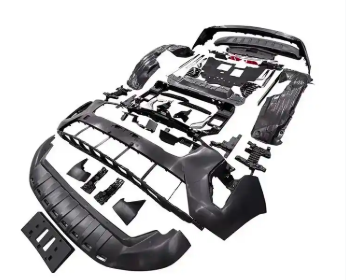
Image source: Great Wall Motors
It is against this industrial background that a number of Chinese companies with scale advantages in modified plastics have gradually emerged.
For example, industry leaderGolden TechnologyIts modified plastic annual production capacity has exceeded3 million tons, it is one of the world's largest modified plastics companies; while Pret and Nanjing Julong, among others, have developed strong technical expertise in automotive engineering plastics and specialty materials.
The rapid development of the automotive industry has not only expanded the scale of the modified plastics industry but also enabled Chinese materials enterprises to gradually master complex material formulations, engineering modification, and large-scale production capabilities.
This accumulation of capabilities has laid the foundation for Chinese materials enterprises to enter higher-end application fields.And as intelligent vehicles, artificial intelligence, humanoid robots, and the low-altitude economy gradually emerge, modified plastics companies start to discover new industrial opportunities.。
Prit's Nansha Layout: Securing a Position in Future Materials
The planning of Prity's Nansha base is actually very representative.
According to the company's plan, the project will be advanced in phases. In the initial stage, the focus will still be on modification.PP, PA, ABS, PC alloys and other traditional automotive materials are mainly used to maintain the current automotive industry supply chain customer requirements. However, more strategically significant is the subsequent layout of high-end engineering plastics such as PEEK, PPS, LCP, and carbon fiber reinforced composite materials.
These materials are not merely upgraded plastics, but essential base materials for advanced equipment manufacturing.
PEEK material, with its extremely high strength and wear resistance, has been widely used in aerospace and high-end equipment manufacturing. For humanoid robots, joints, gears, bearings, and some transmission structures require materials that are both lightweight and wear-resistant, and PEEK is one of the important choices.

Image Source: Gasgoo
PPS material is known for its high heat resistance and corrosion resistance, and can be used for robot structural connectors and motor components; while LCP material has unique advantages in high-frequency connectors, and is irreplaceable in high-speed data transmission and electronic systems.
Pulit inThe LCP materials sector has a relatively complete industrial chain layout. The company not only has the capability for resin synthesis, but also has scaled production capacity in modified materials, films, and fiber production. Currently, its LCP materials have achieved small-scale supply and are undergoing verification with some downstream customers.
In the materials industry, this complete capability from base resins to modified applications is not common.
That's why, when the new technology industry's demand for high-performance materials gradually emerges, companies like Polytech are often able to enter the supply chain more quickly.
The Collective Shift in the Modified Plastics Industry
If you only look at Plite, it's easy to understand the Nansha project as a company's strategic upgrade. But from the perspective of the entire industry, Chinese modified plastics companies are actually undergoing a collective transformation.
Industry leader Kingfa Science & Technology In recent years, the company has continuously increased R&D investment in high-performance engineering plastics, carbon fiber composites, and green materials. With the development of the new energy vehicle and intelligent manufacturing industries, the company’s product lines in structural materials, electronic materials, and other fields have been continuously expanded.
Meanwhile, the demand for material lightweighting is expanding from the automotive industry to more fields.
Intelligent vehicles, humanoid robots, low-altitude aircraft, and high-end automated equipment all have similar requirements for structural materials: they must be strong enough, as lightweight as possible, and maintain stable performance during long-term operation.
Against this backdrop,The application space of high-performance engineering plastics and composite materials is expanding rapidly.。
Another company worth noting is Guoen Shares. Originally, the company had a strong presence in the home appliance and automotive materials sectors, but in recent years, it has started to expand into consumer electronics, new energy equipment, and smart hardware.
As the robot industry chain gradually forms, large quantities of modified materials are needed in areas such as motor housings, control modules, and sensor structural components. For companies with mature material formulations and production capabilities, there is no technological gap in these applications.
Nanjing Julong's path is more inclined towards the accumulation of engineering plastic technology. The company focuses on high-temperature nylon,PPS and long-glass-fiber-reinforced materials are areas in which we possess deep R&D expertise. These materials have already been applied in new-energy vehicles, electrical equipment, and industrial robots.
As the humanoid robot industry gradually develops, these materials also have the conditions to enter new industrial chains.
Therefore, from the perspective of the entire industry, Chinese modified plastic companies are gradually shifting from previously serving only the automotive and home appliance industries to more diversified application markets.
In the development of the technology industry, materials are often the most neglected aspect.When people discuss humanoid robots, they tend to focus more on AI algorithms, motor control systems, and overall mechanical design. However, in actual manufacturing, material selection often directly affects device weight, energy consumption, and service life.Humanoid robots need to strike a balance between high strength and lightweight.
Traditional metallic materials have high strength but are heavy. In comparison, high-performance engineering plastics and carbon fiber composite materials can significantly reduce weight while maintaining strength.
For example, in robot joint structures, using metal materials entirely would not only increase weight but also increase the load on the drive motor. Using reinforced engineering plastics or composite materials can reduce energy consumption while maintaining structural strength.Modified plastics have significant application potential in areas such as robot housings, structural connectors, motor assemblies, and electronic connectors.

Source: Guoen Co., Ltd.
As the robotics industry gradually enters the industrialization stage, the demand for such materials may also grow rapidly.
Some research institutions estimate that the weight of engineering plastics and composite materials used in a humanoid robot may reach20 to 40 kilograms. If the future robot industry reaches a production volume of millions of units, the material market scale will be considerable.
For Chinese modified plastics companies, this means a new industrial window is opening up.
Epilogue: Translate the above content into English, output the translation directly, without any explanation.The Hidden Power of China's High-Tech Industry
In the past, China's material industry was mostly playing catch-up, but now, in the field of modified plastics, some enterprises have already achieved global competitiveness. Kingfa Sci. & Tech. leads the world in scale and product system; Pret Composites has a significant advantage in the field of special materials; Nanjing Julong has a deep accumulation of technology in engineering plastic modification. Although they may not receive as much attention as tech giants, they are supporting Chinese manufacturing in moving towards high-end.
The commencement of construction at the Puleite Nan Sha base signifies the development trend of China's new materials industry. With the rise of industries such as New Energy Vehicles and Artificial Intelligence, the demand for high-performance materials has surged, and material enterprises are the first to sense these changes in the industry.
From automobiles to humanoid robots and materials for the low-altitude economy, and from traditional modified plastics to high-performance engineering plastics, China's modified plastics companies are entering a new stage. When these emerging industries scale up, they could become a crucial foundational support.
A thought-provoking question is: Translate the above content into English, output the translation directly, without any explanation.In the coming new technology era, can Chinese material companies occupy a more important position in the global supply chain, as they did in the new energy vehicle era?
【Copyright and Disclaimer】This article is the property of PlastMatch. For business cooperation, media interviews, article reprints, or suggestions, please call the PlastMatch customer service hotline at +86-18030158354 or via email at service@zhuansushijie.com. The information and data provided by PlastMatch are for reference only and do not constitute direct advice for client decision-making. Any decisions made by clients based on such information and data, and all resulting direct or indirect losses and legal consequences, shall be borne by the clients themselves and are unrelated to PlastMatch. Unauthorized reprinting is strictly prohibited.
Most Popular
-
Supply Extremely Tight! LG Chem Declares Force Majeure on Export Contracts for Di-Octyl Terephthalate (DOTP)
-
Huntsman Introduces “War Surcharge” Amid Shipping Disruption and Soaring Energy Costs, Global MDI Prices Continue to Rise
-
Middle East Tensions Escalate Sharply: How Polyolefins Respond Amid Soaring Risk Premium
-

Deadly Impact: Hormuz Strait Blockade Sparks Shortage of Plastic Raw Materials, Threatening Shutdowns at Japanese and Korean Chemical Plants
-

LG Chem Declares Force Majeure on DOTP Exports! SABIC Joins Five Giants to Redefine EV Safety


