Profit Plunges 41.7%: Cobell Faces Pressure in 2025, Short-Term Pain Conceals Long-Term Breakthrough Confidence
In 2025, the domestic modified plastics and functional additives industry as a whole is in an adjustment cycle characterized by weak demand and intensified competition. As a specialized, refined, unique, and innovative enterprise focusing on the field of polymer modified materials, Hefei Cobear New Materials Co., Ltd. released its 2025 annual report, showing that while the company's revenue remained largely unchanged, both the net profit attributable to shareholders and the net profit excluding non-recurring gains and losses experienced a significant decline, becoming the most prominent feature of the year's operations. Reviewing the entire year's performance with a focus on the decline in profits not only provides a clearer view of the common pressures in the industry but also helps to more accurately understand the balance between Cobear's short-term challenges and long-term strategic layout.
I. Performance Insight: Revenue Remains Slightly Stable as a Floor, While Profit Decline Emerges as the Core Pain Point
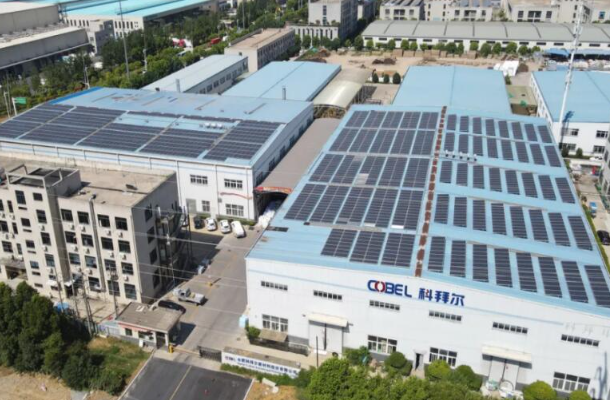
Annual report data shows that in 2025, the company achieved operating revenue of 454 million yuan, a slight increase of 0.09% year-over-year, with the overall business scale remaining stable; however, the net profit attributable to the parent company was 28 million yuan, a decrease of 41.70% year-over-year; the non-recurring profit after deduction was 27 million yuan, a decrease of 35.26% year-over-year. The stark contrast between "stable" revenue and "declining" profits vividly reflects the immense pressure the company's profitability faced in 2025.
From the perspective of asset structure, the company's owners' equity at the end of the period increased compared to the beginning, and the debt-to-asset ratio remained within a reasonable range, indicating that the overall financial fundamentals have not deteriorated. This characteristic suggests that the decline in profits is more of a temporary outcome of business operations rather than a systemic risk within the company, leaving ample room for future performance recovery.
II. Downward Tracing: Resonance of Four Factors, Continuous Pressure on Profit Space
Kobay’s significant profit decline in 2025 was not attributable to a single factor, but rather resulted from the combined impact of external environmental pressures and internal strategic investments; a confluence of multiple adverse factors directly squeezed the company’s profit margin.
(1) Weak downstream demand forces passive price concessions, squeezing gross margins.
The company's core downstream is concentrated in the home appliance industry, with products mainly applied to structural and appearance parts of appliances such as refrigerators, washing machines, and air conditioners. The customer base includes top-tier enterprises like Midea and Whirlpool. In 2025, the overall market sentiment for home appliances both domestically and internationally is not high, with the post-property market cycle effects continuing to manifest and terminal consumption recovery being weak, leading to generally weak demand in the industry. To maintain core customers and market share, the company has had to make concessions on order prices, with the decline in average product prices directly compressing the gross margin, becoming the most direct reason for the decline in profits.
(II) Intensified industry competition has led to a price war, dragging down profitability.
The modified plastics and masterbatch industries have numerous participants, with relatively low technological barriers for mid-to-low end products, leading to particularly intense homogenized competition. In a market environment where overall demand is contracting, companies within the industry generally adopt a "volume over price" strategy to capture market share, and Cobair is no exception. Even though the company has certain technological advantages in areas such as oil and corrosion-resistant materials and metal-like materials without the need for painting, it cannot completely offset the industry-wide pressure of price reductions, resulting in a continuous decline in overall profitability.
(3) Capacity conversion increases burden, fixed costs erode profit margins.
During the reporting period, certain workshops and production lines of the subsidiary Anhui Kebai'er related to its "50,000-ton annual high-performance polymer composite materials project" were gradually transferred to fixed assets, resulting in a significant year-over-year increase in depreciation expenses and a rigid rise in fixed costs. With revenue failing to achieve notable growth, the continued cost increase directly eroded profits. This investment was essentially aimed at overcoming capacity constraints and meeting medium- to long-term order demand; however, against the backdrop of weak demand in 2025, it has significantly weighed on short-term profitability.
(4) Increased R&D investment temporarily drags on short-term profitability
As a technology-driven enterprise, Kerbail will continue to increase R&D investment in high-performance modified materials, bio-based materials, antibacterial functional materials, and automotive modified materials in 2025. At the same time, the company will expand its technical and management teams, leading to a simultaneous increase in R&D expenses and labor costs. Although high R&D investment helps build long-term technical barriers and enhance product competitiveness, it directly reduces short-term profits, making the profit pressure more pronounced during the industry downturn.
Third, Fundamental Resilience: The Main Business Remains Strong, Core Competitiveness Continues to Be Consolidated
Although profits have declined significantly, the fundamental business of Colbert has not deteriorated. From the business structure perspective, modified plastics remains the company's largest source of revenue, accounting for about 85%. Color masterbatch, as a functional additive business, has a higher gross margin and serves as a supplement to the company's profitability.
By 2025, the company's product structure has not undergone significant changes, and the core customers still mainly consist of leading home appliance enterprises. The cooperative relationships are stable, and there has been no large-scale loss of customers or reduction in orders. This means that the decline in the company's profits is not due to the shrinkage of its core business, but rather, under the premise of a stable main business, it is a phased result caused by external environment, industry competition, and internal strategic investments. The core competitiveness has not been weakened.
IV. Breakthrough Measures: Maintaining Resilience Under Pressure and Strategically Planning for Long-Term Breakthrough
Facing the pressure of declining profits, Kebail did not adopt a contractionary business strategy, but instead insisted on addressing short-term fluctuations with a long-term development perspective, focusing on layout around the three dimensions of capacity, market, and technology, attempting to break through the profit dilemma and achieve a strategic breakthrough.
In terms of production capacity, the project to produce 50,000 tons of high-performance composite materials annually is steadily advancing. Once the project is fully operational, it will effectively alleviate the current overloading of existing production lines, significantly increase the production capacity of modified plastics, reduce unit costs through economies of scale, and provide support for profit recovery.
At the market level, while solidifying its core home appliance market, the company is accelerating its expansion into the automotive lightweighting sector. It has obtained IATF 16949 automotive quality management system certification and is gradually entering the automotive components supply chain, striving to establish a second growth curve and reduce reliance on the single home appliance industry.
At the technical level, the company is continuously advancing the upgrading of its products toward higher-end, functional, and green attributes. It is focusing on developing high-end products such as bio-based modified materials and degradable materials to increase the proportion of high-value-added products, striving to move away from low- and mid-end price competition toward value-based competition, thereby fundamentally improving its profitability structure.
V. Summary and Outlook: Short-Term Pain, Awaiting Marginal Profitability Improvement
From an industry perspective, in 2025, modified additive companies generally face the difficulty of increasing revenue and the even greater challenge of increasing profits, with weak demand, strong competition, and high costs becoming the key words of the industry. The decline in Cobear's profits is, in essence, the common pain experienced by small and medium-sized specialized, refined, unique, and innovative enterprises at the bottom of the industry cycle, exhibiting clear industry commonalities and stage-specific characteristics.
In summary, the significant decline in Cobair's profits in 2025 is the result of both external pressures and internal strategic investments. The company's stable revenue, solid customer base, healthy finances, and good asset quality provide a solid foundation for subsequent performance recovery. The short-term pressure on profits is exchanged for increased capacity, technological accumulation, and market structure optimization, laying the groundwork for high-quality development in the medium to long term.
In the future, with the gradual recovery of demand in downstream home appliances and automotive sectors, the release of new production capacity, and an increase in the proportion of high-margin products, the company's profitability is expected to show marginal improvement. For Kobay, the profit decline in 2025 is not a turning point in operations, but a period of transformation and preparation. How to maintain the core business while accelerating high-end and diversified breakthroughs will become the key for the company to overcome the profit downturn and achieve a new round of growth.
【Copyright and Disclaimer】This article is the property of PlastMatch. For business cooperation, media interviews, article reprints, or suggestions, please call the PlastMatch customer service hotline at +86-18030158354 or via email at service@zhuansushijie.com. The information and data provided by PlastMatch are for reference only and do not constitute direct advice for client decision-making. Any decisions made by clients based on such information and data, and all resulting direct or indirect losses and legal consequences, shall be borne by the clients themselves and are unrelated to PlastMatch. Unauthorized reprinting is strictly prohibited.
Most Popular
-
Supply Extremely Tight! LG Chem Declares Force Majeure on Export Contracts for Di-Octyl Terephthalate (DOTP)
-
Huntsman Introduces “War Surcharge” Amid Shipping Disruption and Soaring Energy Costs, Global MDI Prices Continue to Rise
-
Middle East Tensions Escalate Sharply: How Polyolefins Respond Amid Soaring Risk Premium
-

Deadly Impact: Hormuz Strait Blockade Sparks Shortage of Plastic Raw Materials, Threatening Shutdowns at Japanese and Korean Chemical Plants
-

LG Chem Declares Force Majeure on DOTP Exports! SABIC Joins Five Giants to Redefine EV Safety