



Oversupply and Weak Demand: Oil Prices May Be Facing a “Perfect Storm”!
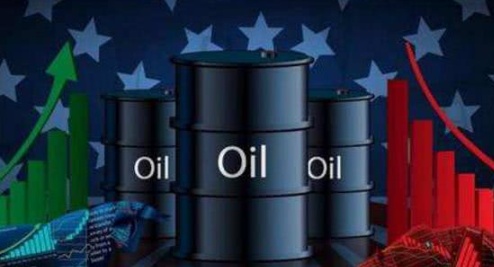
A survey released by Reuters on Friday shows that due to increased production by major producers exacerbating the risk of oversupply, and the threat of U.S. tariffs suppressing demand growth.Oil prices are unlikely to gain much upward momentum from the current level this year.
According to a survey conducted by the media in August of 31 economists and analysts, it is predicted that in 2025Brent Crude OilThe average price will be $67.65 per barrel.The forecast differs little from July's prediction of $67.84. The global benchmark crude oil's average price so far this year is about $70.WTI Crude OilThe price is expected to be $64.65, with last month's estimate at $64.61.
Moutaz Altaghlibi, a senior energy economist at ABN AMRO, said, "With the recent supply increases from OPEC+ and global demand expected to remain lackluster, the prospect of a market surplus in 2025 is even greater.”
He said that the outlook surrounding any additional U.S. tariffs remains shrouded in "profound uncertainty," especially those tariffs related to geopolitical outcomes, such as the Iran nuclear deal or a Russian agreement to a ceasefire.
Earlier this month, OPEC+ agreed to increase oil production by 547,000 barrels per day in September.
Frank Schallenberger, head of commodity research at LBBW, said, "OPEC+ may not have finished its production increase yet. As it stands,"Market share seems to be more important than higher oil price levels. This will lead to a significant oversupply in the oil market in 2025 and 2026, which will put downward pressure on prices.
Washington's efforts to mediate peace with Moscow over the Ukraine issue have so far been unsuccessful. Meanwhile, U.S. President Trump has imposed additional tariffs on India, pressuring it to stop purchasing Russian oil.
Most respondents believe that Trump's threats against buyers of Russian crude oil will have a limited impact on the oil market, as they expect OPEC+ and other alternative suppliers to fill the supply gap.
However, analysts indicate that geopolitical risk premiums are expected to provide support for oil prices becauseThe likelihood of quickly reaching a ceasefire agreement between Russia and Ukraine seems extremely low.
The survey shows that global oil demand in 2025 is expected to increase by 500,000 to 1.1 million barrels per day, while the International Energy Agency (IEA) forecasts an increase of 680,000 barrels per day.
Meanwhile, OPEC has raised its forecast for global oil demand growth for next year and lowered its estimates for supply growth from the U.S. and other non-OPEC+ producers.
OANDA analyst Zain Vawda said, "U.S. production is an interesting point to watch because Trump wants to push for more output, but OPEC+’s forecast might be correct, and the reason behind this is the price."
【Copyright and Disclaimer】The above information is collected and organized by PlastMatch. The copyright belongs to the original author. This article is reprinted for the purpose of providing more information, and it does not imply that PlastMatch endorses the views expressed in the article or guarantees its accuracy. If there are any errors in the source attribution or if your legitimate rights have been infringed, please contact us, and we will promptly correct or remove the content. If other media, websites, or individuals use the aforementioned content, they must clearly indicate the original source and origin of the work and assume legal responsibility on their own.
Most Popular
-

Mexico Imposes Tariff Up to 36% on Cross-Border E-Commerce Products, Effective January 1, 2026; Plastic Shows Partial Fluctuation Today
-
4.5 Million Tons! Wanhua Chemical Dominates Globally in MDI, Heavy Investment in Battery Materials Spurs New Storm
-
Trump Delays Tariff Increase on Furniture, Cabinets, and Vanities
-
Wanhua Chemical Invests $27.3 Billion, 2026 Investment Map Revealed, $1.1 Billion Bet on Battery Materials
-
Back-to-back major joker moves! covestro’s 1.32 million ton mdi dual-line expansion and hdi acquisition reshape global polyurethane landscape


