



No One Cares Whether Car Dealers Live or Die
As the twelfth lunar month approaches and the atmosphere of the Lunar New Year intensifies, a time that should be critical for car dealerships to sprint towards their year-end performance goals, many 4S stores now appear unusually deserted.
The showroom was devoid of its usual bustling crowds, and the negotiation areas sat mostly vacant. Even more striking were the personal belongings piled up at the workstations—many sales consultants had already packed their bags and headed home for the Lunar New Year.
This scene is not an isolated case. In many automobile business districts across the country, "salespeople taking early vacations" has become a widespread phenomenon, reflecting the chill in the car market at the beginning of 2026 and the survival difficulties faced by dealers.
Digging into the root causes of early sales decline, policy changes and consumption overdrafts triggering wait-and-see sentiment are paramount. At the end of 2025, a large number of consumers rushed to purchase vehicles to catch the last train of the purchase tax exemption policy, directly overdrawing market demand at the beginning of 2026.
Entering 2026, the purchase tax policy shifts from exemption to a 50% reduction. This decrease in preferential treatment deters some potential consumers.
More importantly, the 2025 car purchase subsidy policy is set to officially expire, while the 2026 policy has yet to be fully implemented, creating a distinct policy gap.
"The question I hear most from customers these days is, 'When is the new subsidy coming out?' If there's no clear news, they just turn around and leave, without even bothering to discuss models or configurations," a sales consultant for a joint-venture brand in Guangzhou told *Automotive Business*. "I haven't sold a single car this month, and my base salary is barely enough to get by. Instead of wasting time at the dealership, I’d rather head home early for the New Year—at least I could save some rent."
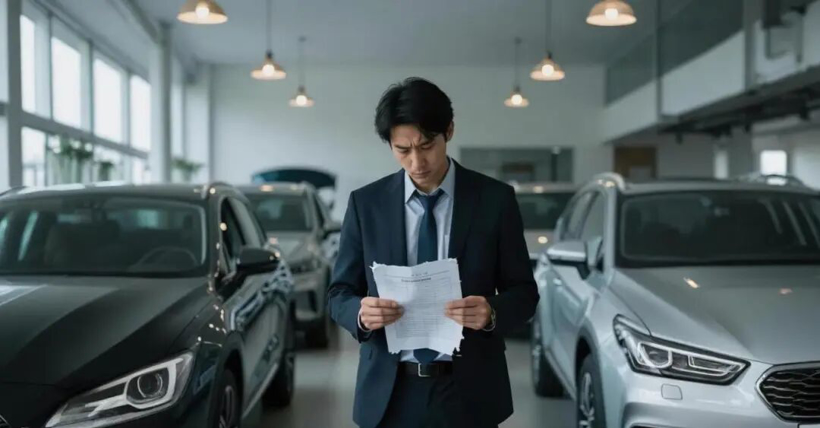
For most ordinary consumers, purchase subsidies and vehicle purchase tax incentives are important considerations in their decision-making process. The uncertainty of these policies leads them to postpone their purchase plans, with a wait-and-see attitude becoming the mainstream. This weakened demand directly results in declining sales performance. Many salespeople, unable to meet their performance targets and thus ineligible for year-end bonuses, choose to return to their hometowns early, waiting for the market to rebound after the new year.
Another car salesperson working in Shanghai, who has already returned to his hometown, also complained to "Auto Business Review": "At this time in previous years, I would receive more than a dozen customers a day and be busy until 8 or 9 p.m. This year, I can't even get three groups a day. If I don't meet my performance targets, there's no year-end bonus. Staying at the dealership is just a waste of time, so I might as well go home early to be with my family."
According to several dealer principals, since January this year, store sales have plummeted year-on-year, with some salespeople not making a single sale for the entire month, making early holidays a reluctant choice.
01The survival dilemma for dealers continues.
The accelerated return of sales before the Lunar New Year is a reflection of the survival anxiety of the entire automotive dealership community. At the beginning of 2026, the pace of consolidation in the automotive dealership industry appears to have significantly quickened, presenting a situation where "top brands face difficulties under pressure, while mid-tier and lower-tier brands struggle to survive."
In this "tribulation," leading brands, relying on their brand power and financial strength, have maintained market share by engaging in aggressive price wars. Although profit margins have been compressed, they have managed to keep operations afloat. Taking some leading new energy brands as an example, since the beginning of the year, they have successively launched discounts of tens of thousands of yuan and trade-in subsidies. The terminal transaction prices of some models have been reduced by 20% compared to the official guide price. By leveraging price advantages, they have stabilized their basic market. Although their dealerships are facing difficulties in profitability, they at least do not have to contend with the risk of closure.
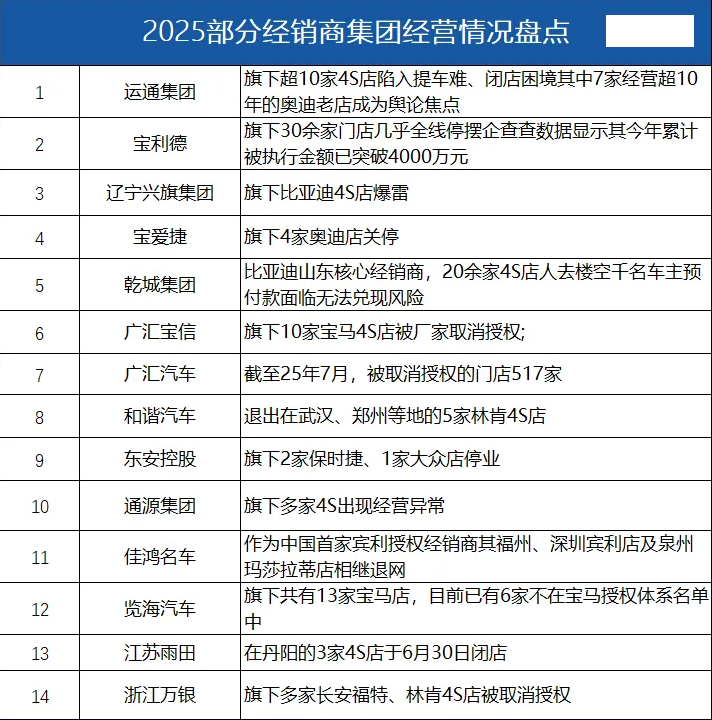
In stark contrast, more often we see the side of dealers facing a desperate struggle for survival.
According to incomplete statistics, in 2025 alone, five major dealership groups have already experienced broken capital chains, while nine groups have seen their stores' authorizations revoked by manufacturers. During the same period, the proportion of loss-making dealerships has soared to 52.6%.
In the article "12 4S Stores Close Daily, The 'Black-Hearted Dealers' You See Are Battling Through the Storm," Auto Commune vividly described the difficult survival situation of car dealerships.
These dealer brands are weak, their product competitiveness is insufficient, and sales continue to be sluggish, with many stores operating at a loss for months. "I used to think selling cars made money, but now I realize you can actually lose more money the more cars you sell," lamented a salesperson at a traditional gasoline car dealership in Shanghai. "We sell a car for 150,000 yuan, and the store next door directly lowers the price by 12,000 yuan. We have no choice but to follow suit, otherwise all the customers will run away. Now we lose more than 8,000 yuan for every car we sell, relying entirely on after-sales service to fill the hole, but after-sales service can't support such a large loss."
Even previously stable regional leading distributors are now falling into crisis one after another.
Less than ten days into 2026, two major auto dealership groups in China, the largest in the west, Tongyuan Group, and the veteran Henan leader, Dong'an Holding Group, have both collapsed, involving over 180 4S stores nationwide, with luxury brands being the hardest hit.
As the 12th largest dealer group among the top 100, Tongyuan Group, with over 140 outlets, has been plagued with problems since August 2025, with luxury brand dealerships in multiple locations facing delivery stalemates. Henan Dong'an Holding Group, with over 40 subsidiaries, experienced a crisis in an extreme form of "overnight emptying." Zhengzhou Zhongyuan Porsche Center, as the largest authorized Porsche dealer in Henan, was the first to shut down, followed by the loss of contact with multiple brand dealerships. Randomly verified store phone numbers showed an abnormality rate of over 50%.
Notably, the upstream OEMs' strategies of channel contraction have further exacerbated the plight of dealerships. Porsche China's president explicitly stated that the number of sales outlets in the Chinese market will be reduced from the current approximately 150 to 80 by the end of 2026, a reduction of as much as 46.7%.
This aggressive channel optimization instantly turned the advantages of dealerships relying on single-brand authorization into risks. For example, Tongyuan and Dong'an, two major groups, suffered heavy losses precisely because they focused on luxury brand authorizations when the automakers downsized their channels.
Consequently, as the year-end approaches, the market—already suffering from sluggish demand—has been further strained by the operational difficulties of dealers. Many stores have simply opted to send their sales staff on early holiday leave to save on labor costs, making the phenomenon of "salespeople returning home early" increasingly common.
A salesperson from a missing dealership in Henan told Auto Commune in a phone interview: "The company is on the verge of collapse. The boss told us to take a break and wait until after the New Year to see if we can resume work. It's uncertain whether we'll be able to come back."
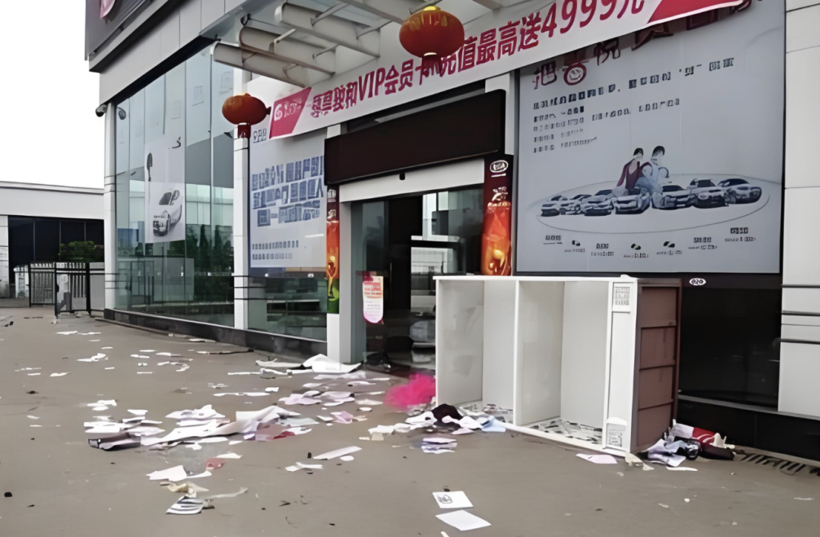
Data shows that from 2021 to 2025, nearly 15,000 4S dealerships in China closed down, and the total number of 4S stores has seen negative growth for two consecutive years. The wave of dealership collapses at the beginning of 2026 has further intensified the industry's shakeout to a fever pitch.
02 The roots of weak demand and the dawn of recovery.
The core reason for the current sluggish car market sales and the operational difficulties faced by dealerships lies in the sustained weakness of demand, a phenomenon driven by the superposition of multiple factors.
First, there's the impact of the purchase subsidy policy receding and the ensuing gap period.
After the expiration of the 2025 car purchase subsidy policy, the new round of subsidy policies for 2026 has not been fully released. Although Guangdong and other regions have recently taken the lead in introducing car trade-in subsidies, with a maximum subsidy of 15,000 yuan for new energy vehicles and 13,000 yuan for gasoline vehicles, a nationwide subsidy policy has not yet been implemented, making it impossible to create a comprehensive market-driving effect.
For consumers, the uncertainty surrounding subsidy policies has fostered a "wait-and-see" attitude; especially against the backdrop of rising vehicle purchase costs, this hesitant sentiment is becoming increasingly prevalent.
Secondly, the adjustment of the purchase tax policy led to a front-loading of consumption.
By the end of 2025, consumers rushed to purchase vehicles to catch the last wave of purchase tax exemptions, significantly depleting market demand for early 2026. Data shows that domestic passenger car sales in December 2025 increased by 23% year-on-year. However, the market quickly cooled down in January 2026, with the number of car buyers in the week after New Year's Day decreasing by one-third compared to the same period last year, and dealership foot traffic dropping sharply.
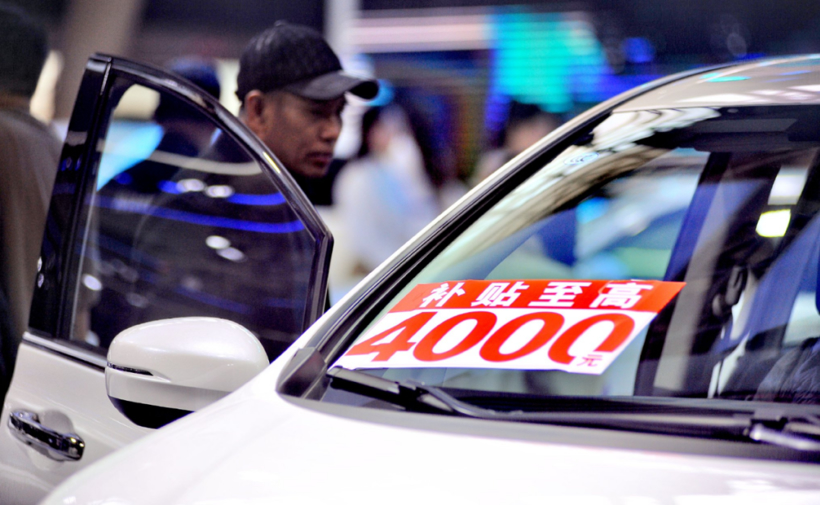
Furthermore, economic uncertainty has also led to a decline in consumer willingness to purchase cars. With uncertain income expectations, many families are choosing to postpone large expenditures, and cars, as non-essential, high-value goods, naturally become a consumption item to be cut back.
However, this does not mean that a recovery in the car market is hopeless.
Recently, many regions have begun to implement a new round of car purchase subsidy policies. In addition to Guangdong, provinces such as Jiangsu and Zhejiang are also brewing local automotive consumption stimulus policies, and the introduction of national subsidy policies has also been put on the agenda.
According to market feedback, local subsidy policies have begun to take effect. After Guangdong's "Guangdong Trade-In" auto replacement subsidy policy was introduced, many dealers reported an increase in inquiries, and some stores saw transaction volume increase compared to before the policy was implemented.
Data shows that from January 12-17, domestic retail sales of new energy passenger vehicles increased by 41.8% year-on-year and 9.5% compared to December, reversing the sluggish trend of the beginning of the month ("down 38% year-on-year and 67% month-on-month"). Signals of market recovery have begun to emerge.
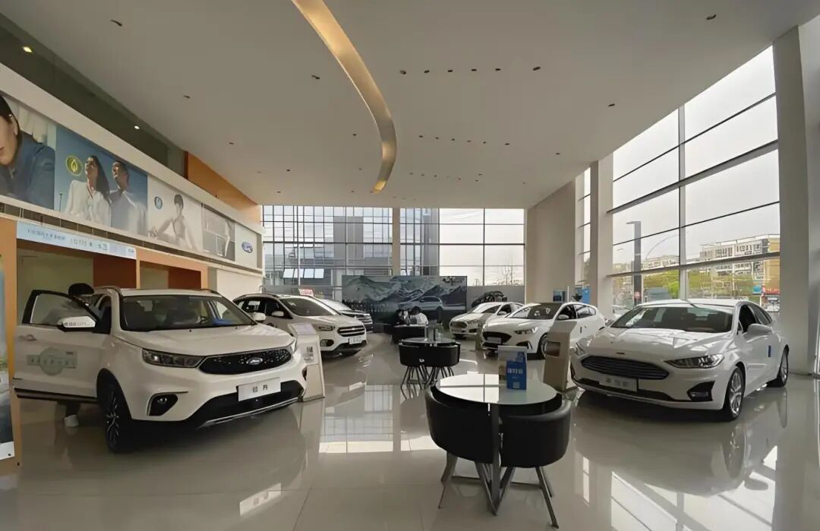
Therefore, looking ahead to the automotive dealership market in 2026, industry consolidation will continue. However, with the full implementation of a new round of car purchase subsidy policies and the gradual release of consumer wait-and-see sentiment, the market is expected to see a substantial recovery in the second quarter.
For dealerships, 2026 will be a pivotal year for transformation and survival. The model of over-reliance on single-brand authorization will no longer be sustainable. Expanding into new energy vehicle brands and developing value-added after-sales services will be crucial for breaking new ground.
Top-tier dealers should accelerate the diversification of their brand portfolios to reduce reliance on a single OEM. Meanwhile, mid-sized and smaller dealers need to identify their niche market positioning or transform into integrated automotive service providers to break away from their sole dependence on new car sales.
Overall, the automotive dealership industry in 2026 will still face challenges, but after eliminating outdated production capacity and optimizing channel structures, the industry will usher in a healthier development pattern. Only those dealers who can adapt to changes and grasp consumer demands will have the opportunity to establish themselves firmly in this new round of industry transformation.
And these salespeople, whose Chinese New Year came early this year, will have the opportunity to be busy again before the next Spring Festival.
【Copyright and Disclaimer】The above information is collected and organized by PlastMatch. The copyright belongs to the original author. This article is reprinted for the purpose of providing more information, and it does not imply that PlastMatch endorses the views expressed in the article or guarantees its accuracy. If there are any errors in the source attribution or if your legitimate rights have been infringed, please contact us, and we will promptly correct or remove the content. If other media, websites, or individuals use the aforementioned content, they must clearly indicate the original source and origin of the work and assume legal responsibility on their own.
Most Popular
-

Key Players: The 10 Most Critical Publicly Listed Companies in Solid-State Battery Raw Materials
-
Vioneo Abandons €1.5 Billion Antwerp Project, First Commercial Green Polyolefin Plant Relocates to China
-

EU Changes ELV Regulation Again: Recycled Plastic Content Dispute and Exclusion of Bio-Based Plastics
-
Clariant's CATOFIN™ Catalyst and CLARITY™ Platform Drive Dual-Engine Performance
-
New 3D Printing Extrusion System Arrives, May Replace Traditional Extruders, Already Producing Car Bumpers

