



New Chemo-Mechanical Process: Removing Pigments from Recycled Plastics and Restoring Their Performance
Researchers from the Department of Chemical Engineering at Worcester Polytechnic Institute and the University of Akron recently published a study in the Chemical Engineering Journal regarding a new technology. This technology aims to address long-standing challenges in the field of plastic recycling that have resulted in the vast majority of plastics being limited to single-use, thereby exacerbating the accumulation of plastic waste.
Currently, global plastic recycling rates are below 20%. To increase this proportion, several challenges need to be overcome, including irreversible performance loss during the recycling process, limited blending capabilities of plastic mixtures, discoloration, and the presence of toxic chemical residues.
Mechanical recycling, which involves physically sorting materials and reprocessing them into new products, faces numerous challenges as mentioned above. To address these issues, chemical recycling has been proposed. This method uses heat and catalysts to break down plastics into substances that can be refined into fuel or further processed for petrochemical production. However, existing chemical recycling methods are energy-intensive and costly, as they require both breaking down plastics and re-forming broken chemical bonds.
Novel chemical mechanical methods are emerging.
Researchers from the Department of Chemical Engineering at Worcester Polytechnic Institute, in collaboration with a team from the University of Akron and the startup Seauciel, have investigated Seauciel's "aqueous chemico-mechanical recycling" (ACMR) process. This process leverages the properties of water above its normal boiling point to transform polymers within plastics into a state where they can mix at the microscopic level. Tests of the method have shown that after chemico-mechanical treatment, polymers achieve mixing at the microscopic scale.
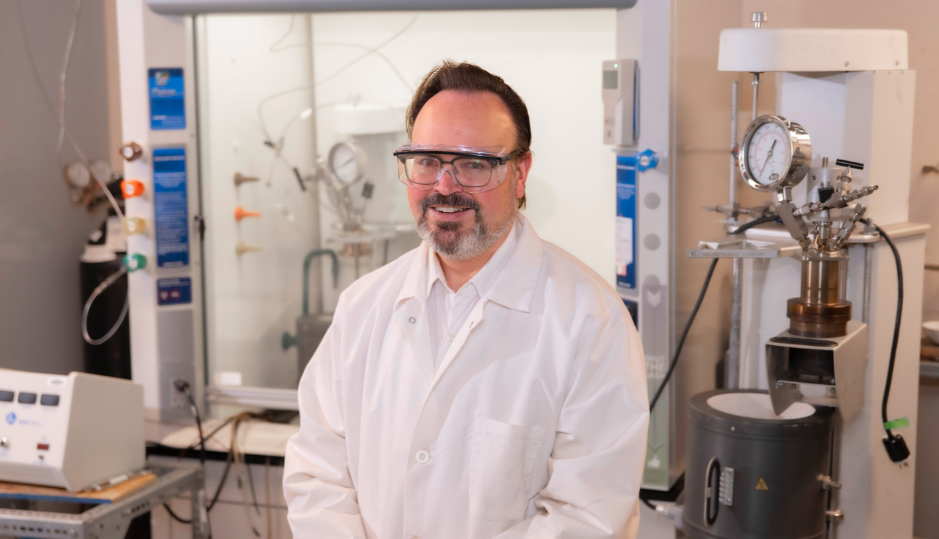
Michael TimkoImage source: Worcester Polytechnic Institute
Furthermore, the study found that compared to mechanically recycled plastics, chemo-mechanical processing can reduce volatile organic compounds (VOCs) by 96%, which are partly responsible for the "recycled plastic odor." Meanwhile, chemo-mechanical recycling can also remove pigments from the polymers, making the recycled material closer to the color of virgin plastic.
Researchers found that by precisely controlling the duration of high-temperature exposure during treatment, molecular weight loss in polymers—a major drawback of mechanical recycling—can be minimized. Furthermore, this method consumes significantly less energy than chemical recycling.
The research team also reported that the recycled plastic produced by this process is priced similarly to virgin plastic, has a carbon footprint comparable to mechanical recycling, and is significantly lower than incineration.
Future outlook
The research team plans to scale up this technology in the future and conduct further research to gain a deeper understanding of the physical principles behind the key phenomena.
"As we continue to make progress, this new technology may ultimately make single-use plastics a thing of the past," said Michael Timko, head of the chemical engineering department and William B. Smith Professor of Chemical Engineering at Worcester Polytechnic Institute, and one of the authors of the report. "Vast amounts of plastic are landfilled or end up in our oceans, not only causing environmental damage but also representing a lost opportunity for material reuse and energy recovery."
【Copyright and Disclaimer】The above information is collected and organized by PlastMatch. The copyright belongs to the original author. This article is reprinted for the purpose of providing more information, and it does not imply that PlastMatch endorses the views expressed in the article or guarantees its accuracy. If there are any errors in the source attribution or if your legitimate rights have been infringed, please contact us, and we will promptly correct or remove the content. If other media, websites, or individuals use the aforementioned content, they must clearly indicate the original source and origin of the work and assume legal responsibility on their own.
Most Popular
-

Key Players: The 10 Most Critical Publicly Listed Companies in Solid-State Battery Raw Materials
-

Vioneo Abandons €1.5 Billion Antwerp Project, First Commercial Green Polyolefin Plant Relocates to China
-

EU Changes ELV Regulation Again: Recycled Plastic Content Dispute and Exclusion of Bio-Based Plastics
-
Clariant's CATOFIN™ Catalyst and CLARITY™ Platform Drive Dual-Engine Performance
-
New 3D Printing Extrusion System Arrives, May Replace Traditional Extruders, Already Producing Car Bumpers

