New 301 Tariff Investigation Launched by United States Against China and 15 Other Trading Partners
Eastern Time, March 11, 2026The Office of the United States Trade Representative (USTR) issued a formal notice to initiate a Section 301 investigation, targeting 16 economies regarding structural overcapacity and production issues in the manufacturing sector, aiming to re-impose tariff pressures.。
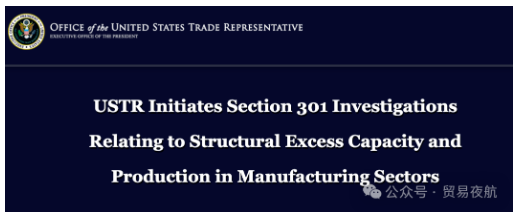
Announcement on the official website of the Office of the United States Trade Representative
U.S. Trade Representative Jamieson Greer announced an investigation under section 301(b) of the Trade Act of 1974 regarding the structural overcapacity and production-related policies, practices, and behaviors of various economies. The investigation will determine whether these policies, practices, and behaviors are unreasonable or discriminatory, and whether they constitute a burden or restriction on U.S. commerce.
List of surveyed economies (16 in total): China, the European Union, Singapore, Switzerland, Norway, Indonesia, Malaysia, Cambodia, Thailand, South Korea, Vietnam, Chinese Taipei, Bangladesh, Mexico, Japan, and India.
U.S. Trade Representative Griller stated that this Section 301 investigation into unfair trade practicesMay lead to new tariffs imposed on China, the European Union, India, Japan, South Korea, and Mexico before this summer (around May).。
During Trump's first term and the Biden administration, Section 301 tariffs have already been imposed on a wide range of Chinese products, with tariff rates ranging from 7.5% to 100%, most products falling within the 7.5%–25% range, and a very small number of products subject to a 100% tariff rate.
Currently, the United States imposes additional tariffs on China, including Section 232 tariffs ranging from 25% to 50%, as well as Section 301 tariffs of 10%.
The U.S. has accelerated the investigation process, and the following are the key time nodes:
Investigation Initiation: March 11, 2026
Open Opinion Submission Platform: March 17, 2026
Written comments and hearing requests due: April 15, 2026
Public Hearing: May 5–8, 2026
Rebuttal submission deadline: within 7 days after the hearing
Greer also stated that an investigation under Section 301 of the 1974 Trade Act will be initiated on March 12 to prohibit the importation of goods produced using forced labor, covering more than 60 countries.
Section 301 of the Trade Act of 1974, as amended, is designed to address unfair foreign practices affecting U.S. commerce. Section 301 may be used to respond to unreasonable, unjustifiable, or discriminatory acts, policies, or practices of a foreign government that burden or restrict U.S. commerce. Under Section 302(b) of the Trade Act, the United States Trade Representative may self-initiate an investigation under Section 301.
Under Section 301(b) of the Trade Act, the investigation will examine whether foreign actions, policies, or practices are unreasonable or discriminatory and impose a burden or restriction on U.S. commerce. Following consideration of the recommendations of the interagency Section 301 committee and consultation with relevant advisory committees, the U.S. Trade Representative has initiated these investigations.
After the investigation is launched, the U.S. Trade Representative (USTR) must consult with the governments of the economies whose actions, policies, or practices are under investigation. The USTR has requested consultations with the governments of the following economies: China, the European Union, Singapore, Switzerland, Norway, Indonesia, Malaysia, Cambodia, Thailand, Korea, Vietnam, Chinese Taipei, Bangladesh, Mexico, Japan, and India.
【Copyright and Disclaimer】The above information is collected and organized by PlastMatch. The copyright belongs to the original author. This article is reprinted for the purpose of providing more information, and it does not imply that PlastMatch endorses the views expressed in the article or guarantees its accuracy. If there are any errors in the source attribution or if your legitimate rights have been infringed, please contact us, and we will promptly correct or remove the content. If other media, websites, or individuals use the aforementioned content, they must clearly indicate the original source and origin of the work and assume legal responsibility on their own.
Most Popular
-
Supply Extremely Tight! LG Chem Declares Force Majeure on Export Contracts for Di-Octyl Terephthalate (DOTP)
-
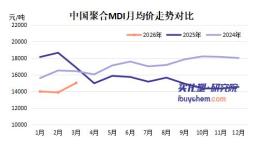
Huntsman Introduces “War Surcharge” Amid Shipping Disruption and Soaring Energy Costs, Global MDI Prices Continue to Rise
-
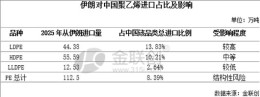
Middle East Tensions Escalate Sharply: How Polyolefins Respond Amid Soaring Risk Premium
-
Deadly Impact: Hormuz Strait Blockade Sparks Shortage of Plastic Raw Materials, Threatening Shutdowns at Japanese and Korean Chemical Plants
-

LG Chem Declares Force Majeure on DOTP Exports! SABIC Joins Five Giants to Redefine EV Safety