



Many Auto Repair Shops Post "No EV Washing" Signs: Will You Follow Suit?
"The car wash is gone, and I might even have to compensate the car owner and the landlord for their losses. Who can I turn to for justice?"
On January 19th, a fire at a car repair shop in Haikou, Hainan, which engulfed a Xiaomi SU7, caused a stir in the aftermarket.
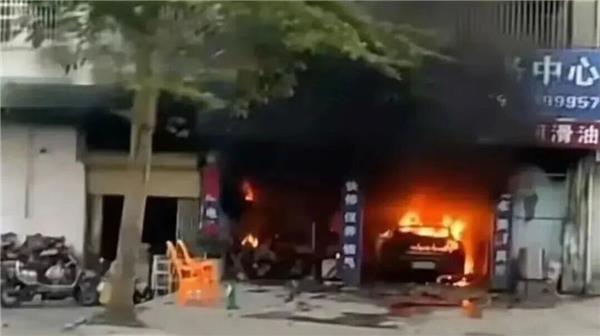
Xiaomi responded urgently, stating that the power batteries were all in normal condition. The front seats moved 4 minutes after the driver and passenger left the vehicle, and a fire broke out inside the car 3 minutes later.
This reply sparked numerous jests from fellow auto repair professionals: "The vehicle was fine before it caught fire, so why did it catch fire?"
That is indeed a difficult question to answer.
Generally, the waterproof and dustproof rating of the high-voltage system (battery, motor, electronic control) in new energy vehicles usually reaches IP67 or even higher (meaning it can be submerged in 1 meter of water for 30 minutes without damage).
This means the possibility of a fire directly caused by a "water-induced short circuit" is extremely low. Moreover, some comments also suggest "the car wash hadn't even started washing when the fire broke out."
As of now, there is no official investigation conclusion confirming that the car wash was the direct cause. Therefore, whether it was "human factors" or other reasons, an official investigation report is urgently needed.
However, auto repair shops and car wash/detailing shops clearly can't wait any longer, "If we can't afford to pay, can't we at least avoid it?"
So, notices saying "We don't wash pure electric cars" were posted on the walls of auto repair shops and car wash/detailing shops, and shared on social media platforms. Peers echoed the sentiment, expressing their intention to follow suit.
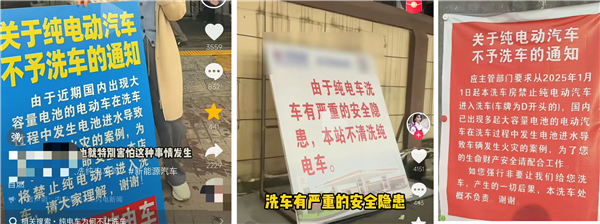
The top-voted comment in the comment section captures this common mentality: "When you encounter a snake on the road and you don't know if it's poisonous, the best approach is to stay away from it, rather than testing to see if it is."
The inconclusive fire, which has put the entire industry on high alert, actually exposes the systemic anxiety of the entire automotive aftermarket under the impact of new energy vehicles.
First Layer of Anxiety: The Overwhelming Burden of "Security Risks"
For new energy vehicles, if the owner forgets to activate a small "car wash mode" when getting a car wash, the high-pressure water gun could damage the charging port cover, leading to compensation disputes worth thousands of yuan.
Last year, a car repair shop in Cangzhou, Hebei, encountered a dispute when washing a Tesla: "30 yuan for the car wash, 2000 yuan demanded in compensation."
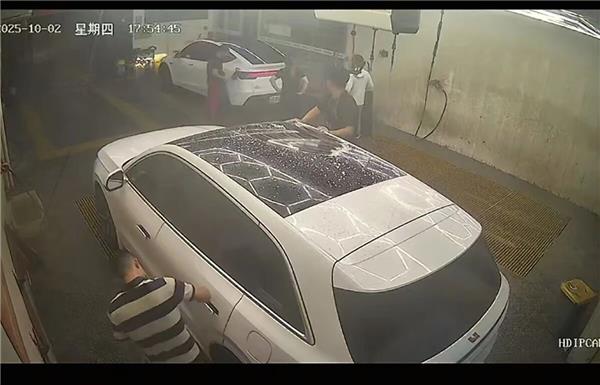
This is just a minor issue. Once it involves accidental scratching of the chassis battery pack, the repair costs are extremely high, and it's difficult for the store to provide proof, which also damages their reputation.
Furthermore, the potential risks for auto repair shops increase exponentially when dealing with three-electric (battery, motor, and electronic control) repair services. In the context of OEM technology monopolies, unauthorized battery repairs can result in hefty fines at best, and legal repercussions at worst.
From the perspective of seeking advantages and avoiding disadvantages, it seems understandable that car repair shops refuse to service electric vehicles.
Second layer of anxiety: "Denial of service" can evade risks, but does not mean evading trends.
The tide of new energy vehicles is unstoppable, and the decline of the traditional maintenance market is irreversible. Although the new energy aftermarket is a boom, the share that independent aftermarket stores can get is both small and difficult to chew.
Low-threshold light services like car washing and tire services are highly competitive, even with OEMs entering the fray.
Paint spraying, sheet metal, and repair of the "three electrical systems" (battery, motor, and electronic control unit) are high-value, high-barrier, and high-risk projects, currently dominated by battery manufacturers, 4S groups, and leading chain enterprises.
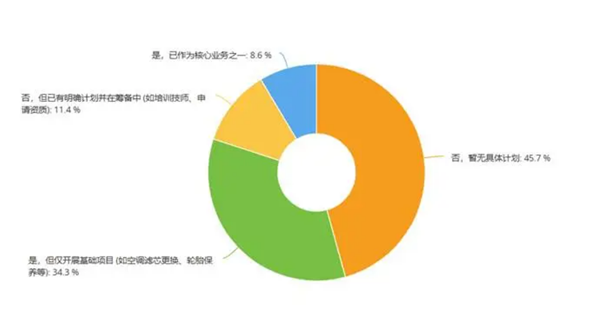
According to the latest research by AC Auto, as high as 45% of auto repair shops have no plans to engage in new energy vehicle business; 34% of auto repair shops, although already involved, are limited to basic services such as air filter replacement and tire maintenance.
On one hand, there's a huge demand for car washes due to the explosion in new energy vehicle ownership; on the other hand, shops "dare not accept" them in the future. Will car owners only be able to go back to 4S stores and wait in line for car washes?
The third level of anxiety: When NEV owners visit the store, they may truly "only want a car wash," offering limited customer value.
Previously, a gasoline car entering a shop for a wash marked the beginning of a service. From washing to detailing, then to maintenance and replacement of wear-and-tear parts, this created a smooth value chain and customer loyalty.
For new energy vehicles, a car wash visit with no other purchases, even if it leads to a window tinting sale, is a one-time transaction. Some stores report that a large volume of EV car washes is even squeezing out appointment slots for loyal gasoline car customers.
However, if they don't wash the cars, many new energy vehicle owners are also old customers who previously owned gasoline cars. Refusing service would damage the reputation the store has built up over many years.
Therefore, some people even suggested changing the "refusal to wash" notice to: "The tram owner shall bear and compensate for all losses caused by spontaneous combustion during tram maintenance or car washing. Accepting our service indicates full agreement."
Finally, to summarize:
"Rejecting pure electric vehicles" is likely a fleeting trend. The new energy trend will not change because of your refusal.
The real way out, perhaps, is not to lie flat in fear, but to actively seek new "ecological niches" within controllable risks.
On the other side of the "no-wash" trend, many auto repair shops have begun investing in learning high-voltage safety knowledge and obtaining basic certifications. They start with less error-prone specialized services (such as exclusive detailing for new energy vehicles and tire services) to build early capabilities and reputation.
Silently pave the way for the future while others panic.
Is the practice of "not washing electric vehicles" advisable? Feel free to leave your thoughts in the comments section for discussion.
【Copyright and Disclaimer】The above information is collected and organized by PlastMatch. The copyright belongs to the original author. This article is reprinted for the purpose of providing more information, and it does not imply that PlastMatch endorses the views expressed in the article or guarantees its accuracy. If there are any errors in the source attribution or if your legitimate rights have been infringed, please contact us, and we will promptly correct or remove the content. If other media, websites, or individuals use the aforementioned content, they must clearly indicate the original source and origin of the work and assume legal responsibility on their own.
Most Popular
-
Layoffs, Divestments, Plant Closures While Pouring Billions: BASF Undergoes Major Transformation!
-
Ascend Adipic Acid Hit By Force Majeure, Market Expects Supply Resumption In Mid-September
-

Raw Material Supply Shortage! INEOS Phenol Declares Force Majeure on Phenol and Acetone Businesses
-
South Korea initiates anti-dumping investigation against Chinese PVC suspension resin! The target is Tianjin Bohua and Wanhua Chemical. How to break through?
-

Sixth national procurement set to be implemented: A “Reshuffling” Moment for the $10-Billion Medical Device Market


