Key Highlights: Government Work Report Sets Tone, New Energy Sector Sees Fresh Development Opportunities
Spring ushers in a new journey, guided by policies. On March 5th, the fourth session of the 14th National People's Congress was grandly inaugurated at the Great Hall of the People. Premier Li Qiang of the State Council delivered the government work report, in which the deployment concerning the new energy sector carried immense weight. It not only clarified the core direction of industry development but also outlined a clear blueprint for the new energy industry over the coming years, serving as a "compass" for the industry's development.
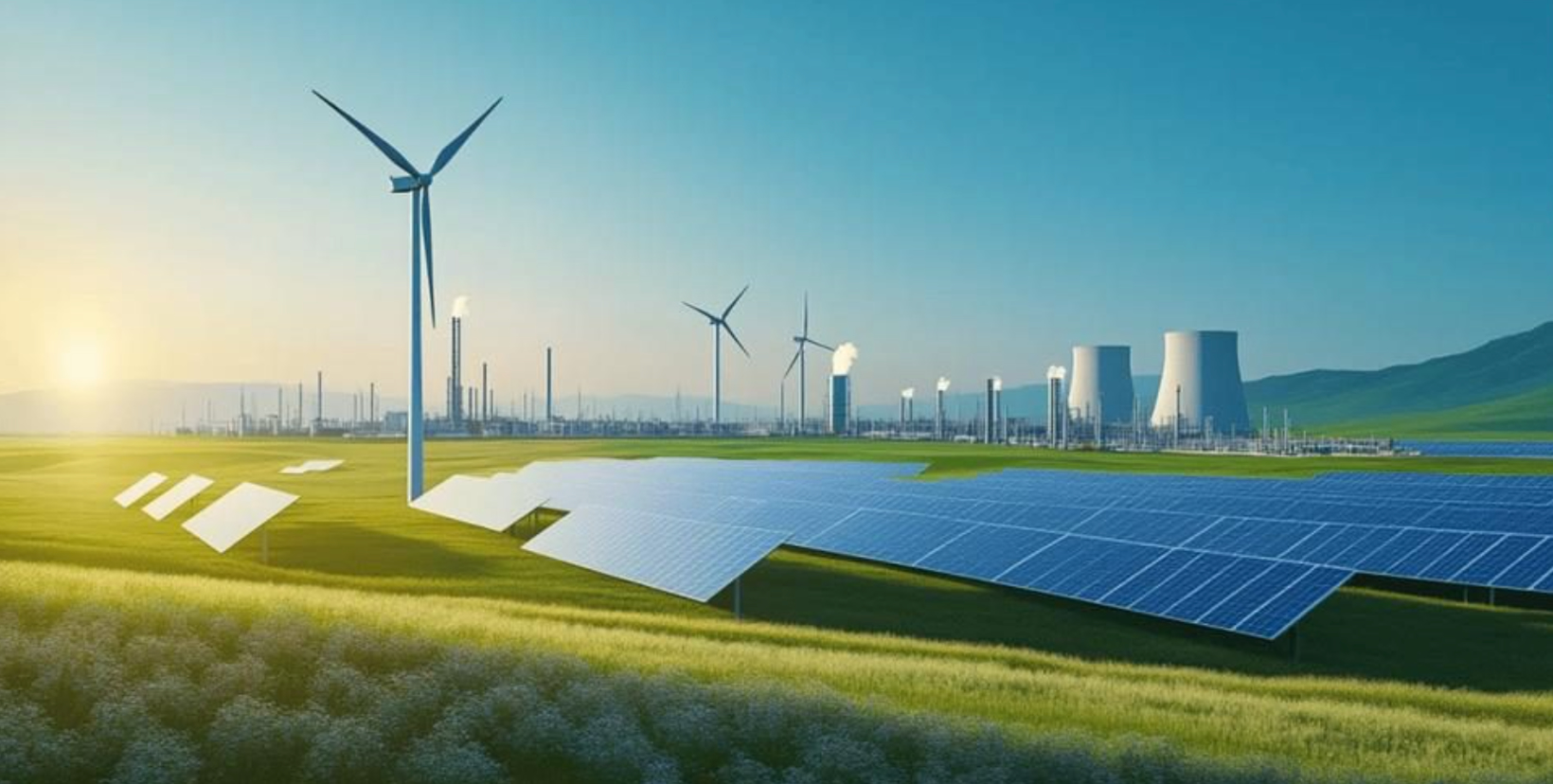
From building a strong energy country to constructing a new power system, from cultivating emerging industries to promoting green and low-carbon transformation, this report has injected strong confidence into the new energy industry and clarified the development path for the upstream and downstream of the industrial chain. Today, we will deeply interpret the key points of the report, and understand the future opportunities and layout logic of the new energy industry.
Report Highlights: The Future Roadmap of the New Energy Industry is Clear
The government work report outlines the development of the new energy sector, summarizing past achievements and setting clear quantitative goals and key tasks for the future. Each item is closely related to the industry's development and deserves close attention.
First, take a look at this impressive "report card"
Reviewing the development process, China's new energy industry has achieved leapfrog development: during the 14th Five-Year Plan period, we have built the world's largest and fastest-growing renewable energy system. The security capabilities in key areas such as energy resources have been significantly enhanced, and we have firmly held the line against systemic risks.
And 2025, as a key milestone, has clearly defined multiple core indicators, demonstrating the industry's confidence in its development.
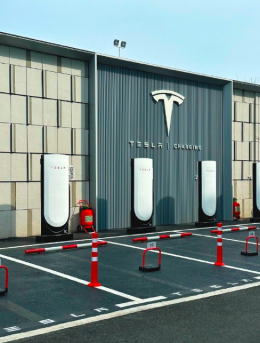
New energy vehicle production exceeded 16 million units, and the number of electric vehicle charging facilities exceeded 20 million, with the new energy vehicle industry continuing to lead globally.
-
The first batch of "Desert, Gobi, and Sandy Land" new energy bases have been basically completed and put into operation, with new energy storage capacity exceeding 130 million kilowatts, the proportion of non-fossil fuel consumption reaching 21.7%, and significant improvement in the capacity of green energy supply.
-
This series of data is not only a vivid snapshot of the development of China's new energy industry but also lays a solid foundation for its subsequent high-quality development.
Looking at the key arrangements for the "14th Five-Year Plan", these areas will become priorities.
The report clearly states that the major projects of the 15th Five-Year Plan will be laid out around three major directions, with deployments related to new energy occupying a significant position.
Modern infrastructure system: Proposing 23 projects centered around new energy systems, to solidify the infrastructure foundation for the development of new energy. This resonates with the previous deployment of "promoting new energy consumption" by the National Development and Reform Commission and the National Energy Administration, promoting the organic combination of large-scale development and efficient utilization of new energy.
-
Green low-carbon transition: Propose 18 projects around carbon peaking and carbon neutrality, using green development as a driver to promote the comprehensive low-carbon upgrading of industries.
-
Key Area Security Assurance: Propose six projects focusing on energy security, elevating new energy to the core level of national energy security.
In addition, the report has clarified two core directions, injecting new momentum into the new energy industry.
One is to foster and strengthen new drivers: Include future energy, low-altitude economy, embodied intelligence, etc., in the key directions for the cultivation of future industries, encourage central and state-owned enterprises to lead in opening up application scenarios, and at the same time, improve the "innovation + capital + entity" collaborative model, to nurture specialized, refined, unique, and new enterprises and unicorn companies, enabling start-ups to rapidly grow into technology leaders. This is highly consistent with the goal proposed by the State-owned Assets Supervision and Administration Commission (SASAC) of "consolidating the leading advantage in the field of new energy."
Second, accelerate the green transition: implement decarbonization initiatives in key sectors, advance the development of zero-carbon industrial parks and factories, establish a national low-carbon transition fund, foster emerging growth areas such as hydrogen and green fuels, and simultaneously enhance the dual control system for carbon emissions, expand the coverage of the carbon trading market, and deeply embed green and low-carbon principles into practice.
Interpreting Industrial Opportunities Behind Policies from the Perspective of New Energy Batteries
A series of deployments outlined in the Government Work Report—from top-level design and policy support to market mechanisms—will exert comprehensive and profound impacts on the new energy industry. As the core enabler of this industry, new energy batteries are thus poised to seize unprecedented development opportunities.
Strategic Positioning Upgrade: New Energy Becomes the Core Support for Energy Security
The report explicitly proposes formulating a National Energy Power Construction Plan Outline, signifying that new energy is no longer merely a tool for green transformation but has become a critical pillar for ensuring national energy self-reliance and controllability and for resolving “bottleneck” risks. This underscores the enhanced policy rigidity driving industry development. As interpreted by China National Radio, “Whoever controls energy controls development space.” The strategic status of the new energy industry has thus been elevated to an unprecedented level, and new energy batteries—serving as the core for energy conversion and storage—will become a vital force supporting the construction of a national energy power.
Industrial Implementation Closed Loop: Policies + Scenarios + Stakeholders to Activate the Entire Industrial Chain
The deployment outlined in the report has established a complete closed loop of "policy guidance + scenario opening + stakeholder activation," which will accelerate the transformation of new energy battery technologies and drive industrial upgrading.
On the one hand, the deployment of core areas such as new power systems, smart grids, and new types of energy storage will drive the large-scale application of lithium-ion, sodium-ion, and other new energy battery technologies. This not only consolidates China's global leading advantages in the new energy industry but also effectively solves the problem of raw material price fluctuations. Combined with recent breakthroughs in the field of new materials, low-temperature resistant, high specific energy lithium batteries have achieved technological breakthroughs, expanding a broader application scope for new energy storage.
On the other hand, the development of emerging industries such as low-altitude economy and embodied intelligence has broadened the high-prosperity application scenarios for new energy batteries. For example, CATL has released the world's first "sea and air integrated low-altitude economy solution" through its ecosystem enterprises, with its high-safety batteries providing energy support for eVTOL aircraft, promoting the low-altitude economy to move from pilot projects to large-scale development. The explosion of these emerging scenarios will drive the continuous increase in demand for high-safety, high-energy, and high-rate batteries.
Accelerated Industrial Transformation: From Policy-Driven to "Technology + Market" Dual-Driven
The proposed measures in the report, such as nurturing specialized, refined, unique, and new enterprises and utilizing innovative financial tools, will inject new vitality into the new energy battery industry. Government investment funds leading the way as patient capital, combined with the flexible innovation advantages of private enterprises in the new energy sector—currently, private enterprises account for over 70% of the capacity in photovoltaic manufacturing and over 60% in wind power equipment manufacturing—will form a collaborative model of "innovation + capital + main players," driving the industry's transition from policy-driven to market-driven and technology-driven.
Looking Ahead: The New Energy Battery Industry Chain Enters a New Stage of High-Quality Development
Under the driving forces of energy power, energy security, zero-carbon manufacturing, and the growing demand for energy storage and power batteries, China's new energy battery industry chain is expected to enter a new stage of high-quality development, and the industry structure will continue to optimize.
Leading enterprises continue to take the lead: Top battery companies such as CATL, BYD, and Gotion High-Tech are accelerating their carbon-neutral transitions, driving global new-energy battery supply through technological innovation, while actively expanding into emerging application areas such as low-altitude economy to seize market opportunities.
Multiple breakthroughs in new battery technologies: Sodium-ion batteries, with advantages such as controllable resource supply, high-rate capability, and superior low-temperature performance, are experiencing rapid development opportunities; sodium-ion battery enterprises—including HiNa Battery and Chuan Yi Technology—are accelerating their rise. Solid-state batteries, as the next-generation core technological route, have entered a critical stage of industry-wide collaborative development and will further consolidate China’s global leading position in the new energy industry.
Upgrading Value Across the Entire Industrial Chain: With enhanced collaboration throughout the entire industrial chain, new energy batteries will evolve from being merely a core power component to becoming a central element of the new energy system, unlocking greater value in future energy, low-altitude economy, embodied intelligence, and other fields, thereby supporting China's dual goals of achieving comprehensive green transformation and energy security.
The deployment outlined in the Government Work Report has sounded the clarion call for high-quality development in the new energy sector. From the “desert, Gobi, and wasteland” (Shagohuang) new energy bases to the development of a new-type power system, and from technological breakthroughs in lithium-ion and sodium-ion batteries to the expansion of low-altitude economic application scenarios, every step forward in the new energy industry relies on policy guidance and innovation-driven advancement.
In the future, with the implementation of various policies, the new energy industry will face more development opportunities. As a core carrier, new energy batteries will write a more wonderful chapter in the journey of building a strong energy nation. Let us continue to pay attention to policy directions, grasp industry opportunities, and jointly embark on a new future of green development!
【Copyright and Disclaimer】The above information is collected and organized by PlastMatch. The copyright belongs to the original author. This article is reprinted for the purpose of providing more information, and it does not imply that PlastMatch endorses the views expressed in the article or guarantees its accuracy. If there are any errors in the source attribution or if your legitimate rights have been infringed, please contact us, and we will promptly correct or remove the content. If other media, websites, or individuals use the aforementioned content, they must clearly indicate the original source and origin of the work and assume legal responsibility on their own.
Most Popular
-

Supply Extremely Tight! LG Chem Declares Force Majeure on Export Contracts for Di-Octyl Terephthalate (DOTP)
-
Deadly Impact: Hormuz Strait Blockade Sparks Shortage of Plastic Raw Materials, Threatening Shutdowns at Japanese and Korean Chemical Plants
-
Huntsman Introduces “War Surcharge” Amid Shipping Disruption and Soaring Energy Costs, Global MDI Prices Continue to Rise
-
Catl “wins big”: Beyond Batteries, What Else Can It Sell?
-
Tao Lin: Tesla’s Supercharger Stations in China Surpass 2,500